What a Lower Return Idler Does on a Conveyor
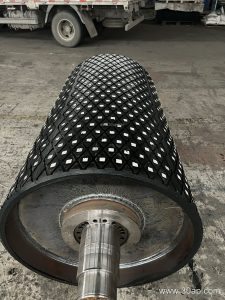
A lower return idler is the roller that supports the empty, returning side of a conveyor belt. After the belt discharges its load at the head end, it travels back underneath the structure, and this is where the return idler carries the belt weight and keeps it from sagging. In many plants the same component is simply called a return roller or flat return idler, and the two names describe the same product. It is not a drive pulley, tail pulley, or bend pulley, and it should never be ordered as a substitute for one of those components.
Because the return side carries no material, the loads are lighter than on the carrying side, but the belt still needs steady support. Sagging return belt can rub on the frame, misalign, and put extra strain on the conveyor pulley and the belt itself. A well-chosen return idler keeps the belt tracking smoothly and reduces wear across the whole conveyor.
Construction and Common Forms
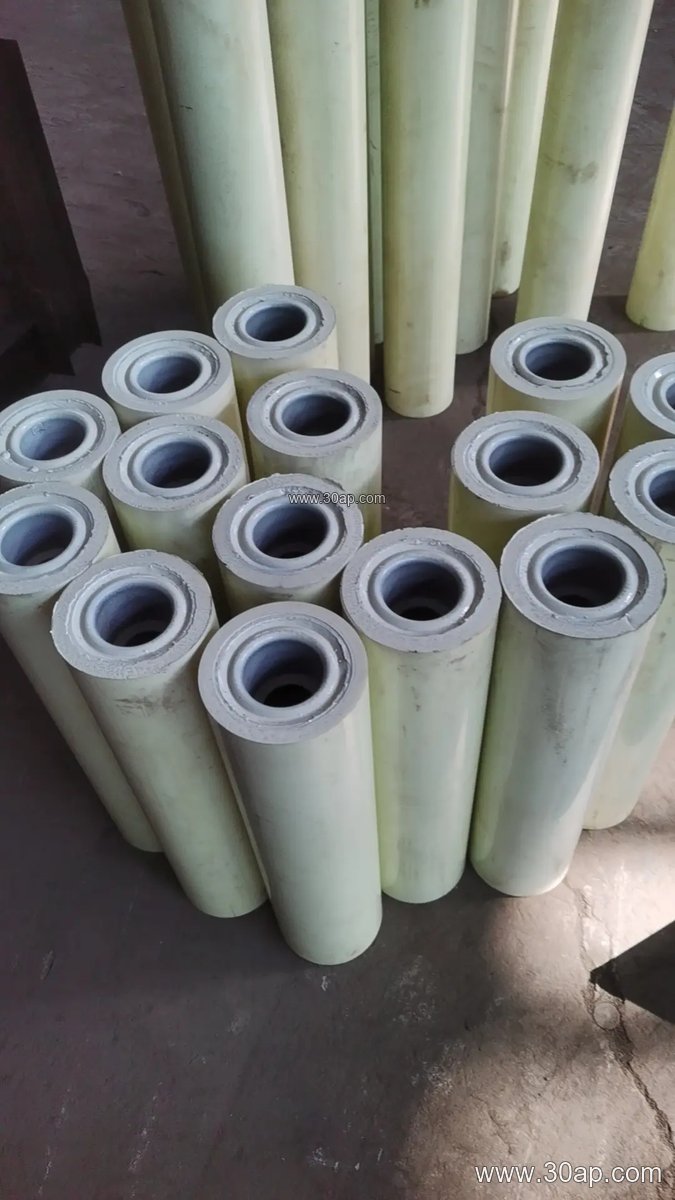
Most lower return idlers share a simple structure: a steel tube shell, a shaft, bearing housings at each end, and a sealing arrangement to keep dust and water out. The shell may be plain steel, nylon-coated, or covered with rubber rings where build-up or impact is a concern. Seals matter in dusty settings such as a coal preparation plant or a cement plant, because fine dust entering the bearing is a common cause of early failure.
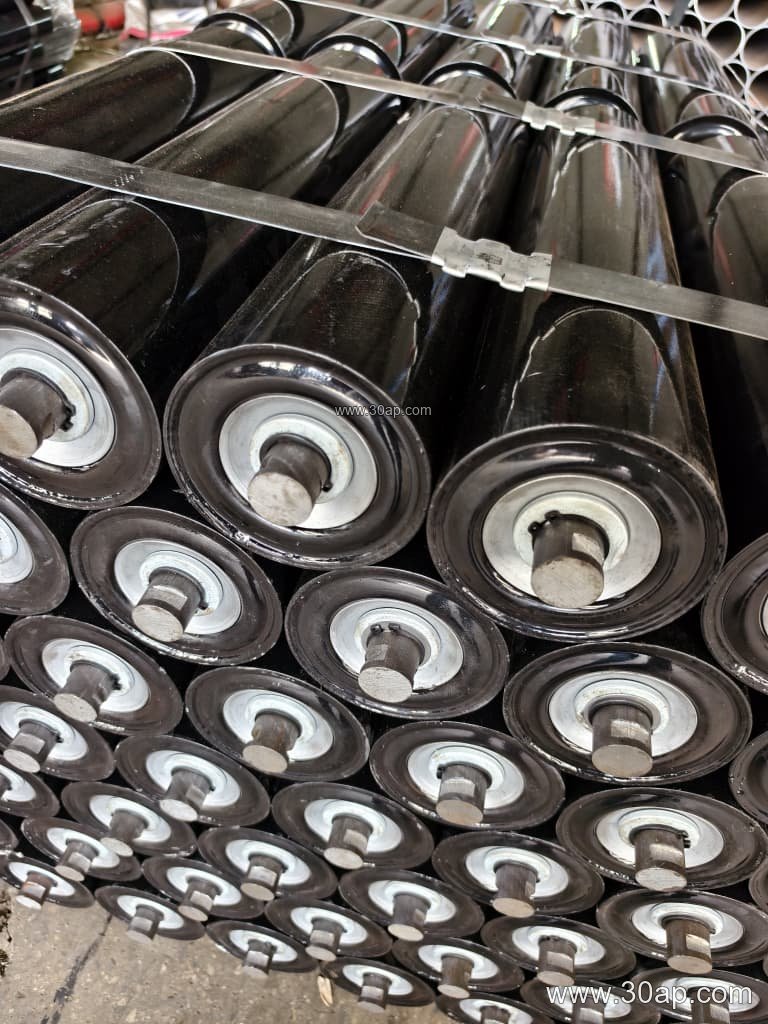
Return idlers are usually supplied as single-roll units, and a flat roll is the standard form. A V-type return idler uses two rolls set in a shallow V to help center the belt, which is useful on long conveyors or where belt wander is a known issue. This is a variation of the return idler family, not a replacement for the main flat design. Bearing sizes commonly seen include 6204, 6205, 6305, 6306, 6308, and 6310, matched by the manufacturer to the roller diameter and load rather than by a single fixed rule.
Typical Dimensions and Reference Data
Return idler diameter and belt width are selected together with the conveyor design, not as a fixed pairing. The table below gives common reference ranges that help a buyer frame a request; final values should come from the conveyor specification.
| Parameter | Common reference values |
|---|---|
| Roller diameter | Ø63, Ø76, Ø89, Ø102, Ø108, Ø127, Ø133, Ø159, Ø178, Ø194, Ø219 mm |
| Belt width | B400, B500, B650, B800, B1000, B1200, B1400, B1600, B1800, B2000, B2200, B2400 |
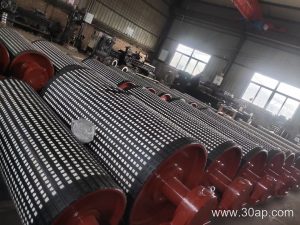
| Roll face | Steel tube, nylon, ceramic, rubber ring |
| Bearing | 6204, 6205, 6305, 6306, 6308, 6310 |
| Roll length (three-roll carrying example) | About 200 mm at B500 up to about 750 mm at B2000; side and center rolls differ |
The roll length figures above are examples taken from three-roll carrying sets and should not be read as fixed return idler lengths. Return roll length follows the belt width and the frame design, so it is always confirmed against the drawing.
Where These Idlers Are Used
Lower return idlers appear wherever a belt conveyor runs: a limestone quarry feeding a crushing circuit, a coal yard at a power station, a sand and gravel line, or a fertilizer plant. In a crushing and screening plant, return idlers are often exposed to spillage and grit, so seal quality and shell finish deserve attention. In a steelworks or sinter plant, heat and sticky fines may call for a different roll surface than a clean aggregate line would need.
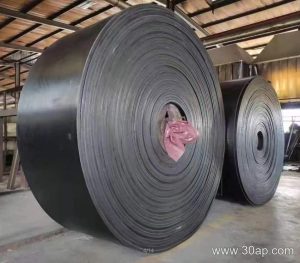
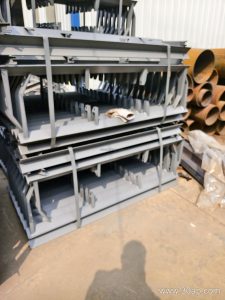
The return idler works alongside the conveyor belt, the conveyor bracket that holds the idler frame, and the conveyor pulley at each end. A worn return roller can affect all of them, which is why routine inspection of the return run is worth the time.
What Buyers Should Check Before Ordering
- Confirm the belt width and the actual roll length required by the return frame, not the carrying idler length.
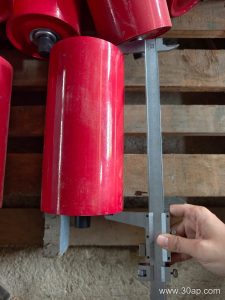
- State the roller diameter and shaft end type so the idler fits the existing bracket.
- Describe the environment: dusty, wet, abrasive, or sticky. This guides seal choice and whether a rubber-ring or nylon surface helps.
- Ask whether a flat or V-type return idler suits the belt tracking on that conveyor.
- Check bearing designation and lubrication arrangement, and keep spares consistent with the installed set.
Replacing a return idler is straightforward when the mounting dimensions match. Measuring the old roller, noting the shaft ends, and photographing the bracket often prevents a wrong order. A correctly specified lower return idler is a low-cost part that protects the belt, the pulleys, and the structure over years of service.