What an Ore Conveyor Belt Does
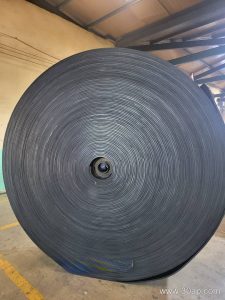
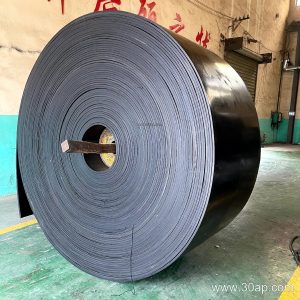
An ore conveyor belt is the load-carrying element of a bulk handling line that moves crushed rock, coal, cement clinker, sand and gravel, or ore concentrate from one transfer point to the next. It runs over a frame fitted with idler rollers, wraps around a head or drive pulley and a tail pulley, and returns through bend pulleys and take-up arrangements. In a mine, quarry, cement plant, power station or aggregate yard, this belt is often the single component that determines how much tonnage the whole circuit can move per hour.
The working conditions are rarely gentle. Sharp lump ore, abrasive dust, oil from machinery, heat from clinker, or sub-zero winter temperatures all attack the belt surface. That is why an ore conveyor belt is specified as a system of cover compound, carcass and edge protection rather than as a simple rubber strip.
Construction of the Belt
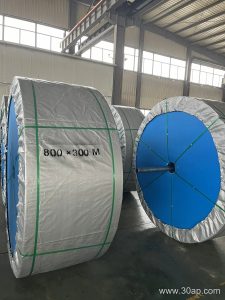
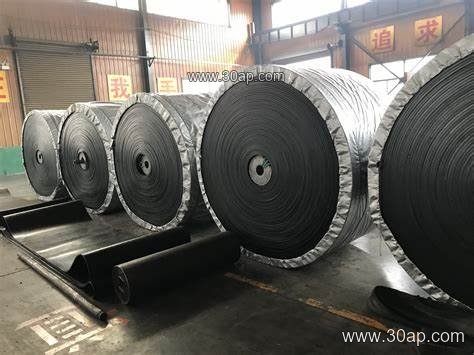
A typical ore conveyor belt is built from three functional layers. The top cover meets the material, the bottom cover runs against the idlers, and the carcass carries the tension. Cover thickness is usually quoted as a pair, for example 4+2 mm or 6+2 mm, meaning top cover plus bottom cover. Common carcass options include EP fabric, NN nylon fabric, and steel cord construction for long, high-tension routes.
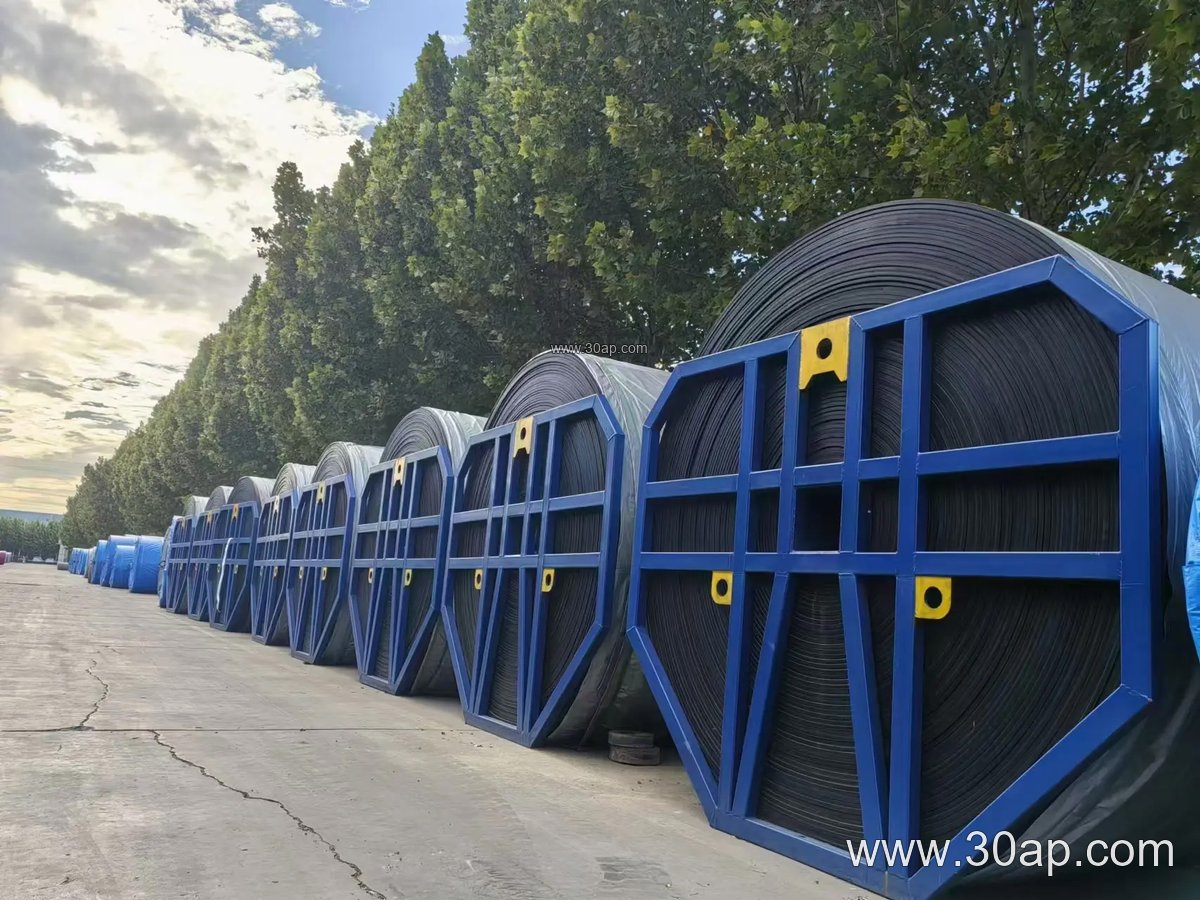
- EP conveyor belt – polyester/polyamide fabric carcass with good elongation behaviour and impact resistance; common in primary crushing and transfer conveyors.
- NN nylon conveyor belt – nylon fabric carcass with high tensile strength and flexibility; often chosen where troughing and flexing are demanding.
- Steel cord conveyor belt – steel cables as the tension member; used on long overland lines and high-capacity trunk conveyors.
- PVC and PVG belts – solid-woven carcasses for lighter duties and, in the PVG form, for underground coal applications with flame-retardant requirements.
Special cover grades address the environment rather than the tonnage: abrasion-resistant, heat-resistant, oil-resistant, flame-retardant and anti-static, cold-resistant, and acid-alkali resistant. Patterned surfaces such as herringbone or chevron profiles help on inclines, while corrugated sidewall belts contain material on steep lifts.
Common Reference Parameters
The values below are reference ranges used in general specification work. Actual figures are confirmed by the belt manufacturer and by conveyor design, and they are not a supply promise for any particular plant.
| Parameter | Common reference values |
|---|---|
| Belt width | B500, B650, B800, B1000, B1200, B1400, B1600, B1800, B2000 |
| Fabric strength grade | EP200, EP315, EP400, EP500, EP630, EP800, EP1000, EP1250, EP1600, EP2000 |
| Cover thickness (top + bottom) | 3+1.5, 4+2, 5+2, 6+2, 8+3 mm |
| Carcass plies | Usually 2 to 6 fabric layers |
| Surface forms | Smooth, abrasion-resistant, heat-resistant, oil-resistant, flame-retardant, anti-static, cold-resistant, acid-alkali resistant, patterned, corrugated sidewall |
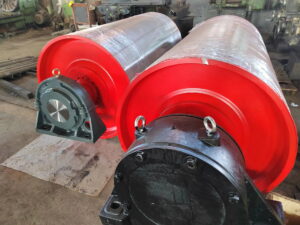
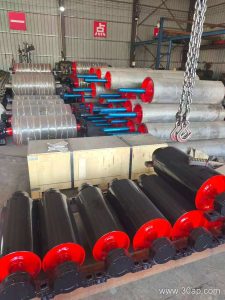
Belt width and pulley diameter are matched through conveyor design calculations, not by a single fixed rule. A wider belt does not automatically dictate one specific drive pulley size, and shaft diameter must be calculated from the actual loads.
Where It Is Used
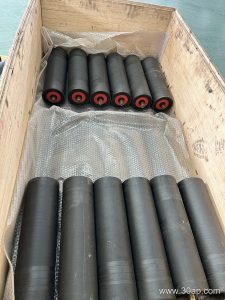
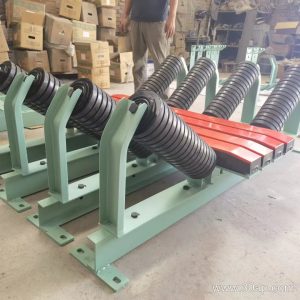
In mining and metallurgy, an ore conveyor belt links the crusher discharge to the stockpile or the grinding circuit. Coal preparation plants use flame-retardant and anti-static grades underground and abrasion-resistant grades on the surface. Cement plants handle hot clinker with heat-resistant covers, while power stations move coal and limestone. Sand and gravel yards rely on patterned belts for inclined stockpiling. In all these settings, the belt works together with conveyor pulleys, idler rollers and conveyor brackets; the pulleys transmit drive and redirect the path, the idlers support the loaded strand, and the brackets hold the idlers in alignment.
What a Buyer Should Confirm
Before ordering, collect the material description, lump size, capacity in tonnes per hour, centre-to-centre distance, incline angle, and the ambient and material temperature. State whether oil, chemicals, or fire risk are present, because these change the cover compound rather than the carcass alone. Ask for the splice method and edge construction, since a poorly finished edge is a common starting point for tracking faults and cover stripping.
Also confirm the interface with the rest of the conveyor: pulley face width, trough angle, idler spacing and transition distance. A belt that is correct on paper can still mistrack if the drive pulley, tail pulley or bend pulleys are misaligned. During operation, check cover wear at the loading point, look for carcass damage from trapped lumps, and keep the return strand clean. These habits extend service life more reliably than any single specification choice.