What a Self-Centering Idler Does
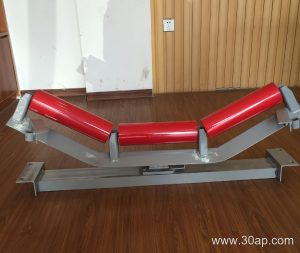
A self-centering idler is a carrying roller assembly designed to keep a conveyor belt running along the center line of the structure. In aggregate plants, coal handling systems, cement kilns and power station coal yards, belts tend to wander when loading is uneven, when the frame is slightly out of alignment, or when one side of the belt carries more material. The self-centering idler, also called an aligning idler or training idler in common plant language, responds to that wander by steering the belt back toward the middle.
The product is not a substitute for a drive pulley, tail pulley or bend pulley. Those components transmit power or change belt direction, while a self-centering idler only supports the belt and corrects tracking. In a typical conveyor line, it works together with standard troughing idlers, return rollers, a conveyor pulley at the head end and conveyor brackets that hold each assembly in place.
How the Assembly Is Built
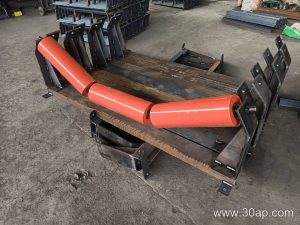
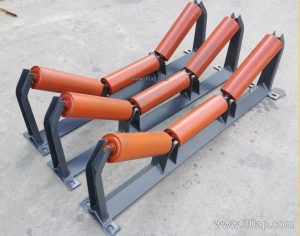
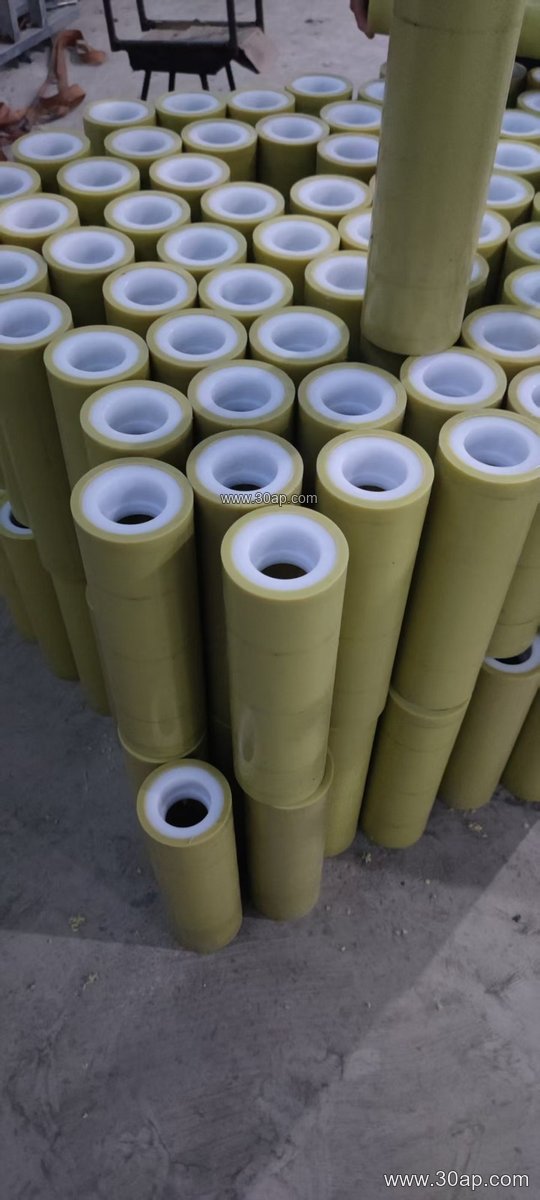
Most self-centering idlers use two or three rolls mounted on a pivoting frame. The frame turns slightly about a vertical axis when the belt pushes against one side, and that small rotation produces a steering effect. Friction-type designs use rubber or polyurethane contact surfaces to increase the response to belt misalignment, while conical roll versions use tapered rolls that create different surface speeds across the belt width.
Common construction details include:
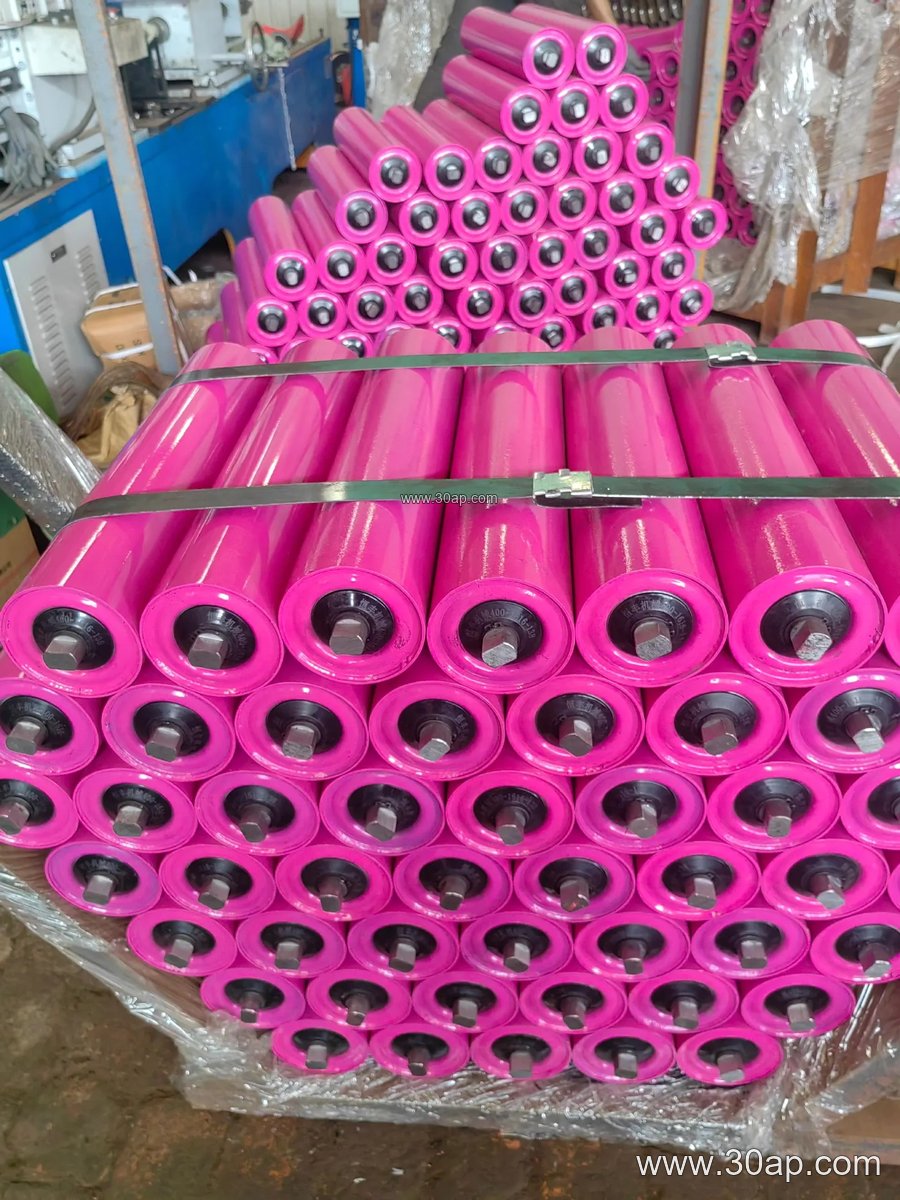
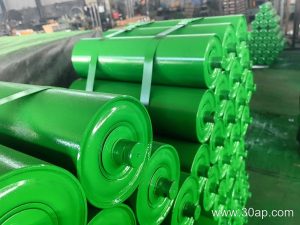
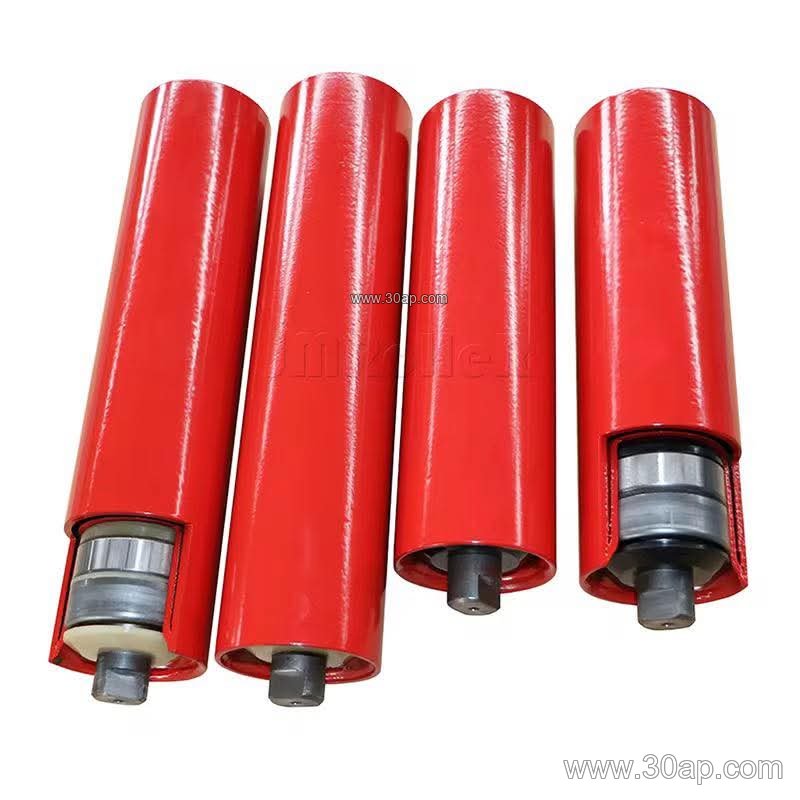
- Roll diameter options such as Ø89, Ø108, Ø127, Ø133 and Ø159 mm, selected according to belt width and load.
- Bearing sizes including 6204, 6205, 6305, 6306 and 6308, paired with sealed housings for dusty sites.
- Roll surfaces in steel tube, nylon, ceramic or rubber rings, depending on abrasion and material build-up.
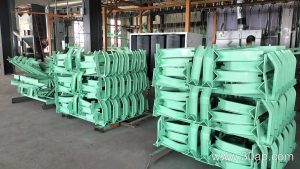
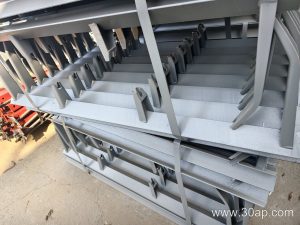
- Mounting frames that fit standard conveyor brackets and allow field adjustment.
The rolls are usually arranged in a trough or V form so the belt is supported across its full width. A slight forward tilt of about 1.5 to 2 degrees is sometimes used on training idlers to encourage self-alignment; this is a design detail, not a universal rule for every installation.
Where Self-Centering Idlers Are Used
These assemblies are common in quarry and sand and gravel lines, where material drops onto the belt from a crusher or screen and can shift the load sideways. They also appear in coal preparation plants and power plant coal conveying, in cement plants handling clinker and raw meal, and in iron ore or copper ore transport where long belts are exposed to wind and uneven feed.
In a crushing and screening circuit, a self-centering idler is often placed after the loading point and before the head pulley, giving the belt a chance to settle before discharge. On a tunnel spoil or fertilizer handling line, the same principle applies: keep the belt centered so it does not rub the frame or spill material along the walkway.
Sizing and Selection Notes
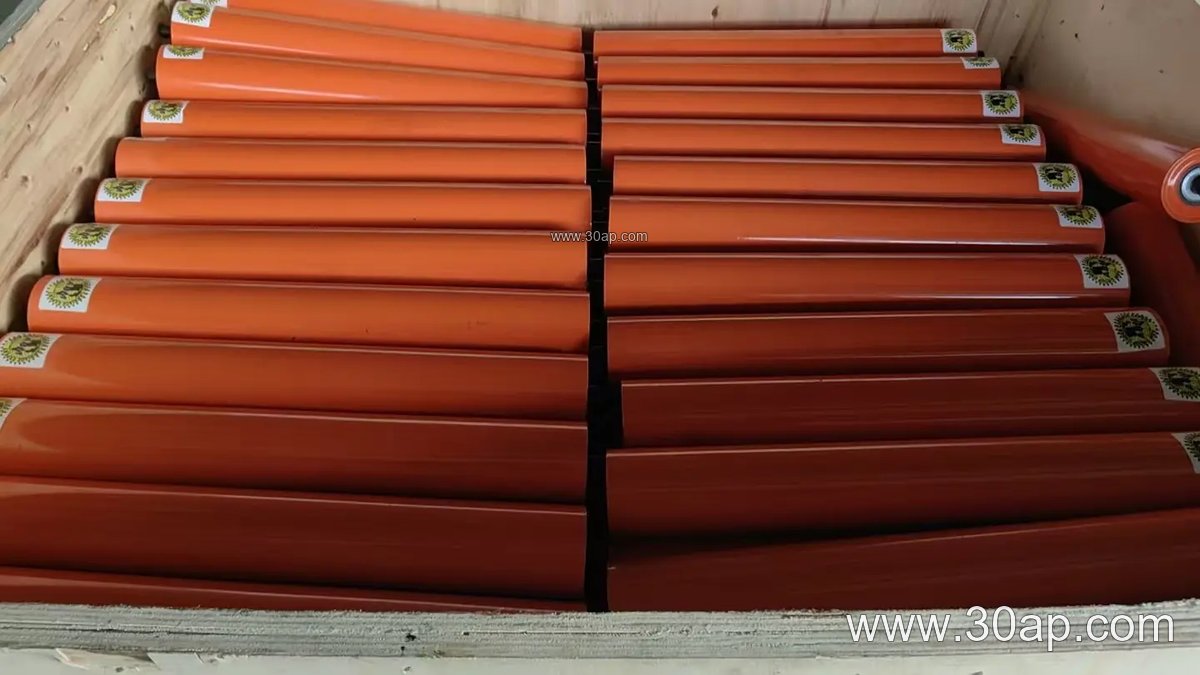
Selection starts with belt width and the trough configuration. Typical reference values are shown below; actual roll lengths and diameters should be confirmed with the conveyor design, because side rolls and center rolls can differ.
| Belt width | Common center roll length (three-roll trough) | Typical roll diameter range |
|---|---|---|
| B500 | about 200 mm | Ø63 to Ø89 mm |
| B650 | about 250 mm | Ø76 to Ø108 mm |
| B800 | about 315 mm | Ø89 to Ø127 mm |
| B1000 | about 380 mm | Ø102 to Ø133 mm |
| B1200 | about 465 mm | Ø108 to Ø159 mm |
| B1400 | about 530 mm | Ø127 to Ø159 mm |
| B1600 | about 600 mm | Ø133 to Ø178 mm |
Trough angles of 20, 30, 35 and 45 degrees are available in the wider idler family, and the self-centering version should match the trough angle of the adjacent carrying idlers so the belt transitions smoothly. Bearing choice depends on load and speed rather than belt width alone; a 6205 bearing, for example, is not tied to one specific roll diameter.
Buyers should also check the frame height, the bracket hole spacing and the available space for the pivoting mechanism. On retrofit projects, measuring the existing conveyor bracket and the belt line before ordering avoids mismatches. For dusty or wet conditions, sealed bearings and a roll surface that resists material sticking are worth specifying.
Maintenance and Practical Advice
Inspect the self-centering idler after the first weeks of operation, since a new belt often stretches and shifts. Check that the pivot moves freely, that the rolls turn without noise, and that no material has packed around the frame. A belt that still wanders may need the loading point, the pulley alignment or the belt splice checked rather than more training idlers added. Used as part of a balanced conveyor system, the self-centering idler helps reduce edge damage, spillage and premature wear on the conveyor belt.