What a Ceramic Lagged Pulley Is
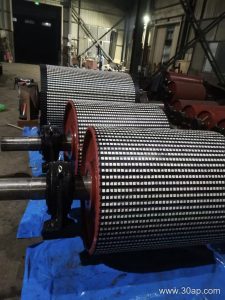
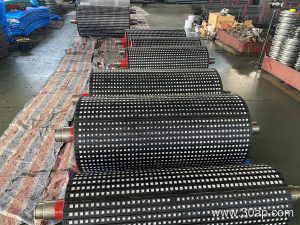
A ceramic lagged pulley is a conveyor pulley whose shell is covered with ceramic tiles set into a rubber backing. The ceramic surface gives the drive pulley extra grip on the conveyor belt, especially where the belt is wet, dusty, or oily. In practice, the ceramic lagging is a wear-resistant grip layer, and the rubber beneath it cushions the tiles and bonds them to the drum face.
This pulley is most often used as a drive or head pulley, where torque has to pass from the drum to the belt. It can also appear on a tension or bend position in demanding circuits, but drive, tail, and bend pulleys are not interchangeable, so the duty must be checked before a ceramic-lagged unit is specified.
How the Ceramic Surface Is Built
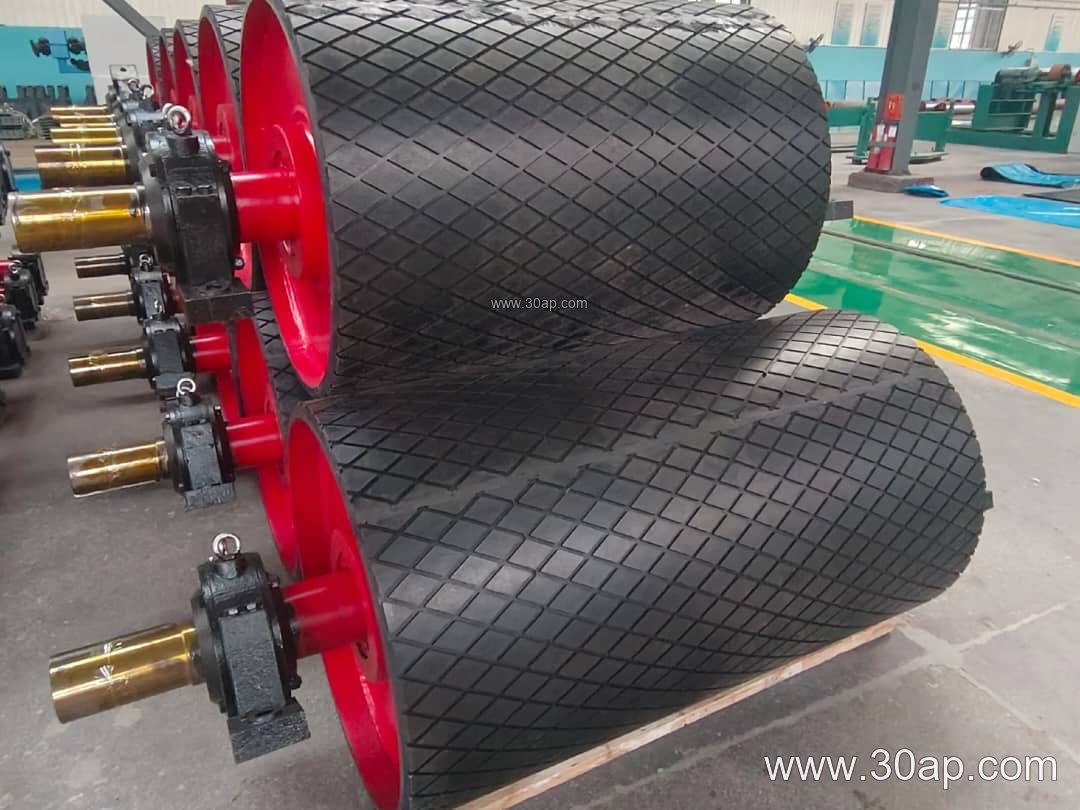
The shell is usually machined steel, and the lagging is applied in one of two general ways. In one, ceramic tiles are vulcanized into a rubber sheet that is then bonded to the drum. In the other, tiles are set directly into a rubber layer applied to the shell. Tiles are commonly arranged in a raised pattern so water and fines can escape from under the belt instead of being trapped.
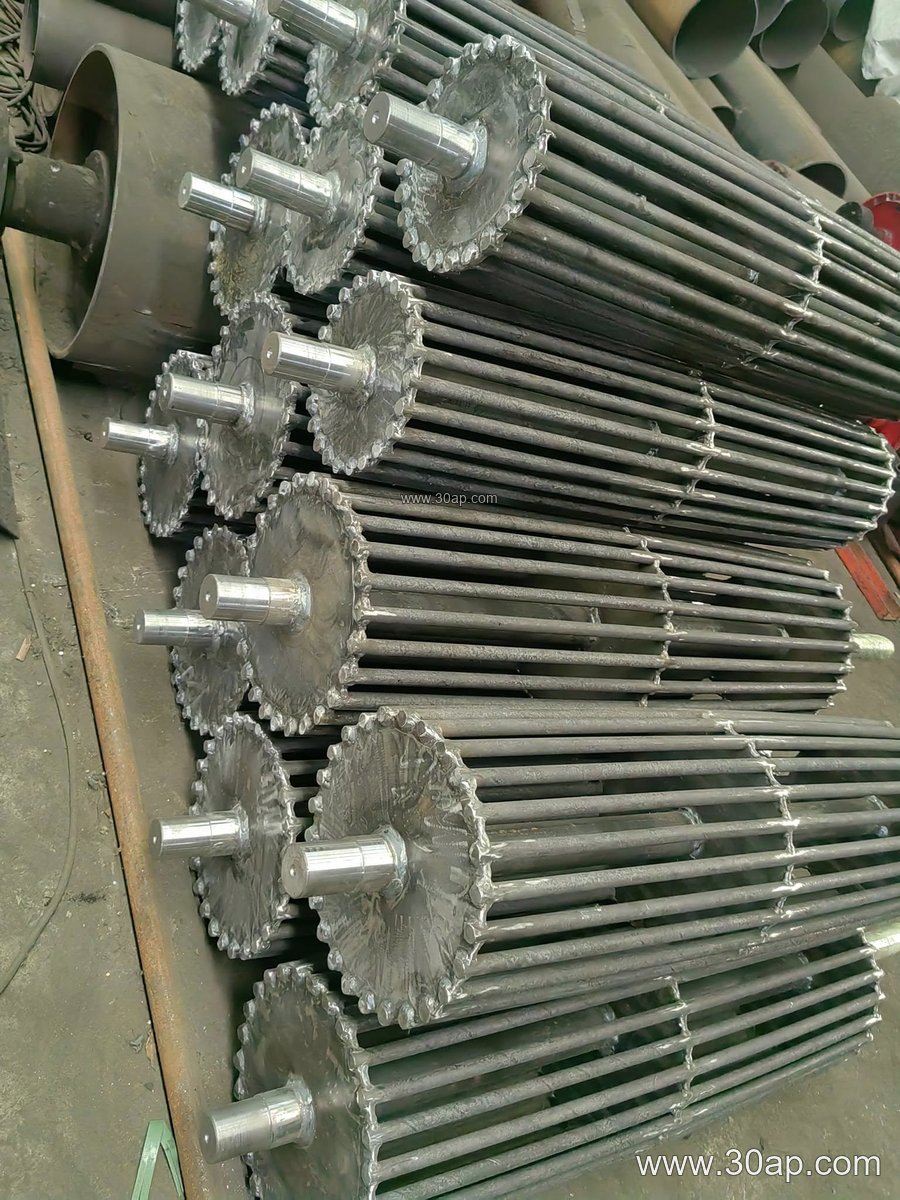
Typical lagging thicknesses are 8, 10, 12, 15, and 20 mm, with the ceramic layer adding grip at the contact face. The tile pattern and rubber hardness are selected for the belt and the material being conveyed, not simply for appearance.
Where It Fits in a Conveyor
Ceramic lagging is common in quarry and aggregate lines, coal preparation plants, cement plants, power station coal handling, and port bulk terminals. In these places the conveyor belt often runs in damp or gritty conditions, and a plain or rubber-lagged drum may slip. A ceramic lagged pulley helps maintain traction on the drive drum without resorting to very high belt tension.
It is also used on conveyors handling sinter, limestone, clinker, and similar abrasive bulk materials. The ceramic face resists the polishing and wear that smooth rubber can suffer over time. Where a smaller wrap angle or a wet discharge point limits grip, the raised ceramic pattern can be a practical choice.
Sizes and Selection Points
Pulley size is set by belt width, shaft load, and the required torque, so no single combination is universal. The table below shows common reference values, not fixed matches.
| Reference item | Common values |
|---|---|
| Belt width | B400, B500, B650, B800, B1000, B1200, B1400, B1600, B1800, B2000 |
| Pulley diameter | Ø200, Ø250, Ø315, Ø400, Ø500, Ø630, Ø800, Ø1000, Ø1250 |
| Lagging thickness | 8, 10, 12, 15, 20 mm |
| Shaft diameter | Ø50, Ø60, Ø70, Ø80, Ø90, Ø100, Ø120, Ø140, Ø160 |
Examples such as B800 × Ø500 or B1200 × Ø1000 are often quoted in project discussions, but the final diameter depends on belt speed, wrap angle, and tension. Shaft diameter is determined by torque and bearing load, not by belt width alone.
What Buyers Should Check
- Duty position. Confirm whether the pulley is a drive, head, tail, tension, or bend pulley. A ceramic lagged drive pulley and a ceramic lagged bend pulley are different duties.
- Belt and material. State the conveyor belt type, belt speed, and whether the material is wet, sticky, or abrasive. This affects tile pattern and rubber grade.
- Lagging specification. Ask for tile size, pattern, rubber hardness, and bond method, plus the lagging thickness.
- Mechanical fit. Check shell thickness, shaft diameter, bearing arrangement, and the conveyor bracket interface.
- Maintenance plan. Inspect tile loss and rubber cracking during shutdowns, and keep the pulley face clean so the pattern keeps working.
A ceramic lagged pulley is a wear part as much as a drive component. Matching it to the conveyor pulley duty, the belt, and the site conditions matters more than picking a size from a list.