What a Conveyor Idler Frame Does on the Line
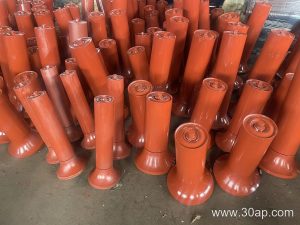
A conveyor idler frame is the structural bracket that holds idler rollers in position under and around the conveyor belt. It sets the trough angle, keeps the rollers spaced correctly, and transfers the load of the belt and material into the conveyor stringer or support structure. In a quarry, a coal handling plant, or a cement clinker line, the frame is a small component with a large effect on belt tracking and roller life.
The same product is often called an idler bracket, roller support frame, or idler mounting frame. These names describe the same fabricated assembly; they are not different products. Drive pulleys, tail pulleys, and bend pulleys are separate components and are never substitutes for an idler frame.
How the Frame Is Built
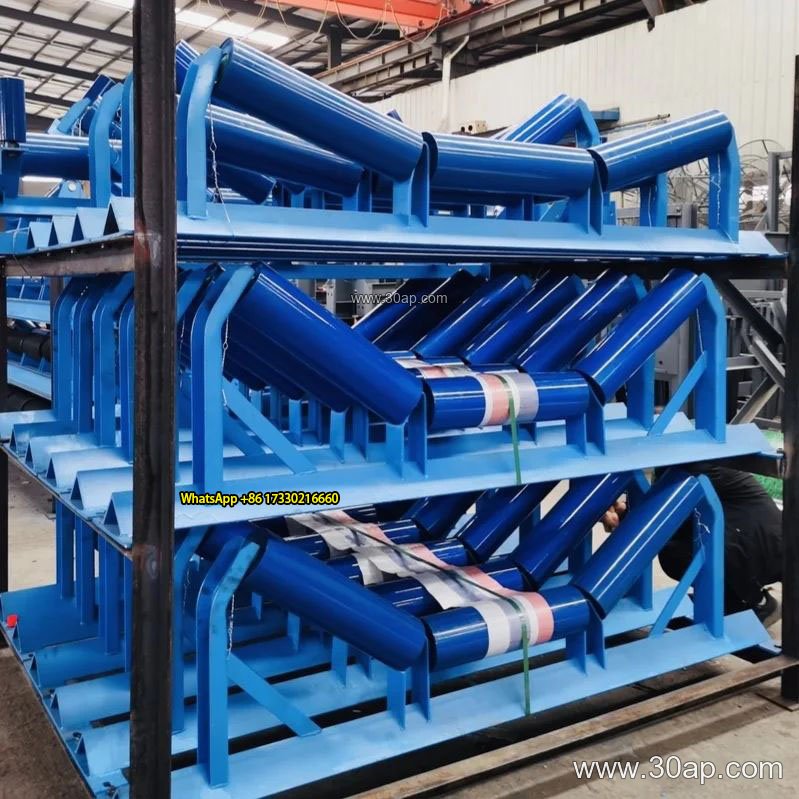
Most frames are fabricated from angle steel, channel steel, or folded steel plate. The crossbeam carries the mounting slots or holes for the idler roller shafts, while end plates or feet connect to the conveyor structure. Welded construction is common, with painted or galvanized finishes available depending on the environment.
Key build details a buyer should check include:
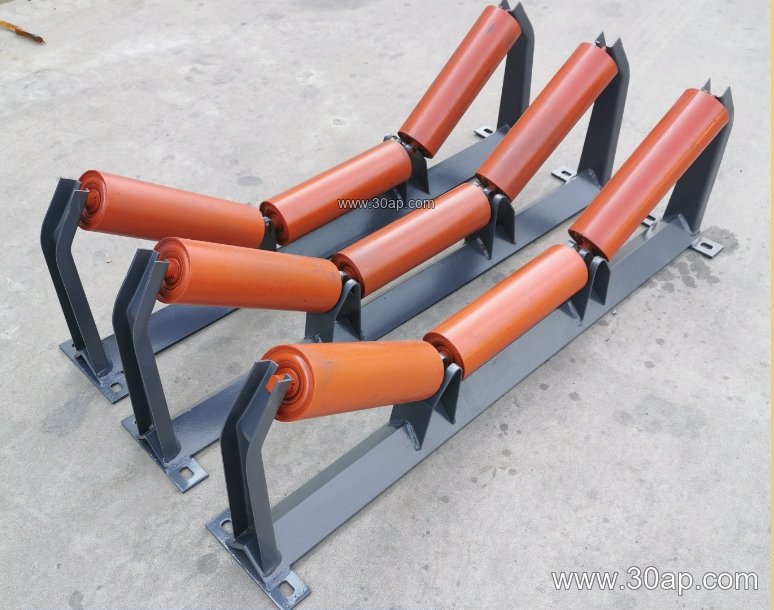
- Mounting hole spacing and crossbeam length, which vary with belt width and trough angle
- Roller diameter compatibility, since the shaft seat must match the idler roller shaft
- Frame stiffness under the weight of the loaded conveyor belt
- Corrosion protection for wet or dusty service
Mounting dimensions are not fixed numbers. They are determined by the belt width, trough angle, and roller diameter specified for each conveyor design.
Common Frame Types and Where They Sit
Troughing frames support the carrying side of the belt and are the most common type. Return frames support the empty belt on its way back. Transition frames sit near pulleys where the belt changes shape. Self-aligning frames help correct belt drift, and impact frames with buffer rollers are used at load points.
For comparison, a V-return frame is a distinct subtype used on the return strand; it is not a replacement for a troughing frame on the carrying side. Choosing between fixed and adjustable frames depends on whether the trough angle needs to change during operation or commissioning.
Typical Reference Data
The table below shows common reference values. These are examples, not mandatory combinations or verified supply commitments.
| Parameter | Common Reference Values |
|---|---|
| Belt width | B500, B650, B800, B1000, B1200, B1400, B1600, B1800, B2000, B2200 |
| Trough angle | 20°, 30°, 35°, 45° (adjustable frames cover a range) |
| Roller diameter | Ø89, Ø108, Ø133, Ø159, Ø194 |
| Forward tilt | Typically about 1.5° to 2° |
| Materials | Angle steel, channel steel, folded steel plate |
A frame might be described as B800, 35°, Ø108, or B1200, 45°, Ø133. Belt width does not lock a frame to one trough angle or one roller diameter; the combination is set by the conveyor design.
Where These Frames Are Used
Idler frames appear wherever a conveyor belt runs on rollers. In a limestone quarry or sand and gravel line, troughing frames carry heavy aggregate. In a power plant coal yard, return and self-aligning frames keep the belt centered through long runs. Similar assemblies are used in fertilizer plants, grain silos, and tunnel spoil handling systems.
The frame works together with the conveyor belt, idler rollers, and conveyor pulley. A misaligned frame can cause edge wear on the belt and premature roller failure, so installation accuracy matters as much as the frame itself.
Buyer Checklist
- Confirm belt width, trough angle, and roller diameter before ordering
- Ask for mounting hole spacing and crossbeam length drawings
- Match the frame material and finish to the site environment
- Decide between fixed and adjustable frames based on maintenance needs
- Check that frames fit the existing stringer or conveyor bracket pattern
Small details on a conveyor idler frame, from slot spacing to steel thickness, determine how well the belt runs and how long the rollers last. Ordering against a clear drawing is the simplest way to avoid fit problems on site.