What Is a Herringbone Grooved Lagged Pulley
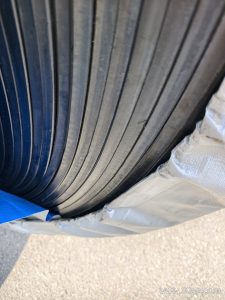
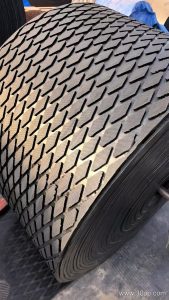
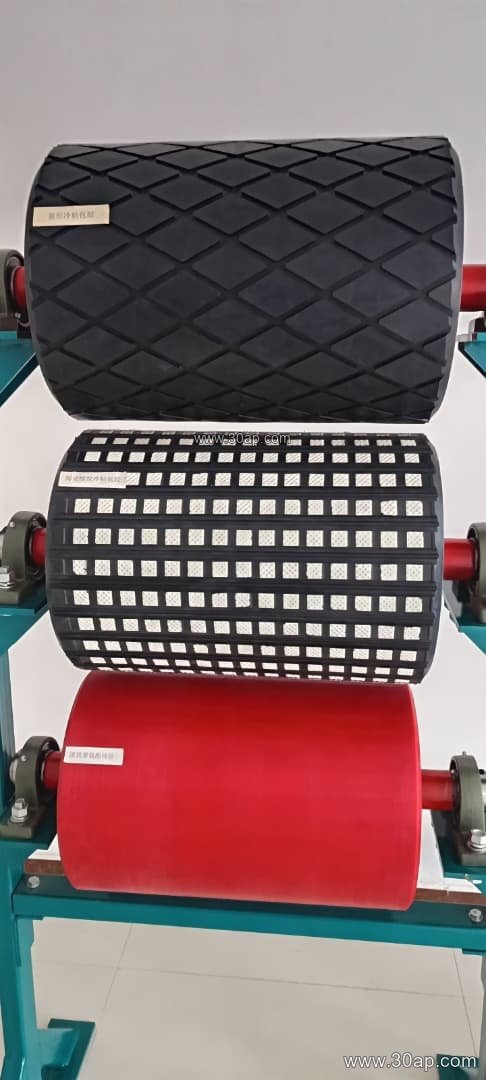
A herringbone grooved lagged pulley is a conveyor pulley whose shell is covered with a rubber lagging that carries a V-shaped herringbone groove pattern. This pattern is also called chevron grooving. The pulley is typically a drive or head pulley, but the same surface form can appear on a tail or bend pulley when extra grip and self-cleaning are needed. The herringbone grooves channel water, fine dust and slurry away from the contact patch, which helps maintain friction between the pulley and the conveyor belt in wet or dirty conditions.
Construction and Surface Details
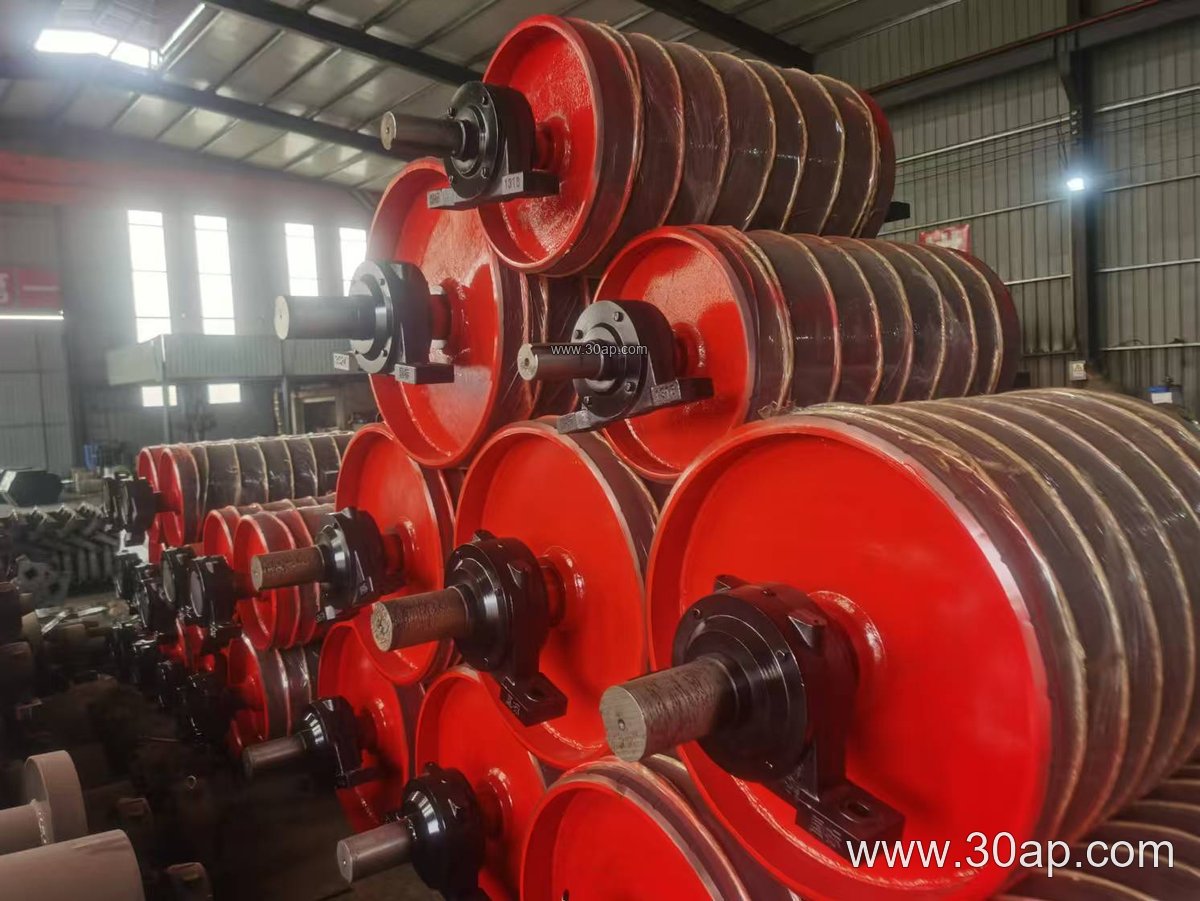
The base is a welded steel drum with a shaft, hubs and end discs sized for the torque and radial loads of the conveyor. Lagging is bonded to the shell, usually by hot vulcanization or cold bonding, and then the herringbone groove is cut or molded into the rubber. Common lagging thicknesses are 8, 10, 12, 15 and 20 mm. The groove depth and pitch are selected so the rubber can flex and shed material without weakening the bond. A herringbone lagged pulley is not the same as a plain lagged pulley; the groove pattern changes how the surface interacts with the belt and how debris is expelled.
Where It Fits in a Conveyor
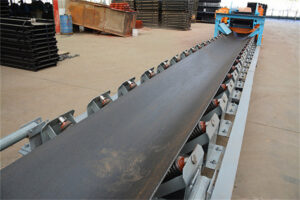
Drive pulleys need the highest traction, so the herringbone grooved lagged pulley is often found at the head of a belt conveyor in a quarry, limestone mine or sand and gravel plant. Tail pulleys and bend pulleys may use the same surface when the return side is wet or carrys fines. In a coal preparation plant or a power plant coal handling line, the grooved lagging helps the pulley run cleaner than a smooth rubber cover. The pulley works together with the conveyor belt, idler roller, conveyor bracket and other conveyor pulley components; the groove pattern does not replace proper belt tension or alignment.
Common Sizes and Combinations
Pulley diameter and face width are chosen from belt width, belt tension and shaft load, not from a single fixed table. The following reference values show typical relationships only; final dimensions are set by design.
- Belt width B400: pulley face about 500 mm, common diameters Ø200 to Ø315 mm
- Belt width B650: pulley face about 750 mm, common diameters Ø315 to Ø500 mm
- Belt width B800: pulley face about 950 mm, common diameters Ø400 to Ø630 mm
- Belt width B1000: pulley face about 1150 mm, common diameters Ø500 to Ø800 mm
- Belt width B1200: pulley face about 1400 mm, common diameters Ø630 to Ø1000 mm
- Belt width B1400: pulley face about 1600 mm, common diameters Ø800 to Ø1250 mm
- Belt width B1600: pulley face about 1800 mm, common diameters Ø1000 to Ø1400 mm
Examples such as B800 × Ø500 and B1200 × Ø1000 are common combinations, but a given belt width can match several pulley diameters. Shaft diameter is determined by torque and load; typical shaft sizes include Ø80, Ø100, Ø120, Ø140, Ø160 and Ø180 mm, and should not be guessed from belt width alone.
Buyer Checklist
Before ordering a herringbone grooved lagged pulley, confirm the belt width, pulley face width, shaft diameter and keyway, bearing centers, lagging thickness and rubber hardness. State whether the pulley is a drive, tail or bend pulley, because the duty changes the required traction and groove depth. Ask how the groove pattern is produced and how the lagging is bonded. For abrasive service such as iron ore or copper ore, check that the rubber grade suits the material. In cement plants and clinker lines, heat and dust may call for a different lagging compound. The pulley should be balanced and the groove pattern should be symmetrical so the belt tracks evenly. Finally, match the pulley to the conveyor bracket and take-up system so the belt does not slip or misalign after installation.