What an Aggregate Conveyor Idler Does on a Belt
An aggregate conveyor idler is the rotating roller that supports the conveyor belt along its carrying and return runs. In a quarry, crusher line or gravel plant, the belt may move hundreds of tonnes of crushed stone per hour, so the idler assembly has to carry that load while keeping friction low. The idler roller is not a single molded part; it is a tube with end discs, a shaft, bearings and a sealing arrangement, mounted in a frame or conveyor bracket.
Because the material is abrasive and often dusty, the idler is judged as much by its seals and bearing protection as by its tube wall. A smooth-running roller reduces belt drag, power draw and the chance of belt mistracking.
Construction Details That Matter
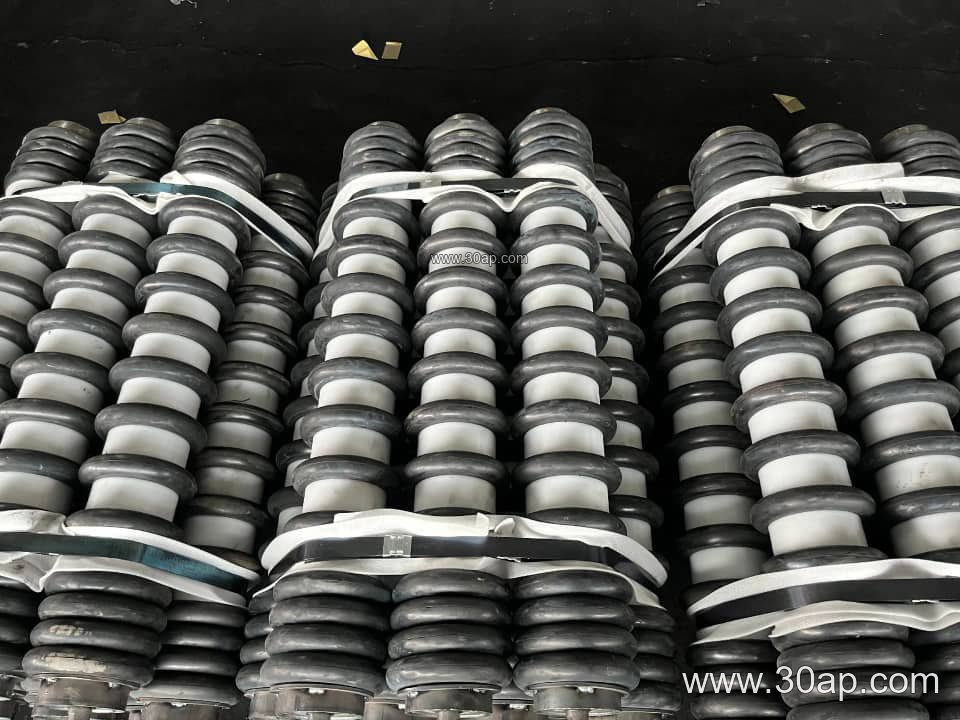
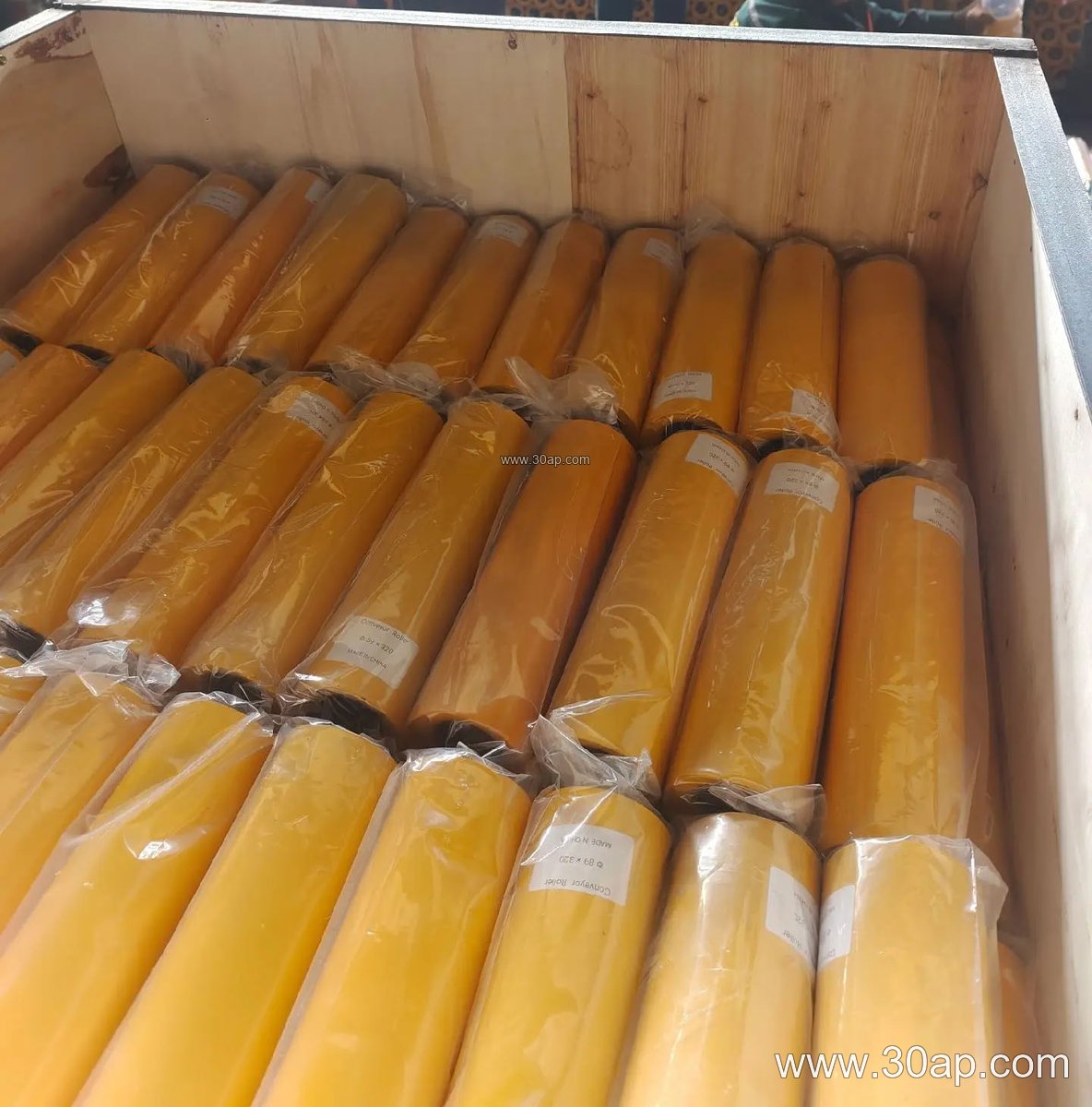
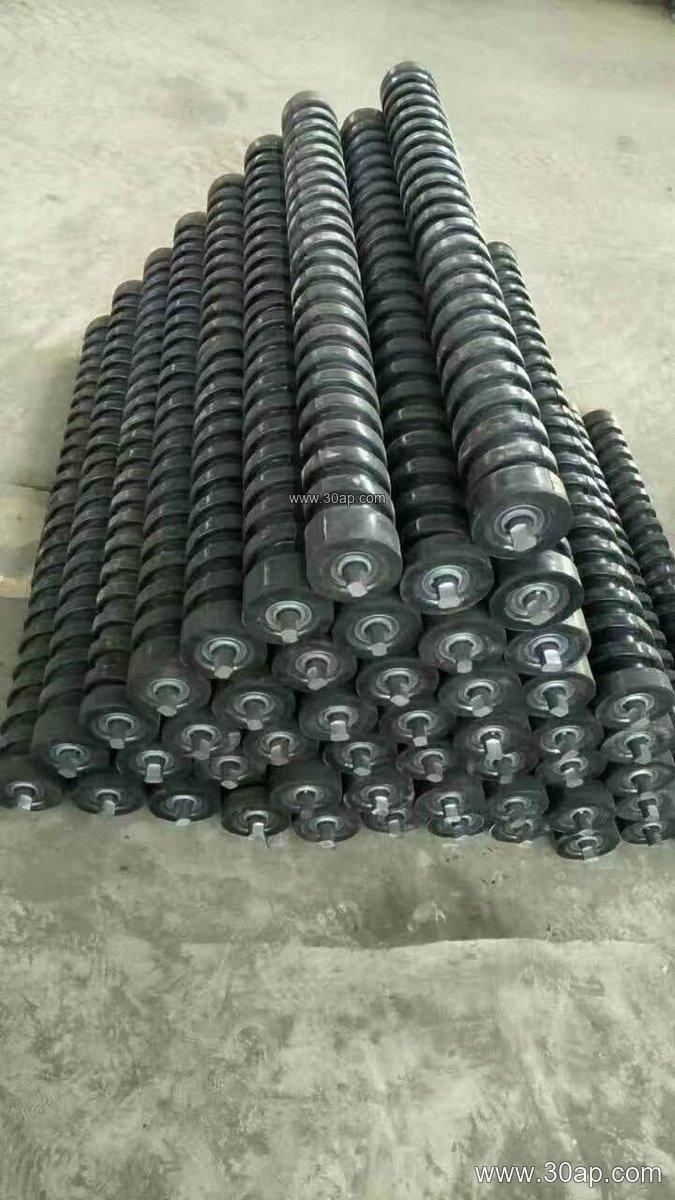
A typical unit uses a steel tube shell, welded bearing housings, a through shaft and deep-groove ball bearings. Common bearing references include 6204, 6205, 6305, 6306, 6308 and 6310, matched to the shaft and load rather than to belt width alone. Roller diameters commonly range from Ø63 and Ø76 up to Ø159, Ø178 and larger sizes for heavy service. The shell may be plain steel, nylon-coated, ceramic-covered or fitted with rubber rings, depending on whether the goal is wear life, material build-up control or impact absorption.
- Sealing: labyrinth or contact seals keep fines out of the bearing cavity.
- Tube wall: thicker walls resist denting at transfer points.
- Balance: a true-running roller limits vibration and belt noise.
Common Forms and Where They Sit
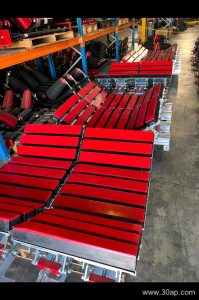
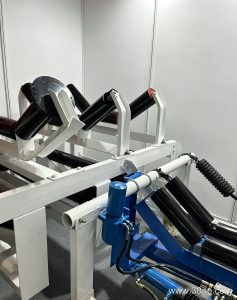
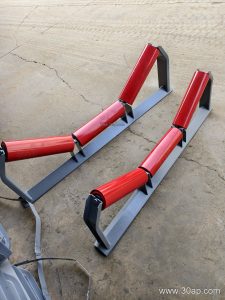
Troughing idlers are arranged as single-roll, two-roll or three-roll sets to shape the belt into a trough. Trough angles of 20, 30, 35 and 45 degrees are common, and the choice affects how much material the belt can hold and how the load sits on the belt edges. Return idlers support the empty belt; flat return and V-return forms are both used, with the V shape helping to center the belt.
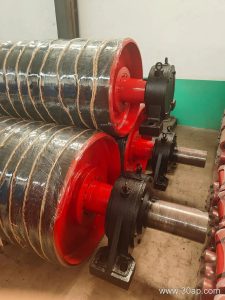
Impact or buffer idlers with rubber rings are placed under loading chutes where lumps drop onto the belt. Transition idlers ease the belt from the flat pulley area into the trough. Self-aligning idlers, including friction and tapered types, correct minor mistracking. Note that a drive pulley, tail pulley or bend pulley is a different component entirely and cannot be substituted for an idler in a support role.
Matching Roller Size to Belt Width
Belt width and trough angle together set the roll length and the frame geometry. The table below gives common reference values for three-roll troughing sets; side rolls and center rolls may differ, and final dimensions are set by the conveyor design.
| Belt width | Typical roll length (three-roll set) |
|---|---|
| B500 | about 200 mm |
| B650 | about 250 mm |
| B800 | about 315 mm |
| B1000 | about 380 mm |
| B1200 | about 465 mm |
| B1400 | about 530 mm |
| B1600 | about 600 mm |
| B1800 | about 670 mm |
| B2000 | about 750 mm |
Belt widths from B400 through B2400 appear in aggregate and mining conveyors, but no single belt width locks in one shaft diameter or one roller diameter. Those follow load, speed and shaft span.
Buying Notes for Plant Engineers
Start with the duty: material lump size, belt speed, tonnage and whether the location is a loading point. Specify the shell material and surface form, the bearing reference, the seal type and the frame or bracket pattern. For a dusty limestone or cement plant, seal quality often decides service life; for an iron ore or copper mine transfer point, impact resistance and tube wall thickness take priority. Spare parts should match the existing bracket centers and shaft ends so a roller can be changed without modifying the frame.
Inspect idlers periodically for seized bearings, worn shells and material build-up. Replacing a failed roller early protects the conveyor belt and the conveyor pulley from unnecessary wear. Keep a small stock of the most-used sizes and forms so a crusher line or coal handling system can return to service quickly.