What a Heavy-Load Pulley Does on a Conveyor
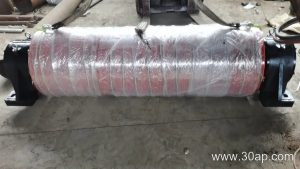
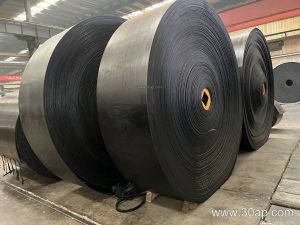
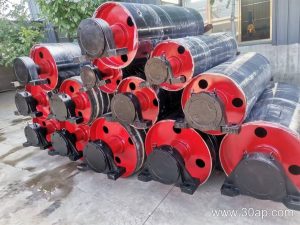
A heavy-load pulley is the drum that carries the conveyor belt at the head, tail, or intermediate turning points of a high-capacity system. In the field it is often called a heavy-duty conveyor pulley or a heavy-duty drum pulley, and both names describe the same component. Its job is simple to state and hard to execute: transfer torque to the belt, keep the belt tracking, and survive the loads that come from millions of tonnes of bulk material moving over years of service.
The word heavy-load is not a marketing label. It points to a real design difference. Ore from a copper mine, clinker from a cement plant, or overburden at a limestone quarry all put the pulley under conditions that a light conveyor drum would not tolerate: high belt tension, abrasive dust, impact at the loading point, and long operating hours.
How the Drum Is Built
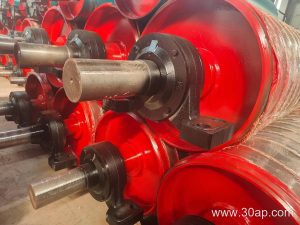
Most heavy-load pulleys share a common architecture. The shell is a rolled steel cylinder, machined at the ends and often machined on the face to keep the belt contact true. End discs are welded or shrink-fitted to the shell and connect to the hub. The hub carries the shaft, and the shaft runs in bearing housings mounted on a conveyor bracket at each side of the frame.
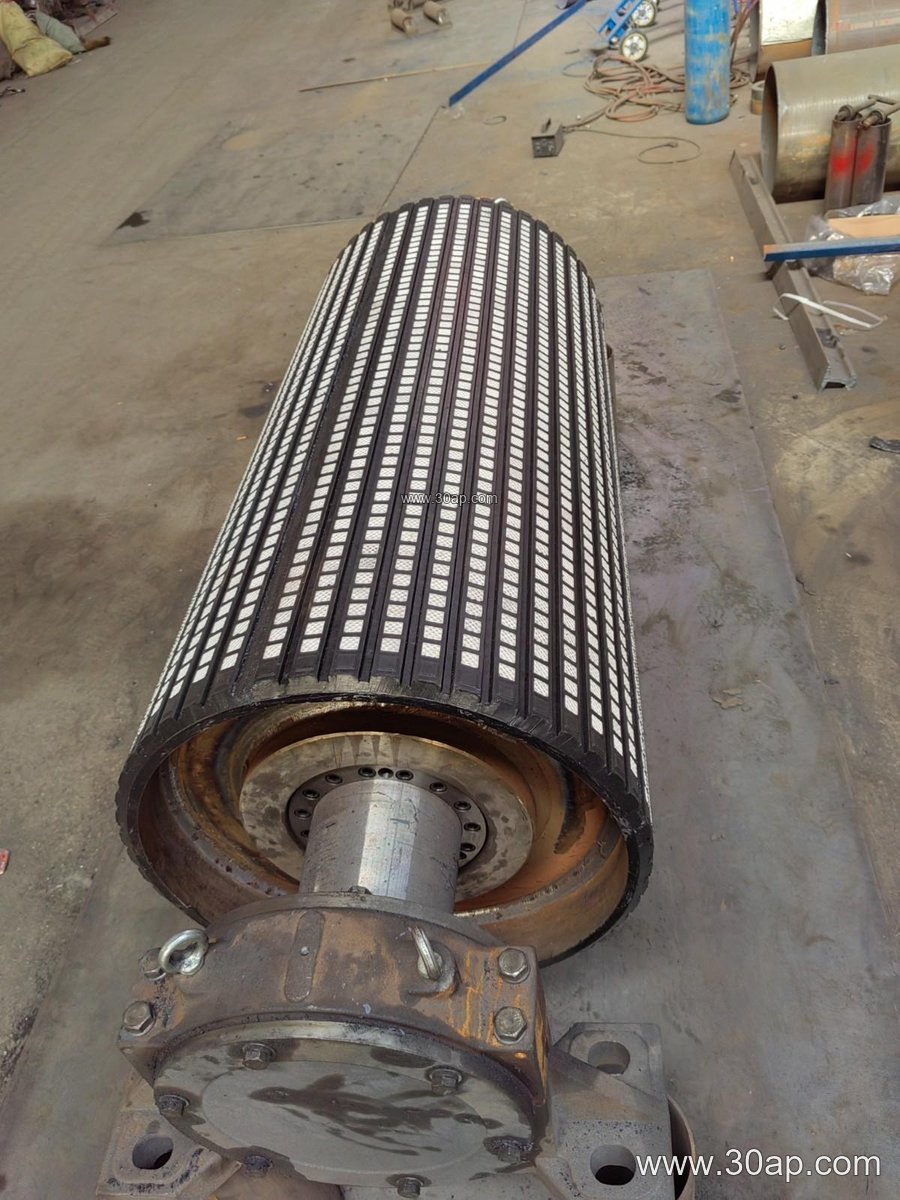
Key structural details that separate heavy-duty work from light duty include:
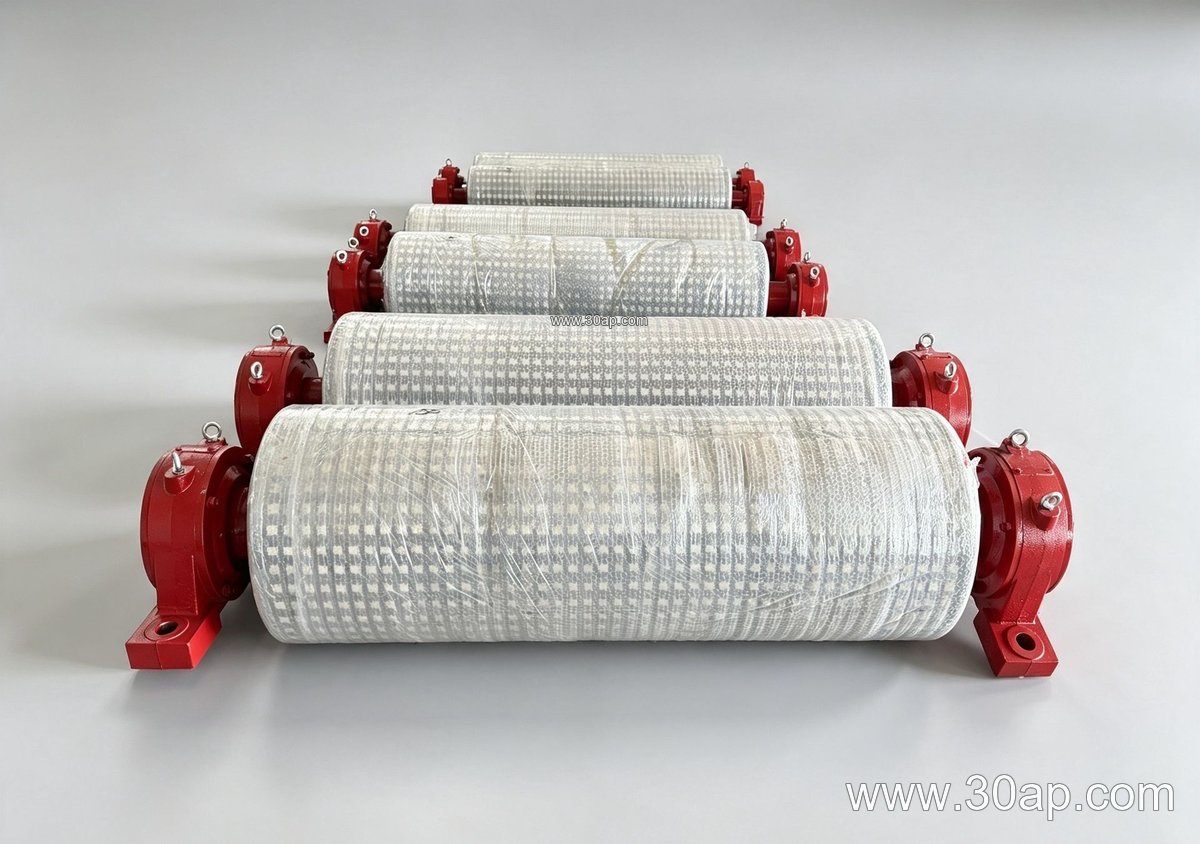
- Thicker shell plate and reinforced weld seams at the disc-to-shell joint.
- Shaft diameter sized from torque and radial load, not from belt width alone. Common shaft sizes run from Ø50 to Ø200 mm, but the value must follow the actual load case.
- Bearing selection matched to the continuous load and to the misalignment that occurs when the frame settles.
- Surface treatment chosen for grip and wear, from plain finished face to rubber or ceramic lagging.
Surface Options and Their Practical Use
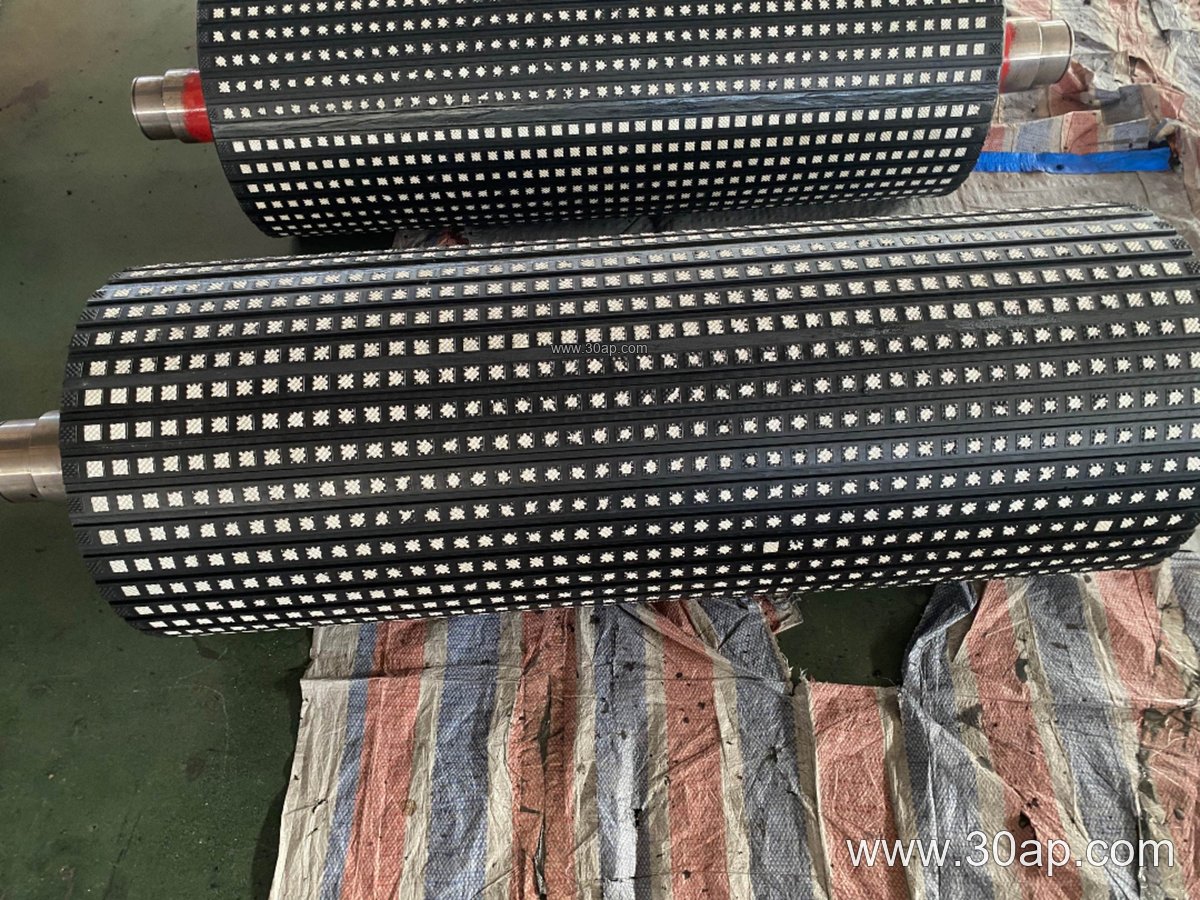
Lagging is where many heavy-load pulley decisions are made. A bare steel face can work on a clean, dry return position, but it slips once dust or moisture appears. Rubber lagging, applied by hot vulcanizing or cold bonding, raises friction and protects the shell. Diamond and herringbone patterns help shed water and fines, which matters on a belt that sees wash-down or wet ore. Ceramic lagging is used where abrasion is severe and slip cannot be tolerated.
Common lagging thicknesses are 8, 10, 12, 15, and 20 mm. Thicker is not automatically better: it adds weight and cost, and it must match the pulley diameter and the belt tension. A plain face, cast rubber, hot-vulcanized rubber, cold-bonded rubber, diamond, herringbone, ceramic, and flat rubber are all standard options, and each should be selected against the actual material and duty.
Matching Diameter and Belt Width
Diameter and face width are decided together with the belt and the drive. Face width is normally a little wider than the belt so the belt is fully supported: B400 often pairs with about 500 mm face, B800 with about 950 mm, B1200 with about 1400 mm, and B1600 with about 1800 mm. Diameter follows the belt speed, the required wrap angle, and the torque to be transmitted. Typical combinations include B800 × Ø500, B1200 × Ø1000, and B1400 × Ø800, but these are examples, not fixed rules. A wider belt does not force one diameter, and no diameter should be inferred from belt width without checking tension and torque.
| Belt width | Typical face width | Example diameter |
|---|---|---|
| B400 | about 500 mm | Ø250–Ø400 |
| B650 | about 750 mm | Ø315–Ø500 |
| B800 | about 950 mm | Ø400–Ø630 |
| B1000 | about 1150 mm | Ø500–Ø800 |
| B1200 | about 1400 mm | Ø630–Ø1000 |
| B1400 | about 1600 mm | Ø800–Ø1250 |
Note that the diameter ranges above are illustrative. The correct value comes from the conveyor design, including belt tension and the drive arrangement.
Where It Fits in the Plant
Heavy-load pulleys appear at the head of a primary crushing line, at the tail of a long overland conveyor, and at tension or bend positions where the belt changes direction. In a coal preparation plant they run under wet, fine material; in a power station coal yard they handle continuous tonnage with little downtime; in a sand and gravel plant they face abrasive grit and frequent starts. The position matters: a head pulley transmits the drive torque, a tail pulley mainly guides and tensions, and a bend pulley only redirects. These roles are not interchangeable, and a heavy-load drum should be specified for the role it actually performs.
What Buyers Should Check
Before ordering, confirm the belt width and the required face width, the shaft diameter that follows from the torque and load, the lagging type and thickness, and the bearing and housing arrangement. Ask how the pulley will be balanced and how the lagging is bonded. Check that the conveyor bracket and bearing centers match the frame. Finally, keep spare lagging and inspection records, because a heavy-load pulley is only as reliable as the maintenance around it, including the conveyor belt, the idler roller set, and the supporting structure.