What an Intermediate Bend Pulley Does
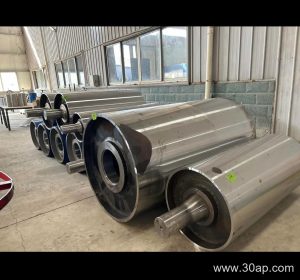
An intermediate bend pulley is a non-driven conveyor pulley that changes the direction of the conveyor belt between the head and tail of the machine. It is often placed where the belt must be guided around an obstacle, routed into a take-up zone, or wrapped onto a drive pulley with a larger contact angle. Unlike a drive pulley, it transmits no drive torque, and unlike a tail pulley, it does not normally receive the returning belt at the loading end. In many layouts it also acts as a snub or take-up pulley, increasing belt wrap and helping to hold tension in the system.
Because the intermediate bend pulley carries belt tension without driving, its design centres on smooth rotation, accurate alignment and stable bearing support rather than on high-friction transmission. In a quarry, a coal preparation plant or a cement clinker line, a poorly aligned bend pulley will quickly show up as belt wander, edge wear and noise.
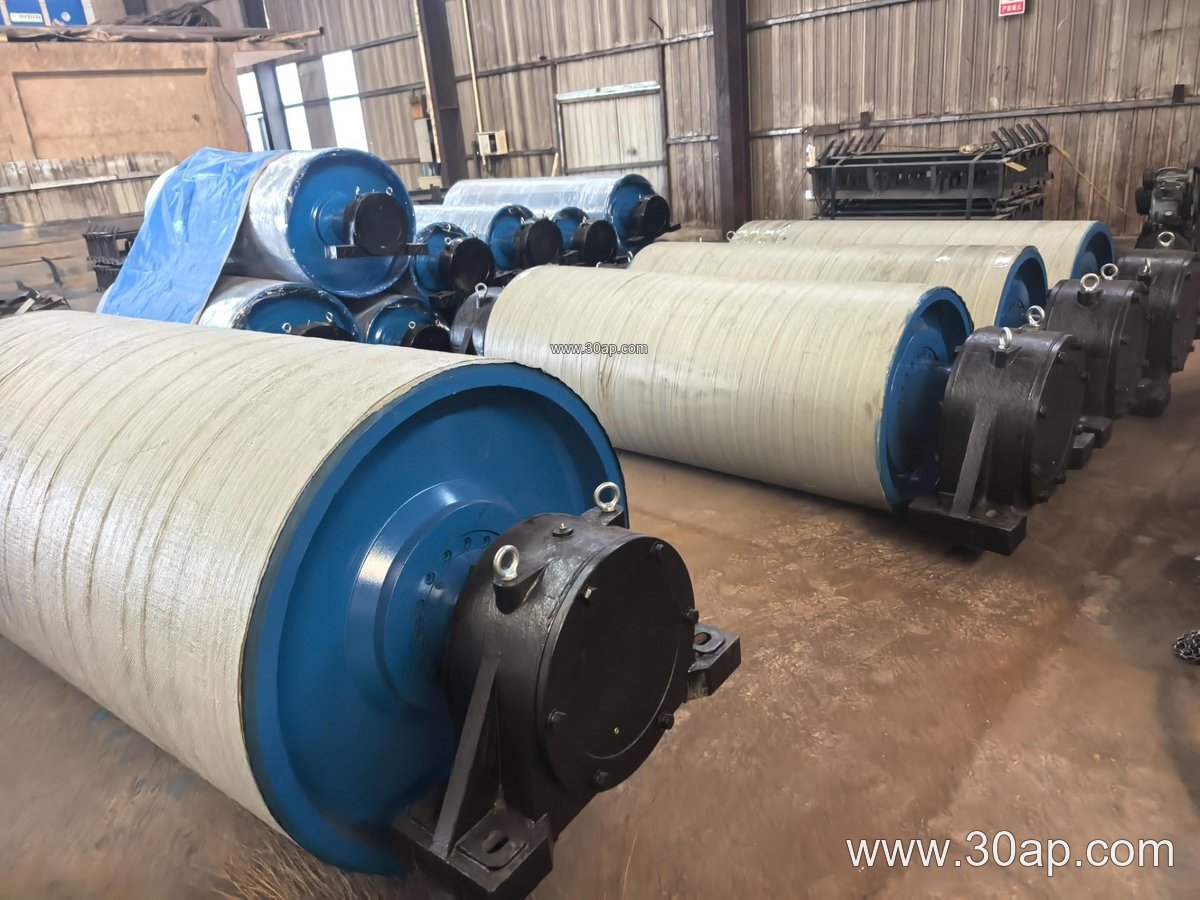
Construction and Surface Options
The pulley body is usually a welded steel shell with end discs and a through shaft, mounted on self-aligning bearings in pillow blocks or in a conveyor bracket fixed to the conveyor frame. Lagging is optional on this pulley type. A plain finish may be enough where the pulley only redirects the belt, while rubber or ceramic lagging is chosen when extra grip or protection against abrasive dust is needed.
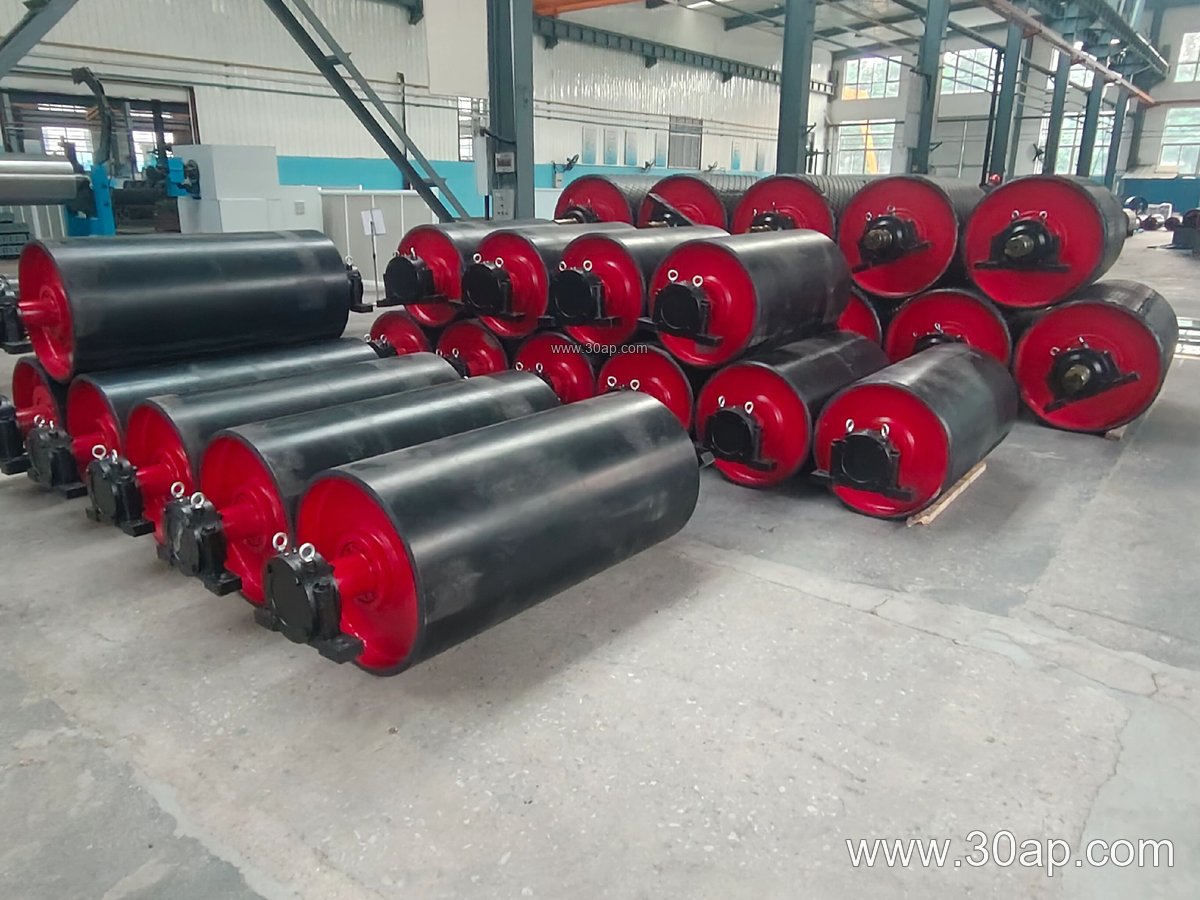
Common surface forms include plain, vulcanised rubber, cold-bonded rubber, diamond grooved and ceramic lagging. Lagging thickness is often 8, 10, 12, 15 or 20 mm, selected according to belt speed, dust and the consequence of slip. For a secondary bend position where slip is not critical, a plain or lightly lagged shell is often sufficient.
Typical reference data (indicative, not a supply promise)
| Belt width | Typical shell face width | Example diameter range | Common shaft diameters |
|---|---|---|---|
| B500 | about 600 mm | Ø200 to Ø400 | Ø50 to Ø80 |
| B650 | about 750 mm | Ø250 to Ø500 | Ø60 to Ø90 |
| B800 | about 950 mm | Ø315 to Ø630 | Ø70 to Ø100 |
| B1000 | about 1150 mm | Ø400 to Ø800 | Ø80 to Ø120 |
| B1200 | about 1400 mm | Ø500 to Ø1000 | Ø90 to Ø140 |
| B1400 | about 1600 mm | Ø630 to Ø1000 | Ø100 to Ø160 |
These figures are for orientation only. A B1200 belt may work with a Ø500 pulley in a light duty route or a Ø1000 pulley where wrap length and belt stiffness demand it. Shaft size follows torque, bearing span and load, not belt width alone.
Where It Fits in a Conveyor
In a power plant coal handling system, an intermediate bend pulley is frequently used to route the return strand under a transfer tower or to add wrap before a take-up. In a sand and gravel aggregate line, it may sit between the head pulley and the gravity take-up to keep the belt clear of the discharge chute. It is also common on stackers, ship loaders and long overland conveyors where the belt path cannot be a simple straight run.
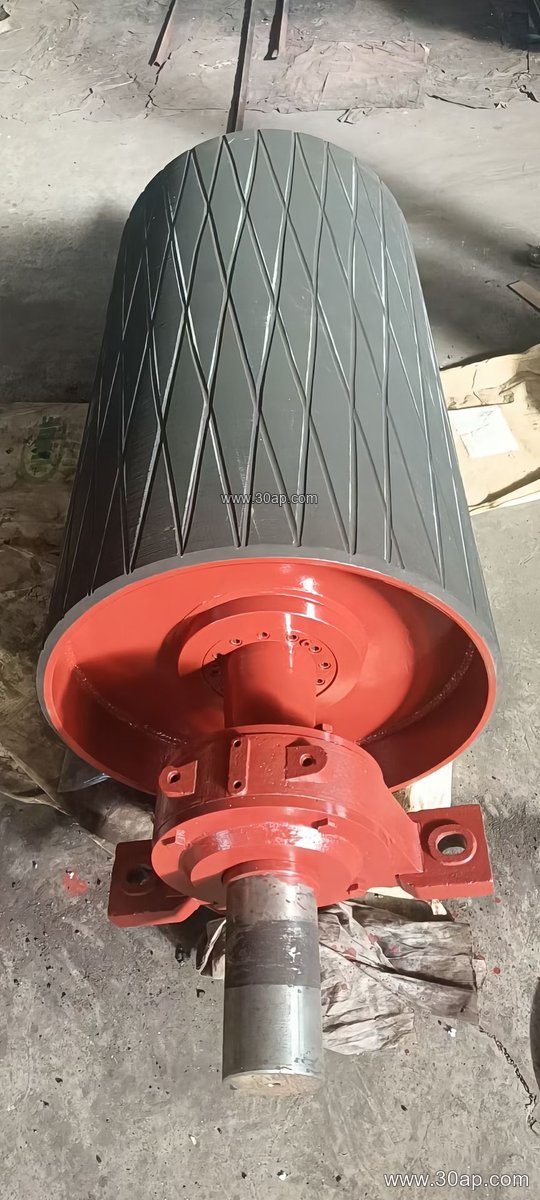
A bend pulley should not be confused with a drive pulley or a tail pulley. Those positions carry different loads and require different lagging and shaft designs. A bend pulley may appear similar in shape, but its duty is guidance and wrap, not power transmission or belt reception.
Selection and Maintenance Notes
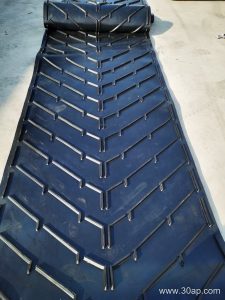
- Confirm the belt path and the required wrap angle before choosing the diameter; a larger pulley reduces bending stress in the conveyor belt.
- Match the shell face width to the belt width with a small margin, for example about 950 mm for B800 or about 1400 mm for B1200.
- Choose lagging only where grip, wear protection or noise reduction justifies it; plain shells are common in secondary bend positions.
- Check bearing type, sealing and lubrication access, especially in dusty cement or crushing circuits.
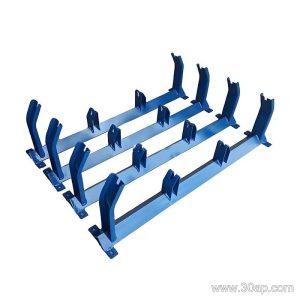
- Verify alignment with the conveyor frame and the adjacent idler roller stations so the belt trains correctly.
- Inspect for shell wear, lagging looseness and bearing play during scheduled shutdowns.
When specifying an intermediate bend pulley, share the belt width, belt speed, expected tension, available space and the position in the conveyor with the supplier. That information matters more than a single catalogue number, because the same pulley size can serve very different duties in a mine, a fertiliser plant or a grain silo conveyor.