What a Heavy-Load Pulley Is
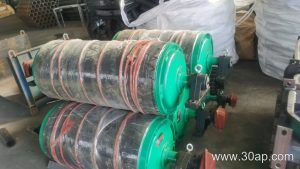
A heavy-load pulley is a conveyor pulley engineered around high belt tensions, abrasive bulk material, and continuous operation. In a quarry, a limestone mine, or a cement plant clinker line, the pulley at the head or tail of the conveyor is not a light-duty component. It carries the full pull of the conveyor belt, transfers torque to the shell, and keeps the belt tracking through thousands of hours of service. The same product is often called a heavy-duty conveyor pulley, and both names describe the same item. Drive, tail, and bend pulleys perform different jobs and are not interchangeable, so the position in the conveyor matters as much as the load rating.
Construction and Load Path
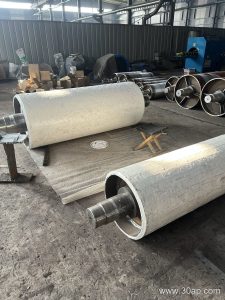
The shell is usually a rolled steel drum with machined end discs, welded to a shaft or to hubs. In heavy-duty service, the shaft diameter is determined by torque and bending load rather than by belt width alone; common shaft sizes include Ø100, Ø120, Ø140, Ø160, Ø180, and Ø200, with smaller shafts used on lighter positions. Bearings are selected for the radial load and for the tension from the conveyor belt, and the bearing housings are bolted to a conveyor bracket that aligns with the frame.
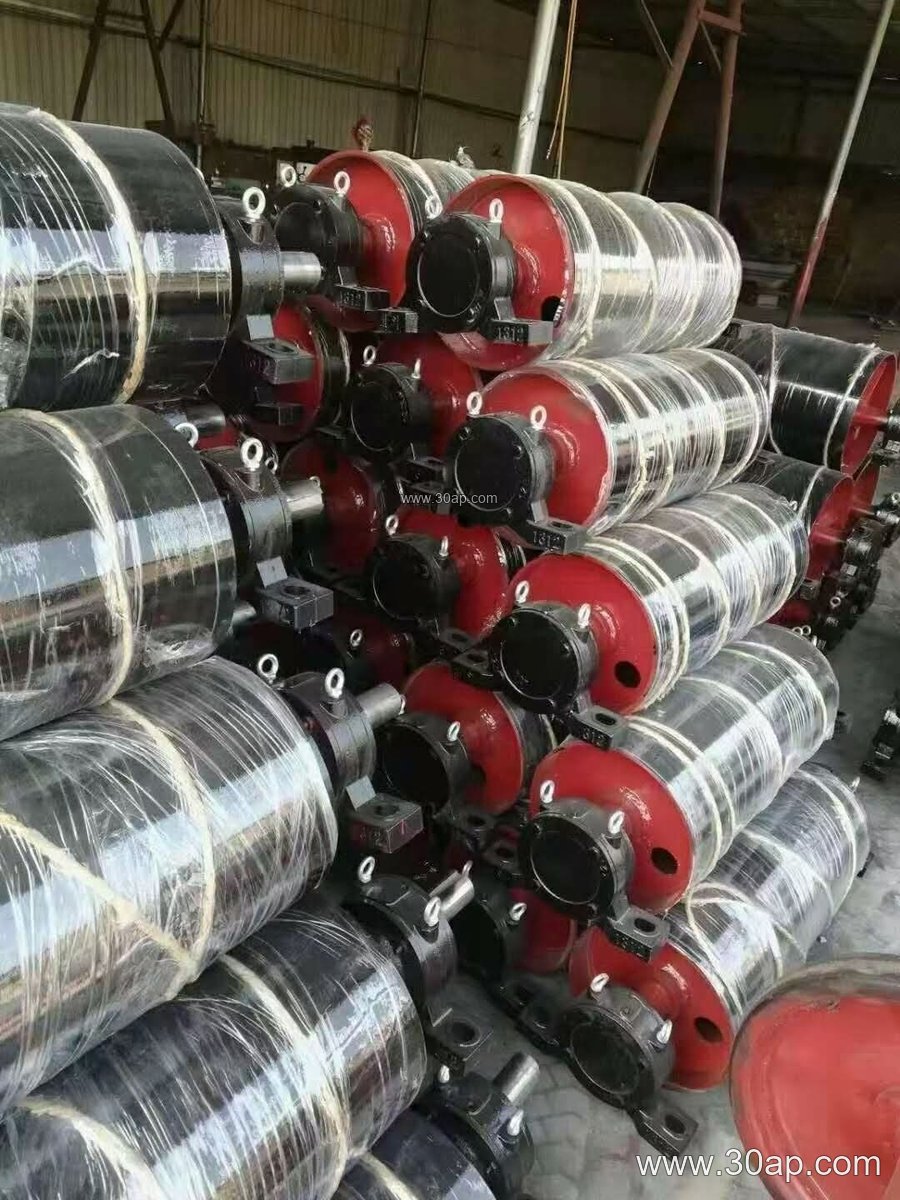
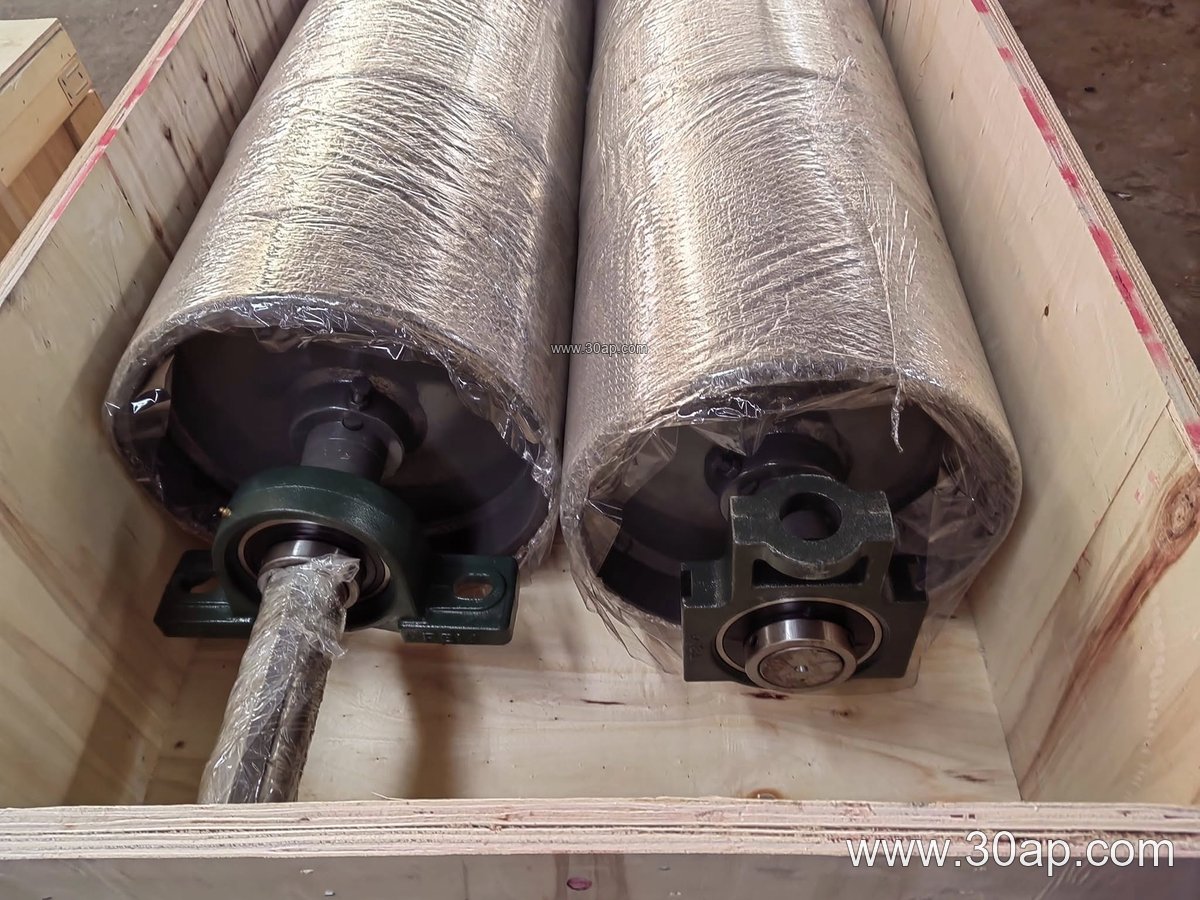
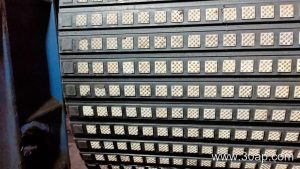
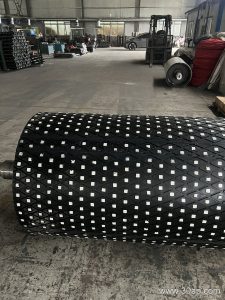
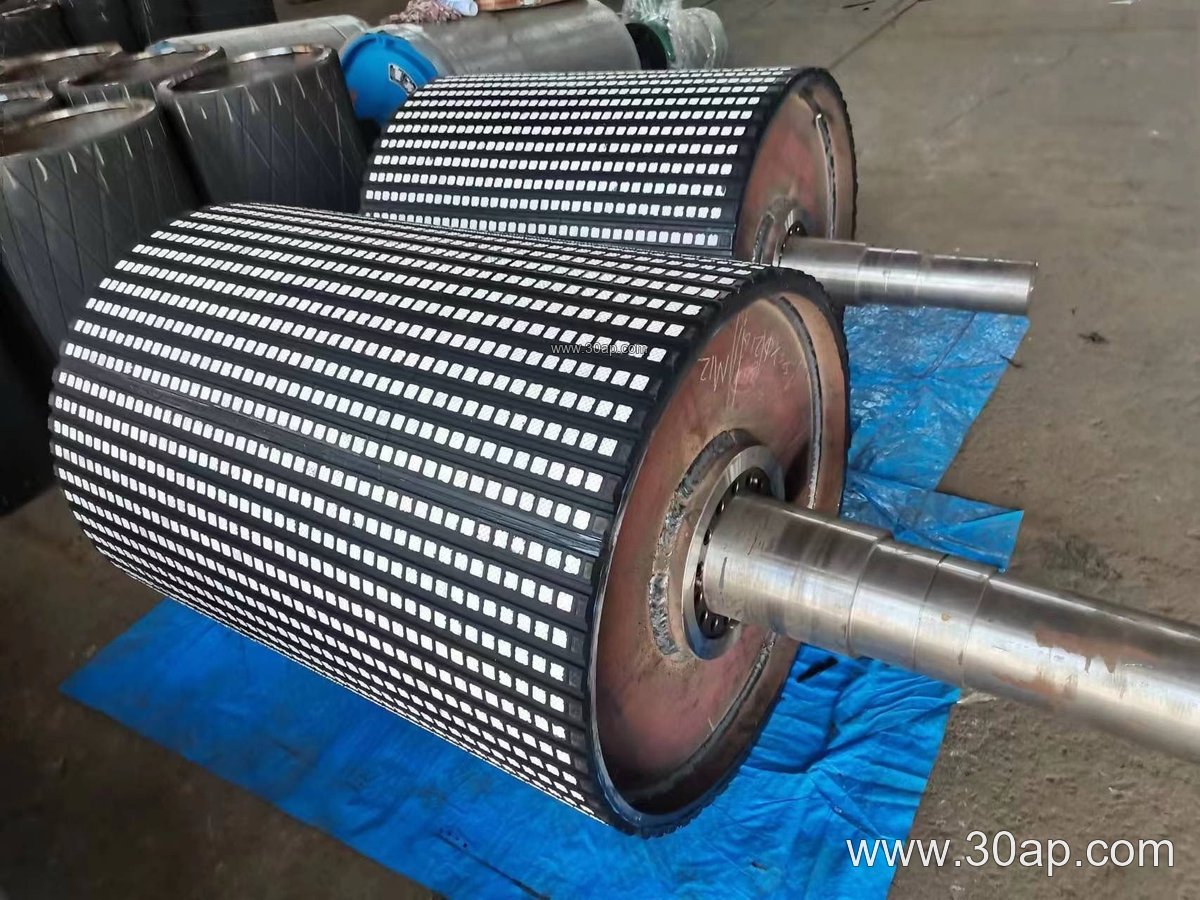
Lagging protects the shell and improves grip. A heavy-load pulley may be supplied with plain finish, cast rubber, cold-bonded rubber, hot-vulcanized rubber, diamond groove, herringbone, ceramic, or flat lagging, typically 8, 10, 12, 15, or 20 mm thick. Diamond and herringbone patterns help shed water and fines, while ceramic lagging suits highly abrasive conditions. None of these surfaces is a substitute for correct tensioning, and lagging choice should follow the material and the pulley position.
Where It Fits in the Conveyor
At the head of a coal handling system in a power plant, the drive pulley transmits power from the gearbox to the belt. At the tail, a tail pulley turns the belt back into the carrying run. Bend and snub pulleys change belt direction and increase wrap angle around the drive. Each position loads the pulley differently, and a heavy-load pulley used as a drive pulley needs a different shaft and bearing calculation than the same shell used as a bend pulley. A conveyor pulley working in a crushing and screening circuit may face shock loads from lump ore, while one in a grain silo handles a cleaner but still continuous duty.
Common Sizes and Combinations
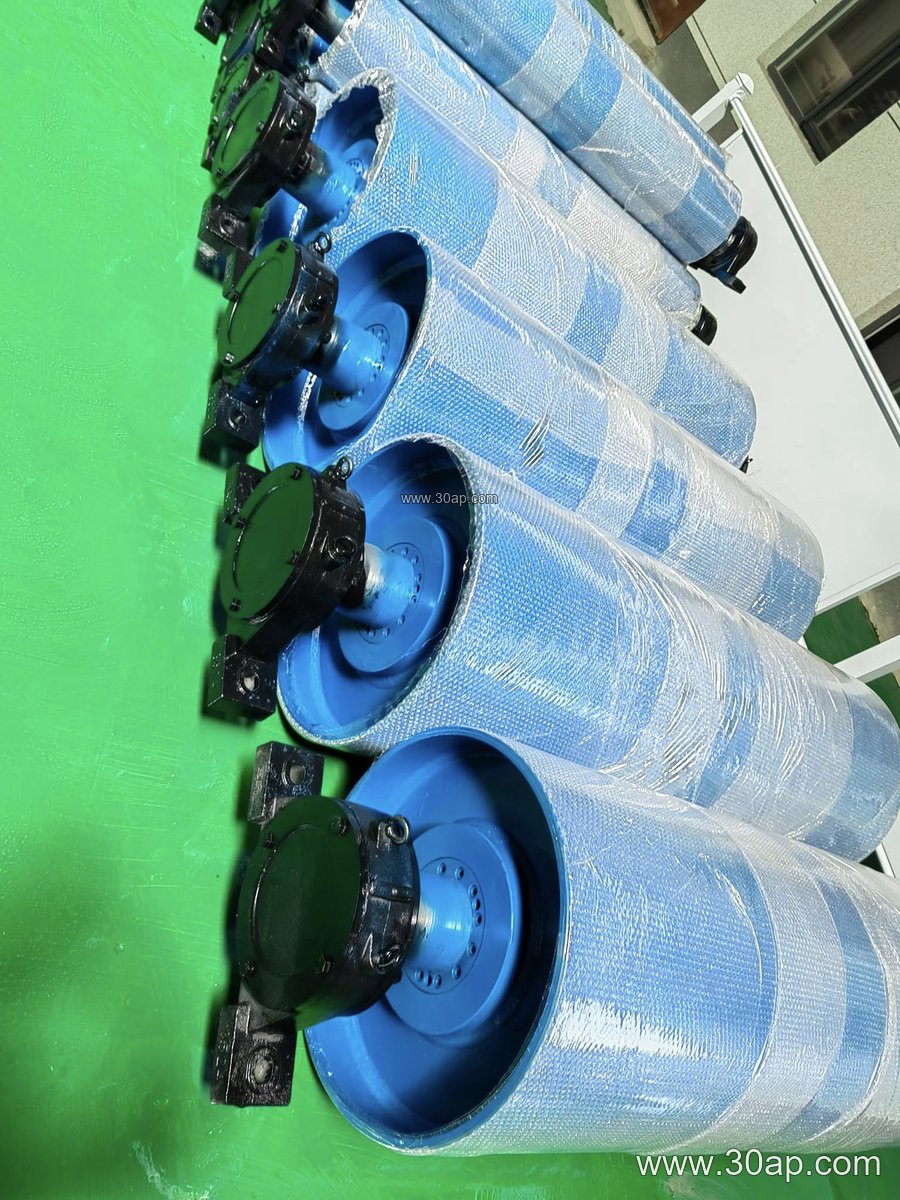
Diameter and face width are matched to the belt and to the conveyor layout. Face width is normally a little wider than the belt, and diameter follows the belt thickness, wrap angle, and tension. Reference values below are typical examples, not fixed pairings; the final combination is set by design.
- Belt width B800 with face width around 950 mm, often paired with Ø400 or Ø500 diameter
- Belt width B1000 with face width around 1150 mm, often paired with Ø500 or Ø630 diameter
- Belt width B1200 with face width around 1400 mm, often paired with Ø630 or Ø800 diameter
- Belt width B1400 with face width around 1600 mm, often paired with Ø800 or Ø1000 diameter
- Belt width B1600 with face width around 1800 mm, often paired with Ø1000 or Ø1250 diameter
A single belt width can work with more than one pulley diameter. For example, B1200 may run with Ø800 in one conveyor and Ø1000 in another, depending on belt tension and the space available. Shaft diameter is never derived from belt width alone.
Buyer Checklist
Before ordering, confirm the pulley position, the belt width and type, the calculated belt tension, the required diameter, the lagging form and thickness, and the shaft and bearing arrangement. Ask how the shell, end disc, and hub are welded and machined, and whether the pulley will be balanced for the intended belt speed. Check that the conveyor bracket and bearing housing dimensions match the existing frame. For a mine or a steel plant, specify the dust and water exposure so the bearing seal and lagging can be chosen accordingly. Keep spare idler rollers and a spare pulley for critical drives, and record the shaft and bearing numbers on the drawing for future replacement.