What a Heavy-Duty Lagged Pulley Does on a Conveyor
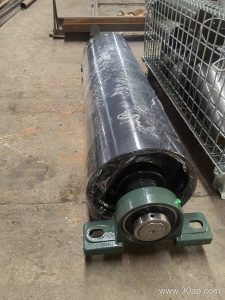
A heavy-duty lagged pulley is a conveyor pulley built for sustained torque, high belt tension and abrasive or wet conditions. The lagging is the sacrificial layer bonded to the drum shell; it raises friction between the drum and the conveyor belt, protects the shell from wear and can help shed material. In a quarry or a limestone mine, that extra grip often decides whether the drive can start a fully loaded belt without slipping.
It is worth separating the family members. A drive pulley transmits power, a tail pulley turns the belt at the return end, and a bend pulley changes belt direction without driving. These are different duties and are not interchangeable. A lagged drive pulley is the usual focus of this article; a bend pulley may be mentioned only for comparison, because it normally carries far less torque.
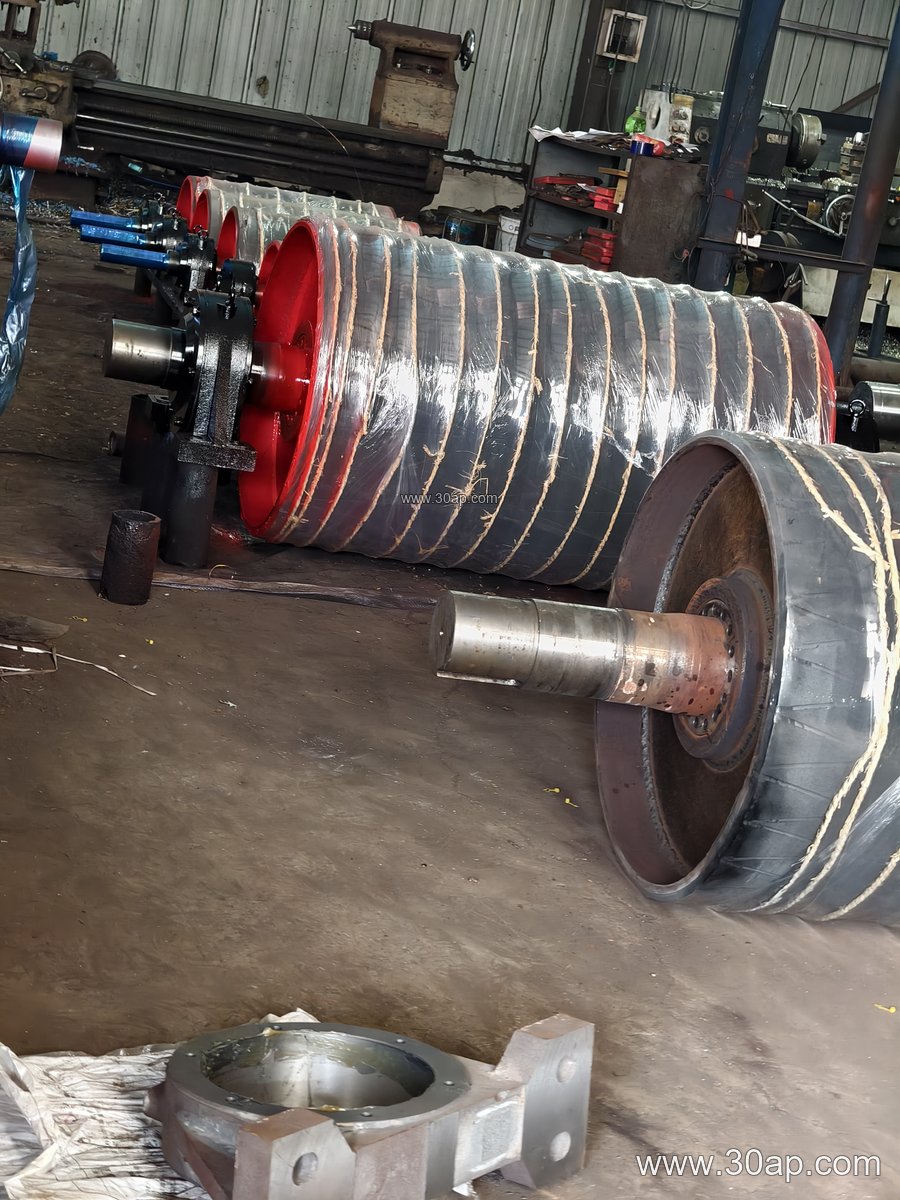
Construction and Surface Options
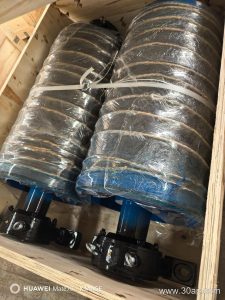
The core is typically a welded steel shell with machined end discs, a shaft, bearing housings and a hub connection. Heavy-duty versions use thicker shells, reinforced welds and larger shafts to resist bending and fatigue. The lagging can be supplied in several forms, and the choice depends on the material and the environment rather than on fashion.
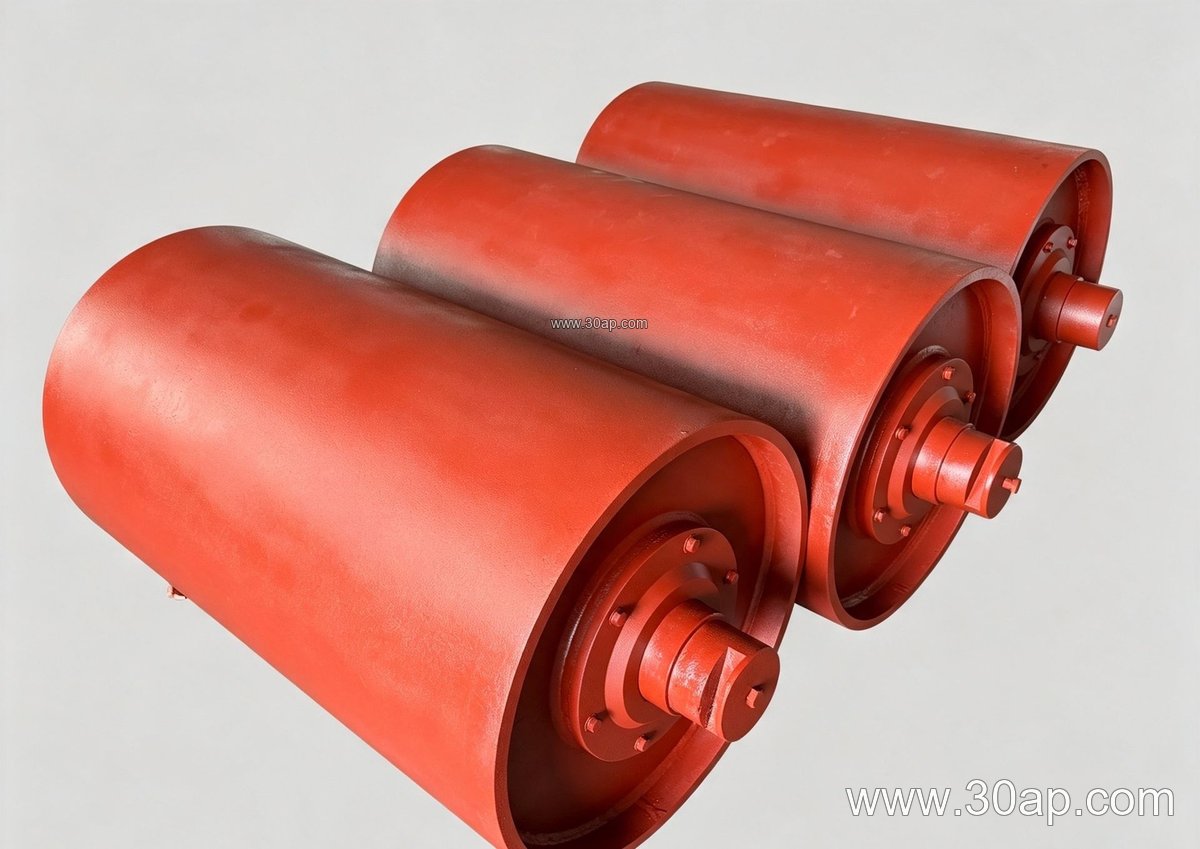
- Plain or flat rubber lagging for general bulk handling
- Hot vulcanised or cold-bonded rubber for a strong, repairable bond
- Diamond groove pattern to improve water and fines drainage
- Herringbone pattern for reversible belts where tracking matters
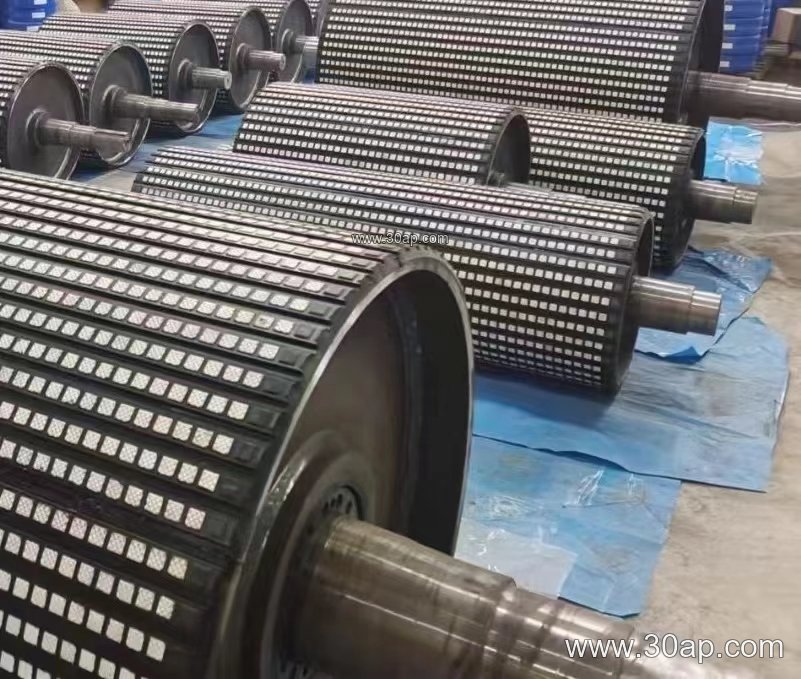
- Ceramic lagging for highly abrasive service such as sinter or iron ore
Common lagging thicknesses are 8, 10, 12, 15 and 20 mm. Thicker lagging is not automatically better; it must match the pulley diameter, the belt tension and the expected wear rate. A ceramic tile surface may suit a wet, gritty transfer point, while a plain rubber face may be adequate on a clean aggregate line.
Typical Sizes and How Diameter Is Chosen
Pulley size is driven by belt width, shaft load, belt stiffness and the required wrap angle. The shell face is normally wider than the belt so the belt is supported across its full width. The following combinations are common reference points, not fixed rules.
| Belt width | Typical shell face | Example diameter |
|---|---|---|
| B400 | about 500 mm | Ø250 to Ø400 |
| B650 | about 750 mm | Ø400 to Ø630 |
| B800 | about 950 mm | Ø500 to Ø800 |
| B1000 | about 1150 mm | Ø630 to Ø1000 |
| B1200 | about 1400 mm | Ø800 to Ø1000 |
| B1400 | about 1600 mm | Ø800 to Ø1250 |
| B1600 | about 1800 mm | Ø1000 to Ø1400 |
A B1200 x Ø1000 drive pulley and a B800 x Ø500 tail pulley are both plausible, but one belt width does not lock you to one diameter. Shaft diameter is sized from torque and bearing load, with common values from Ø80 to Ø200; it should never be guessed from belt width alone.
Where It Is Used
These pulleys appear wherever the belt is heavily loaded and the drive has to be reliable. In a coal preparation plant, a lagged head pulley pulls the belt through a wet, fine-particle circuit. In a cement plant clinker line, heat and abrasion push the lagging choice toward ceramic or thick rubber. Power station coal handling, copper and iron ore concentrators, crushed stone plants and port bulk terminals all use heavy-duty lagged pulleys on their main conveyor drives.
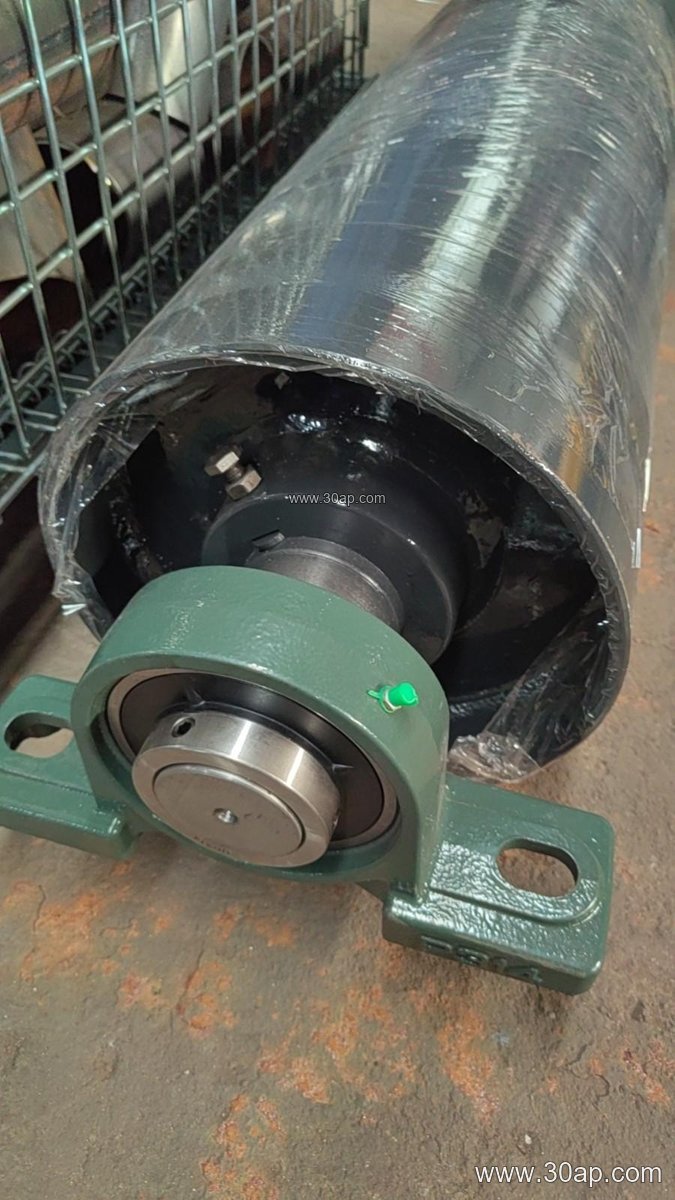
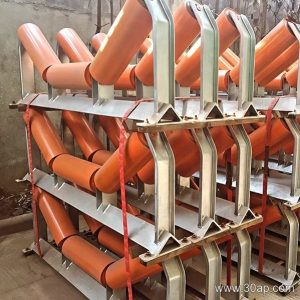
The surrounding hardware matters too. Correctly spaced conveyor idler rollers support the belt on the carrying side, while a sturdy conveyor bracket keeps the pulley and bearing assembly aligned. Poor alignment shortens lagging life more often than load does.
Buyer Checklist
- Confirm the duty: drive, tail or bend. Ask for the wrap angle and belt tension.
- State belt width, pulley face width and required diameter together.
- Specify lagging type, pattern and thickness, plus whether the surface must be replaceable.
- Provide shaft size, keyway, bearing type and hub arrangement.
- Describe the environment: wet, dusty, abrasive, corrosive or hot.
- Ask for the balancing grade and runout tolerance, since these affect vibration and belt tracking.
Maintenance is mostly inspection. Check lagging wear at the edges, look for loose tiles or lifted rubber, and verify that the belt is not slipping under load. Replacing lagging before the shell is exposed avoids costly downtime, especially on a primary crusher discharge or a long overland conveyor.