What the Tail Drive Pulley Does
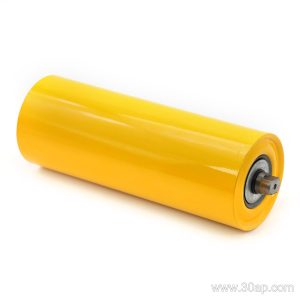
A tail drive pulley is the drum at the tail end of a belt conveyor that both supports the returning belt and drives it. In many bulk handling layouts the tail end is where the belt changes direction and where the drive is placed, either to shorten the drive train or to suit the plant layout. This differs from a head drive pulley at the discharge end, and also from a bend pulley that only redirects the belt without transmitting torque. The three roles are distinct and should not be treated as interchangeable when specifying a machine.
In a coal preparation plant, a quarry crushing line, or a cement clinker handling section, the tail drive pulley often works in a dusty and sometimes wet environment. Correct sizing and lagging keep the conveyor belt from slipping and reduce wear on both the belt and the drum.
Construction and Key Parts
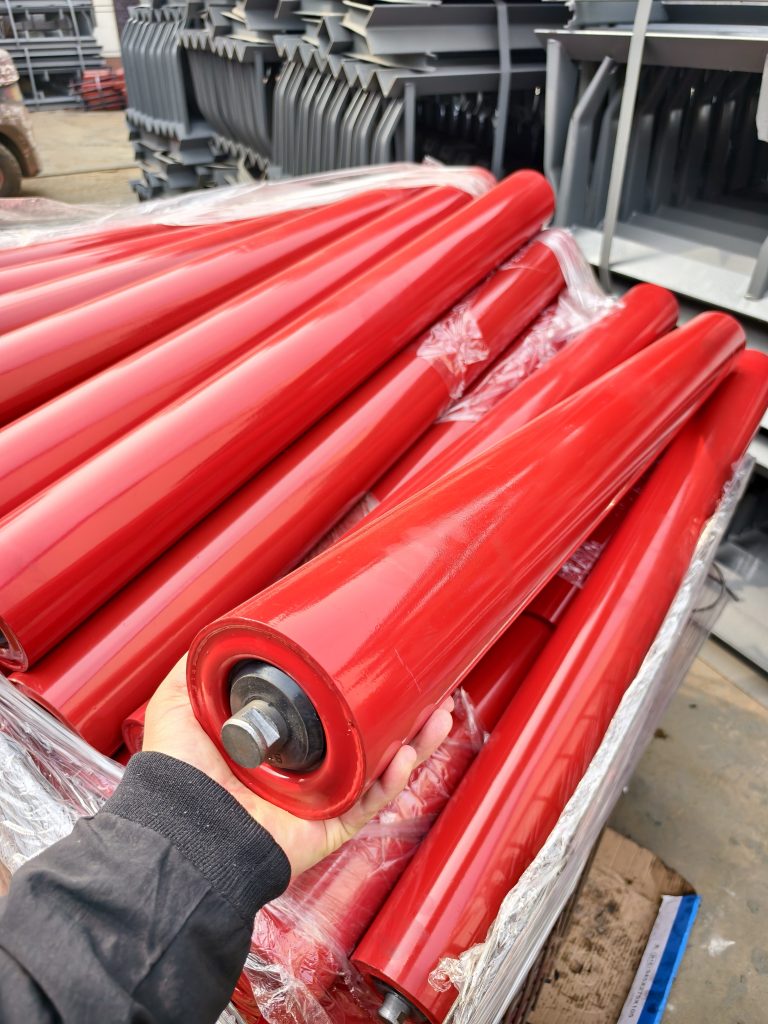
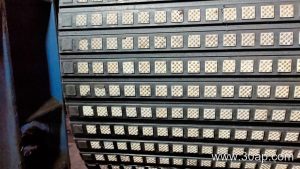
A tail drive pulley is normally built as a welded steel drum with a shaft, end discs, and a hub assembly. The shell may be machined for concentricity and fitted with a lagging layer to raise friction. Common surface forms include plain, cold bonded rubber, hot vulcanized rubber, diamond lagging, herringbone lagging, and ceramic lagging, with lagging thickness usually in the range of 8, 10, 12, 15, or 20 mm.
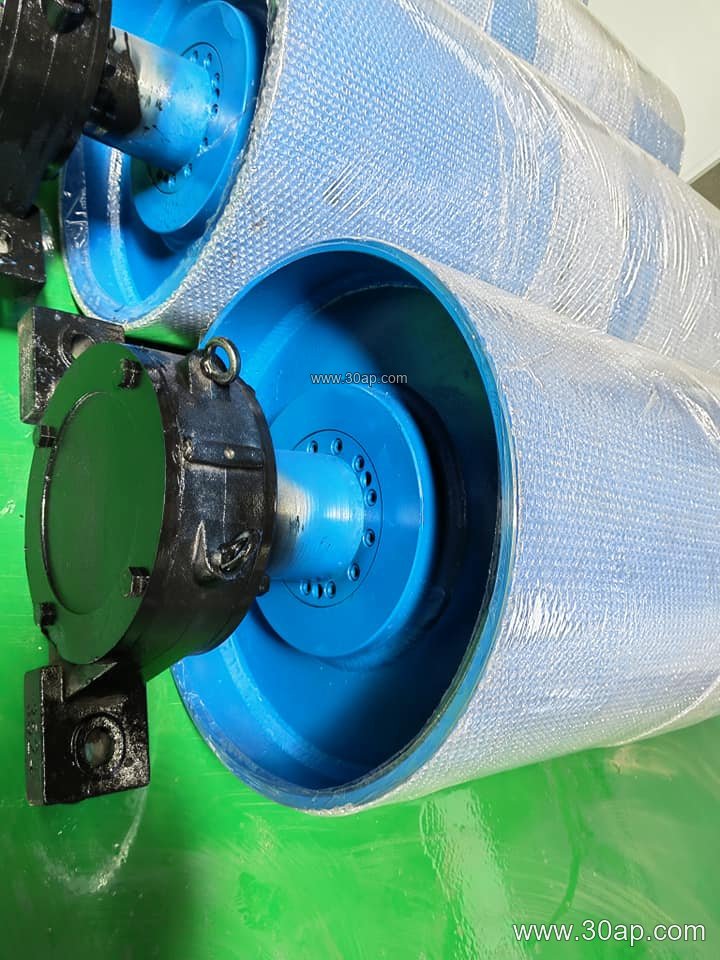
The shaft is sized by torque and bearing load rather than by belt width alone, so shaft diameters such as Ø80, Ø100, Ø120, or Ø140 may appear in different designs for the same belt width. Bearings are carried in pillow blocks or flange housings, and the pulley is fixed to a conveyor bracket or frame at the tail station. For heavy drives, the drum may be coupled to a gearbox through a keyed or shrink disc connection.
Common Sizes and Combinations
Diameters are chosen to suit belt thickness, belt speed, and the required torque. The table below shows typical reference values, not mandatory pairings.
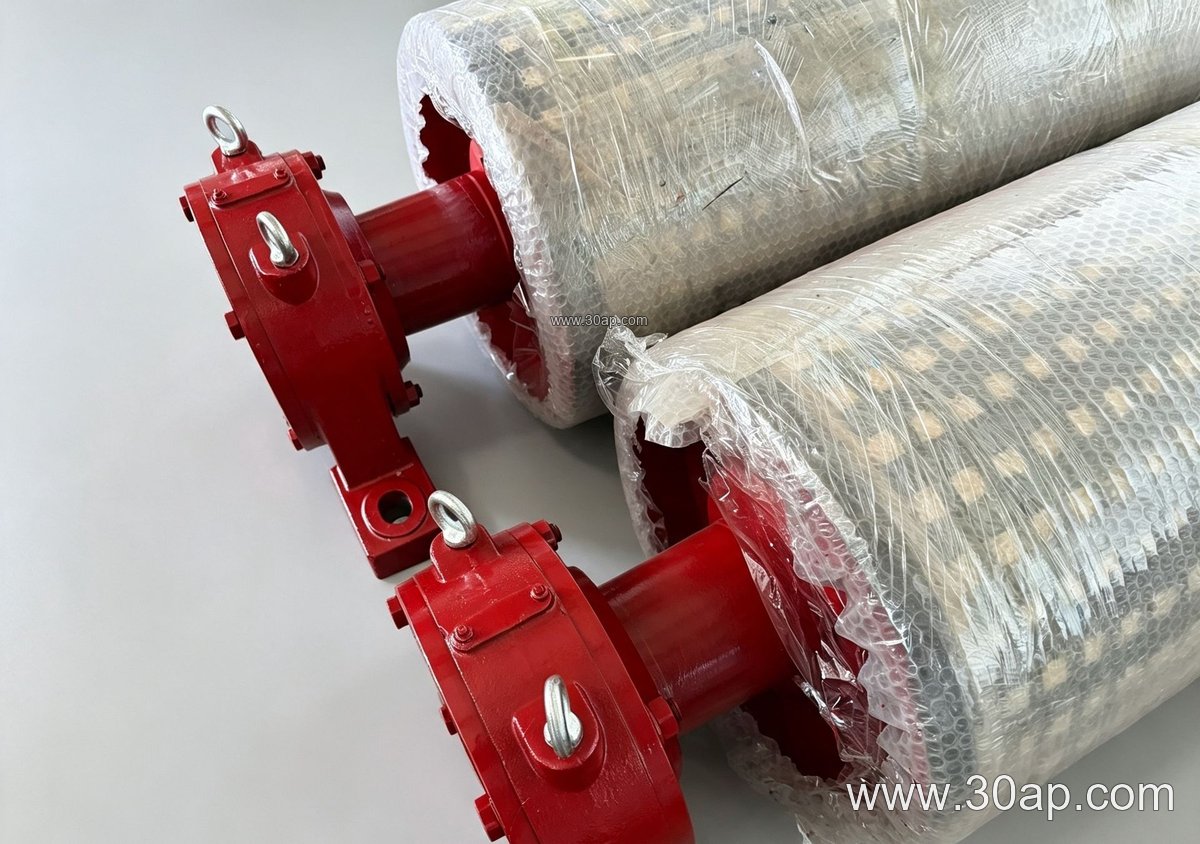
- Belt width B650 with drum Ø400 or Ø500
- Belt width B800 with drum Ø500 or Ø630
- Belt width B1000 with drum Ø630 or Ø800
- Belt width B1200 with drum Ø800 or Ø1000
- Belt width B1400 with drum Ø1000 or Ø1250
Face width is usually a little wider than the belt. For example, a B800 belt may run on a drum with a face width of about 950 mm, and a B1200 belt on a drum of about 1400 mm. These figures are reference data only; the final face width and diameter are fixed by the conveyor designer.
A typical specification might read B1200 × Ø1000, with 12 mm diamond lagging and a Ø140 shaft. Another line may use B800 × Ø500 with plain surface and a Ø90 shaft. Each combination should be checked against belt tension and torque, not copied from a list.
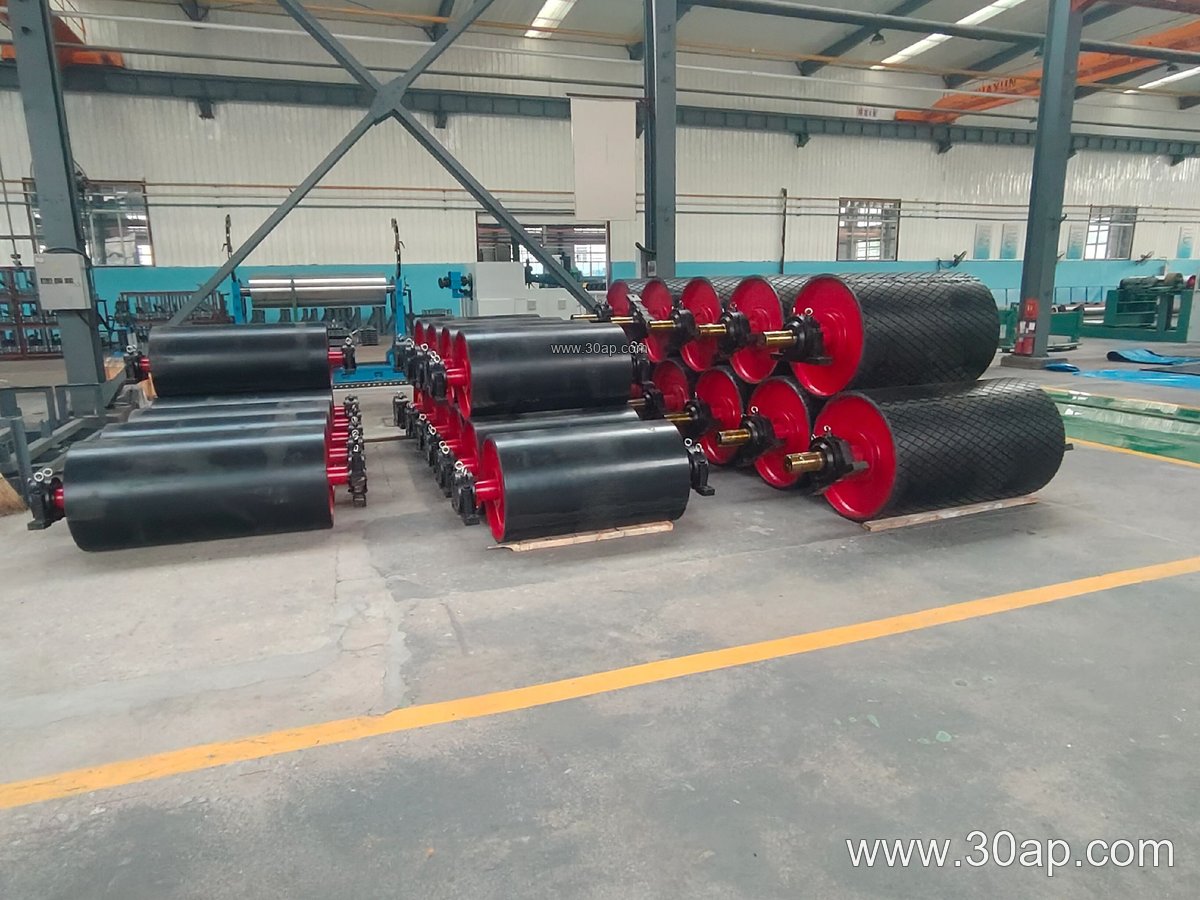
Where It Fits in the Plant
Tail drive pulleys are found in aggregates plants, coal washing circuits, iron and copper ore handling, power station coal yards, and fertilizer or grain silo conveyors. In a crushing and screening line, the tail drive pulley can be positioned close to the feed point so the drive stays clear of the discharge chute. In a tunnel muck removal conveyor, a compact tail drive pulley may be preferred where space is limited.
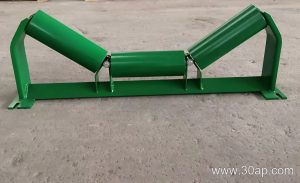
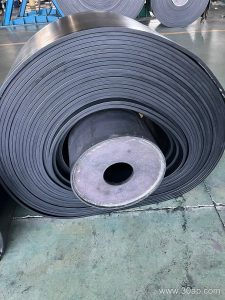
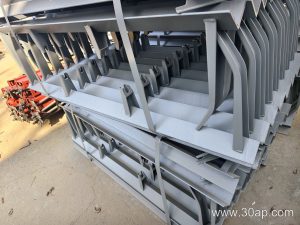
The pulley works together with the conveyor belt, idler rollers, and conveyor brackets. Misalignment between the tail drive pulley and the first idler roller can cause belt mistracking, so the mounting faces should be checked during installation.
Selection and Maintenance Notes
Buyers should confirm belt width, belt speed, expected tension, shaft diameter, lagging type and thickness, and bearing arrangement before ordering. Ask whether the pulley is supplied with bearings, coupling, and a bracket matched to the existing frame. For abrasive or wet service, rubber or ceramic lagging usually wears better than a plain shell, but the choice depends on the material and the drive duty.
During operation, check lagging wear, bolt tightness, and bearing temperature at regular intervals. Keep the tail area free of spilled material so the pulley does not run against a buildup of fines. A well matched tail drive pulley helps the belt run true and keeps the whole conveyor line productive.