What a Dustproof and Waterproof Idler Does
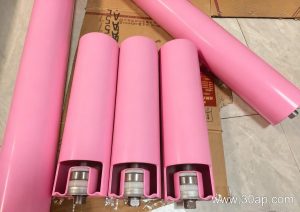
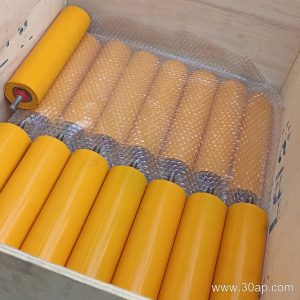
A dustproof and waterproof idler is a carrying or return roller built to keep fine grit, slurry splash and washdown water away from its bearings. On a wet or dusty line, an ordinary idler roller can seize long before its shell wears out, because contaminants reach the bearing cavity and push the grease out. The sealed version uses a multi-stage protection system so the roller keeps turning freely in conditions where a standard roller would fail early.
This roller is still a normal part of the conveyor structure. It supports the conveyor belt, fits into the same brackets and frames, and runs in the same positions as other rollers. The difference is the sealing and surface treatment, not the basic function. Buyers often specify it for the load-carrying run in wet sections and for return runs where dust settles and moisture collects.
How the Sealing and Construction Work
The protection starts at the end cap. A typical design combines a labyrinth path, a contact lip seal and a bearing cap, sometimes with a grease-filled chamber between stages. Dust has to lose energy through several narrow turns, while water meets a lip that keeps it out under splash and low-pressure washdown. The bearing itself is usually a deep-groove ball bearing such as 6204, 6205, 6305, 6306, 6308 or 6310, selected to suit the shaft and load rather than a single fixed roller diameter.
The shell is commonly steel tube, with painted, galvanized or rubber-covered options. Rubber rings are useful on impact zones and on lines handling sticky or abrasive material. The shaft is machined at the ends to seat in the conveyor bracket, and the whole roller is balanced so it runs smoothly at line speed.
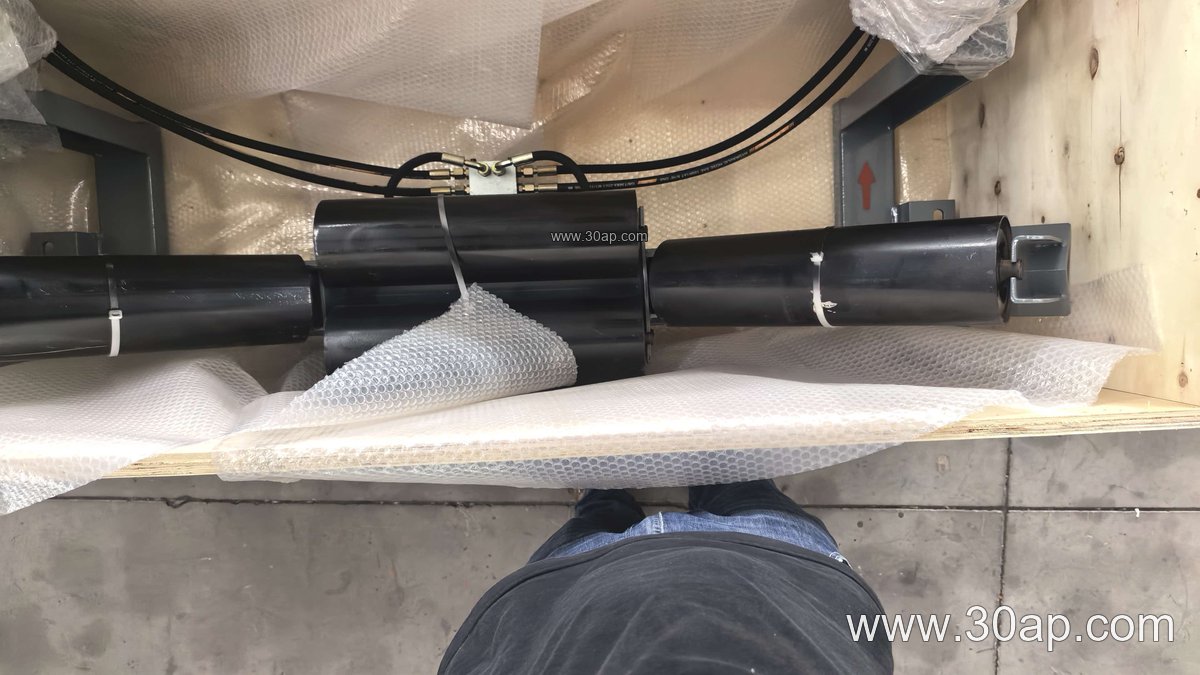
- Labyrinth seal plus lip seal for dust and splash protection
- Grease-retaining end cap to extend bearing life
- Steel, nylon, ceramic or rubber-covered shell options
- Welded or pressed end discs depending on duty
Reference Dimensions and Bearing Choices
The table below is a reference range, not a fixed selection chart. Final roller length depends on belt width, trough angle and roller set form, and a three-roll trough set usually has different side and centre roll lengths. Shaft diameter and bearing size are confirmed by the conveyor designer against the actual load.
| Item | Common reference values |
|---|---|
| Roller diameter | Ø63, Ø76, Ø89, Ø102, Ø108, Ø127, Ø133, Ø159, Ø178, Ø194, Ø219 mm |
| Belt width | B400, B500, B650, B800, B1000, B1200, B1400, B1600, B1800, B2000, B2200, B2400 |
| Trough angle | 20°, 30°, 35°, 45° |
| Roller length examples for three-roll trough sets | about 200 mm at B500, 250 mm at B650, 315 mm at B800, 380 mm at B1000, 465 mm at B1200, 530 mm at B1400, 600 mm at B1600, 670 mm at B1800, 750 mm at B2000 |
| Bearing reference | 6204, 6205, 6305, 6306, 6308, 6310 |
These figures are common examples only. A Ø108 roller with a 6305 bearing and a Ø133 roller with a 6306 bearing are both normal, and no single bearing size should be treated as the only match for a given diameter.
Where It Fits on the Conveyor
On a coal washing plant line, the sealed roller is often used on the return run, where fine coal and water collect under the belt. In a sand and gravel aggregate line, it suits the transfer points and the sections after a wash screen, where spray and grit are constant. The same roller can be used in a cement plant’s raw material handling, a power plant coal yard, or a tunnel muck line where the belt stays damp.
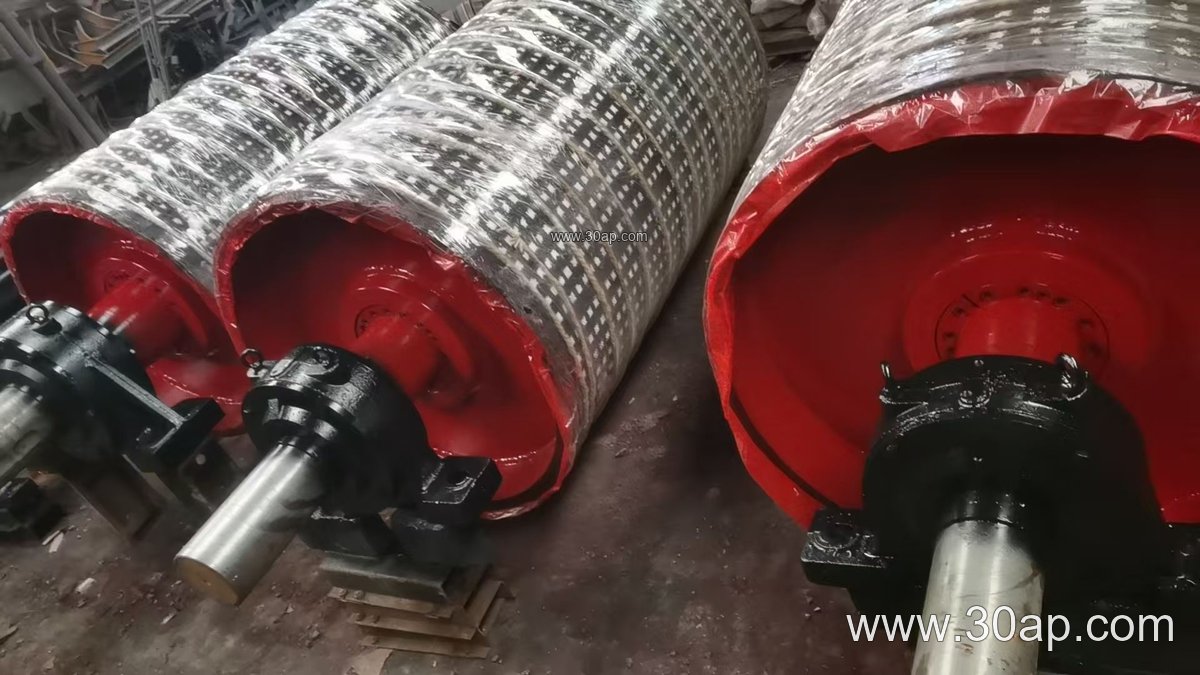
It is not a replacement for a drive pulley, tail pulley or bend pulley. Those are conveyor pulleys that transmit power or change belt direction, and they have their own lagging and shaft requirements. The dustproof and waterproof idler is a support roller only, working alongside the conveyor belt, the pulleys and the frame.
Selection and Maintenance Notes
Match the roller diameter to the belt width and load first, then choose the seal class and shell material. For heavy impact, a rubber-ring cushion roller can be considered at the loading point, but the sealed carrying roller remains the main subject along the rest of the line. Check that the bracket spacing, shaft ends and mounting holes fit the existing frame before ordering.
In service, listen for a rough or squealing roller and check for play at the shaft. A sealed idler that has stopped turning should be replaced rather than regreased from outside, because the internal seal may already be damaged. Keep washdown pressure moderate and avoid directing a strong jet at the end caps. Regular inspection of the return run and the transfer zone will catch a failing roller before it damages the belt.