What a Galvanized Conveyor Bracket Is
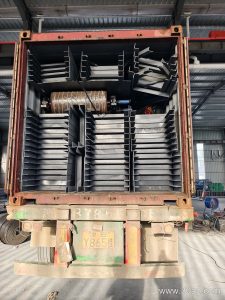
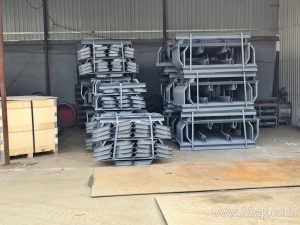
A galvanized conveyor bracket is the support frame that holds idler rollers in position along a belt conveyor. After fabrication from angle steel, channel steel, or folded steel plate, the bracket is hot-dip galvanized so that the zinc coating protects it from moisture, dust, and corrosive fines. This makes the bracket a practical choice in coal preparation plants, power station coal yards, and aggregate crushing lines where washdown or humid air is common.
The bracket is not a single universal part. It is a family of support frames, each matched to a position on the conveyor and to the job the rollers must do there. The galvanized finish does not change the mechanical role of the frame, but it does extend service life in wet or dusty service.
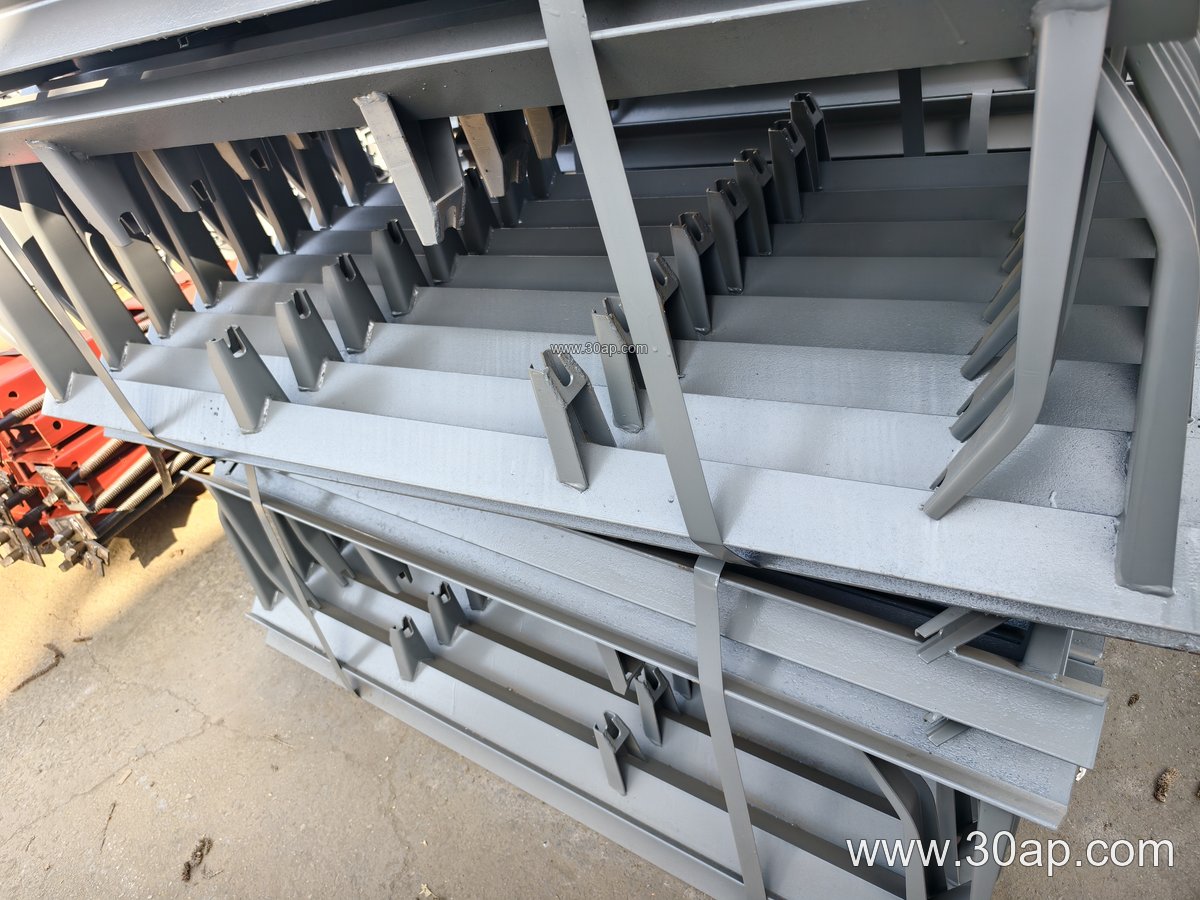
How the Bracket Is Built
Most frames are welded or bolted assemblies. The cross beam carries the roller mounts, and the end plates or feet connect to the conveyor stringer. Common materials are angle steel, channel steel, and folded plate, with the zinc coating applied after cutting and drilling so that exposed edges are also covered.
Key construction details a buyer should check include the mounting hole spacing, the beam length, and the slot angle. These are not fixed numbers; they are determined by belt width, trough angle, and roller diameter. A frame for B800 at 35 degrees with Ø108 rollers will differ from a frame for B1200 at 45 degrees with Ø133 rollers. Hole spacing and beam length should always be confirmed with the conveyor design rather than assumed from belt width alone.
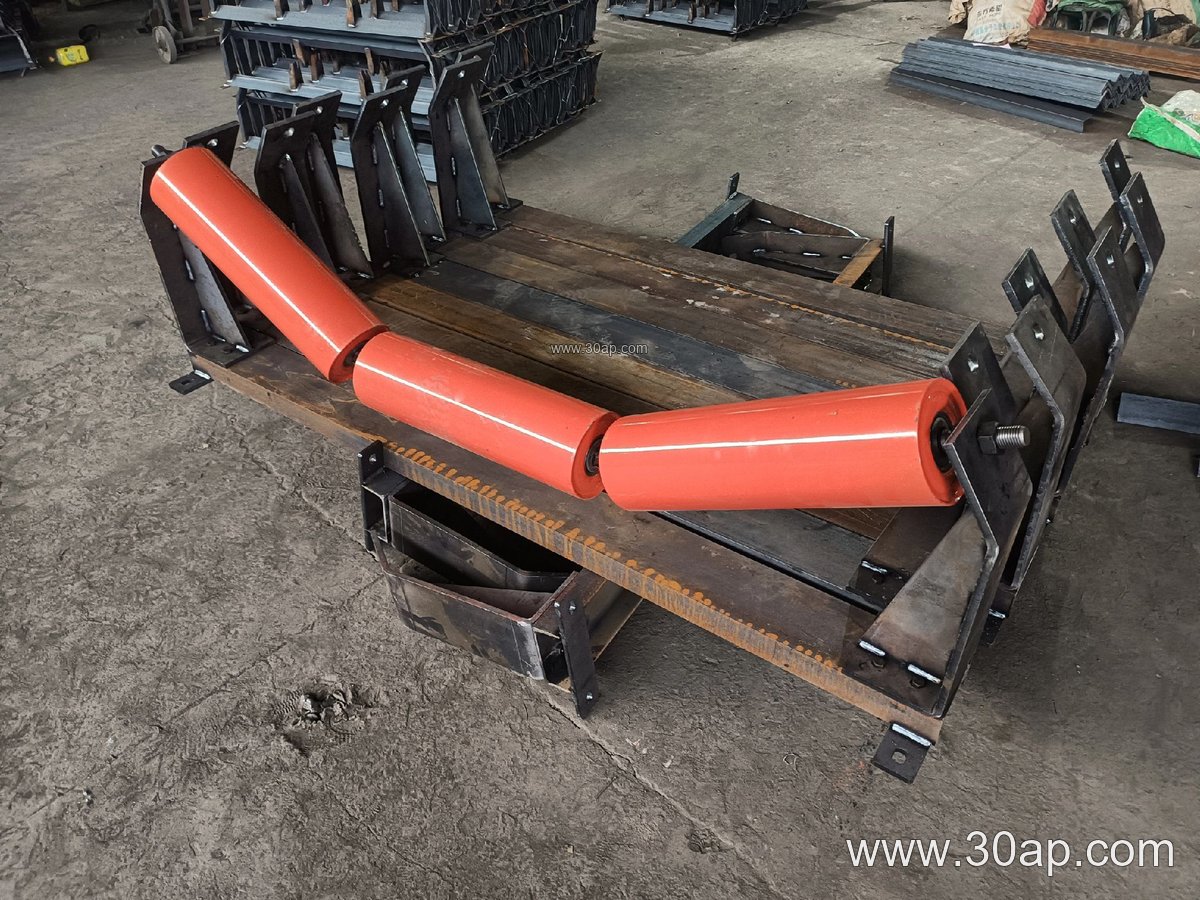
Common Bracket Positions and Their Roles
Brackets are defined by where they sit and what they support. The table below groups the common types and their typical use.
| Bracket type | Typical position | Supporting role |
|---|---|---|
| Troughing bracket | Carrying side | Holds three rollers at the set trough angle |
| Transition bracket | Near head or tail | Guides the belt from flat to troughed profile |
| Return bracket | Return side | Supports the belt on its return run |
| V-return bracket | Return side | Centers the belt with two angled rollers |
| Impact bracket | Loading point | Carries impact rollers under the chute |
| Self-aligning bracket | Any long run | Corrects belt drift with pivoting or forward-leaning rollers |
| Adjustable bracket | Carrying side | Allows the trough angle to be changed |
Drive pulleys, tail pulleys, and bend pulleys are separate components with their own support structures; they are not interchangeable with a roller bracket. A conveyor pulley is mounted on its own bearing housing, while the bracket carries idlers. Keeping this distinction clear helps avoid ordering the wrong part.
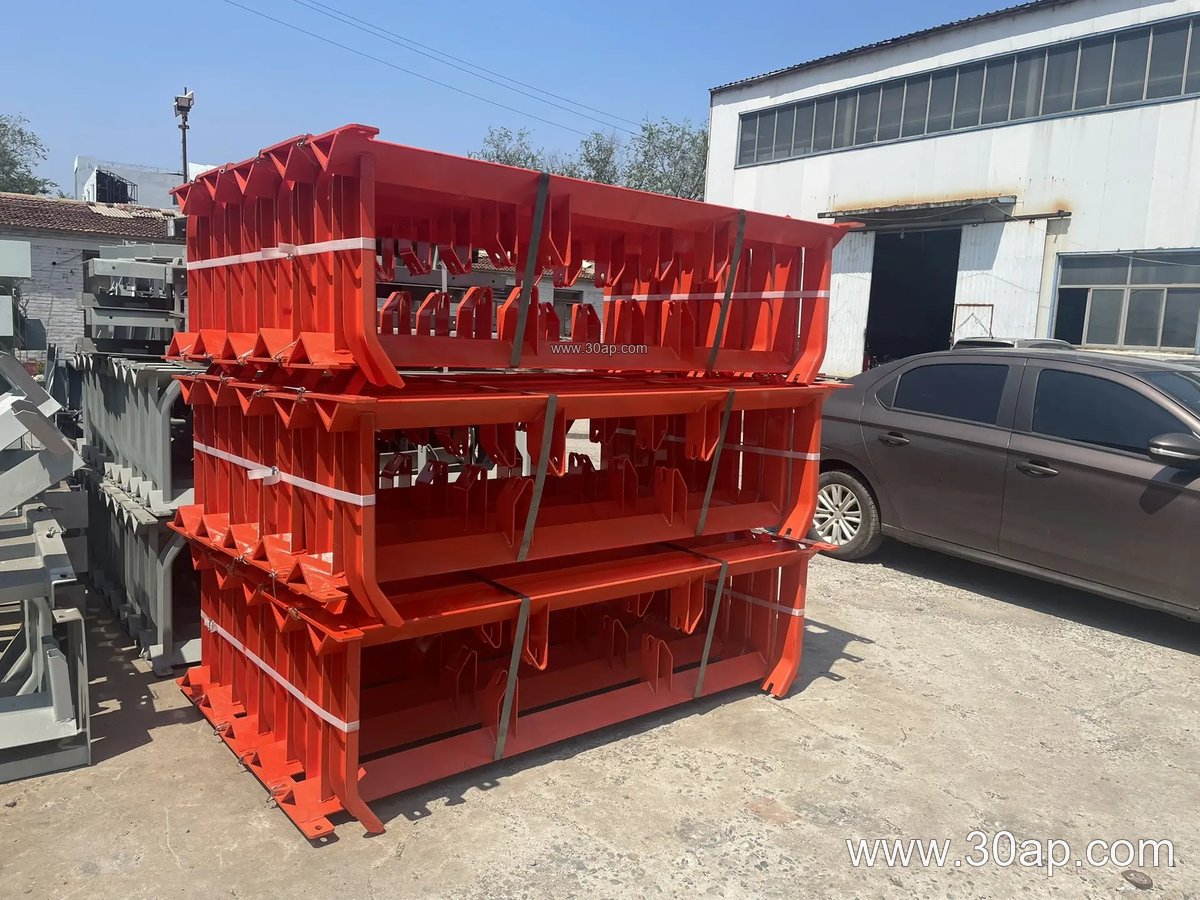
Trough Angle and Roller Diameter
The trough angle affects how much material the belt can carry and how the belt tracks. Common angles are 20, 30, 35, and 45 degrees. An adjustable bracket can be set between these angles to suit the material and belt stiffness. Forward-leaning brackets usually use a small angle of about 1.5 to 2 degrees to help center the belt.
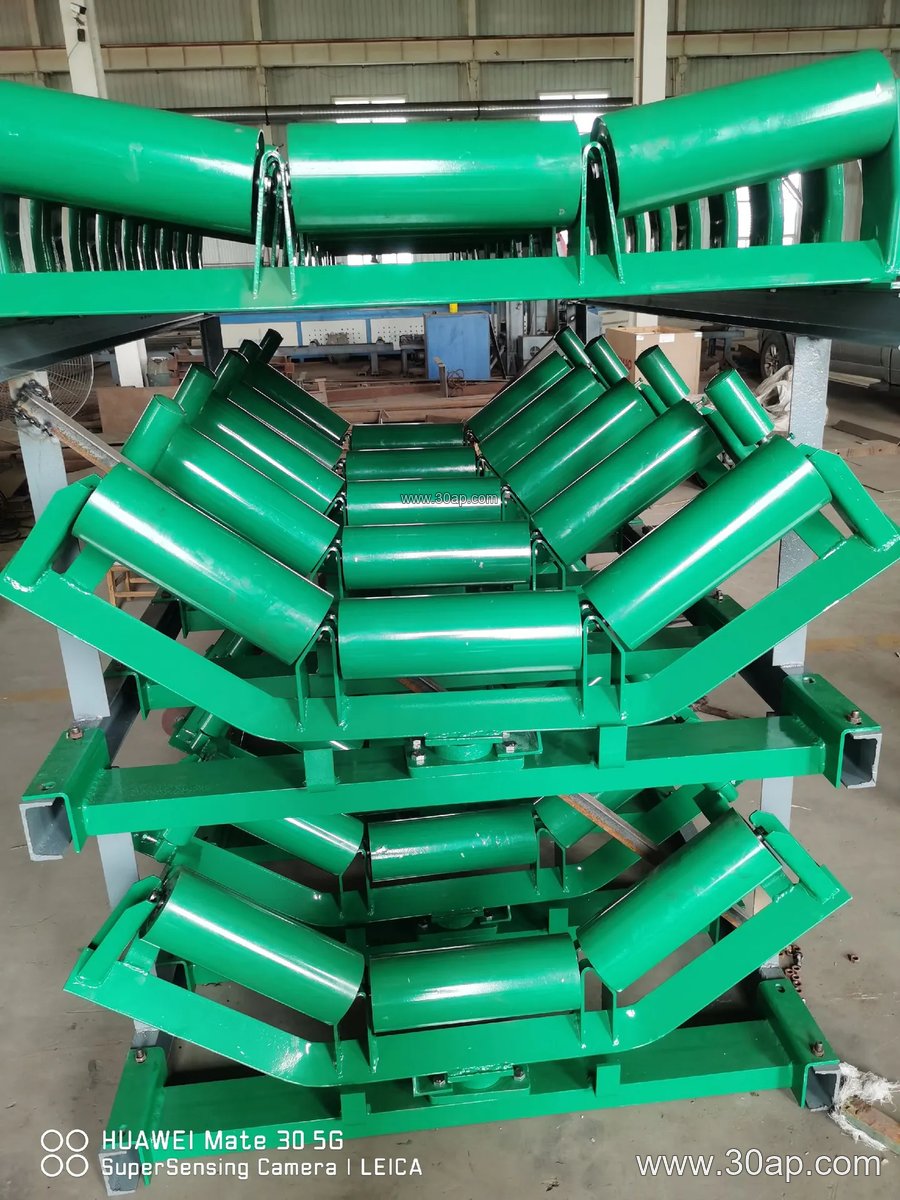
Roller diameter is selected with belt width and load in mind. Common diameters include Ø89, Ø108, Ø133, Ø159, and Ø194. A B650 conveyor at 30 degrees may use Ø89 rollers, while a B1400 line at 45 degrees might use Ø159. No single belt width is limited to one trough angle or one roller diameter; the combination follows the conveyor design.
Where Galvanized Brackets Are Used
In a limestone quarry, galvanized brackets on the carrying side keep the conveyor belt aligned through dusty, open-air runs. In a cement plant, the same frames support idler rollers on transfer conveyors where fine dust settles on every surface. The zinc coating is useful in both settings because it resists the damp, abrasive conditions that shorten the life of painted steel.
Other common sites include coal washing plants, iron ore handling, port stockyards, and crushing and screening lines. In each case the bracket works together with the conveyor belt, idler roller, and conveyor pulley to keep the line running smoothly.
What Buyers Should Confirm
- Belt width and trough angle: state both, for example B1000 at 35 degrees, so the frame geometry can be matched.
- Roller diameter: confirm Ø108, Ø133, or another size so the mounting seats fit.
- Mounting hole spacing and beam length: these vary with width and angle and should come from the conveyor drawing.
- Bracket position: carrying, return, transition, impact, or self-aligning frames are not interchangeable in service.
- Galvanizing quality: ask how the coating is applied and whether cut edges and holes are protected.
Ordering by position, belt width, trough angle, and roller diameter gives the clearest match between the galvanized conveyor bracket and the rest of the conveyor.