What the Four-Roll Idler Bracket Does
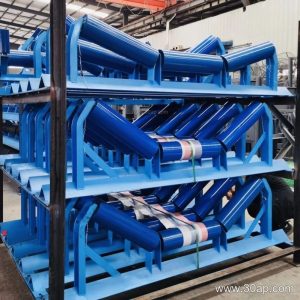
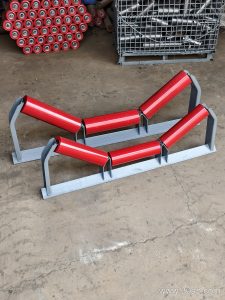
A four-roll idler bracket is the support frame that carries four idler rollers under or along a conveyor belt. Instead of the more familiar three-roll trough set, this bracket arranges four rolls to spread the belt load across more contact points. It is common in bulk handling lines where the belt is wide, the material is heavy, or the trough profile needs extra support. You will see it in coal preparation plants, cement plants, and power station coal yards, where a conveyor belt runs long shifts and steady alignment matters.
The bracket itself does not carry the material. It holds the idler roller shafts at the correct angles so the belt forms a stable trough. That makes it a structural part of the conveyor bracket family rather than a wear part like the rolls.
How a Four-Roll Bracket Is Built
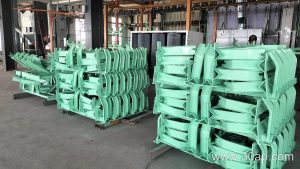
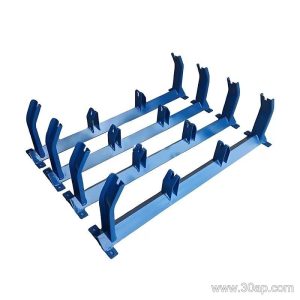
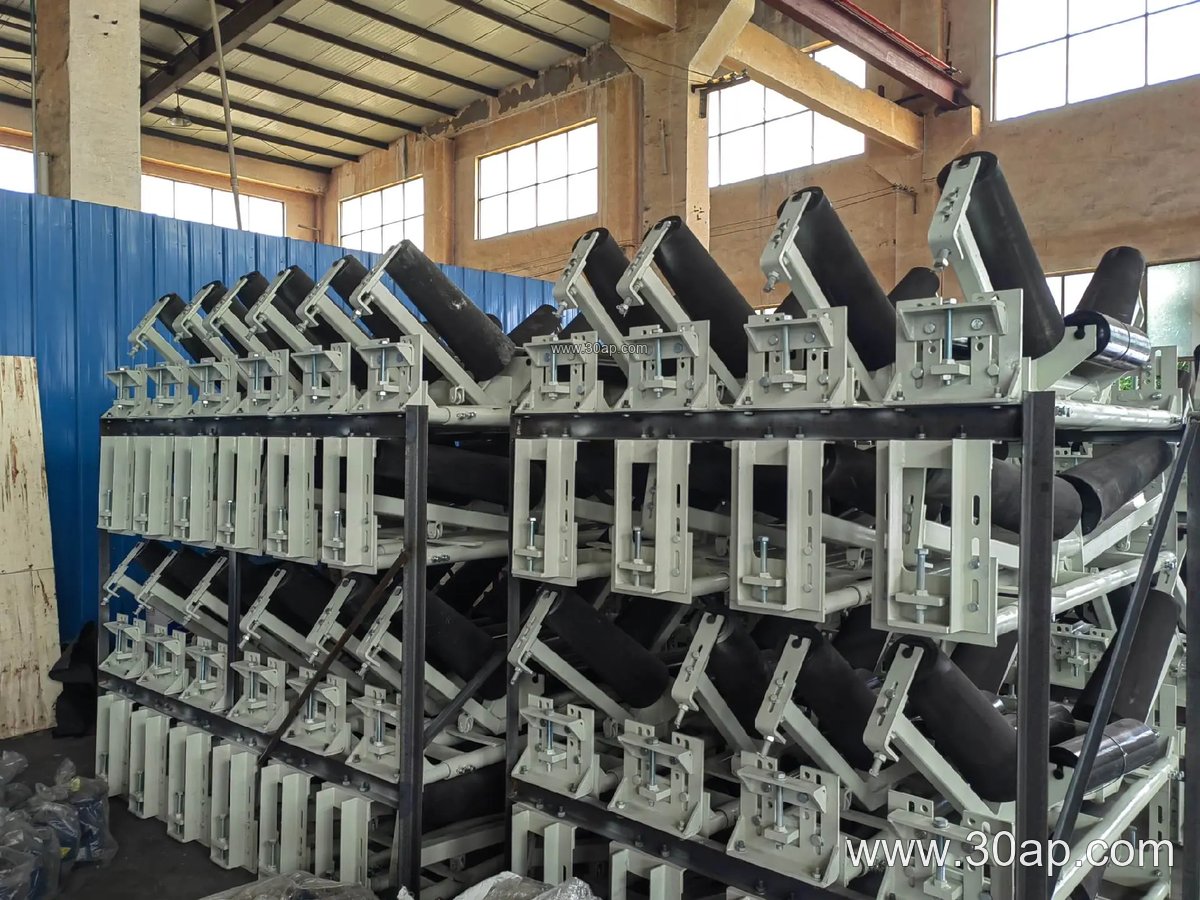
Most units are welded from angle steel, channel steel, or folded steel plate. The frame has mounting positions for the outer rolls and for the central rolls, and the angles are set to match the required trough. Some designs are fixed, while adjustable versions let maintenance staff change the trough angle within a range.
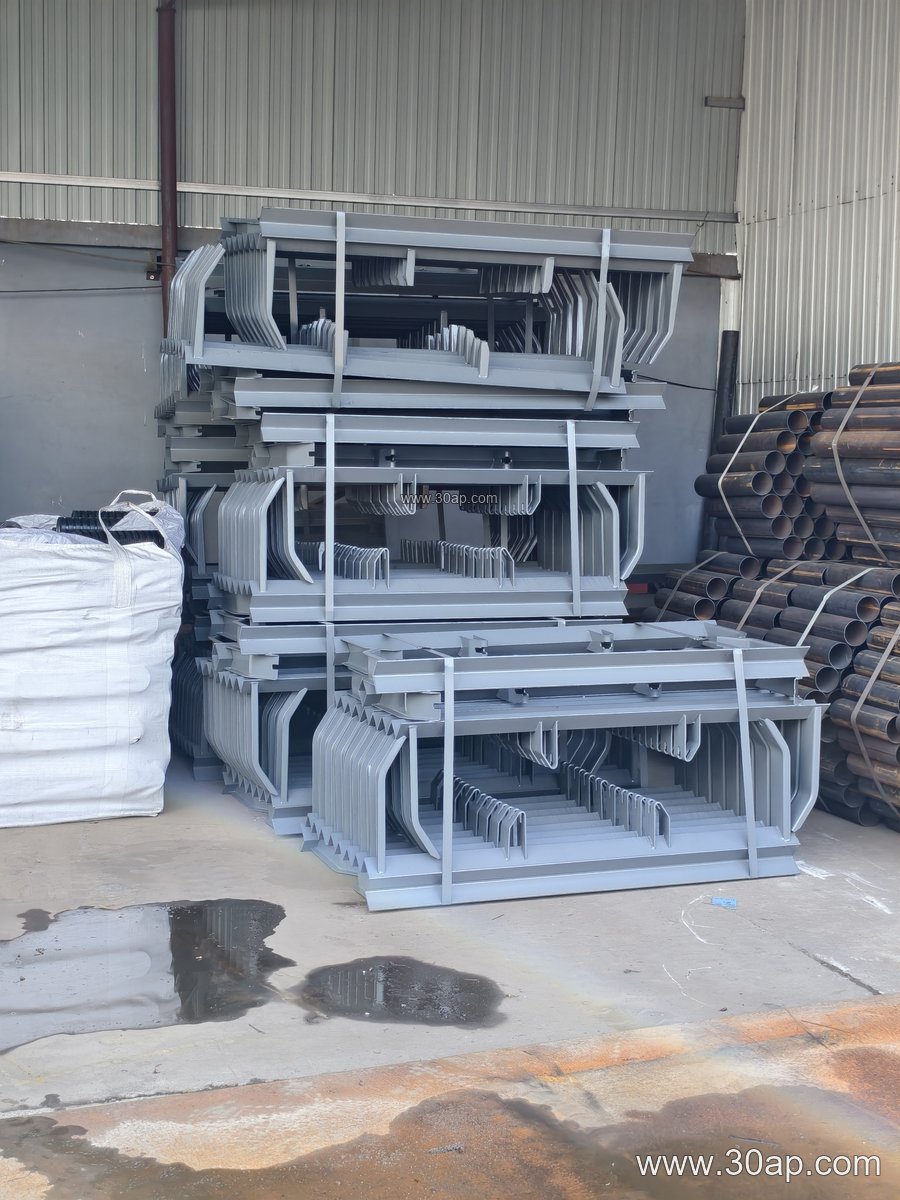
Typical build points to check:
- Roll seating and shaft slots, which should match the chosen roller diameter.
- Weld quality at the crossbeam and the end brackets.
- Mounting hole spacing, which changes with belt width and trough angle.
- Surface treatment, usually painted or galvanized, matched to the site environment.
The bracket is usually bolted to the conveyor stringer. Because the four-roll layout spreads load, the frame needs good stiffness, and the crossbeam length is set by the belt width rather than by a single fixed figure.
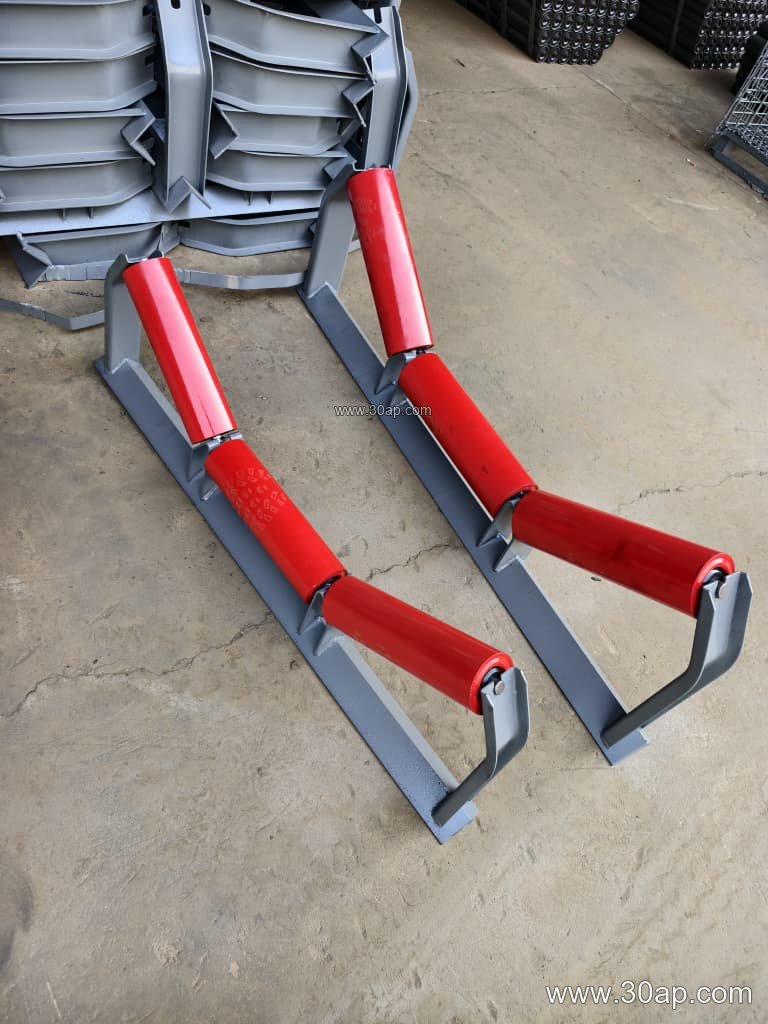
Trough Angle and Roller Matching
The trough angle is the main choice. Common values are 20, 30, 35, and 45 degrees. A wider belt running at a deeper trough needs the bracket geometry to suit it, and an adjustable bracket can cover several of these angles. Roller diameter is a separate decision. Common sizes are Ø89, Ø108, Ø133, Ø159, and Ø194. The bracket must accept the shaft and seat of the roller you plan to use.
Reference combinations below are examples only. They are not fixed rules, and one belt width can work with more than one trough angle or roller diameter.
| Belt width | Example trough angle | Example roller diameter |
|---|---|---|
| B800 | 35 degrees | Ø108 |
| B1000 | 30 degrees | Ø108 |
| B1200 | 45 degrees | Ø133 |
| B1400 | 35 degrees | Ø159 |
| B1600 | 45 degrees | Ø159 |
| B1800 | 35 degrees | Ø194 |
For comparison, a three-roll trough set is often used on lighter or narrower belts, while the four-roll bracket adds support where the belt is wide or the load is high. This is a comparison of layout, not a claim that one replaces the other everywhere.
Where It Fits on the Conveyor
The four-roll idler bracket is normally used on the carrying side, in the trough section between the tail and head. It is not a substitute for a conveyor pulley at the drive, tail, or bend position. Those are separate components with their own duties. The bracket works together with the conveyor belt, the idler rollers, and the conveyor frame to keep the belt profile steady.
In a limestone quarry or a crushing and screening line, dust and impact are part of daily operation. In those places, check that the bracket sits squarely and that the rolls turn freely. A four-roll layout can help where the belt tends to sag between rolls, but it still depends on correct installation.
Buyer Checklist
- Confirm belt width and the trough angle you need, or choose an adjustable bracket if the angle may change.
- Match roller diameter and shaft seating to the idler roller you will install.
- Ask for mounting hole spacing and crossbeam length as design data, not as a universal size.
- Check material thickness and surface treatment for the site, whether it is a coal yard, a cement plant, or a fertilizer store.
- Keep spare brackets and rolls for planned maintenance, since replacing a frame is easier before the belt is loaded.
A four-roll idler bracket is a small part of the conveyor line, but it decides how well the belt and rolls work together. Choose it by belt width, trough angle, roller size, and mounting details, and confirm the final dimensions with the supplier before ordering.