What a Lower Self-Aligning Idler Does
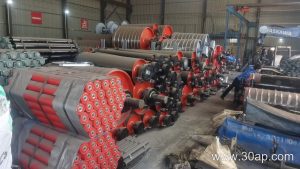
A lower self-aligning idler is a return-side roller assembly designed to keep the conveyor belt centred as it travels back under the carrying run. Unlike a plain flat return idler, this idler is mounted on a pivoting frame or a set of angled rollers that steer the belt gently when it begins to drift sideways. In a quarry, a coal washing plant or a cement plant, belt misalignment on the return strand is a common cause of edge damage, spillage and premature wear, so a self-aligning return idler is often fitted at intervals along the lower run.
The accurate equivalent name for this product is a self-aligning return idler. It should not be confused with a drive pulley, tail pulley or bend pulley, which are separate components with different duties. A V-shaped return idler is another return-side subtype, but it is used for belt support and tracking rather than as a direct replacement for the self-aligning lower idler described here.
How the Assembly Is Built
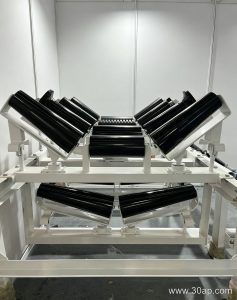
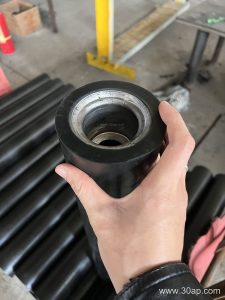
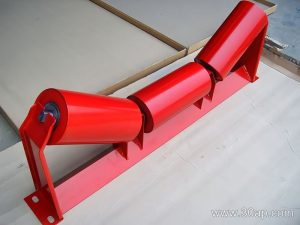
A typical lower self-aligning idler consists of two or more roller segments mounted on a common frame that can rotate slightly about a vertical pivot. When the belt contacts one side of the rollers more heavily, the frame turns and the angled rollers push the belt back toward the centre line. The rollers themselves usually have a steel tube shell, with bearing housings at each end and a sealing arrangement to keep out dust and water. Rubber rings or ceramic surfaces may be offered where extra grip or wear resistance is needed.
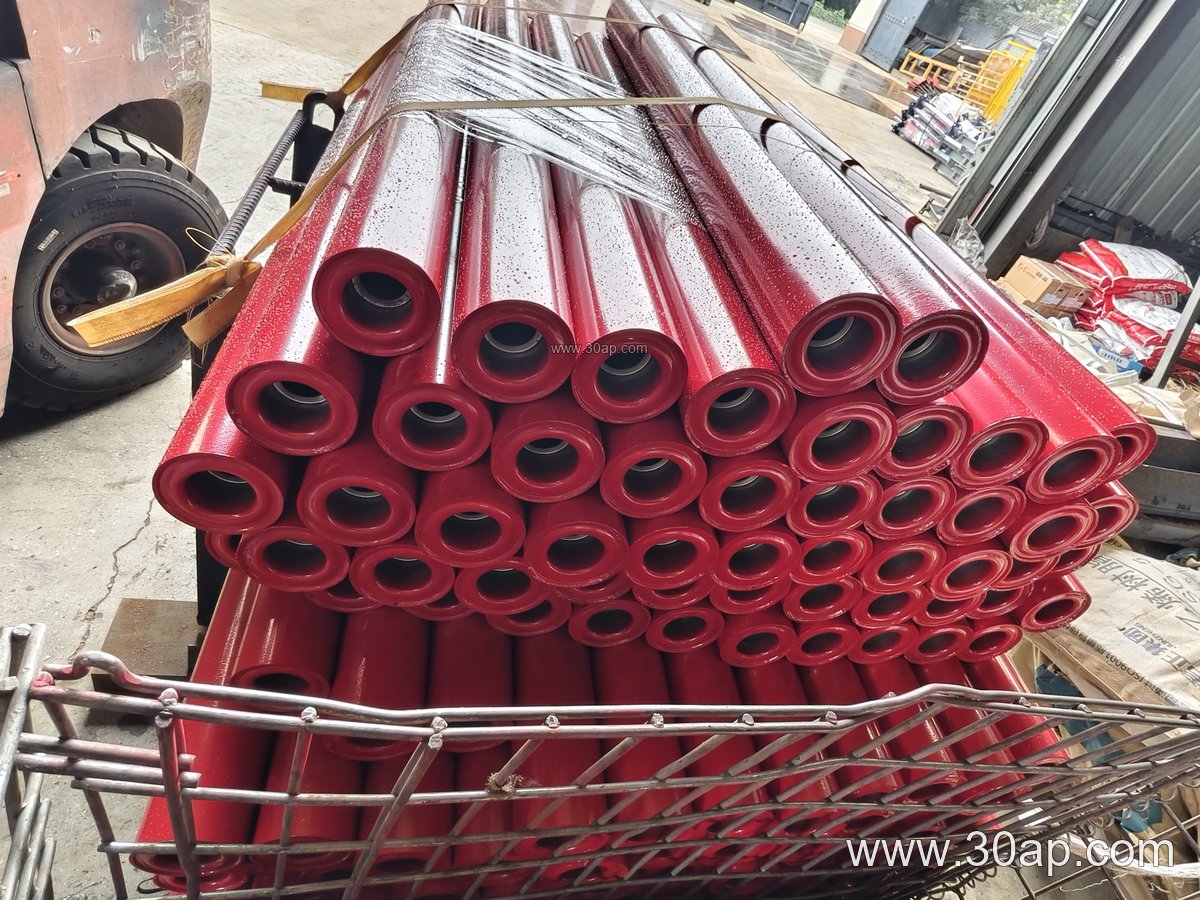
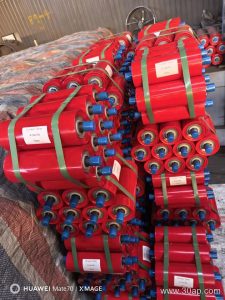
Common roller diameters for return-side idlers include Ø89, Ø102, Ø108, Ø127 and Ø133 mm, with larger sizes such as Ø159 or Ø178 mm used on heavier installations. Bearing sizes are matched to the load and shaft design rather than to belt width alone; 6204, 6205, 6305, 6306 and 6308 are frequently seen in this range. The roller length depends on the belt width, the frame type and the clearance required, so it is always determined by the conveyor design rather than by a single fixed rule.
Where It Fits on the Conveyor
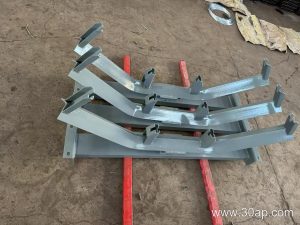
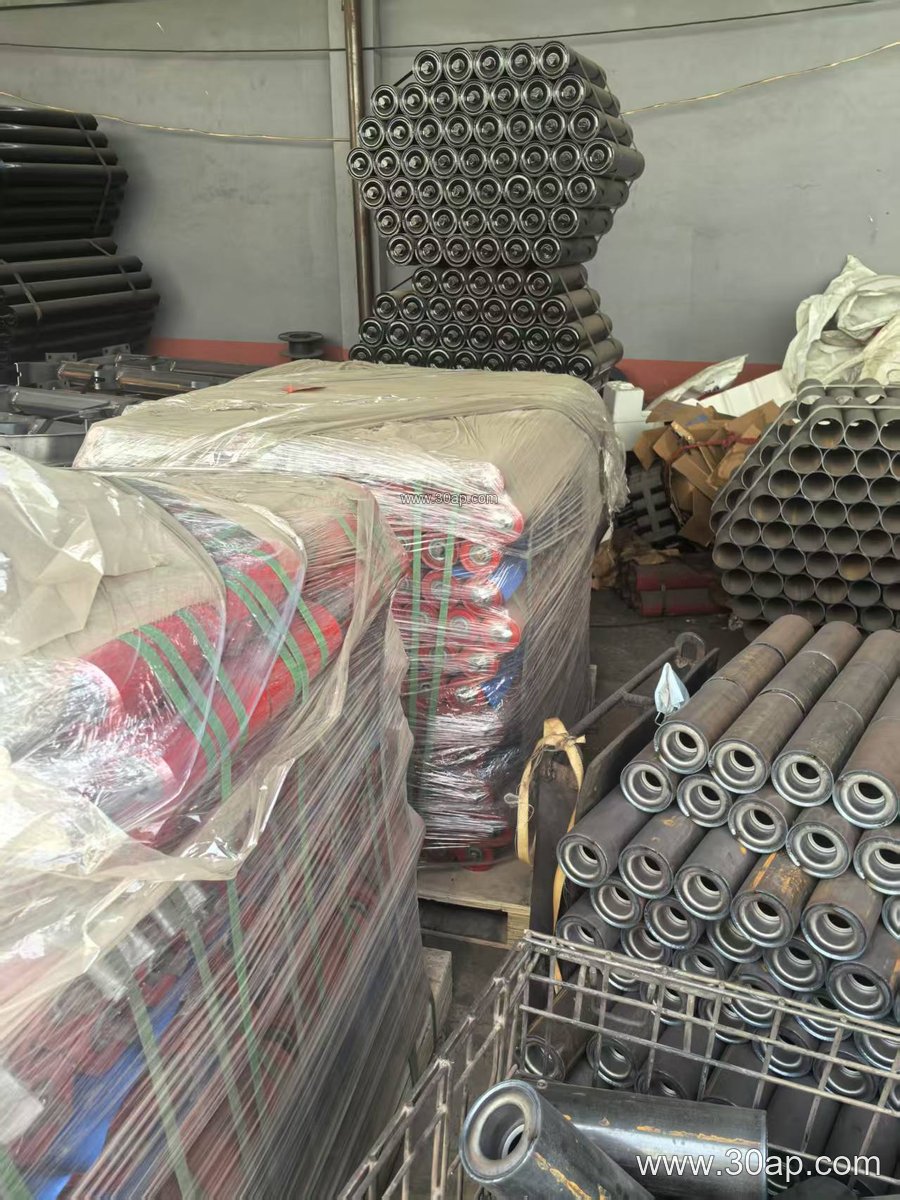
The lower self-aligning idler sits on the return strand, usually between the head pulley and the tail pulley, and is supported by a conveyor bracket fixed to the stringer. It is often placed after a transition zone or on long runs where the belt has a tendency to wander. In a limestone mine, an iron ore transfer point or a power plant coal handling line, a few of these idlers can reduce the need for frequent manual tracking adjustments.
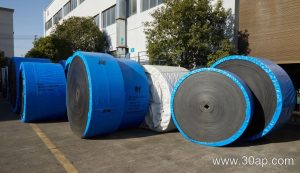
It is not a substitute for a carrying-side training idler, nor for the conveyor pulley that drives or redirects the belt. The return strand has different loading and access conditions, so the lower self-aligning idler is selected for its own position in the system.
Typical Reference Dimensions
The figures below are common reference values, not a fixed specification for every conveyor. Final sizes should follow the conveyor design and the roller manufacturer’s data.
- Belt widths often considered: B500, B650, B800, B1000, B1200, B1400 and B1600.
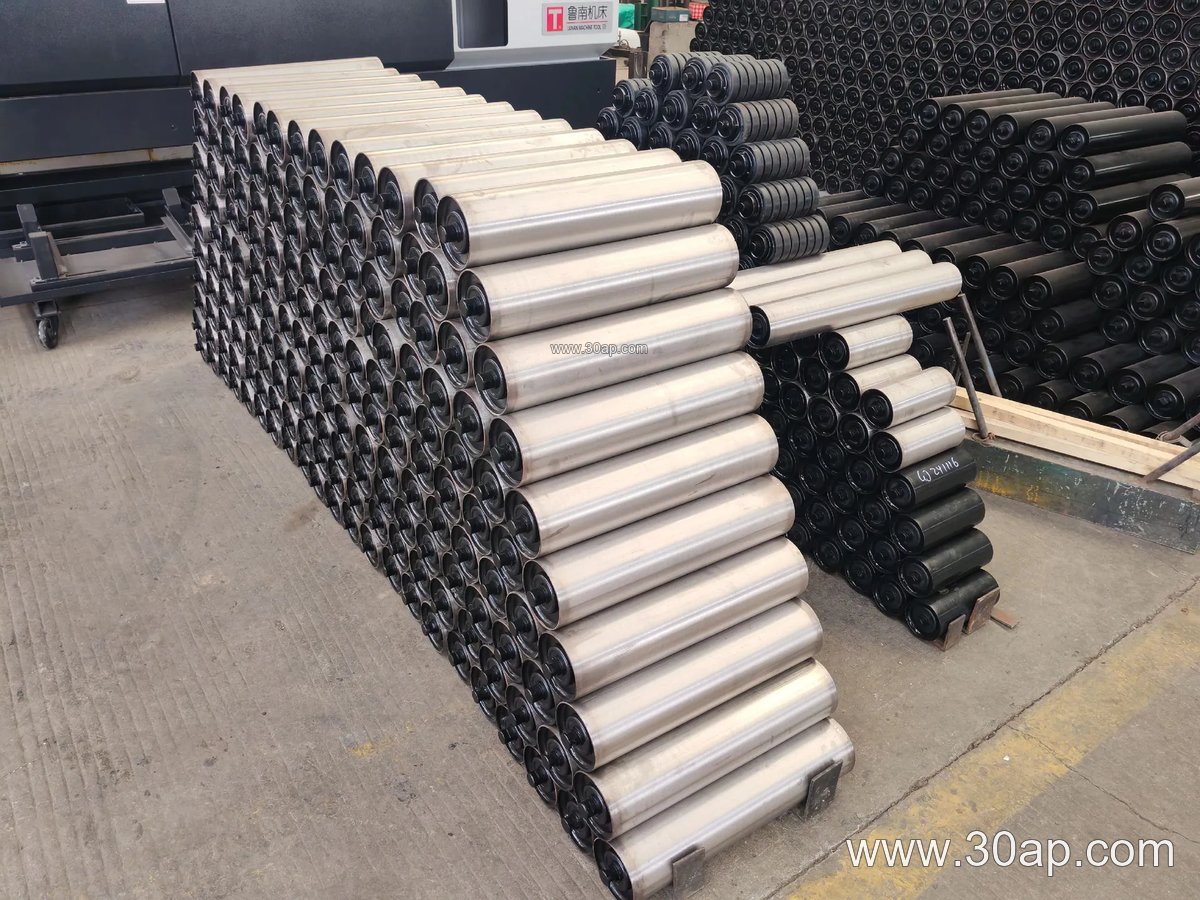
- Roller diameters commonly used: Ø89, Ø102, Ø108, Ø127 and Ø133 mm.
- Return idler roller lengths for a three-roll carrying set are sometimes quoted as about 200 mm for B500, 250 mm for B650, 315 mm for B800, 380 mm for B1000, 465 mm for B1200 and 530 mm for B1400; these are examples only and side rollers can differ.
- Bearing sizes commonly fitted: 6204, 6205, 6305, 6306 or 6308, depending on load and shaft.
If a supplier offers a table of belt width against roller diameter, treat it as a starting point for discussion, not as a rule that one belt width can only match one diameter.
What a Buyer Should Check
Before ordering, confirm the belt width, the return strand layout and the available mounting space. Ask how the pivot is sealed and how the roller ends are protected against fine dust, especially in a sand and gravel line or a crushing and screening plant. Check that the frame can be fitted to the existing conveyor bracket without modifying the stringer. Also confirm the roller shell material and whether rubber rings are needed for grip.
During maintenance, inspect the pivot for stiffness, look for build-up of material around the frame, and check that the rollers turn freely. A lower self-aligning idler that cannot pivot will not correct belt drift, and a seized roller will damage the conveyor belt. Regular checks are more useful than waiting for visible edge damage.