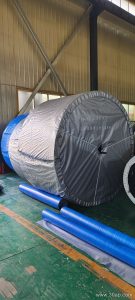
What a Bulk Material Conveyor Belt Is
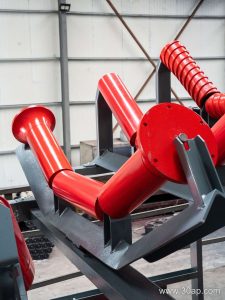
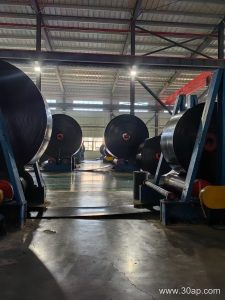
A bulk material conveyor belt is the load-carrying member of a continuous conveying system. It moves loose materials such as coal, ore, clinker, limestone, sand, gravel, and biomass across long distances with minimal manual handling. In a coal mine, cement plant, power station, or sand and gravel yard, this rubber belt works together with idler rollers, a conveyor pulley, and a conveyor bracket to form a stable transport line.
The belt itself is not a single rubber strip. It is a composite structure designed for tension, impact, and environmental exposure. The correct name for the same product in many workshops is simply the rubber conveyor belt for bulk materials. That term describes the same item without changing its function.
Construction of the Belt
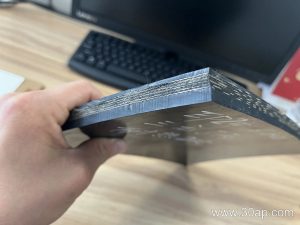
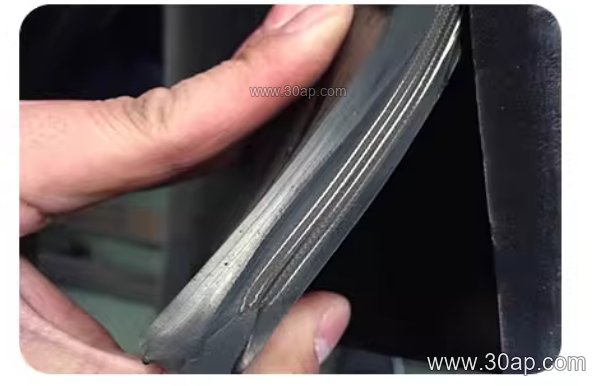
A typical bulk material belt contains a carcass, cover rubber, and edge protection. The carcass provides strength and elongation control. Common carcass options include EP (polyester-cotton) fabric, NN nylon fabric, and steel cord. Each has different elongation and impact behavior. The cover rubber protects the carcass from abrasion, heat, oil, or chemicals, depending on the application.
Cover thickness is often expressed as top cover plus bottom cover. For example, 4+2 mm or 6+2 mm. The number of fabric plies usually ranges from 2 to 6, but this depends on the required belt strength and the conveyor design. A belt for a primary crusher discharge may need a thicker cover and more plies than a belt on a clean coal transfer point.
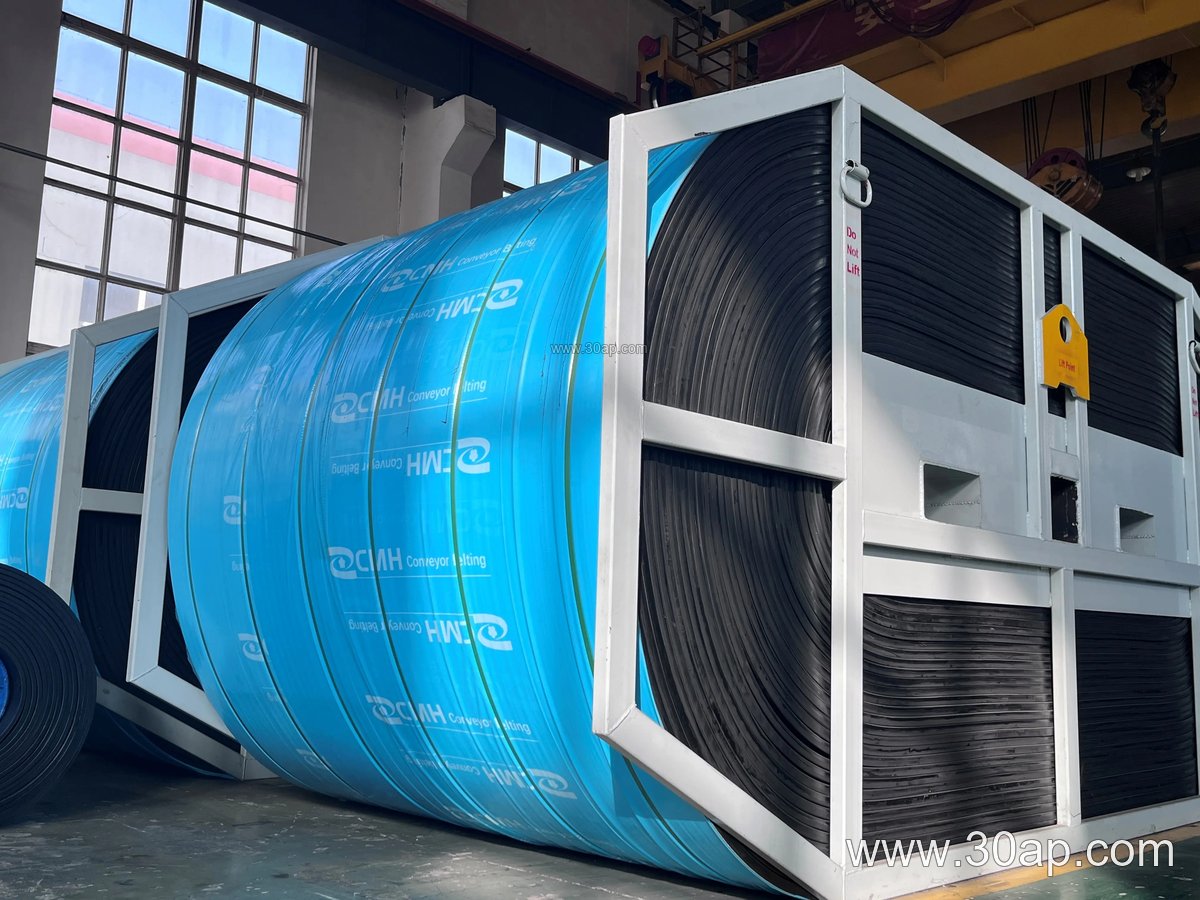
Common Types and Their Working Conditions
Different industries call for different belt constructions. The list below shows typical types, not mandatory choices for every project.
- EP conveyor belt – general purpose, good for sand, gravel, and cement.
- NN nylon conveyor belt – high tensile strength and fatigue resistance, often used in mining and heavy duty plants.
- Steel cord conveyor belt – for very long distances and high tonnage, such as overland coal or ore transport.
- PVC or PVG conveyor belt – flame retardant and antistatic, common in underground coal mines.
- Heat resistant belt – for clinker, sinter, and cement kiln discharge.
- Oil resistant, acid and alkali resistant, cold resistant belt – for specific chemical or low-temperature environments.
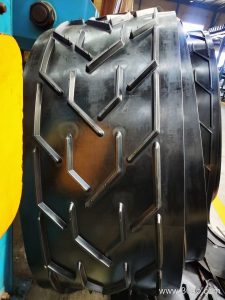
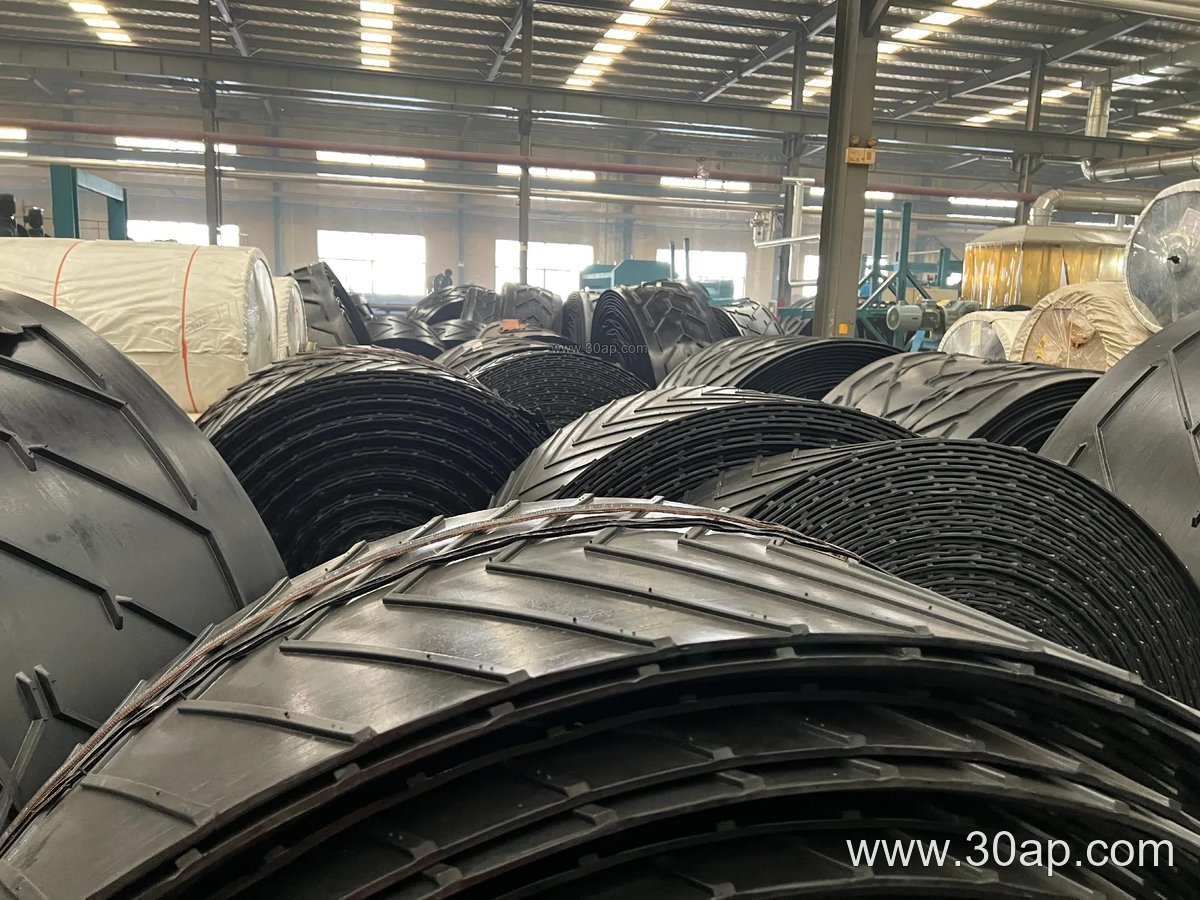
- Patterned belt, chevron belt, and corrugated sidewall belt – for inclined conveying where material slippage is a concern.
These types are not interchangeable by name. A chevron belt is not a replacement for a smooth belt in every case, and a steel cord belt is not a drop-in for a fabric belt without checking pulley diameters and tension requirements.
Key Specifications a Buyer Should Check
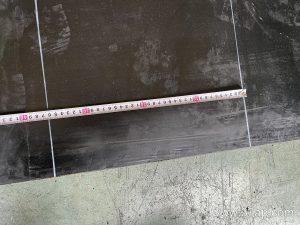
Belt width and strength rating must match the conveyor system. Common widths include B500, B650, B800, B1000, B1200, B1400, B1600, B1800, and B2000. Strength grades such as EP200, EP315, EP400, EP500, EP630, EP800, EP1000, EP1250, EP1600, and EP2000 are often quoted for EP and NN belts. These values are reference data, not a universal supply promise.
The table below shows typical parameters for discussion with a supplier. Actual values depend on the manufacturer and the specific conveyor design.
| Parameter | Common range or example |
|---|---|
| Belt width | B500 to B2000 |
| Fabric plies | 2 to 6 |
| Cover thickness | 3+1.5, 4+2, 5+2, 6+2, 8+3 mm |
| Strength grade | EP200, EP315, EP400, EP500, EP630, EP800, EP1000, EP1250, EP1600, EP2000 |
| Surface form | smooth, patterned, chevron, corrugated sidewall |
Do not assume that one belt width must match one pulley diameter. Pulley diameter is selected from belt tension, carcass type, and the number of plies. A B1000 belt can run on different pulley diameters in different conveyor designs. Likewise, shaft diameter is not determined by belt width alone.
Where Bulk Material Conveyor Belts Are Used
These belts appear in mines, coal preparation plants, cement kilns, power plant coal yards, port bulk terminals, and sand and gravel operations. In each place, the belt works with idler rollers to support the load, a conveyor pulley to drive or redirect, and a conveyor bracket to hold the structure. The belt may also pass over a bend pulley, but a bend pulley is a different component from a drive pulley or a tail pulley. They are not interchangeable names.
For inclined transport, a patterned or chevron belt can reduce material rollback. For underground coal, a PVC or PVG belt with flame retardant and antistatic properties is often considered. For hot clinker, a heat resistant belt with an appropriate cover compound is needed.
Selection and Maintenance Notes
When choosing a bulk material conveyor belt, start with the material properties: lump size, density, temperature, moisture, and abrasiveness. Then check the conveyor layout, including incline angle, loading point impact, and pulley diameters. A belt that is too stiff for the pulley may crack; a belt that is too soft may stretch or fail under high tension.
Maintenance matters as much as the initial choice. Misaligned idler rollers can damage belt edges. Worn pulley lagging can cause slippage. Material buildup on a return roller can train the belt off center. Inspect the belt regularly for edge wear, cover gouges, and splice condition. Keep the conveyor bracket and pulley alignment within the manufacturer’s recommendation.
For any project, request the belt data sheet with carcass type, ply count, cover thickness, strength grade, and width. Confirm that the selected belt matches the drive and tail pulley dimensions. A belt that fits one mine may not fit another, even if the width and strength grade look the same.