What a Ceramic Lagged Pulley Does on a Conveyor
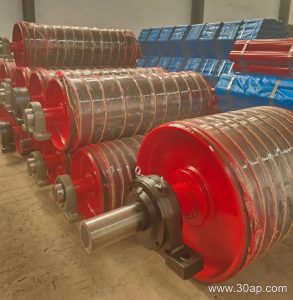
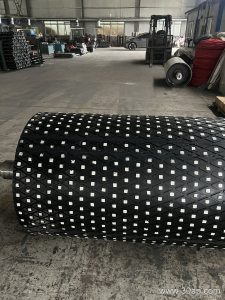
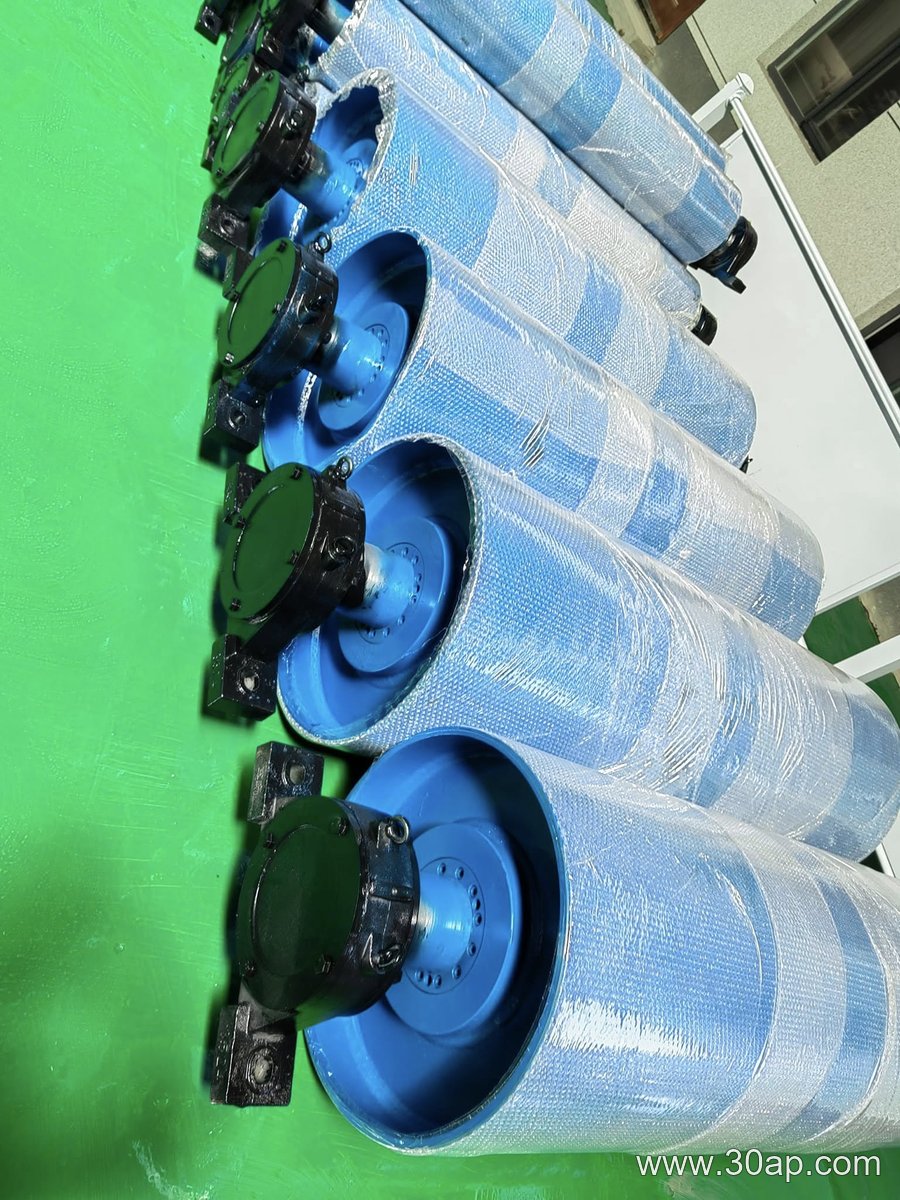
A ceramic lagged pulley is a conveyor drive or driven pulley whose outer shell carries a rubber lagging embedded with small ceramic tiles. The rubber body provides flexibility and protects the belt, while the ceramic chips sit slightly proud of the surface and bite into the belt cover under load. This combination raises the friction coefficient far above that of plain steel or smooth rubber, which helps a drive pulley transmit torque without slipping when the belt is wet, muddy, or carrying a heavy load.
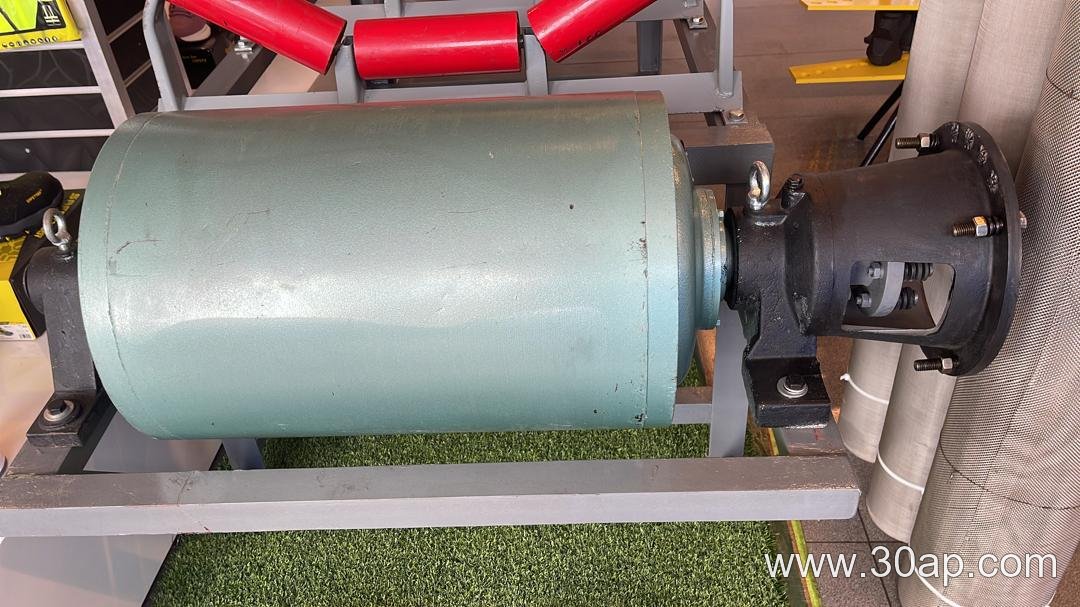
The product is sometimes called a ceramic rubber lagged drum or a ceramic-coated pulley. It is not the same as a tail pulley or a bend pulley, although those positions can also be lagged. The drive pulley is the one that receives power from the gearbox and must grip the belt; a tail pulley simply redirects it, and a bend pulley changes its path. Interchanging those names would mislead anyone selecting a component.
How the Ceramic Surface Is Built
Most ceramic lagging starts with a rubber sheet, commonly 8 mm, 10 mm, 12 mm, 15 mm, or 20 mm thick. Ceramic tiles are bonded into the rubber in a pattern, often staggered or in rows, and the sheet is then attached to the pulley shell. Attachment methods include hot vulcanizing, cold bonding, and bolt-on strips. A hot-vulcanized ceramic lagging usually gives the strongest bond and is preferred for high-torque drives in mines and quarries.
The tiles are typically small squares or rectangles with sharp edges. They are not meant to cut the belt; they are meant to create local pressure points that displace water and fines. Between the tiles, rubber ribs or grooves help channel water away. This is why a ceramic lagged pulley often outperforms a smooth rubber lagged pulley on wet coal, limestone, or ore.
Where It Is Used
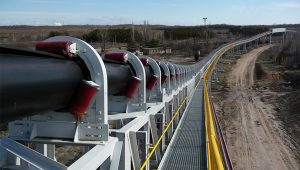
Ceramic lagging is common in the drive position of belt conveyors in coal preparation plants, limestone quarries, copper and iron ore concentrators, cement clinker lines, and power station coal handling. It also appears on high-capacity aggregate conveyors and on some port bulk terminals. In these places, the conveyor belt may run in rain, wash-down water, or process slurry, and the drive pulley must keep grip without over-tensioning the belt.
A ceramic lagged pulley can also be used on a take-up or tension pulley when extra grip is needed, but that is a different duty from the main drive. For a simple gravity take-up, a plain or rubber-lagged pulley may be enough. The choice depends on torque, belt speed, and the material being carried.
Key Parameters to Check Before Ordering
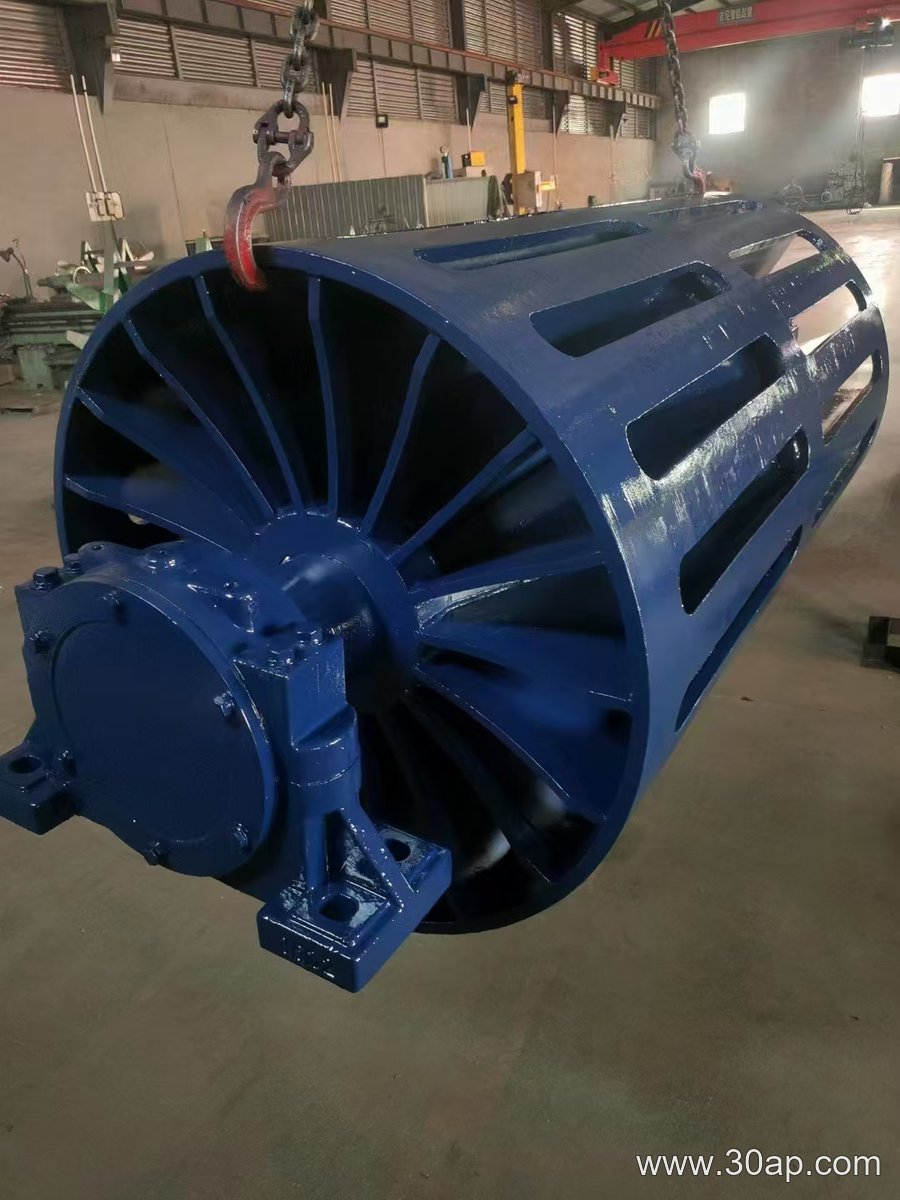
Buyers should confirm the pulley diameter, face width, shaft diameter, and lagging thickness. The table below shows common reference values; they are not fixed pairings and should be adjusted to the actual conveyor design.
| Parameter | Common reference values |
|---|---|
| Belt width | B400, B500, B650, B800, B1000, B1200, B1400, B1600, B1800, B2000 |
| Pulley diameter | Ø200, Ø250, Ø315, Ø400, Ø500, Ø630, Ø800, Ø1000, Ø1250, Ø1400 |
| Lagging thickness | 8 mm, 10 mm, 12 mm, 15 mm, 20 mm |
| Shaft diameter | Ø50, Ø60, Ø70, Ø80, Ø90, Ø100, Ø120, Ø140, Ø160, Ø180, Ø200 |
For example, a B1200 conveyor might use a Ø1000 drive pulley with 15 mm ceramic lagging, while a B800 line could run a Ø500 pulley with 10 mm lagging. These are common combinations, not universal rules. Shaft diameter is determined by torque and load, not by belt width alone. A larger belt width does not automatically mean a larger shaft, and one belt width can match several pulley diameters.
Installation and Maintenance Notes
- Check that the ceramic tiles are not cracked or missing before mounting. A damaged tile can reduce grip and may mark the belt.
- Align the pulley with the conveyor bracket and the idler roller frame so the belt tracks straight.
- Keep the lagging clean. Material build-up between tiles can reduce friction.
- Inspect the bond line during scheduled shutdowns, especially on hot-vulcanized lagging.
- Do not use a ceramic lagged pulley as a substitute for a tail or bend pulley without checking the belt path and tension.
A ceramic lagged pulley is a wear part, not a permanent fix. Its advantage is grip, and its cost is justified where slip would stop production. For light-duty conveyors with dry material, a plain or rubber-lagged pulley may be sufficient. For wet, dusty, or high-torque drives in mining, cement, or power plants, the ceramic option is often the practical choice.