What a Carbon Steel Conveyor Bracket Does
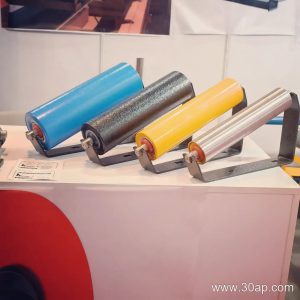
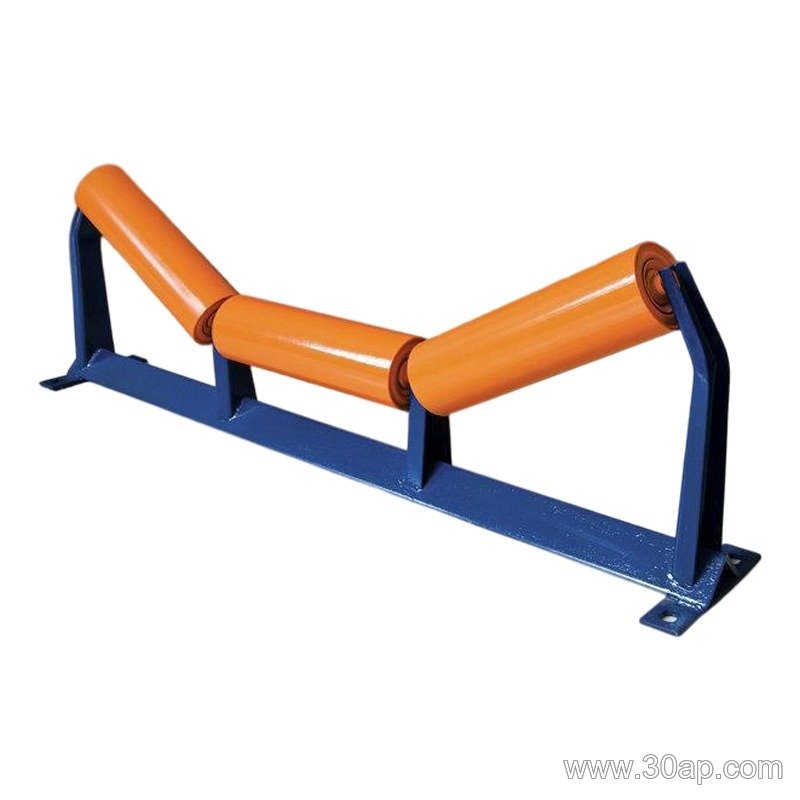
A carbon steel conveyor bracket is the structural support that holds the idler roller in place along a belt conveyor. It carries the weight of the belt and the material on it, keeps the rollers at the right angle, and ties the whole idler station to the conveyor frame. In a quarry, a coal handling plant, or a cement line, these brackets are the quiet parts that decide how well the belt tracks and how long the rollers last.
Because it is made from carbon steel, the bracket can be formed from angle iron, channel, or folded plate. The material choice is practical: carbon steel is weldable, formable, and strong enough for the repeated loads a conveyor sees every shift.
How the Bracket Is Built
Most carbon steel conveyor brackets are fabricated rather than cast. A typical unit includes:
- A base or mounting plate that bolts to the conveyor stringer
- One or more angled seats that hold the idler roller shaft
- Slotted or drilled holes for adjustment
- Reinforcing ribs or gussets where the load is highest
Fabricators often use angle steel for lighter troughing stations and channel or folded plate for wider belts and heavier loads. The bracket may be fixed or adjustable. A fixed bracket locks the roller at a set trough angle, while an adjustable bracket lets maintenance staff change the angle or the roller position without cutting and rewelding the frame.
Matching the Bracket to the Belt and Roller
The bracket is never chosen alone. It is matched to the belt width, the trough angle, and the roller diameter. Common belt widths include B500, B650, B800, B1000, B1200, B1400, B1600, B1800, B2000, and B2200. Trough angles are usually 20, 30, 35, or 45 degrees, and adjustable brackets can move between these values. Roller diameters such as Ø89, Ø108, Ø133, Ø159, and Ø194 are also common.
These values are reference points, not fixed rules. A B800 belt can run with different trough angles and roller diameters depending on the material, the capacity, and the conveyor layout. The mounting hole spacing and crossbeam length change with belt width and trough angle, so they should be confirmed against the actual conveyor design rather than copied from a general table.
Common Reference Combinations
| Belt Width | Trough Angle | Roller Diameter | Typical Bracket Style |
|---|---|---|---|
| B650 | 30 degrees | Ø89 | Troughing bracket |
| B800 | 35 degrees | Ø108 | Troughing or transition bracket |
| B1000 | 35 degrees | Ø108 or Ø133 | Troughing bracket |
| B1200 | 45 degrees | Ø133 | Troughing bracket |
| B1400 | 45 degrees | Ø159 | Heavy troughing bracket |
For return side support, a V-return bracket or a flat return bracket is used instead of a troughing bracket. These are different functions, not interchangeable names. A drive pulley, tail pulley, and bend pulley also serve different roles and should not be confused with each other or with the idler bracket.
Where Carbon Steel Conveyor Brackets Are Used
These brackets appear wherever a conveyor belt needs reliable roller support. In a limestone quarry, they hold the troughing rollers that carry crushed rock. In a coal yard, they support the belt through loading and transfer points. In a cement plant, they keep the idler roller aligned under clinker and raw material. The same bracket type also works in sand and gravel lines, crushing and screening circuits, and power plant coal handling systems.
Because carbon steel can be painted, galvanized, or left bare depending on the environment, the bracket can be adapted to dusty, wet, or abrasive conditions. The surrounding equipment usually includes the conveyor belt, the idler roller, the conveyor pulley, and the conveyor bracket itself, all working as one support system.
What a Buyer Should Check
Before ordering, confirm the belt width, the trough angle, and the roller diameter the bracket must hold. Ask whether the bracket is fixed or adjustable, and whether it is for the carrying side or the return side. Check the mounting hole spacing and the crossbeam length against the existing conveyor frame. For a transition zone, a transition bracket may be needed to guide the belt from the pulley to the full trough. For a loading point, a impact or buffer bracket may be the better choice.
Also consider the steel form. Angle steel brackets are common for standard stations, while channel or folded plate brackets suit wider belts and higher loads. A carbon steel conveyor bracket that fits the belt width, the roller diameter, and the trough angle will reduce belt mistracking, roller wear, and downtime across the whole conveyor line.