What a Rock Conveyor Belt Is
A rock conveyor belt is the heavy-duty rubber belt that carries crushed stone, ore, coal, clinker, and other abrasive bulk materials along a conveyor system. In mines, quarries, cement plants, power stations, and sand and gravel yards, it is the wear part that takes the direct impact of falling rock and the constant abrasion of the load. Because rock is heavy and sharp, this belt is usually built with a strong carcass and a thick rubber cover rather than being treated as a general-purpose belt.
The accurate equivalent name for the same product is stone conveyor belt. Both terms describe the same item, and the choice of wording often depends on the industry. A quarry may say rock belt, while a cement plant may prefer stone belt. What matters is that the belt is specified for the material, the duty, and the conveyor layout.
How the Belt Is Built
The construction has two main parts: the carcass and the rubber covers. The carcass provides tensile strength and resistance to stretching. Common carcass options include EP (polyester-cotton) fabric, NN nylon fabric, and steel cord. Steel cord is often chosen for very long runs and high tension, while fabric belts are common on shorter or medium-length conveyors. The number of fabric plies usually ranges from 2 to 6 layers, depending on the load and the required strength.
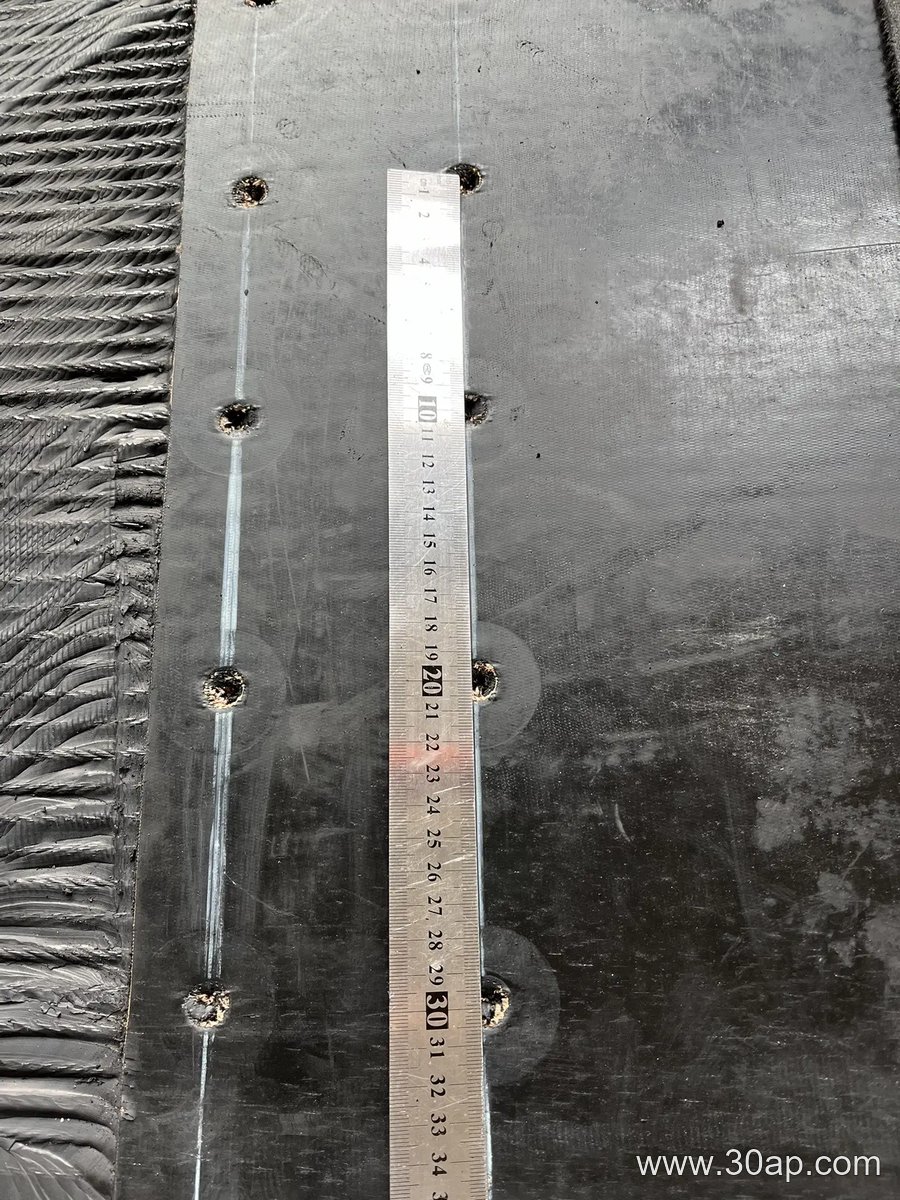
The cover protects the carcass. Top cover thickness is often selected from 3 mm, 4 mm, 5 mm, 6 mm, or 8 mm, while the bottom cover may be 1.5 mm, 2 mm, or 3 mm. A typical specification might be written as 4+2, 5+2, or 6+2 mm. These are common reference values, not a fixed rule for every plant. The correct cover grade depends on whether the rock is dry, wet, oily, hot, or chemically active.
Common Types for Rock Duty
Several belt types appear in rock handling, and each has a purpose:
- EP conveyor belt – a general choice for abrasive rock with moderate tension.
- NN nylon conveyor belt – known for good flexibility and impact resistance.
- Steel cord conveyor belt – used where high strength and long distance are needed.
- Wear-resistant belt – for sharp, heavy rock that attacks the cover.
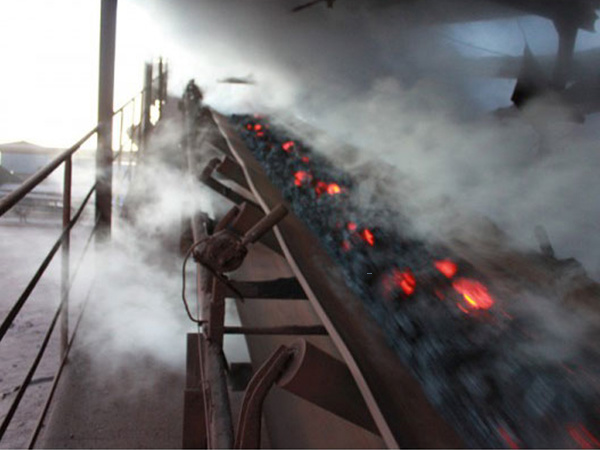
- Heat-resistant belt – for clinker or hot sinter in cement and power plants.
- Flame-retardant and antistatic belt – often required in coal mines and other underground work.
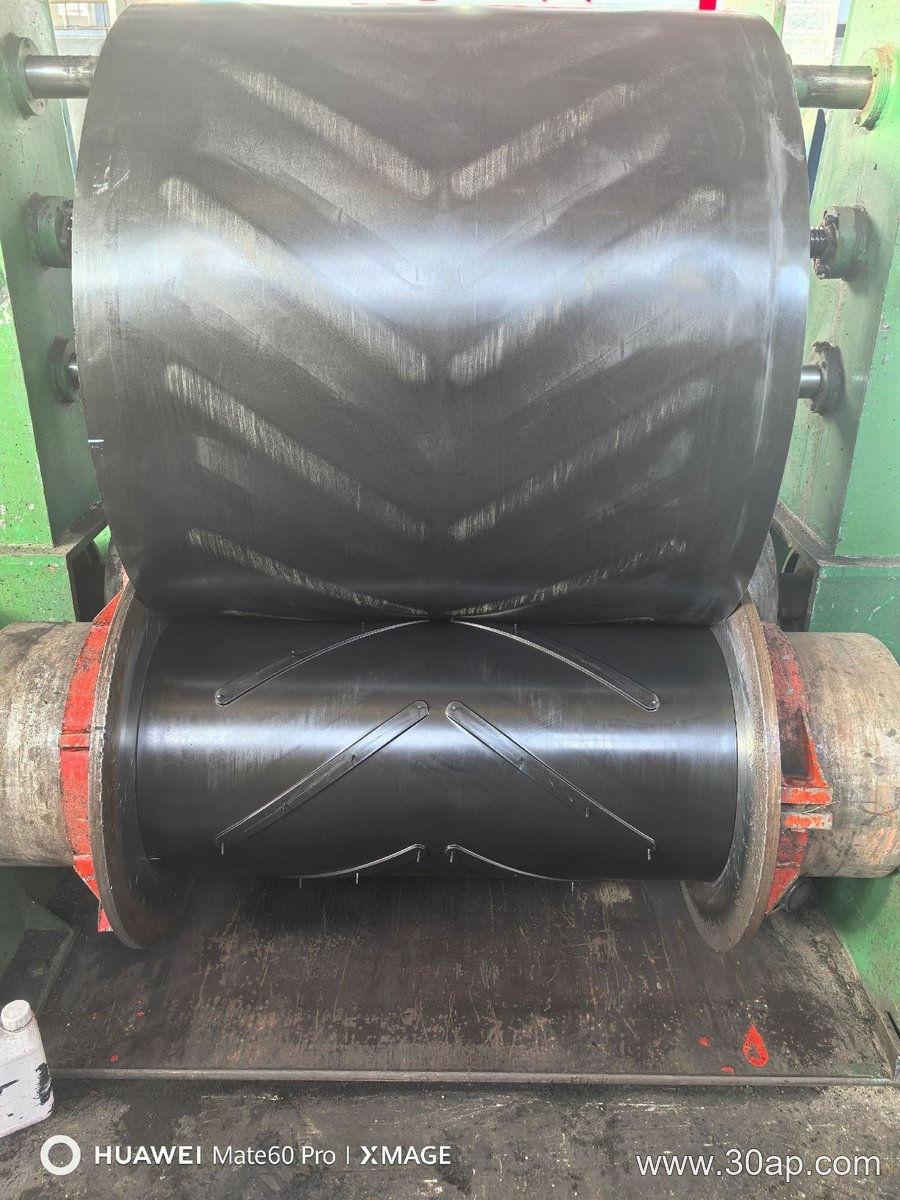
- Chevron or patterned belt – for inclined transport where rock may slide back.
- Corrugated sidewall belt – for steep or vertical conveying where a flat belt cannot hold the load.
These types are not interchangeable. A heat-resistant belt does not replace a wear-resistant belt, and a flame-retardant belt is not automatically suitable for every rock application.
Typical Specifications
Belt strength is usually expressed by the EP or steel cord grade. The table below lists common reference values; the final choice is made by design.
| Parameter | Common reference values |
|---|---|
| Strength grade | EP200, EP315, EP400, EP500, EP630, EP800, EP1000, EP1250, EP1600, EP2000 |
| Belt width | B500, B650, B800, B1000, B1200, B1400, B1600, B1800, B2000 |
| Cover thickness | 3+1.5, 4+2, 5+2, 6+2, 8+3 mm |
| Carcass plies | 2 to 6 layers, depending on tension |
| Surface form | smooth, chevron, patterned, corrugated sidewall |
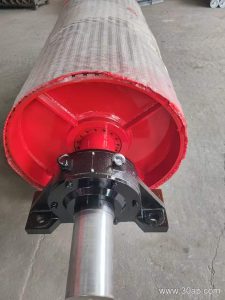
A wider belt is not tied to one pulley diameter, and belt width alone does not determine shaft size. The conveyor pulley, idler roller, and conveyor bracket are selected from the full conveyor design, including load, speed, and trough angle.
Where Rock Belts Are Used
These belts work in many heavy industries. In a mine, they carry ore from the crusher to the stockpile. In a coal mine, flame-retardant grades are common for safety. In a cement plant, they move limestone, clay, and clinker, sometimes at high temperature. In a power station, they feed coal to the boiler. In a sand and gravel yard, they handle washed stone and aggregate. The same belt may also run in a port, a steel mill, or a fertilizer plant.
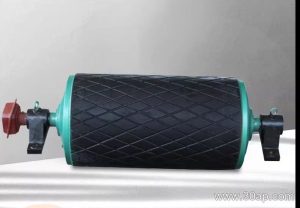
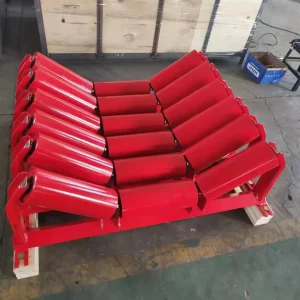
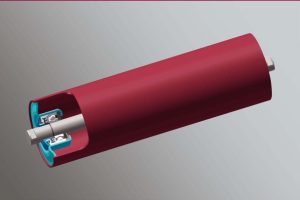
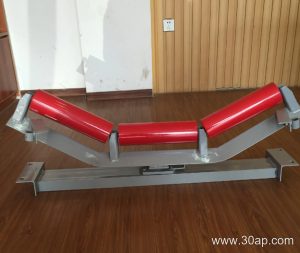
On the conveyor itself, the belt runs over idler rollers that support the load, turns around a conveyor pulley at the head and tail, and is held by a conveyor bracket and frame. The drive pulley, tail pulley, and bend pulley each have a different role and are not interchangeable names. If the belt is misaligned, the idlers and pulleys are usually checked first.
What a Buyer Should Know
Before ordering, a buyer should confirm the material type, lump size, density, temperature, and whether the rock is wet or oily. The required belt width and strength should come from the conveyor design, not from a guess. The cover grade and thickness should match the abrasion and impact level. For inclined conveyors, a patterned or chevron surface may be needed. For underground coal, flame-retardant and antistatic properties are usually specified.
It also helps to ask about splice method, edge condition, and roll length. A rock conveyor belt is a long-term wear item, so matching the belt to the duty is more important than choosing the lowest price. With the right carcass, cover, and surface form, the belt can keep the mine, quarry, or plant moving with fewer stoppages.