What a Tail Drive Pulley Does
A tail drive pulley is a driven conveyor pulley mounted at the tail end of a belt conveyor. Unlike a non-driven tail pulley that simply redirects the belt, this component transmits torque from the drive unit to the conveyor belt, helping move material through the system. In some layouts, it works alongside a head drive pulley; in others, it serves as the primary drive point. It is common in mining, coal preparation, cement plants, power station coal handling, and aggregate quarries where space or layout favors tail-end driving.
Where It Fits
The tail drive pulley sits at the return end of the conveyor. A conveyor belt wraps around it, and the friction between the pulley surface and the belt converts rotary motion into linear belt travel. Because it is a drive pulley, it must handle higher torque than a bend pulley or a standard tail pulley. The term tail drive pulley is specific: it is not interchangeable with a head pulley, a bend pulley, or a snub pulley. Each has a different role in the conveyor.
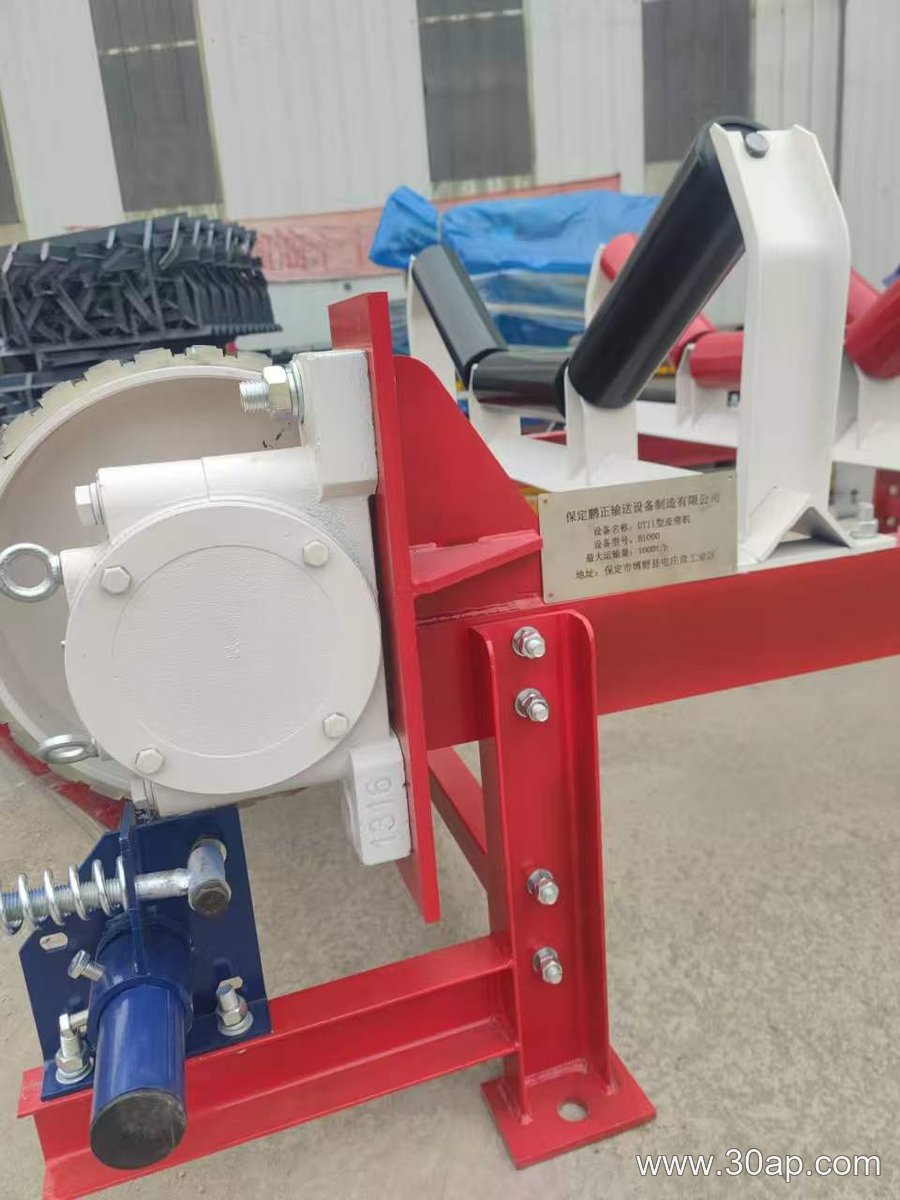
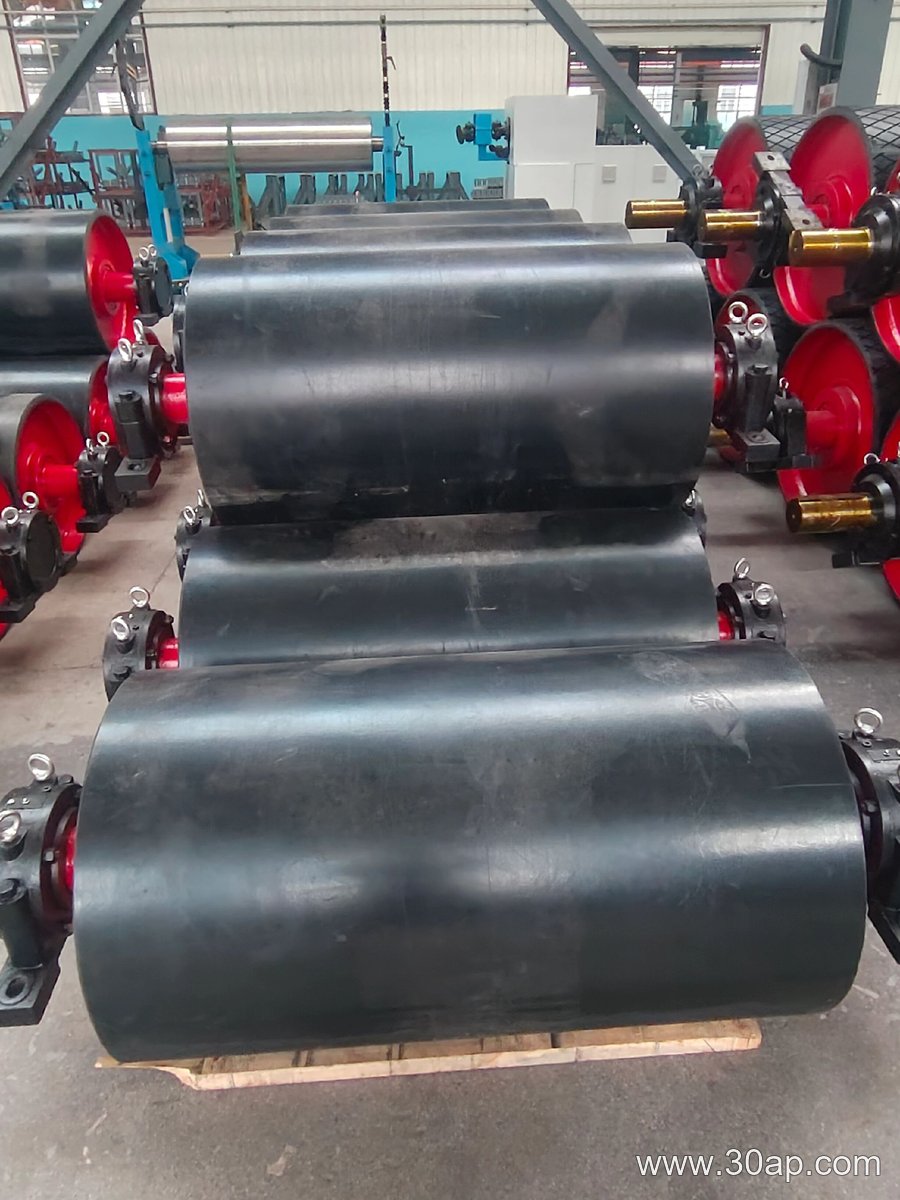
Construction and Key Components
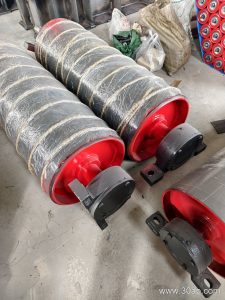
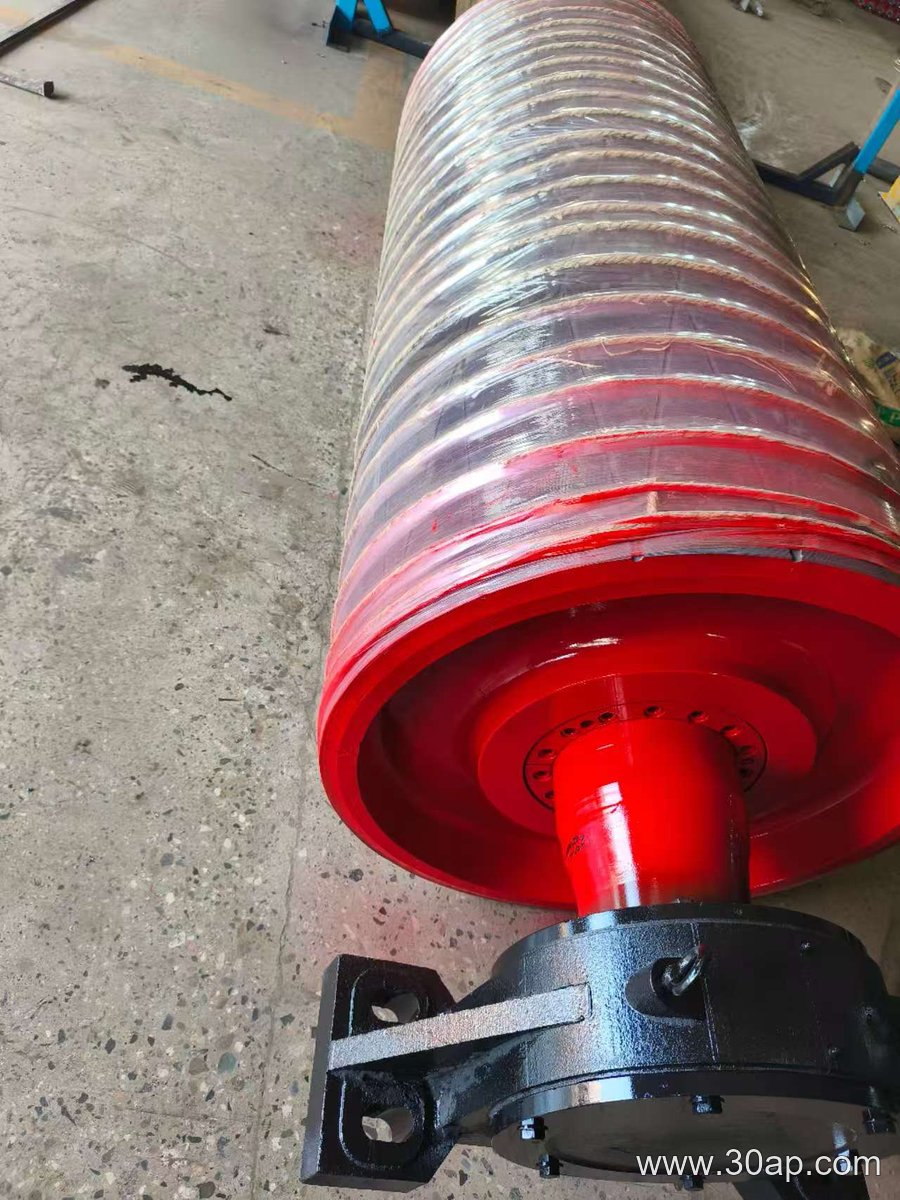
A typical tail drive pulley consists of a cylindrical shell, end discs, a shaft, and a locking assembly or keyed connection. The shell may be smooth or covered with rubber, ceramic, or diamond pattern lagging to improve grip. The shaft is sized by torque and load, not by belt width alone. Common shaft diameters include Ø50, Ø60, Ø70, Ø80, Ø90, Ø100, Ø120, Ø140, Ø160, Ø180, and Ø200 mm, but the final choice depends on the drive design.
Lagging thickness often ranges from 8 mm to 20 mm. A thicker lagging can extend service life in abrasive conditions, such as handling limestone, clinker, or iron ore. The pulley face width is usually wider than the belt. For example, a B800 belt may use a pulley face around 950 mm, while a B1200 belt may use about 1400 mm. These are common references, not fixed rules.
Common Sizes and Configurations
| Belt Width | Typical Pulley Face Width | Common Diameter Range |
|---|---|---|
| B400 | ~500 mm | Ø200–Ø315 |
| B650 | ~750 mm | Ø250–Ø400 |
| B800 | ~950 mm | Ø315–Ø500 |
| B1000 | ~1150 mm | Ø400–Ø630 |
| B1200 | ~1400 mm | Ø500–Ø800 |
| B1400 | ~1600 mm | Ø630–Ø1000 |
Diameter and face width are selected together with the conveyor profile, belt tension, and available space. A B1200 × Ø1000 or B800 × Ø500 combination may appear in some projects, but no single belt width requires only one diameter.
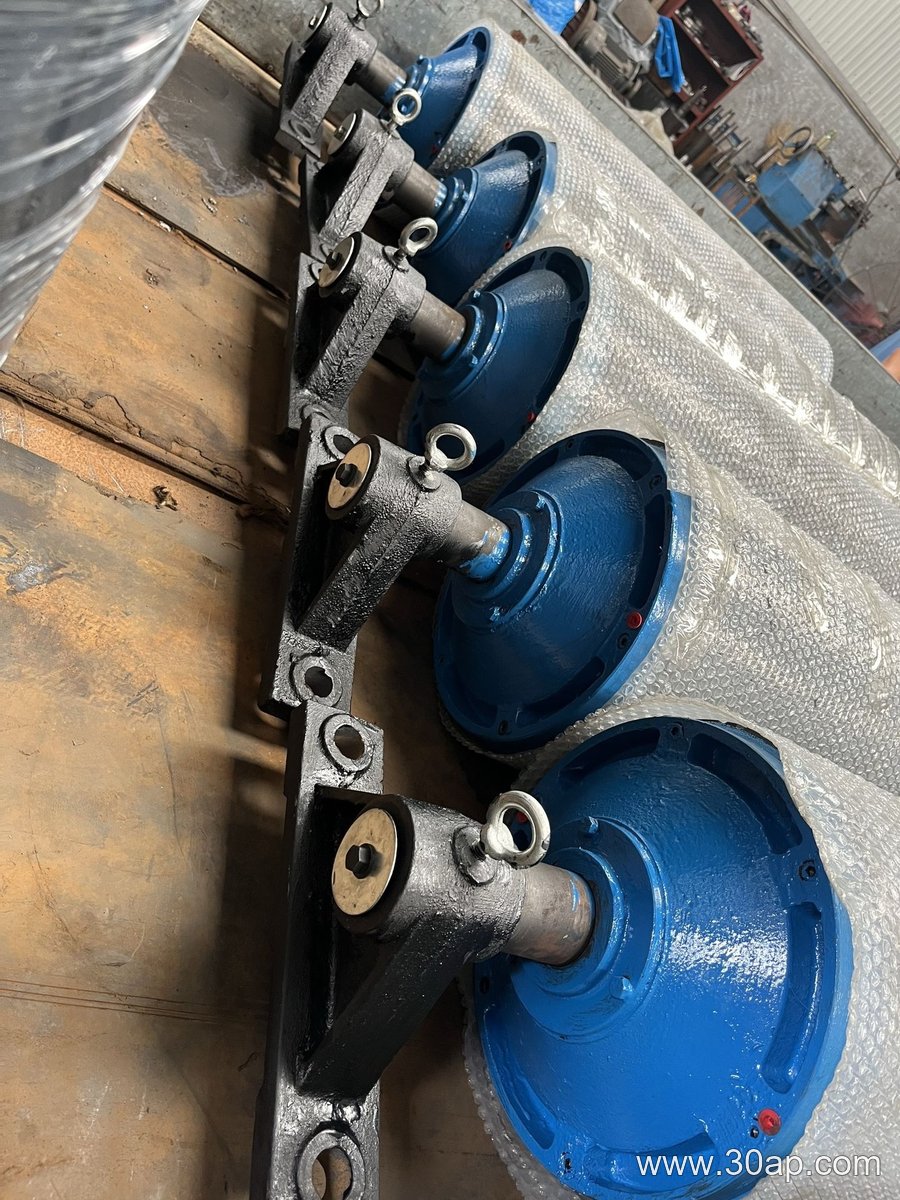
Applications Across Industries
Tail drive pulleys are found in bulk material handling where the drive is placed at the rear of the conveyor. In a sand and gravel plant, they may drive a short transfer belt. In a coal mine, they can be part of a main haulage conveyor. Cement plants use them for clinker or raw meal transport. Power stations rely on them in coal handling systems. The surrounding equipment often includes idler rollers, conveyor brackets, and the conveyor belt itself. Each component must work together to keep the belt tracking and tension stable.
Why Choose a Tail Drive Arrangement
In some conveyor layouts, placing the drive at the tail reduces the need for a long drive shaft or allows the head pulley to remain a simple bend or discharge pulley. This can simplify maintenance access in confined spaces, such as tunneling or underground mining. However, it also means the tail pulley must be built to withstand continuous torque and possible belt slip. Proper lagging and sufficient wrap angle are important.
Buyer’s Checklist
- Confirm the pulley’s role: tail drive pulley, not a bend pulley or head pulley.
- Provide belt width, belt speed, and required torque so the shaft and shell can be sized correctly.
- Specify lagging type and thickness if the environment is wet, dusty, or abrasive.
- Check the shaft diameter separately from the belt width; it depends on load and drive torque.
- Ensure the pulley face width matches the conveyor belt width with proper overhang.
- Ask for the bearing type, locking assembly, and balance grade if the speed is high.
A tail drive pulley is a durable, torque-transmitting component. When selected with the right diameter, shaft, and surface, it helps keep conveyors running in mines, quarries, cement works, and power plants. The final specification should always come from the conveyor designer, not from a single size table.