What the 2400mm Conveyor Belt Is
A 2400mm conveyor belt is a very wide endless or open-length belt designed for bulk material transport where a single pass must carry a large cross-section of ore, coal, clinker, or aggregate. In metric terms this is a 2.4-metre-wide belt, and the product is also accurately called a 2400 mm wide conveyor belt. The width itself is the defining feature; it is not a drive pulley, a tail pulley, or a bend pulley, and it should never be confused with those components. The belt is the moving carrying surface, while the pulleys and idler rollers support and drive it.
Wide belts of this class are common in mines, coal preparation plants, cement works, power stations, and sand and gravel yards where tonnage per hour is the main design driver. A wider belt can carry more material at the same belt speed, which can reduce the number of parallel conveyor lines in a plant layout.
Construction and Typical Specifications
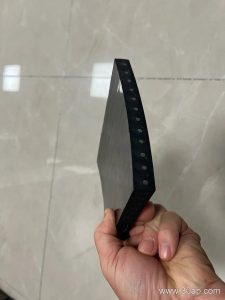
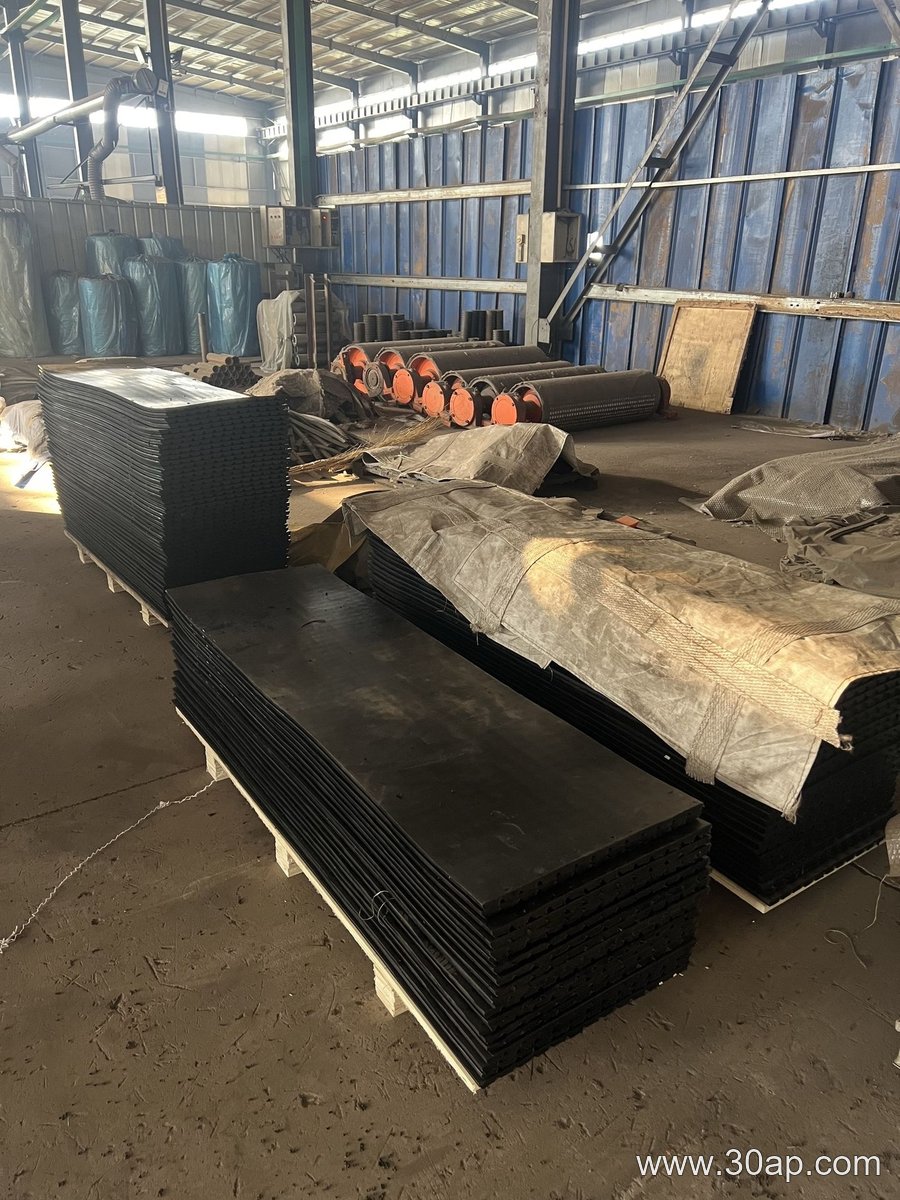
The 2400mm conveyor belt is usually built with a fabric or steel-cord carcass and rubber covers. Common carcass types include EP conveyor belt, NN nylon conveyor belt, and steel cord conveyor belt. Cover compounds may be selected for abrasion resistance, heat resistance, oil resistance, flame retardancy, antistatic behaviour, cold resistance, or acid and alkali resistance.
Reference values below are typical industry ranges, not fixed supply promises. Actual construction is confirmed by the belt manufacturer for each project.
| Parameter | Common reference values |
|---|---|
| Belt width | 2400 mm (B2400) |
| Fabric strength grades | EP200, EP315, EP400, EP500, EP630, EP800, EP1000, EP1250, EP1600, EP2000 |
| Carcass layers | Usually 2 to 6 plies |
| Cover thickness | 3+1.5 mm, 4+2 mm, 5+2 mm, 6+2 mm, 8+3 mm |
| Surface forms | Smooth, patterned, chevron, or corrugated sidewall |
For a 2400mm wide belt, the top cover is often thicker because the belt handles coarse and sharp materials. The bottom cover protects the pulley side. Edge construction matters because a very wide belt can track poorly if the edges are not straight and square.
Where It Is Used
This width appears in high-capacity trunk conveyors. In an open-pit mine it may carry run-of-mine ore from a crushing station. In a coal mine or coal preparation plant it can move raw coal or washed coal. In a cement plant it may feed limestone or clinker. In a power plant it often handles coal or limestone. In a sand and gravel yard it may transport screened aggregate.
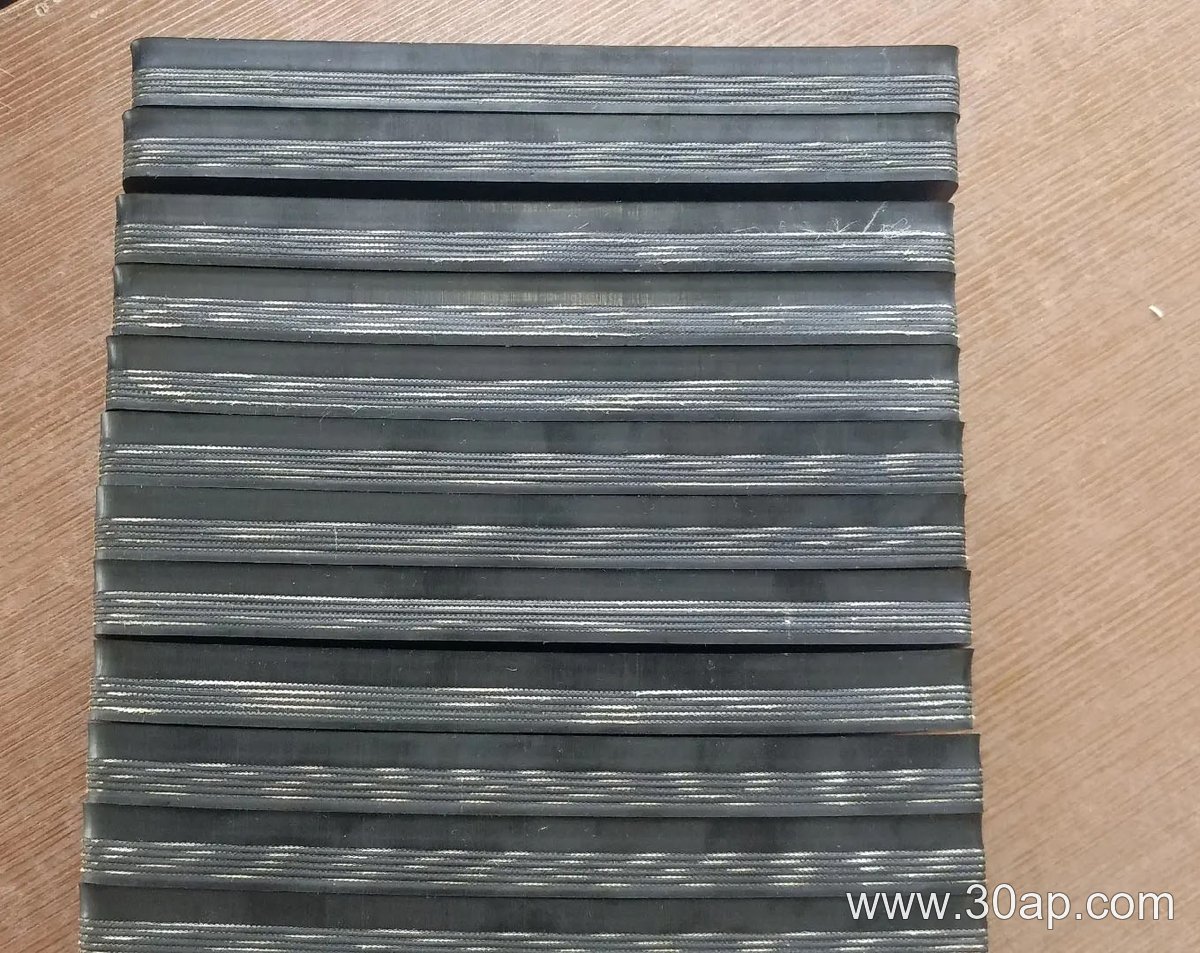
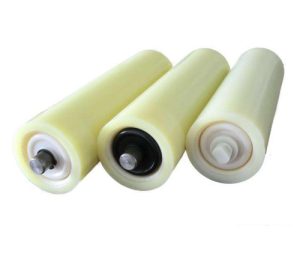
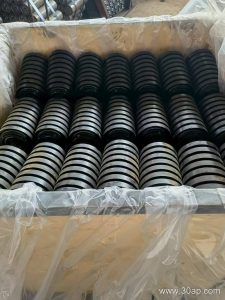
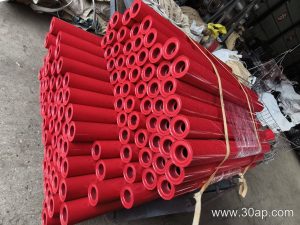
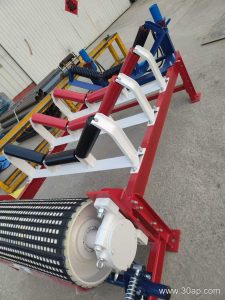
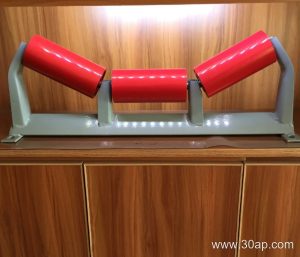
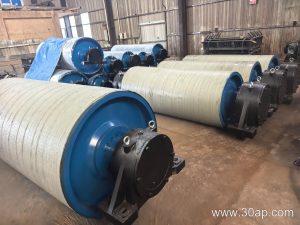
Supporting equipment must match the duty. A conveyor pulley at the head end drives the belt, a tail pulley returns it, and bend pulleys change direction in the return run. Idler rollers carry the loaded strand, and conveyor brackets hold the idlers in alignment. These parts are selected by the conveyor designer, not by belt width alone.
Selection Points for Buyers
- Material and lump size: Decide the maximum lump size and bulk density. Very wide belts are often chosen when the lump size is large and the required capacity is high.
- Strength grade: The working tension determines whether an EP, NN, or steel cord construction is appropriate. A 2400mm belt can be supplied in several strength grades.
- Cover grade: Match the cover to abrasion, heat, oil, flame, or cold conditions. A cement plant and a coal mine may need different compounds.
- Pulley and idler compatibility: The conveyor pulley diameter, idler roller spacing, and conveyor bracket layout are set by the conveyor design. A wide belt does not automatically require one fixed pulley diameter.
- Tracking and splicing: Wide belts need careful splicing and alignment. Poor tracking can damage edges and reduce belt life.
Maintenance Notes
Inspect the 2400mm conveyor belt for edge wear, cover gouges, and splice condition. Check idler rollers for seizure and build-up, because a failed roller can damage a wide belt quickly. Confirm that the conveyor pulley lagging is in good condition and that bend pulleys rotate freely. Keep the belt cleaner adjusted so that material does not carry back and misalign the belt.
For any project, the final belt specification should come from the conveyor designer and the belt manufacturer, based on the actual load, speed, pulley diameters, and environment.