What a Heavy-Duty Belt Conveyor Idler Does
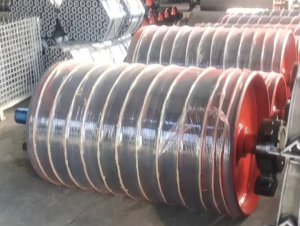
A heavy-duty belt conveyor idler is the rotating support that carries the conveyor belt and its load along the length of a conveyor. In simple terms, it is a robust roller assembly mounted on a frame, and its job is to keep the belt moving smoothly while absorbing the weight and impact of the material. Unlike a conveyor pulley, which drives or redirects the belt at the ends of the system, an idler is a passive component distributed along the carrying and return sides. A drive pulley, tail pulley, and bend pulley are not interchangeable with an idler, and each has a distinct role. The heavy-duty version is built for abrasive, high-tonnage, or high-impact duties where standard rollers would wear out quickly.
Construction and Common Configurations
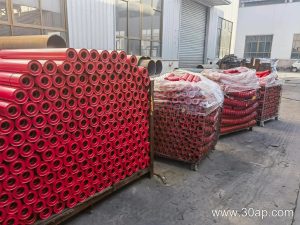
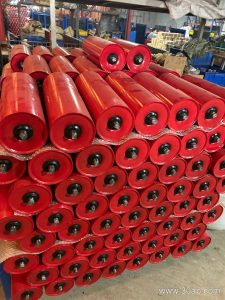
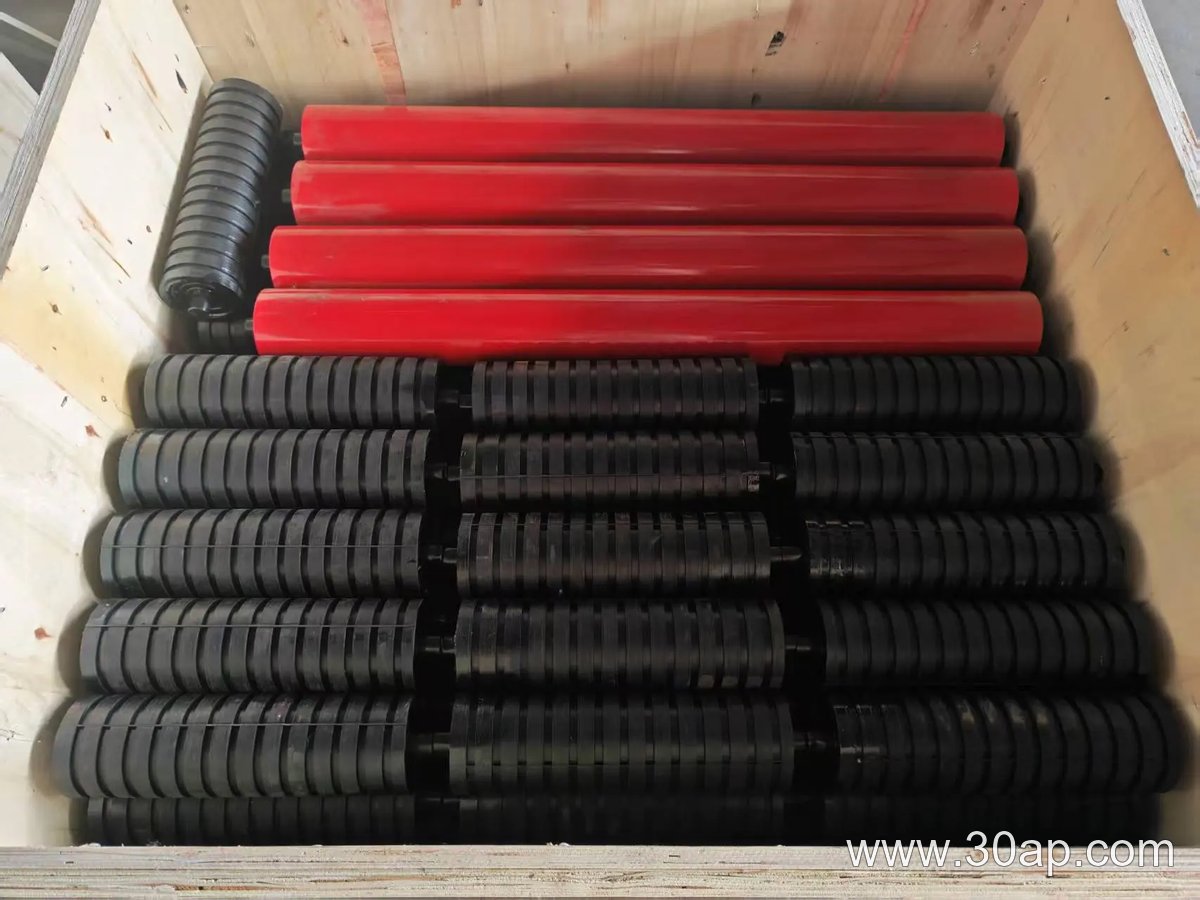
The core of a heavy-duty idler roller is a thick-walled steel tube fitted with bearing housings at each end. Bearings such as 6204, 6205, 6305, 6306, 6308, or 6310 may be used, depending on load and speed requirements, but no single bearing size is tied to one roller diameter. Seals are typically labyrinth or contact types to keep out dust and moisture. The roller surface can be plain steel, nylon, ceramic, or rubber rings for impact and noise reduction. Troughing idlers are grouped in single-roll, two-roll, or three-roll sets, and the trough angle is commonly 20, 30, 35, or 45 degrees. A slight forward tilt of about 1.5 to 2 degrees is sometimes used on training or aligning idlers. The roller length changes with belt width, trough angle, and roll arrangement. For example, a three-roll troughing set may use approximately 200 mm rolls at B500, 250 mm at B650, 315 mm at B800, 380 mm at B1000, 465 mm at B1200, 530 mm at B1400, 600 mm at B1600, 670 mm at B1800, and 750 mm at B2000. These are common examples only, and side rolls and center rolls can differ. Return idlers are often flat or V-shaped, and impact idlers with rubber rings are selected under crushers and transfer points.
Where Heavy-Duty Idlers Are Used
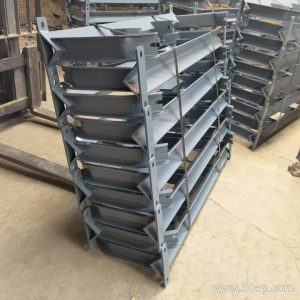
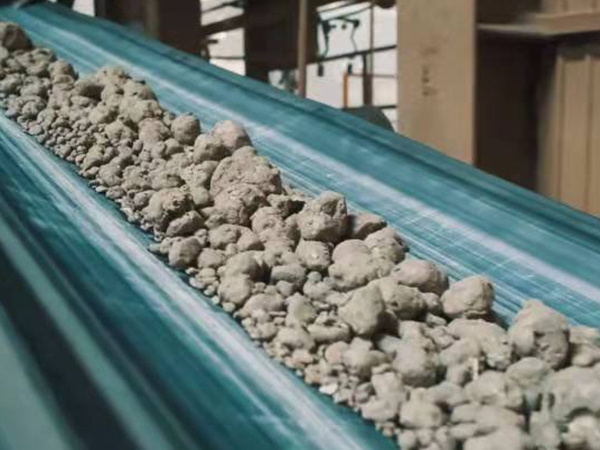
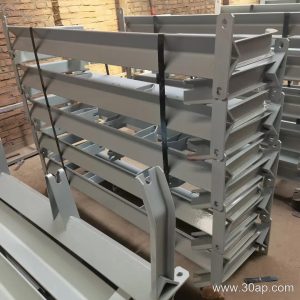
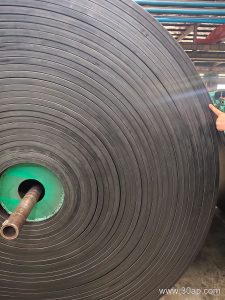
These idlers appear in a wide range of bulk handling operations. In a quarry or limestone mine, they support conveyor belts moving blasted rock and crushed stone. In a coal preparation plant, they handle wet, abrasive coal on the main and return strands. Other users include sand and gravel lines, crushing and screening circuits, cement plants, and power station coal handling. In each case, the idler must resist dust, fines, and continuous loading. A conveyor bracket or frame holds the idler in position, and the whole assembly works with the conveyor belt and conveyor pulley to form a complete system.
Specification and Selection Notes
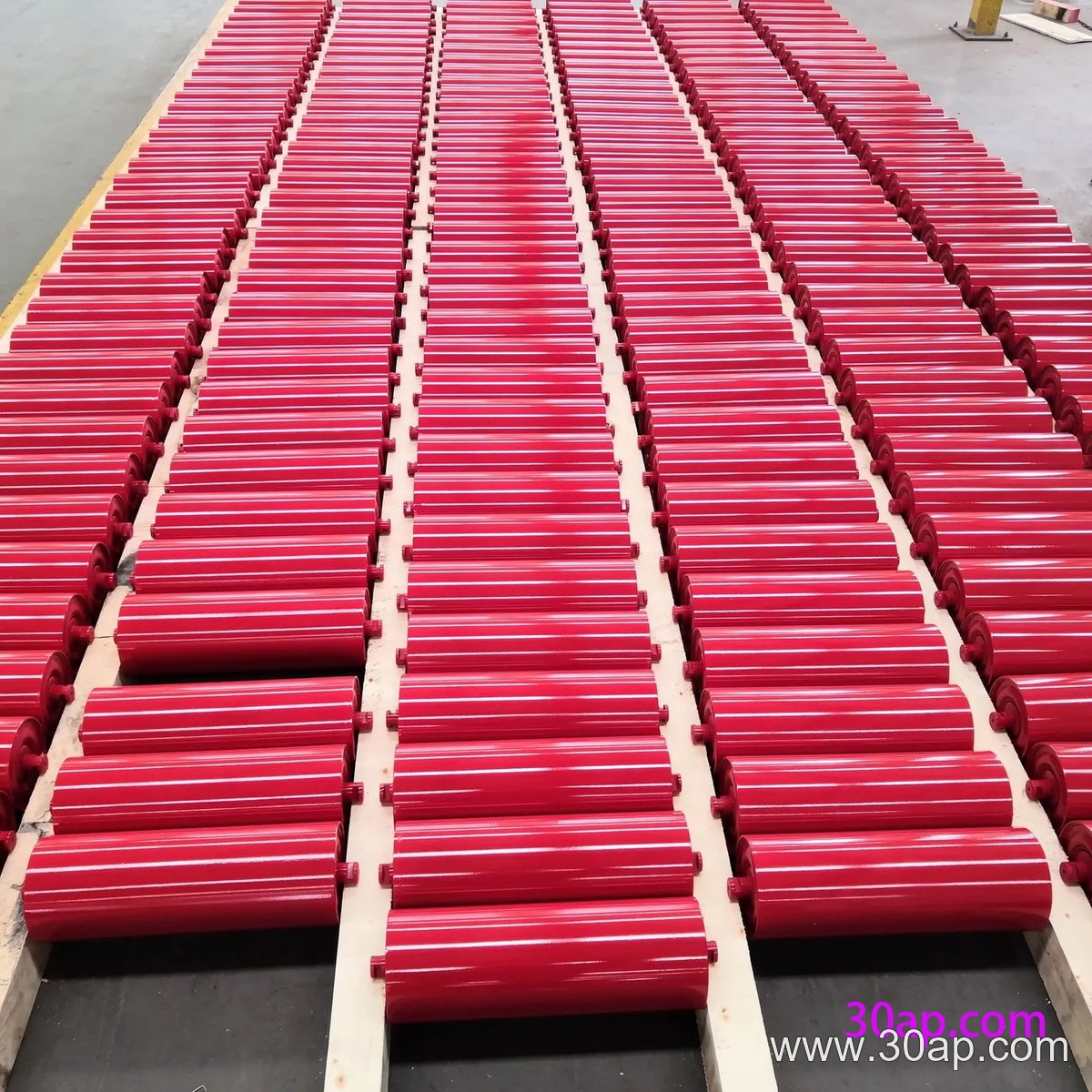
Buyers should look at roller diameter, belt width, trough angle, bearing size, seal type, and roller surface. Common roller diameters include Ø63, Ø76, Ø89, Ø102, Ø108, Ø127, Ø133, Ø159, Ø178, Ø194, and Ø219. Belt widths often range from B400 through B2400. Troughing angles are usually 20, 30, 35, or 45 degrees. The following table shows typical examples, not fixed rules.
| Belt Width | Common Roll Length Example | Typical Roller Diameter Range |
|---|---|---|
| B500 | 200 mm | Ø63 to Ø89 |
| B650 | 250 mm | Ø76 to Ø108 |
| B800 | 315 mm | Ø89 to Ø133 |
| B1000 | 380 mm | Ø108 to Ø159 |
| B1200 | 465 mm | Ø127 to Ø178 |
| B1400 | 530 mm | Ø133 to Ø194 |
| B1600 | 600 mm | Ø159 to Ø219 |
Do not assume one belt width can only match one pulley diameter or one shaft size. The shaft diameter must be calculated from load, span, and bearing selection, not from belt width alone. For heavy-duty service, check the load rating, seal effectiveness, and roller wall thickness. A heavier idler is not always better if it adds unnecessary drag. The right choice balances strength, service life, and energy use. Maintenance is mostly about checking for seized bearings, worn seals, and damaged rollers, then replacing them before they damage the conveyor belt. In dusty or wet conditions, a good seal and a smooth roller surface often make more difference than a larger diameter. When specifying a heavy-duty belt conveyor idler, match the roller to the actual material, belt speed, and loading pattern rather than relying on a single universal size.