What a Trough Idler Bracket Set Does on a Conveyor
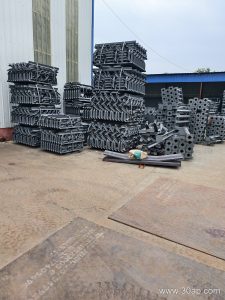
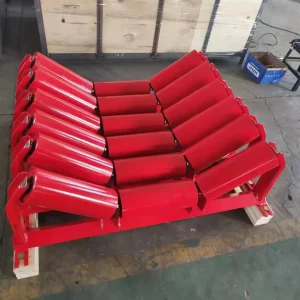
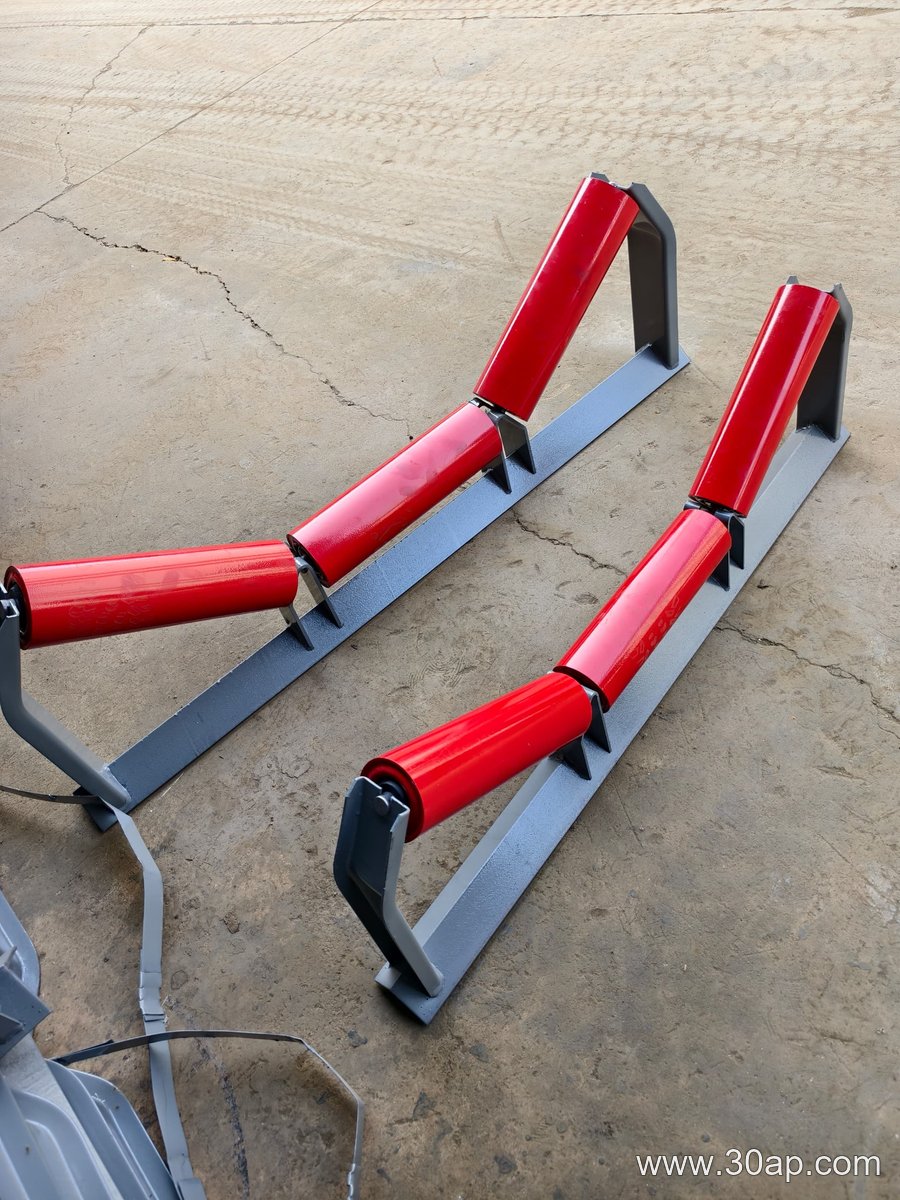
A trough idler bracket set is the supporting frame that holds the carrying idlers in a troughed arrangement, so the conveyor belt forms a curved profile and keeps material centered as it travels. The set usually includes the crossbeam or base, the mounting plates, and the angled seats or arms that position each idler roller. In everyday plant language this assembly is also called a troughing idler frame set, and it is one of the parts that decides how smoothly the belt runs between the loading point and the discharge end.
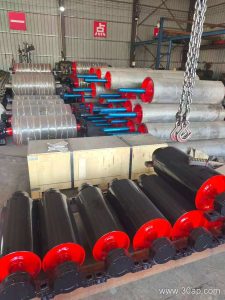
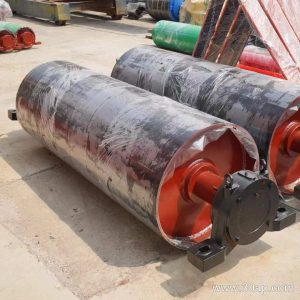
It should not be confused with a bend pulley, a drive pulley, or a tail pulley. Those are rotating drums that transmit motion or change belt direction. The bracket set is a stationary structural component that carries the idlers. A conveyor bracket of this kind works together with the belt, the idler rollers, and the conveyor pulley, but it performs a different job.
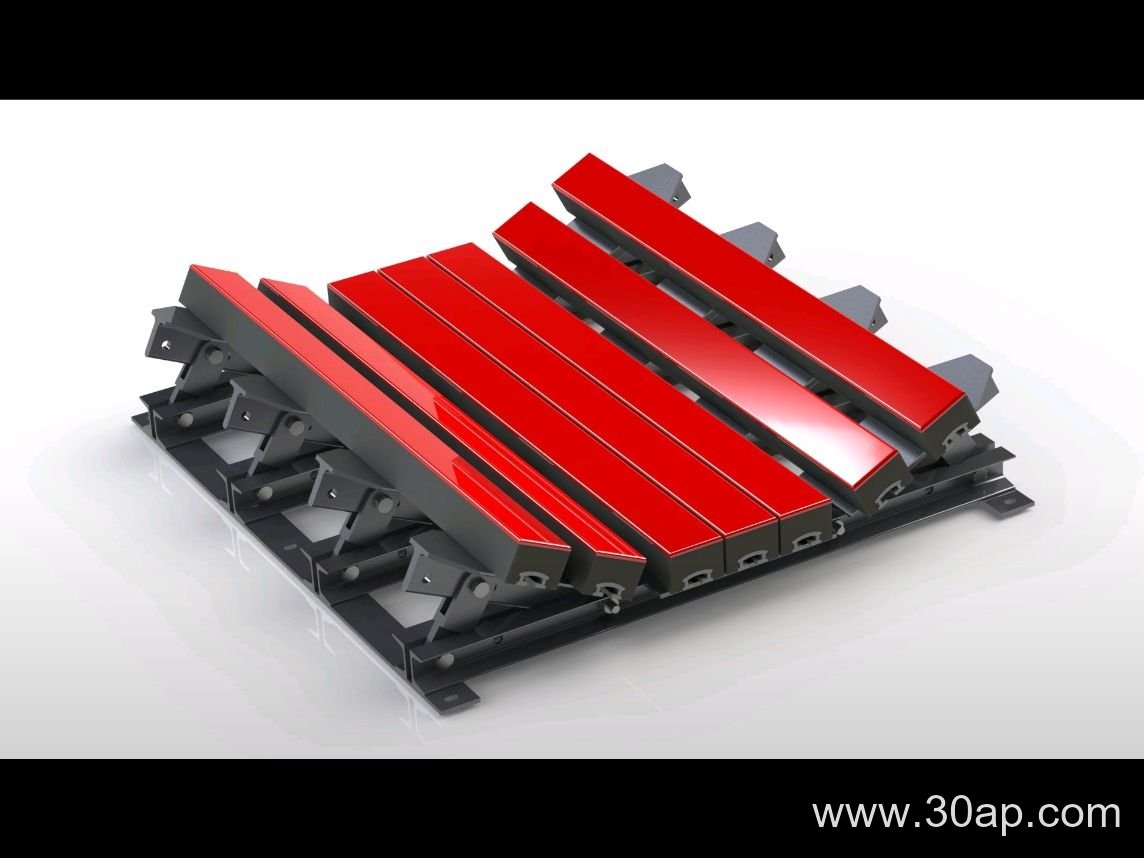
How the Assembly Is Built
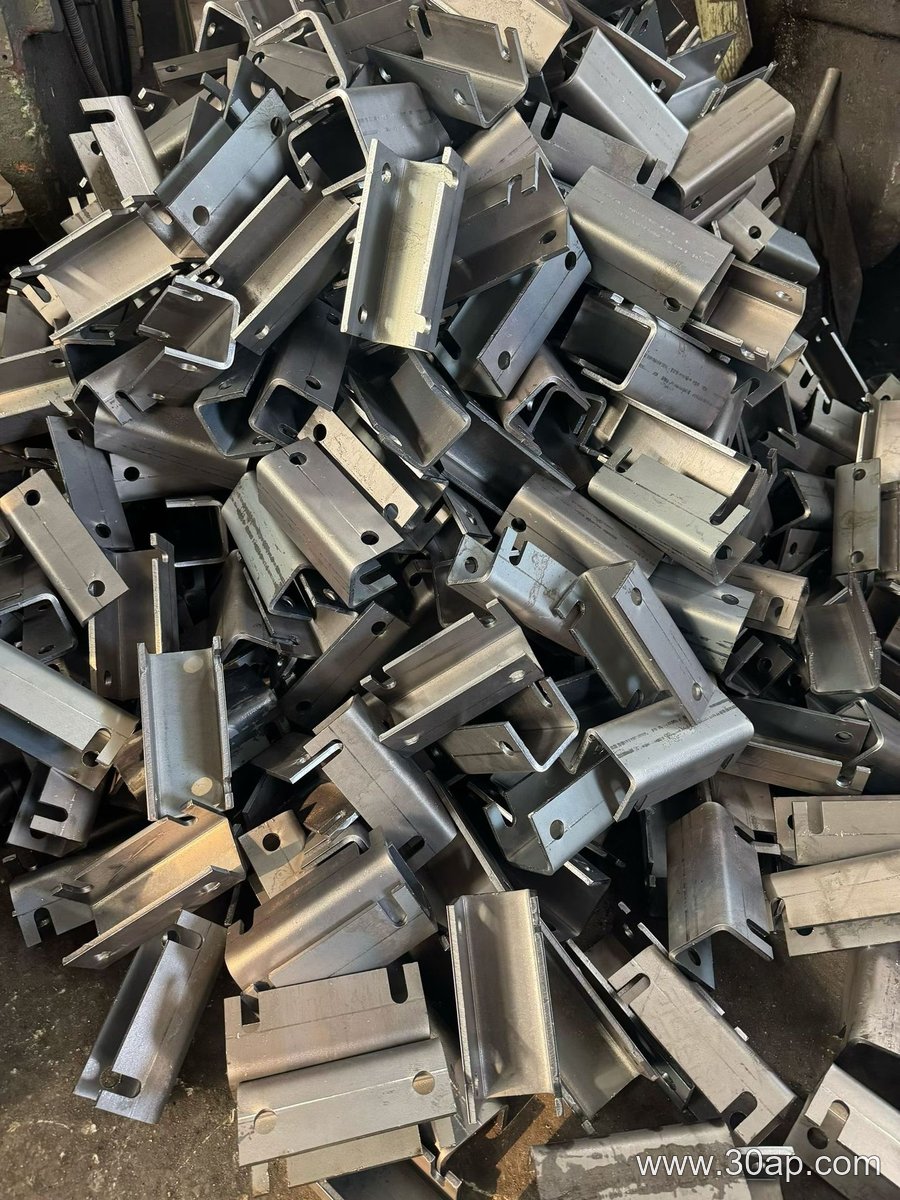
The frame is commonly fabricated from angle steel, channel steel, or folded steel plate. The choice depends on belt width, load, and the expected service life. Slots and bolt holes are positioned so the idler shafts sit at the required trough angle, and the whole set is bolted to the conveyor stringers or to a cross support.
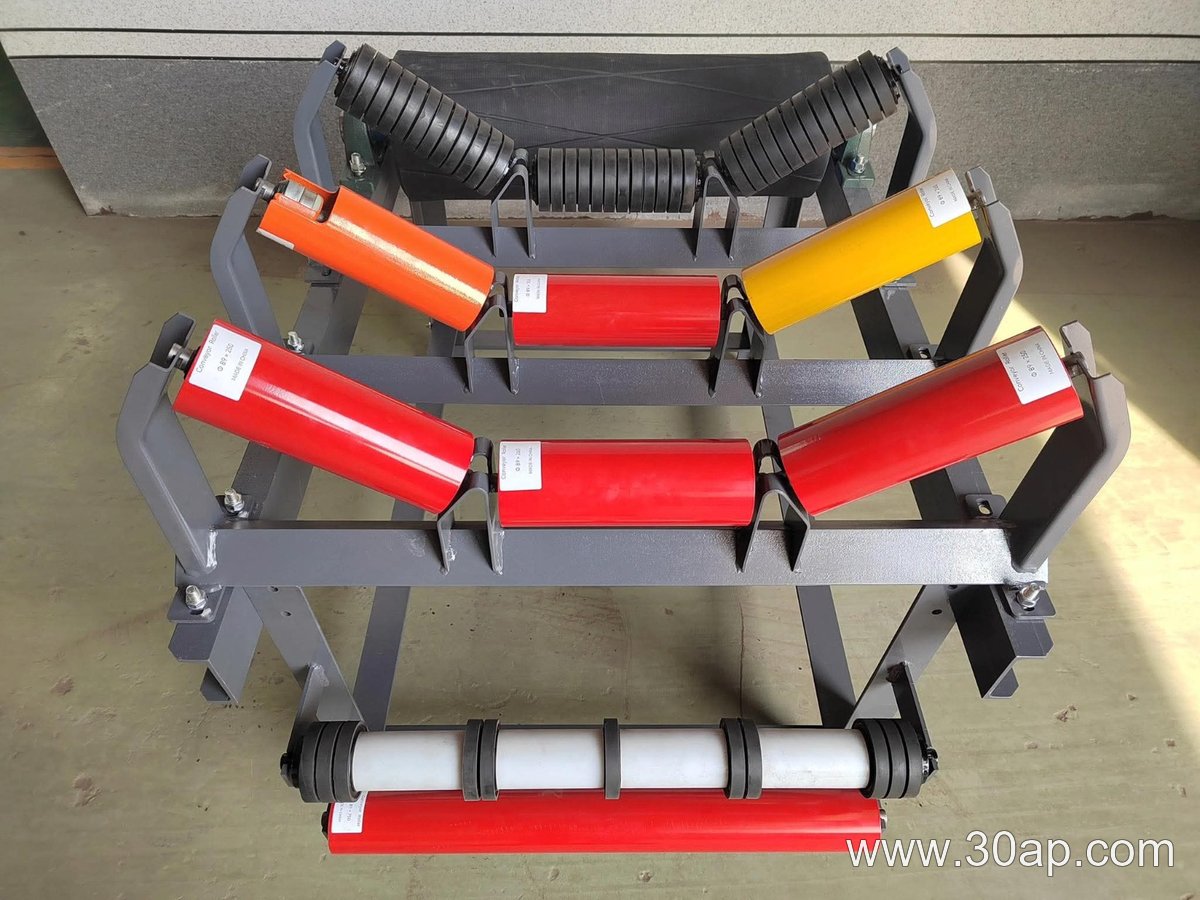
Typical build details include:
- Welded or bolted crossbeam sized to the belt width
- Angled idler seats, often at 20, 30, 35, or 45 degrees
- Mounting holes that match the idler shaft and frame spacing
- Optional adjustable arms for fine tuning the trough angle
Because the mounting hole spacing and beam length change with belt width and trough angle, these dimensions are normally confirmed against the conveyor design rather than treated as universal values.
Common Sizes and Matching Idlers
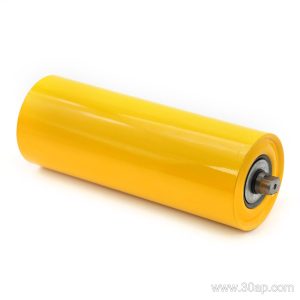
Bracket sets are usually selected together with the belt width and the idler diameter. Common belt widths include B500, B650, B800, B1000, B1200, B1400, B1600, B1800, B2000, and B2200. Common idler roller diameters include 89 mm, 108 mm, 133 mm, 159 mm, and 194 mm. A bracket set for B800, 35 degrees, with 108 mm idlers is a typical combination, but it is not the only valid one. The same belt width may use a different trough angle or roller diameter depending on the material and the conveyor layout.
| Item | Common range |
|---|---|
| Belt width | B500 to B2200 |
| Trough angle | 20, 30, 35, 45 degrees |
| Idler diameter | 89, 108, 133, 159, 194 mm |
| Frame material | Angle steel, channel steel, folded plate |
Adjustable brackets allow the trough angle to be changed within a range, which helps when the same frame has to handle different materials. Fixed brackets are simpler and are chosen when the conveyor geometry is already settled. Forward-leaning idlers, often set at about 1.5 to 2 degrees, are sometimes used for belt training, and a self-aligning bracket is another option for conveyors that tend to mistrack.
Where These Brackets Are Used
Trough idler bracket sets appear in many bulk handling locations. In a quarry or crushed stone line, they support the belt under heavy rock loads. In a coal preparation plant or a power station coal handling system, they help keep the belt profile steady through transfer points. Other common sites include cement plants, steel works, ports, and sand and gravel operations. The bracket set is not limited to one industry; it is chosen wherever a troughed belt needs reliable support between the loading zone and the discharge.
What Buyers Should Check Before Ordering
Before selecting a set, confirm the belt width, the required trough angle, and the idler diameter. Check the mounting hole spacing on the existing conveyor frame, because a bracket that fits one stringer layout may not fit another. Ask whether a fixed or adjustable version is needed, and whether the frame is designed for standard carrying idlers, impact idlers at the loading point, or return idlers on the lower run. The material and finish should suit the environment, especially in dusty or wet conditions.
It also helps to verify that the bracket set is compatible with the idler roller shaft ends and with the overall conveyor bracket layout. A correctly matched trough idler bracket set keeps the belt stable, reduces spillage, and supports longer idler and belt life.