What a Steel Idler Does on a Conveyor
A steel idler is a rotating roller that supports the conveyor belt along its carrying and return runs. In everyday plant language it is also called an idler roller, and the two names describe the same component. Its job is simple but demanding: carry the belt, the material on it, and keep the belt tracking in a stable line without adding unnecessary drag.
The idler does not drive the belt. That task belongs to the drive pulley, while the tail pulley and bend pulleys redirect the belt at the ends and corners of the conveyor. Those pulleys are separate components with different duties and are not interchangeable with idlers. A steel idler simply rolls under the belt and lets it pass.
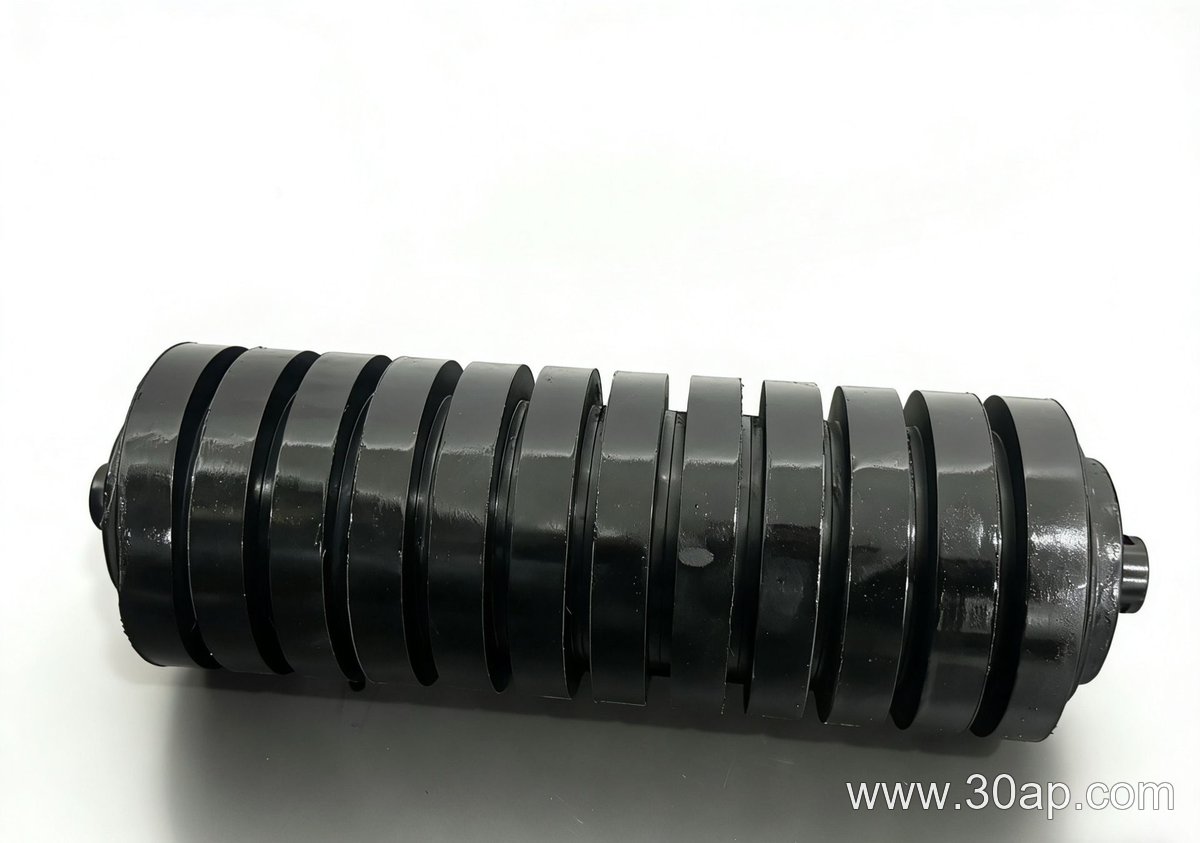
How a Steel Idler Is Built
A typical unit consists of a steel tube shell, end discs, a shaft, bearings, and a sealing arrangement. The shell is often made from steel pipe with machined ends; the shaft runs through the center and is supported by bearing housings. Common bearing sizes include 6204, 6205, 6305, 6306, 6308, and 6310, though the correct bearing for a given roller depends on load, speed, and design life rather than on roller diameter alone.
Sealing matters as much as the tube. Dust, fines, and water are the main enemies of bearing life, so labyrinth seals, felt seals, or contact seals are used depending on the environment. Roller surfaces may be plain steel, nylon, ceramic, or fitted with rubber rings. Rubber rings are common on impact idlers at loading points, while plain steel is typical on long carrying runs.
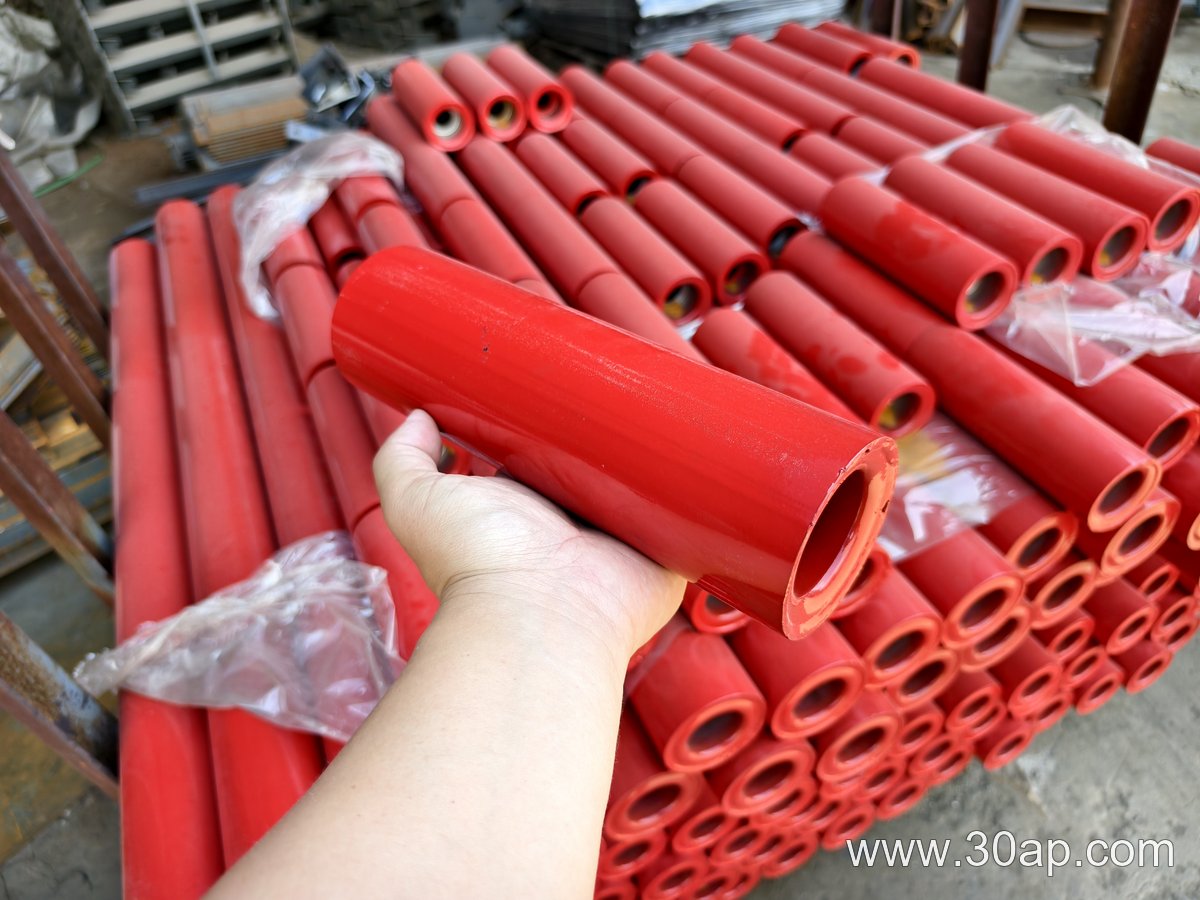
Common Types and Where They Sit
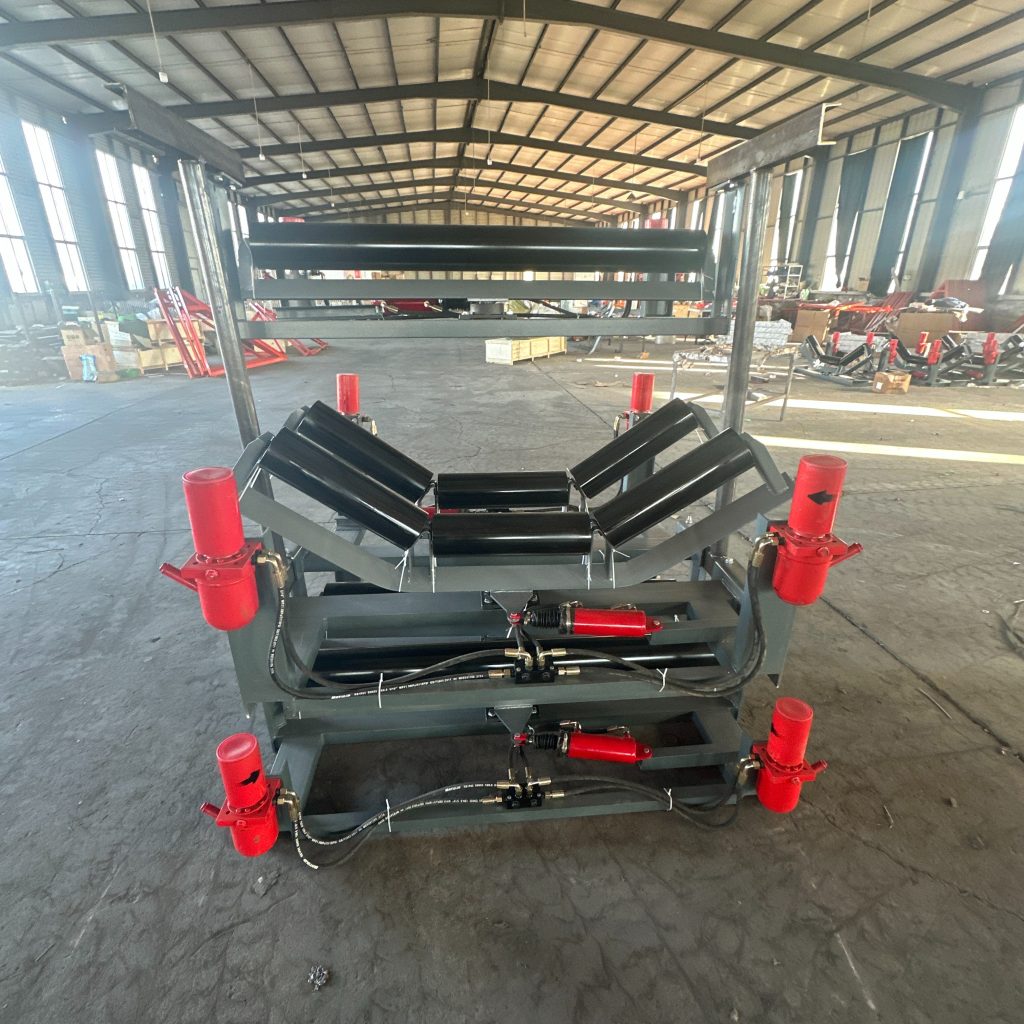
The carrying run usually uses troughing idlers arranged in a set. A three-roll troughing set is the most common form, with two side rolls angled to cradle the belt. Trough angles of 20, 30, 35, and 45 degrees are widely used depending on material and belt width. A two-roll set or a single-roll flat set may appear on narrower belts or special layouts.
On the return run, flat return idlers, V-return idlers, and spiral return idlers are used. V-return and spiral types help shed sticky material and reduce belt wander. Training idlers, including friction and tapered self-aligning designs, correct belt misalignment. Impact idlers with rubber rings sit under the loading chute to absorb fall energy. Transition idlers support the belt where it changes from trough to flat near a pulley. These are different duties, and none of them replaces the drive, tail, or bend pulley.
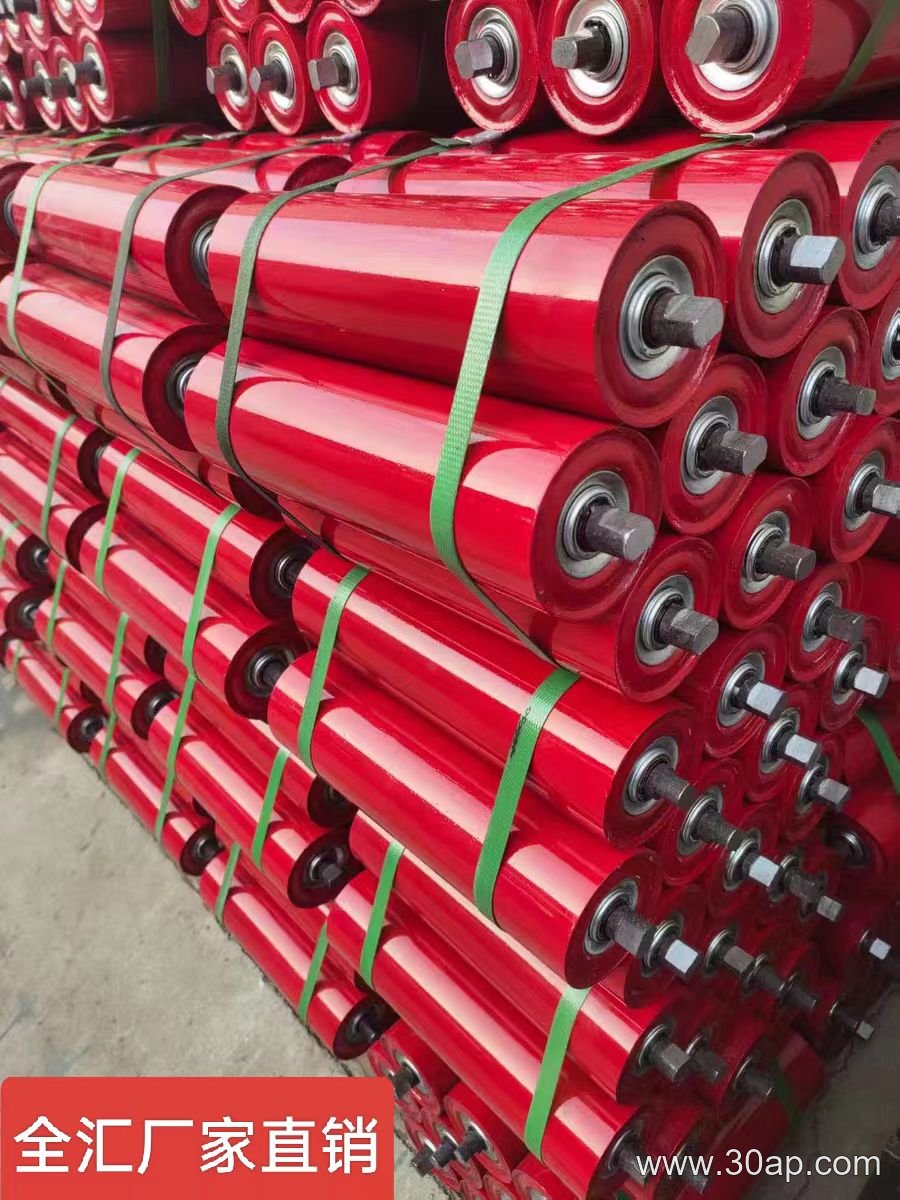
Dimensions a Buyer Should Confirm
Roller diameter, roller length, shaft size, and bearing type must be confirmed against the conveyor design. The table below shows common reference values; they are examples, not fixed matches, and side rolls, center rolls, and return rolls can differ within one conveyor.
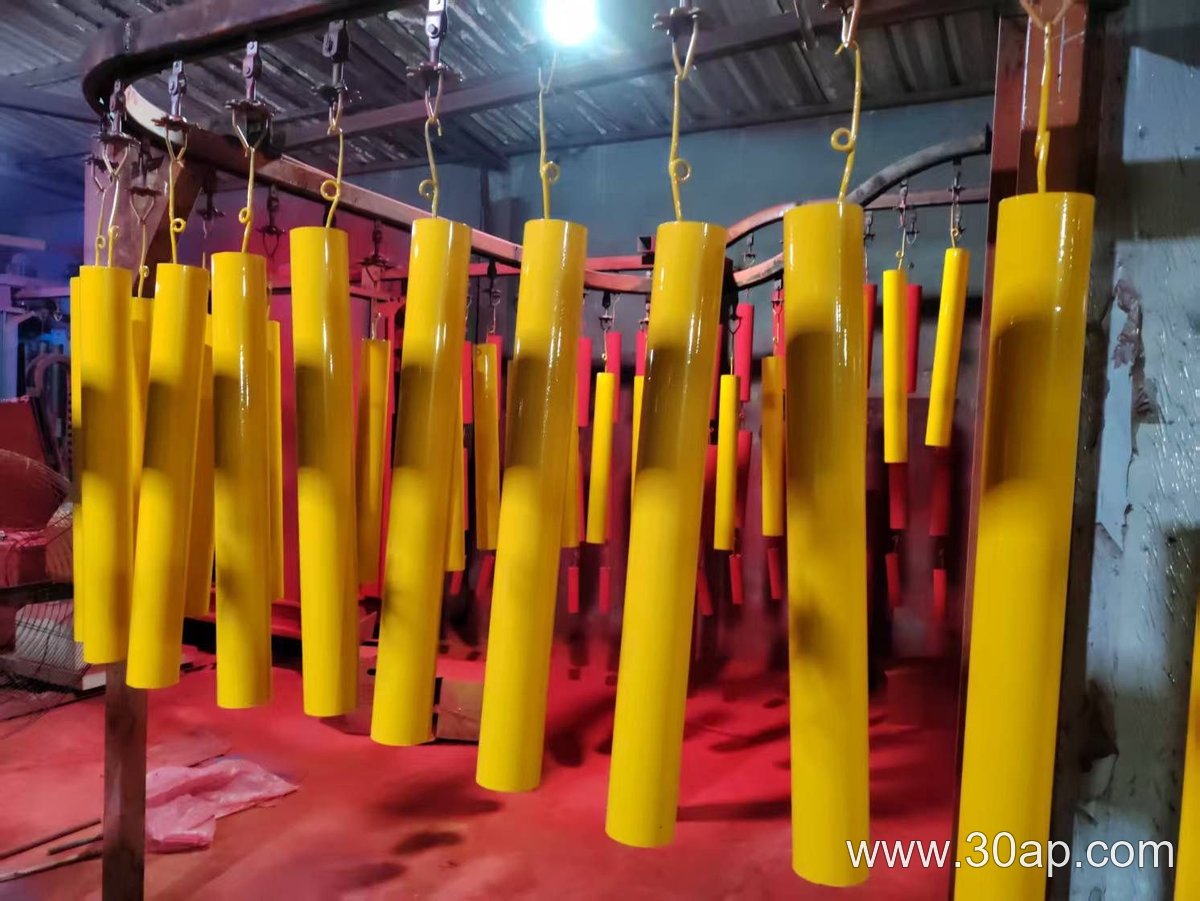
- Roller diameters: Ø63, Ø76, Ø89, Ø102, Ø108, Ø127, Ø133, Ø159, Ø178, Ø194, Ø219
- Belt widths: B400, B500, B650, B800, B1000, B1200, B1400, B1600, B1800, B2000, B2200, B2400
- Troughing angles: 20, 30, 35, 45 degrees
- Common bearing sizes: 6204, 6205, 6305, 6306, 6308, 6310
Roller length changes with belt width, trough angle, and set type. For a three-roll troughing set, typical roll lengths are about 200 mm at B500, 250 mm at B650, 315 mm at B800, 380 mm at B1000, 465 mm at B1200, 530 mm at B1400, 600 mm at B1600, 670 mm at B1800, and 750 mm at B2000. These are common examples only. A single belt width does not dictate one pulley diameter, and shaft diameter cannot be read from belt width alone.
Choosing and Maintaining Steel Idlers
Selection starts with the material, the belt speed, the load, and the environment. Abrasive ore, wet coal, and sticky limestone each put different demands on the shell and seal. In a quarry or a coal handling plant, sealed bearings and thick-walled tubes usually last longer than light-duty units. In a cement or aggregate line, impact idlers under the chute protect the belt and the idler set alike.
During operation, listen for squealing or rumbling, watch for a roller that stops turning, and check for material buildup on the shell. A seized idler can wear through a belt quickly, so damaged units should be replaced in sets where wear is uneven. Keep the conveyor bracket and frame clean so the idler sits square, and check that the belt runs centered on the troughing set. Small alignment corrections often prevent large tracking problems later.
For any inquiry, provide the belt width, trough angle, roller diameter, roller length, shaft end type, and working conditions. That information lets a supplier match a steel idler to the conveyor instead of guessing from a single dimension.