What a Conveyor Idler Frame Does
A conveyor idler frame is the structural assembly that holds idler rollers in position along a belt conveyor. Sometimes called a roller bracket or idler support, it carries the weight of the belt and the material on it, keeps the rollers at the right angle, and helps the belt track straight. The frame is not a pulley and does not drive or redirect the belt; drive, tail, and bend pulleys handle those jobs. The idler frame simply provides a stable mounting platform for the rollers that support the belt between pulleys.
How the Frame Is Built
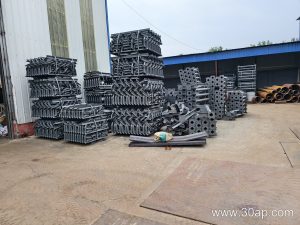
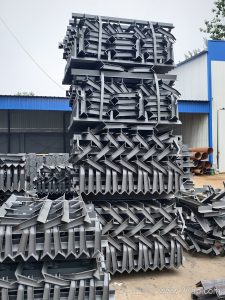
Most frames are fabricated from angle steel, channel steel, or folded steel plate. The material choice depends on load, belt width, and the environment. A typical troughing frame has a horizontal base and angled arms that position three rollers in a trough shape. Return frames often use a flat or V-shaped layout to support the empty belt on its way back.
Key details include the mounting slots for the roller shafts, the cross beam that ties the arms together, and the holes or brackets that bolt the frame to the conveyor stringer. Installation hole spacing and beam length change with belt width and trough angle, so these are design variables rather than fixed numbers.
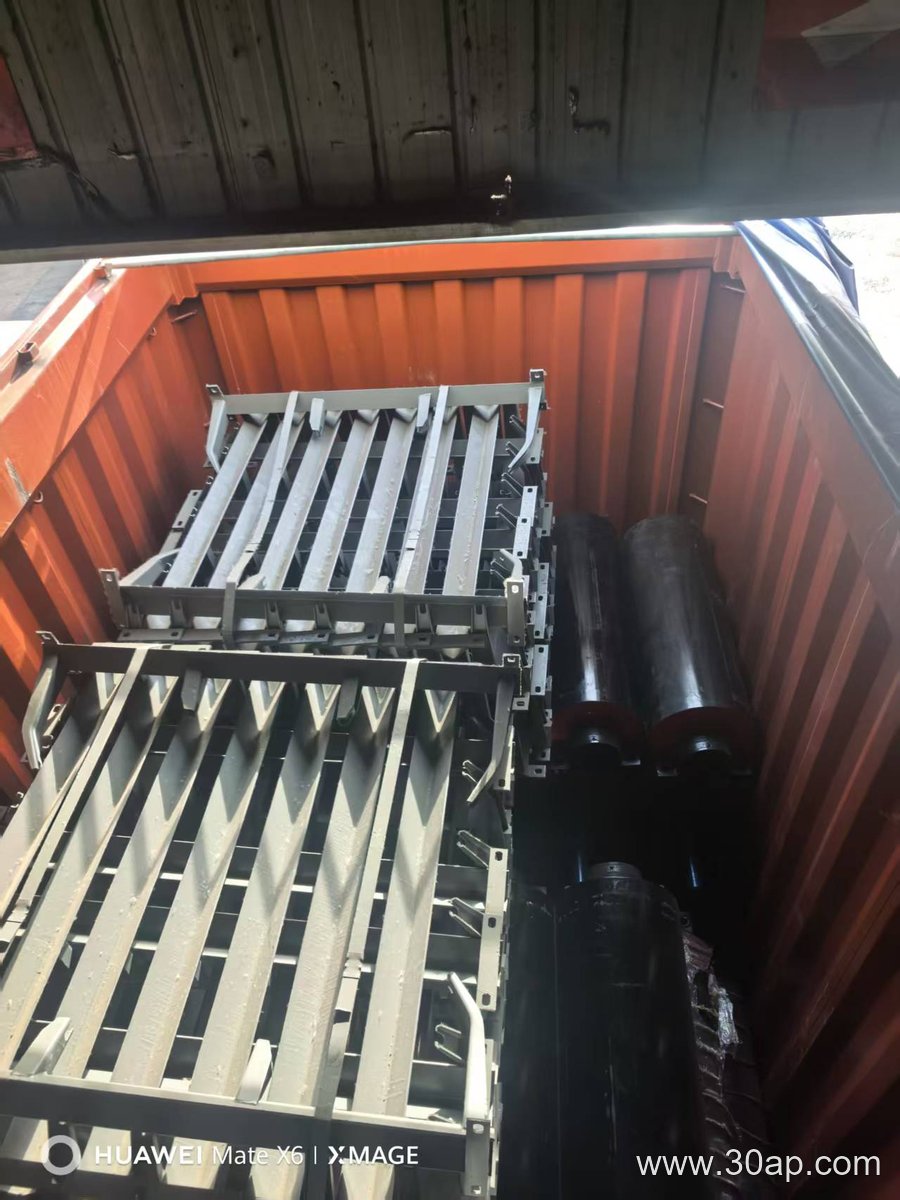
Common Types and Where They Fit
Different positions on a conveyor call for different frame types. A few common examples:
- Troughing frame: carries the loaded belt in a three-roller arrangement.
- Transition frame: eases the belt from the flat pulley area into the trough section.
- Return frame: supports the empty belt underneath the conveyor.
- V-return frame: uses two rollers in a V to help center the returning belt.
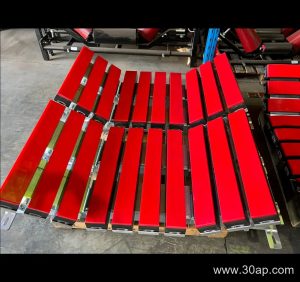
- Impact frame: built heavier for loading zones where material drops onto the belt.
- Self-aligning frame: allows small pivoting movements to correct belt drift.
A self-aligning frame is sometimes compared with a fixed troughing frame, but they serve different purposes. The fixed frame holds a constant angle, while the self-aligning version responds to belt misalignment.
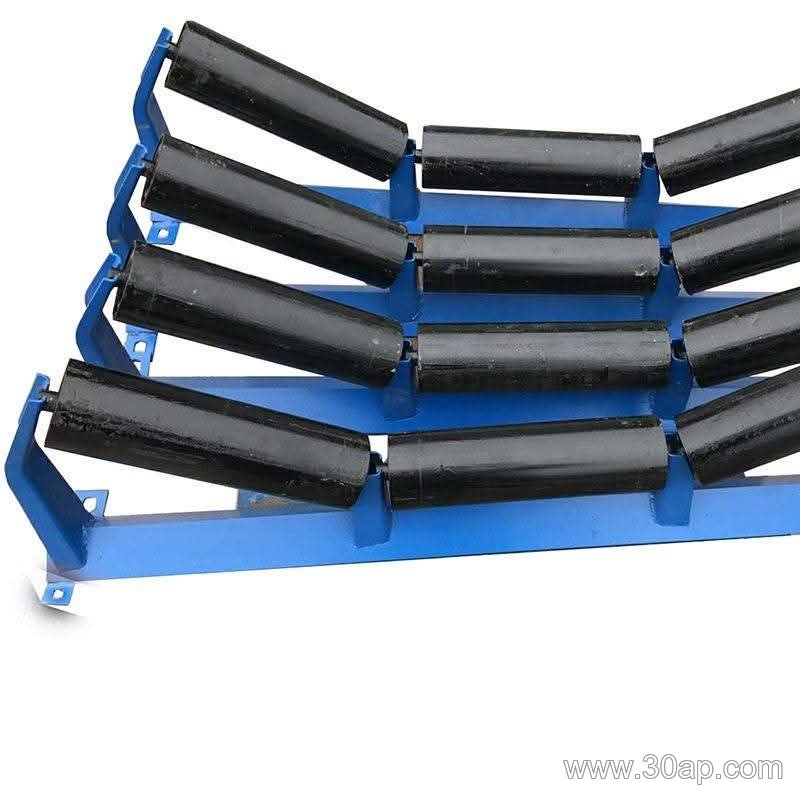
Matching Frame, Roller, and Belt
Belt width, trough angle, and roller diameter work together. Common belt widths include B500, B650, B800, B1000, B1200, B1400, B1600, B1800, B2000, and B2200. Trough angles are often 20, 30, 35, or 45 degrees. Roller diameters such as Ø89, Ø108, Ø133, Ø159, and Ø194 are selected by load and belt speed.
These values are not locked to each other. A B800 belt might run with a 35 degree trough and Ø108 rollers, while a B1200 conveyor could use a 45 degree trough and Ø133 rollers. The right combination depends on the material, capacity, and design of the whole conveyor. Adjustable frames can be set to different trough angles within a range, which helps when the same frame design is used across several belt widths.
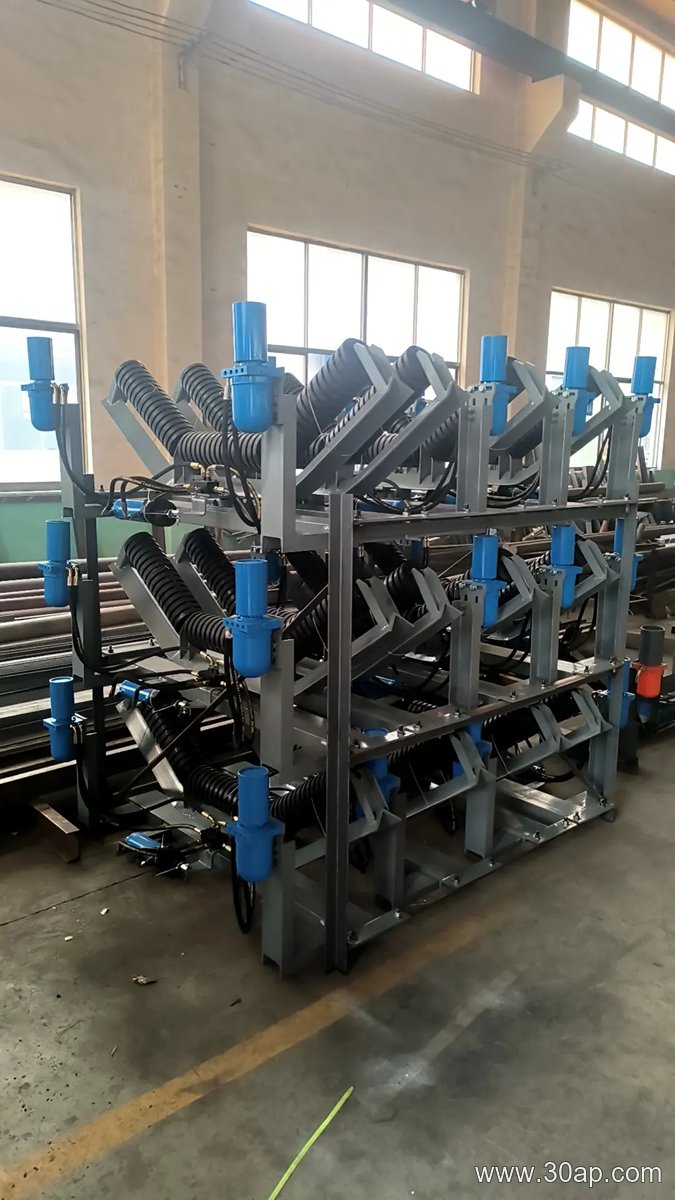
Materials and Finish
Frames are usually made from painted or galvanized steel. In dusty or wet locations, a galvanized or coated finish can extend service life. The frame should be rigid enough to resist bending under load but not so heavy that installation becomes difficult. Bolted connections are common, and some designs use slotted holes to allow small adjustments during alignment.
Where These Frames Are Used
Conveyor idler frames appear in many bulk handling settings. In a quarry or sand and gravel line, they support the belt through crushing and screening circuits. In a coal washing plant or power station coal yard, they keep the belt aligned through long runs and transfer points. The same frame designs are used in cement plants, steel mills, and port loading facilities. The working conditions, such as dust, moisture, and temperature, influence the choice of frame type and finish.
What a Buyer Should Check
Before ordering, confirm the belt width, trough angle, roller diameter, and the distance between mounting holes. Check whether the frame is for the carrying side or the return side, and whether it needs to be fixed or adjustable. Ask about the steel thickness and surface treatment if the conveyor runs outdoors or in a corrosive environment. Also confirm that the frame matches the conveyor stringer and the roller shaft size. A frame that fits the belt but not the mounting points will not work.
For replacement projects, measure an existing frame or take the conveyor model and roller dimensions to the supplier. This avoids mismatches and keeps the belt supported correctly. The conveyor idler frame is a simple part, but getting the details right keeps the whole belt system running smoothly.