What the Trough Idler Bracket Set Does
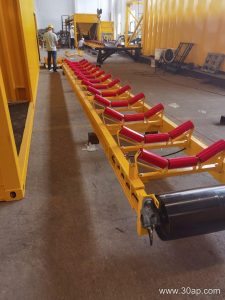
A trough idler bracket set is the stationary steel assembly that holds the idler rollers in a troughed position along the carrying side of a conveyor. The set usually includes the brackets on both sides of the belt line plus the crossbeam or mounting base that ties them together. Its job is simple to state and demanding to execute: keep three or more idler rollers at a fixed angle so the conveyor belt forms a stable trough that carries bulk material without spilling.
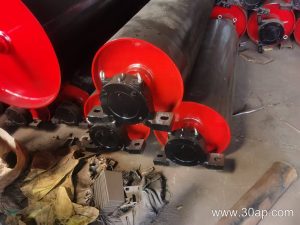
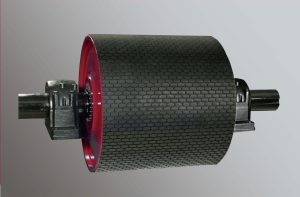
The same product is often called a troughing idler bracket set, or a set of troughing brackets. Either name refers to the same hardware. It should not be confused with drive, tail, or bend pulleys, which are completely different assemblies that transmit motion or change belt direction rather than support the belt along its run.
How the Set Is Built
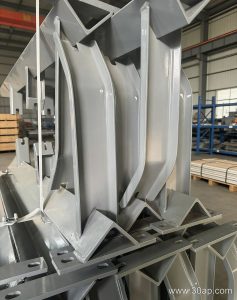
Most sets are fabricated from angle steel, channel steel, or folded steel plate. The side brackets carry slots or drilled holes that accept the idler shaft, and the cross member sets the spacing between the left and right brackets. Welded construction is common, and bolt-together designs appear where site assembly or later adjustment is expected.
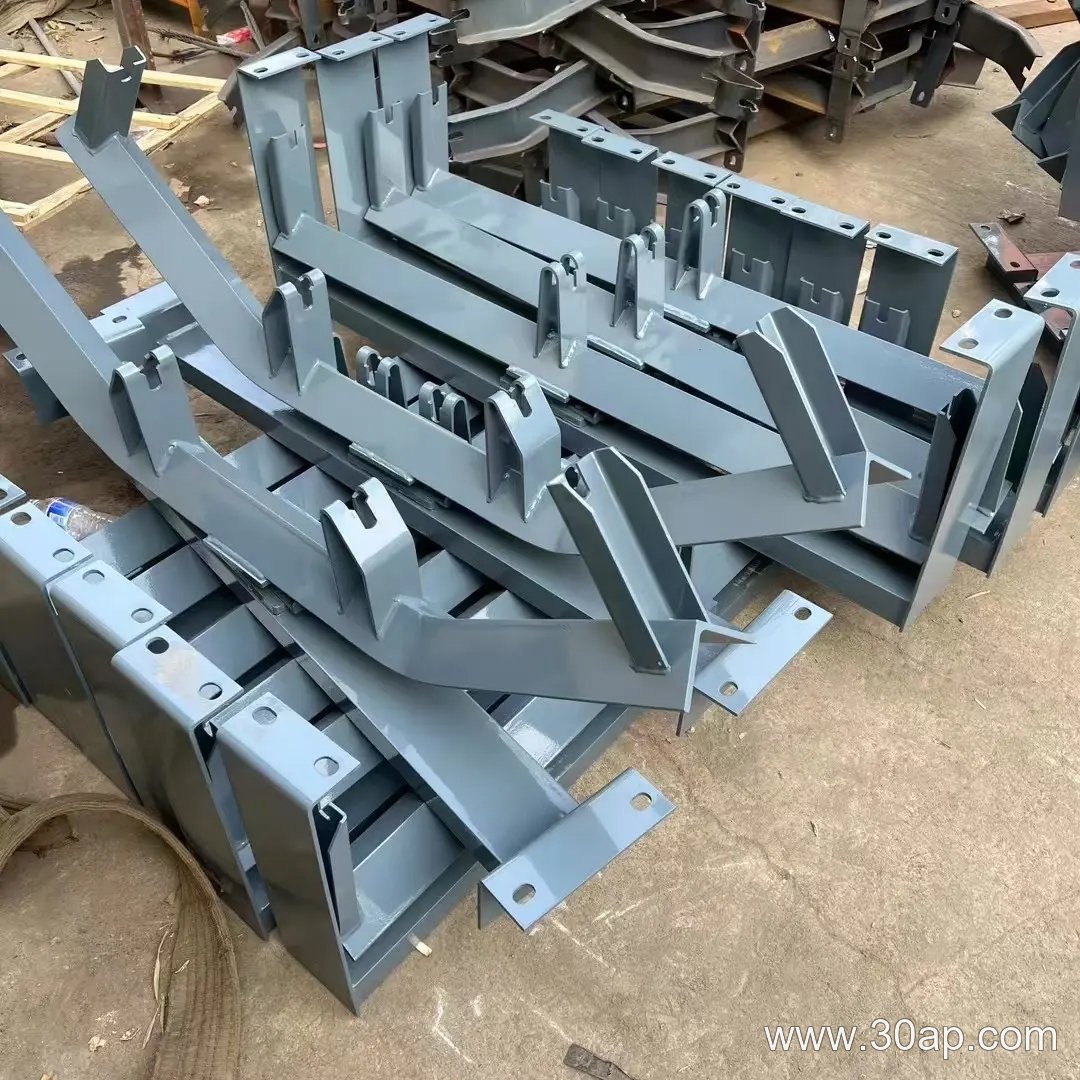
Surface treatment matters in dusty or damp locations. Painting, galvanizing, or a powder coating helps the bracket resist corrosion, though the exact finish depends on the supplier and the environment. Buyers should ask what the bracket is made from and how it is protected rather than assuming a single standard.
Trough Angle and Roller Position
The trough angle is the main geometric decision. Common values are 20, 30, 35, and 45 degrees. A shallow angle suits materials that need a flatter bed, while a deeper trough contains a wider load. Adjustable bracket sets allow the same hardware to be set at more than one of these angles, which is useful when a conveyor handles changing materials or when the ideal troughing angle is not yet fixed.
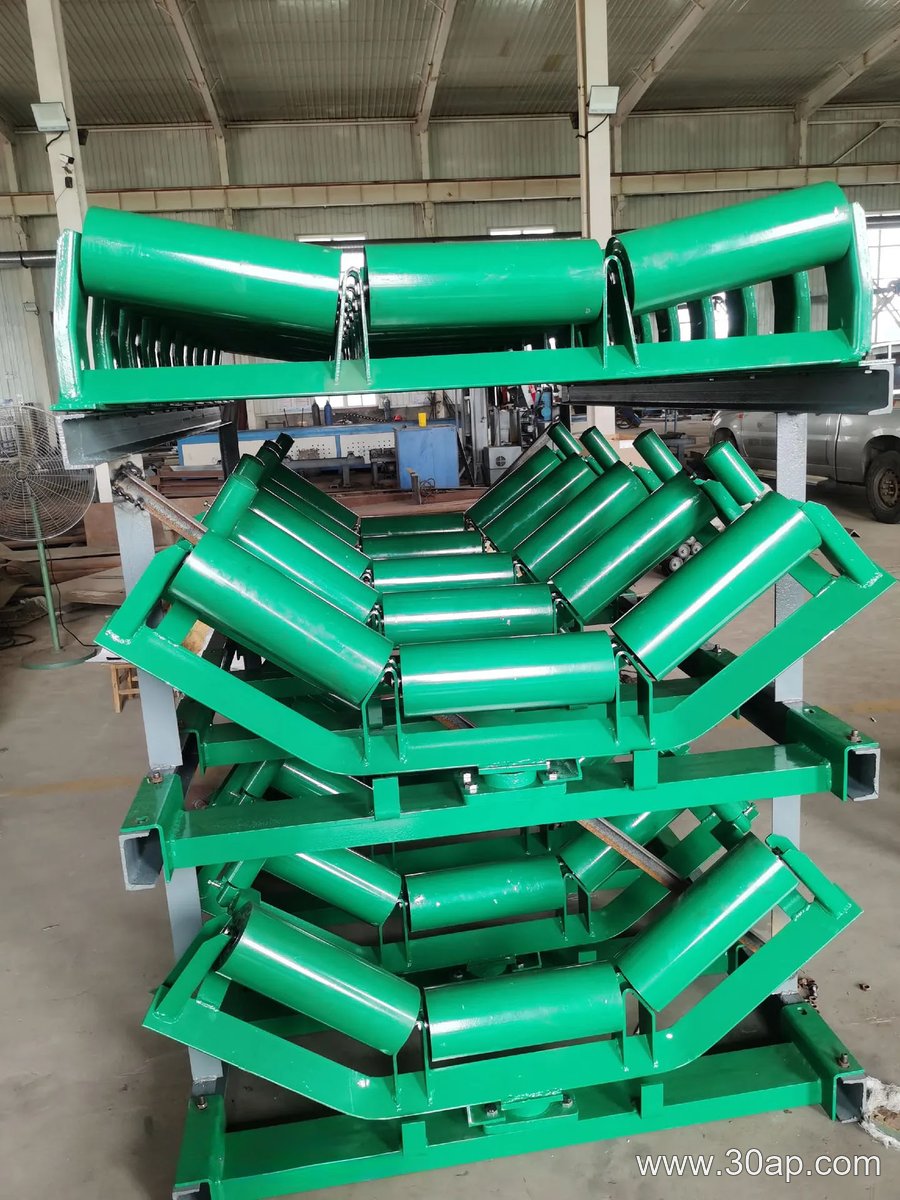
Some designs add a small forward tilt, often around 1.5 to 2 degrees, to help the belt track toward the center. This is a feature of the bracket or the mounting position, not a separate product type, and it should be specified clearly if tracking is a concern.
Matching Belt Width and Roller Diameter
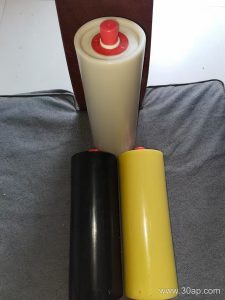
Bracket sets are sized to the conveyor belt width. Common belt widths run from B500 and B650 through B800, B1000, B1200, and on to wider belts such as B1400, B1600, B1800, B2000, and B2200. Roller diameters such as Ø89, Ø108, Ø133, Ø159, and Ø194 are also part of the selection. A combination such as B800 with a 35 degree trough and Ø108 rollers is typical, but it is not the only valid pairing. A wider belt may use a larger roller for load capacity, and a narrow belt may use a smaller one.
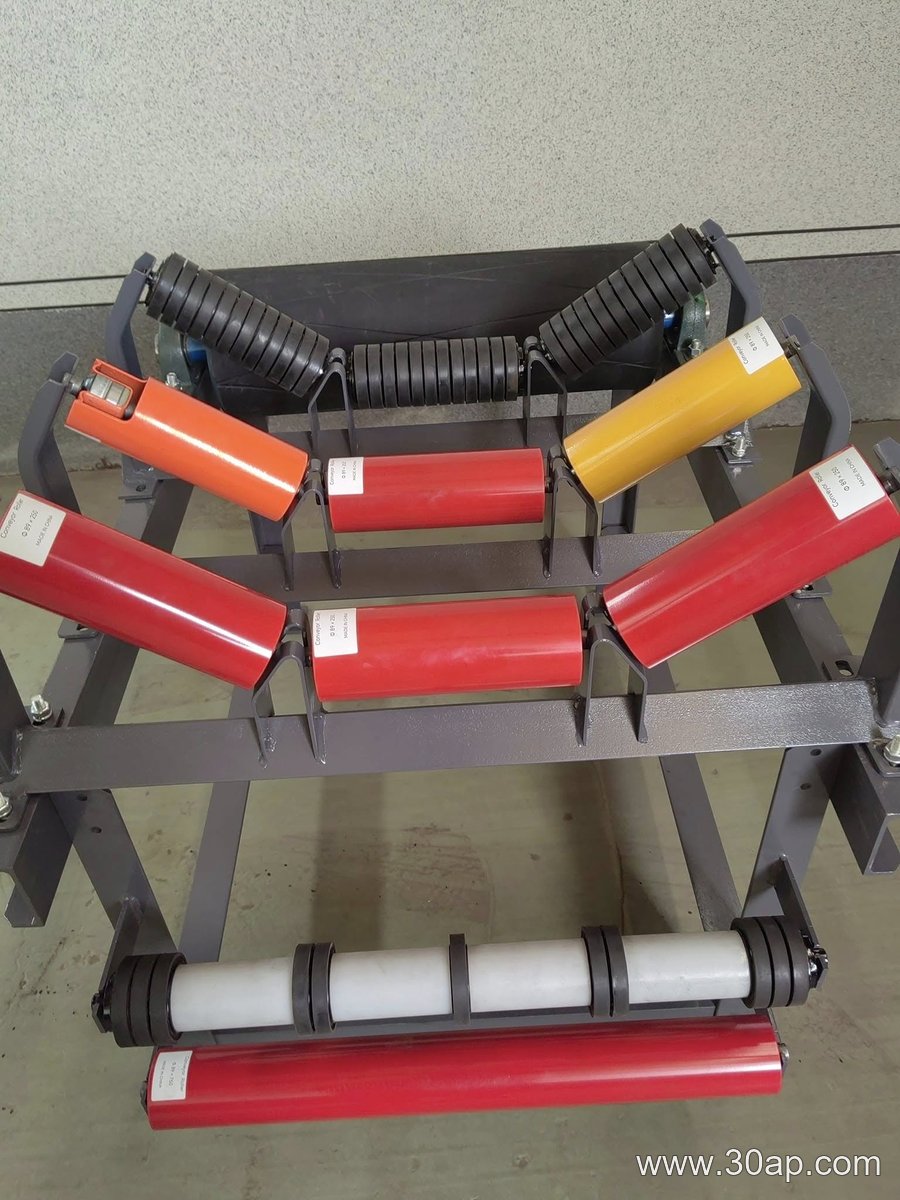
There is no rule that ties one belt width to one trough angle or one roller diameter. Hole spacing and crossbeam length change with belt width and trough angle, so these dimensions should be taken from the drawing for the specific set rather than assumed. The bracket must also match the idler roller shaft size and end shape, otherwise the rollers will not seat correctly.
Where the Set Is Used
Trough idler bracket sets appear wherever a conveyor belt carries bulk material on the load side. One common location is a crushing and screening line, where the belt receives variable lump sizes and needs steady support. Another is a grain silo or fertilizer handling system, where dust and fine material make clean troughing important.
In these settings the bracket set works together with the conveyor belt, the idler rollers, and the conveyor bracket frame that anchors the whole assembly. A related but different component is the return bracket, which supports the empty side of the belt; that is a separate subtype and does not replace the troughing set.
What a Buyer Should Check
- Belt width and required trough angle, including whether adjustment is needed.
- Roller diameter and shaft end type that the bracket must accept.
- Material and surface treatment for the working environment.
- Mounting hole spacing and crossbeam length from the actual drawing.
- Compatibility with the existing idler roller and conveyor frame.
A well-chosen trough idler bracket set keeps the belt profile consistent, reduces spillage, and lets the rollers do their job. Treat the dimensions as design data, confirm them against the conveyor, and the rest of the support system will follow.