What a Self-Aligning Idler Set Does
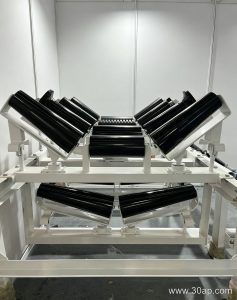
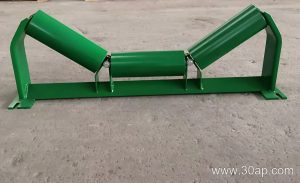
A self-aligning idler set is a group of rollers mounted on a pivoting frame that senses belt drift and gently steers the conveyor belt back toward the center line. Instead of being fixed rigidly to the conveyor bracket, the assembly can rotate slightly around a vertical pivot. When the belt wanders to one side, it contacts a vertical guide roller or an angled end roller, and the resulting force turns the whole set. The skewed rollers then apply a small lateral push that corrects the belt path. This is sometimes called a training idler set or a self-centering roller set, and both names describe the same product.
Tracking problems are common on long overland conveyors, in tunnels, and at transfer points where material loading is uneven. A self-aligning set does not replace good belt training by the conveyor pulley, but it helps control minor drift before it becomes a major spillage or edge damage problem.
How the Assembly Is Built
A typical self-aligning idler set has three main parts: the roller group, the pivot base, and the sensing or guide element.
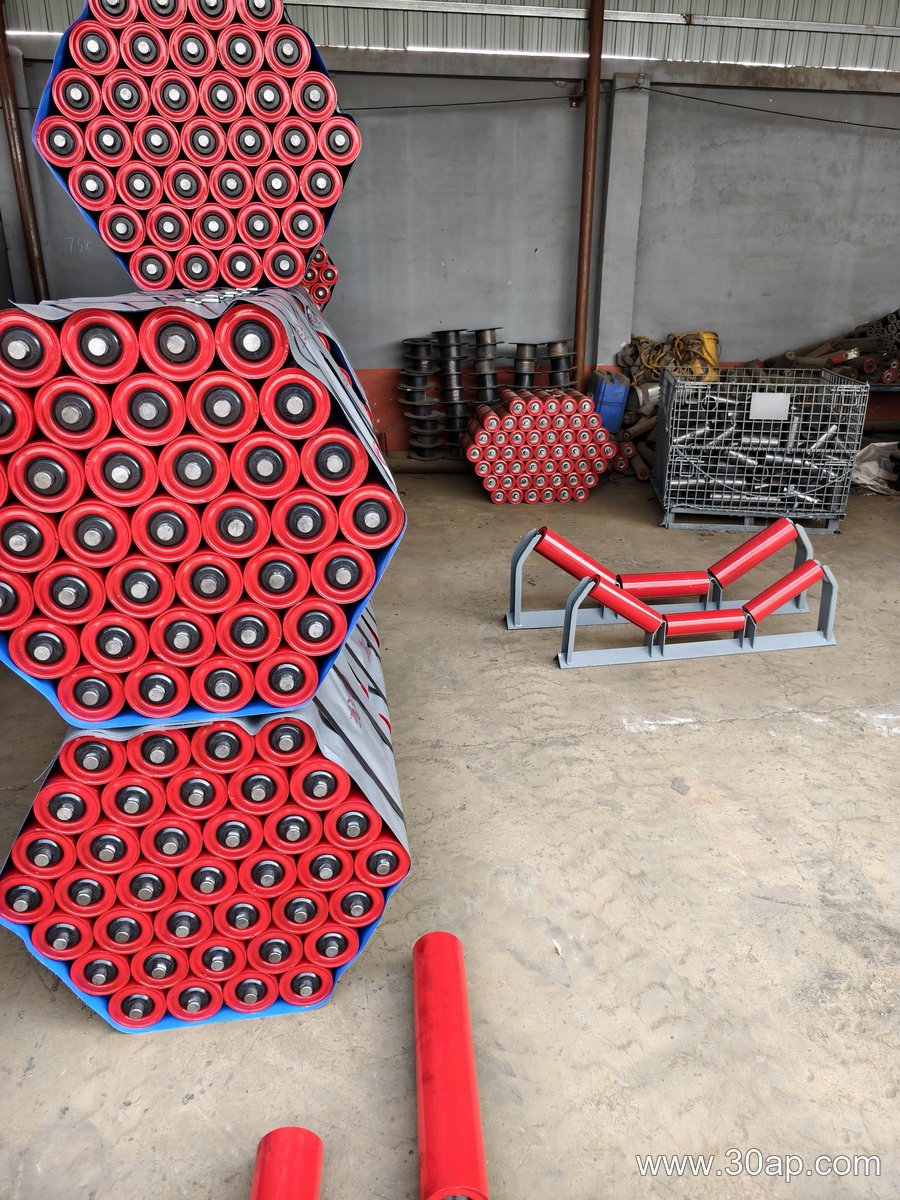
- Roller group. Most units use a three-roller trough arrangement with a trough angle of 20, 30, 35, or 45 degrees. The center roller and the two side rollers are mounted in a common frame. Some designs use a two-roller V shape for the return side.
- Pivot base. The frame sits on a bearing or a pin that allows rotation in the horizontal plane. The base bolts to the conveyor bracket or to a cross member.
- Sensing element. This can be a pair of vertical guide rollers at the ends of the frame, or tapered end rollers that create a steering effect when the belt touches them.
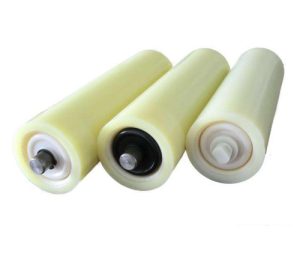
Roller diameters commonly range from Ø63 mm to Ø219 mm, and the choice depends on belt width, load, and speed. For example, a medium-duty aggregate line might use Ø108 mm or Ø127 mm rollers, while a heavy iron ore conveyor could use Ø159 mm or larger. Bearing sizes such as 6204, 6205, 6305, 6306, 6308, and 6310 appear across these diameters, but a given bearing is not tied to one roller diameter. The roller shell can be steel, nylon, ceramic, or rubber-covered. Rubber rings are often used on impact or buffer idlers, but a self-aligning set usually has a plain steel or nylon surface unless the application needs extra grip or wear resistance.
Where It Fits on the Conveyor
Self-aligning idler sets are most often installed on the carrying side, spaced every few standard troughing idler sets. They are also used on the return side, where a V-return or flat return self-aligning set can correct belt drift caused by misaligned structure or uneven loading. A quarry floor conveyor, a limestone crushing line, or a coal yard transfer conveyor are typical places where this product earns its keep. In a tunnel boring or tunnel mucking operation, where the belt may be short and frequently moved, a self-aligning set helps compensate for imperfect installation.
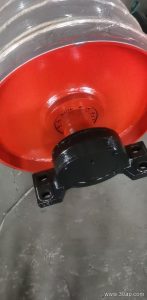
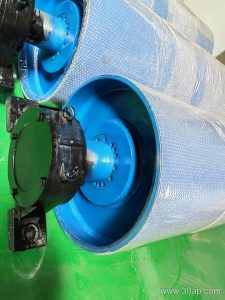
Do not confuse this product with a drive pulley, tail pulley, or bend pulley. Those are conveyor pulleys that transmit power or change belt direction, and they are not interchangeable with idlers. A self-aligning idler set is a tracking accessory, not a drive component.
What Buyers Should Check
When selecting a self-aligning idler set, start with the belt width. Common widths include B400, B500, B650, B800, B1000, B1200, B1400, B1600, B1800, and B2000. The roller length follows the belt width, trough angle, and roller group form. For a three-roller trough set, a B500 belt might use side rollers around 200 mm long, while a B1200 belt might use side rollers around 465 mm. These are common examples, not fixed rules, and the center roller can differ from the side rollers.
Also confirm the shaft diameter that matches your conveyor bracket, the mounting hole spacing, and the available clearance for the pivot motion. Check the bearing type and sealing arrangement for the environment. A dusty quarry or a wet coal yard needs better sealing than a clean grain terminal. Finally, ask how the sensing element works: a friction-type self-aligning set uses the belt contact to pivot the frame, while a tapered roller design uses the cone angle to create a steering force. Both can work well, but they behave differently on reversing belts and on belts that run empty.
A self-aligning idler set is a simple, mechanical answer to a common conveyor problem. With the right roller diameter, trough angle, and pivot design for the belt width and material, it can reduce edge damage, spillage, and downtime without adding complex controls.