What a Trough Idler Bracket Set Does
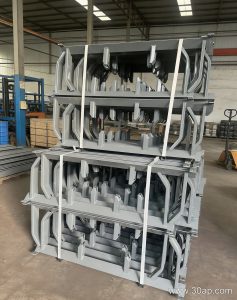
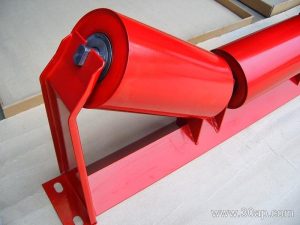
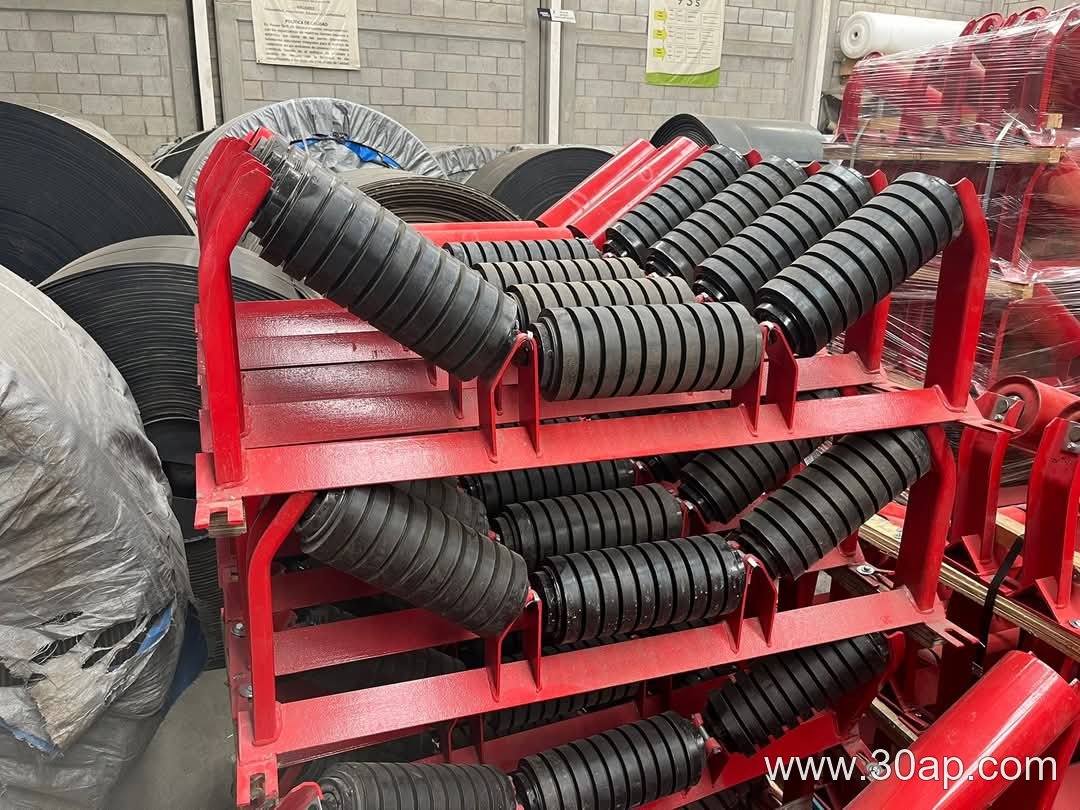
A trough idler bracket set is the supporting frame that holds the idler rollers in a troughed arrangement under a conveyor belt. Instead of letting each roller sit loose on the stringer, the set fixes the rollers at the correct angles and spacing so the belt forms a smooth, stable trough. The set usually includes the main bracket body and the mounting points for the centre roller and the two side rollers, which together carry the load and keep the belt centred.
People often call this same item a troughing idler bracket set or a conveyor troughing bracket assembly. The name changes with the supplier, but the function does not. It is part of the carrying side of a conveyor, not the drive end. Drive pulleys, tail pulleys and bend pulleys all do different jobs, and none of them replaces a troughing bracket set.
How the Bracket Set Is Built
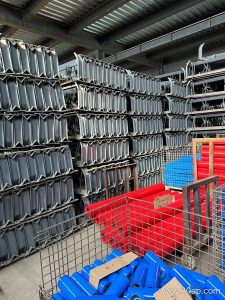
Most bracket sets are made from angle steel, channel steel, or folded steel plate. The choice depends on the load, the belt width, and how much impact the conveyor sees. A typical set has a base that bolts to the conveyor frame, plus angled seats that position the side rollers at the required trough angle.
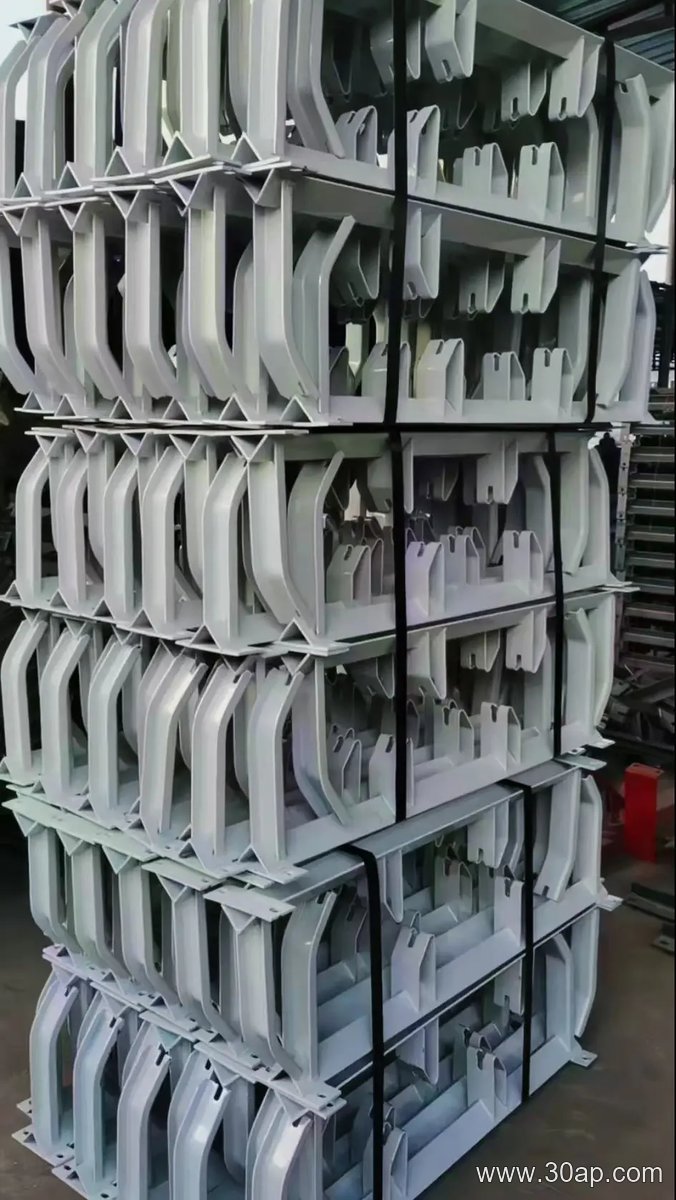
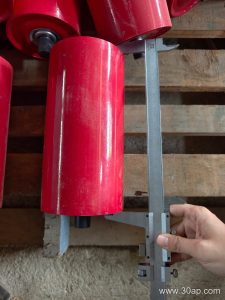
Common trough angles include 20, 30, 35 and 45 degrees. Adjustable brackets can move between these angles, which helps when a conveyor handles different materials or when the belt needs a deeper or shallower trough. Some designs also add a slight forward tilt of about 1.5 to 2 degrees to help keep the belt tracking. The roller seats are spaced to match the idler roller diameter, so a set built for Ø108 rollers should not be forced to accept Ø133 rollers without checking the fit.
Where It Fits on the Conveyor
The set sits on the carrying side, between the loading point and the discharge. In a quarry or a sand and gravel line, it supports the belt as it moves crushed stone. In a coal washing plant or a power station coal yard, it keeps the belt in a trough so loose material does not spill. The same bracket set may also appear on a stockyard conveyor or a crushing and screening circuit.
On the return side, a different bracket type is used, such as a flat return bracket or a V-return bracket. Those are not interchangeable with a troughing set. A buffer idler bracket or a self-aligning bracket may also appear nearby, but each has its own role. The troughing bracket set is specifically for the carrying run.
Matching Belt Width and Roller Size
Belt width and roller diameter are linked, but not in a fixed one-to-one way. A B800 belt might use Ø89 or Ø108 rollers depending on the load and speed. A B1200 conveyor could run Ø133 or Ø159 rollers, and a B1600 belt may use larger diameters again. The bracket set must be built for the chosen belt width and the selected roller diameter, because the mounting hole spacing and the crossbeam length change with those choices.
When ordering, give the belt width, the trough angle, and the roller diameter. For example, a set for B800, 35 degrees, Ø108 is a clear description. So is B1200, 45 degrees, Ø133. Do not assume that one belt width only matches one trough angle or one roller size. The right combination comes from the conveyor design, the material, and the capacity required.
What Buyers Should Check
- Confirm the bracket type: troughing, transition, or another carrying-side design.
- Check the trough angle and whether it is fixed or adjustable.
- Match the roller diameter to the seats and mounting holes.
- Verify the belt width and the frame hole spacing before ordering.
- Look at the material and finish for the working environment.
A well-matched trough idler bracket set keeps the belt stable, reduces spillage, and helps the idler rollers last longer. It is a small part of the conveyor, but it affects the whole carrying run.