What the Tail Pulley Does on a Conveyor
The conveyor tail pulley sits at the rear end of a belt conveyor and turns the returning belt back toward the carrying side. In many layouts it also serves as the tensioning point, which means it keeps the conveyor belt tight enough to grip the drive pulley without slipping. Because it handles the return strand, it often works in a dustier, dirtier position than the head end, and that environment shapes how it is built and maintained.
It is not the same component as a drive pulley or a bend pulley. A drive pulley transmits motor torque to the belt, while a bend pulley only changes belt direction. The tail pulley mainly redirects and, where the take-up is located there, maintains tension. Treating these positions as interchangeable usually leads to the wrong selection.
Construction and Surface Options
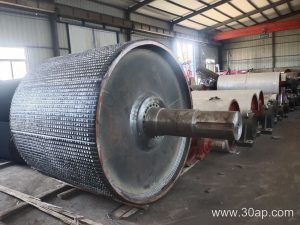
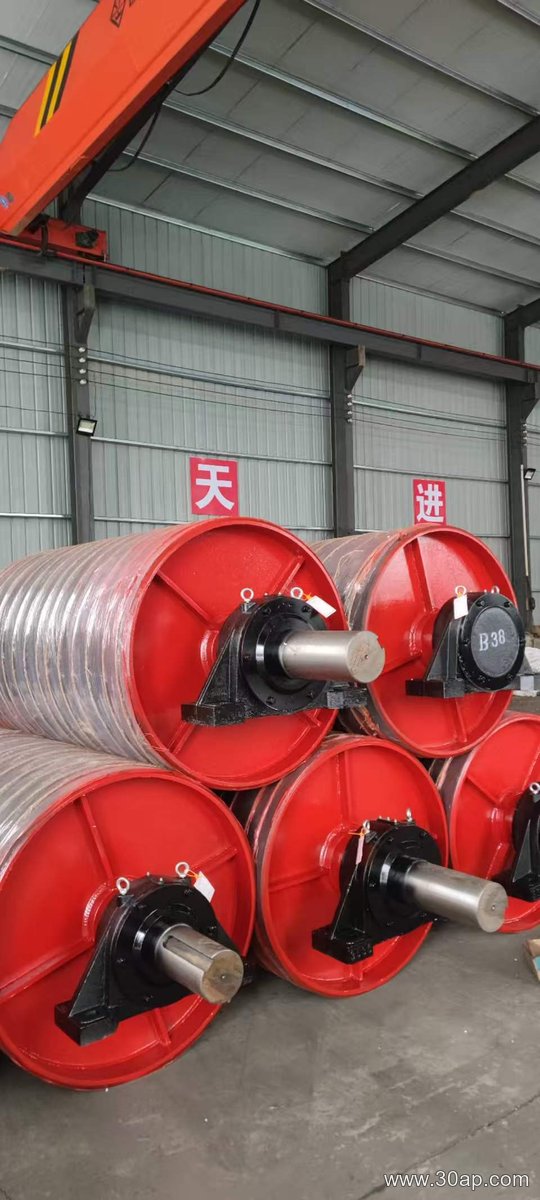
A typical tail pulley is a welded steel cylinder with end discs and a through shaft, mounted in bearing housings that sit on the conveyor bracket or tensioning frame. The shell may be smooth or covered with rubber lagging. Common lagging thicknesses include 8, 10, 12, 15, and 20 mm, and the surface pattern can be plain, diamond, herringbone, or ceramic. Plain steel is often enough for light, dry duty, while rubber lagging helps grip and protects the shell from abrasive material.
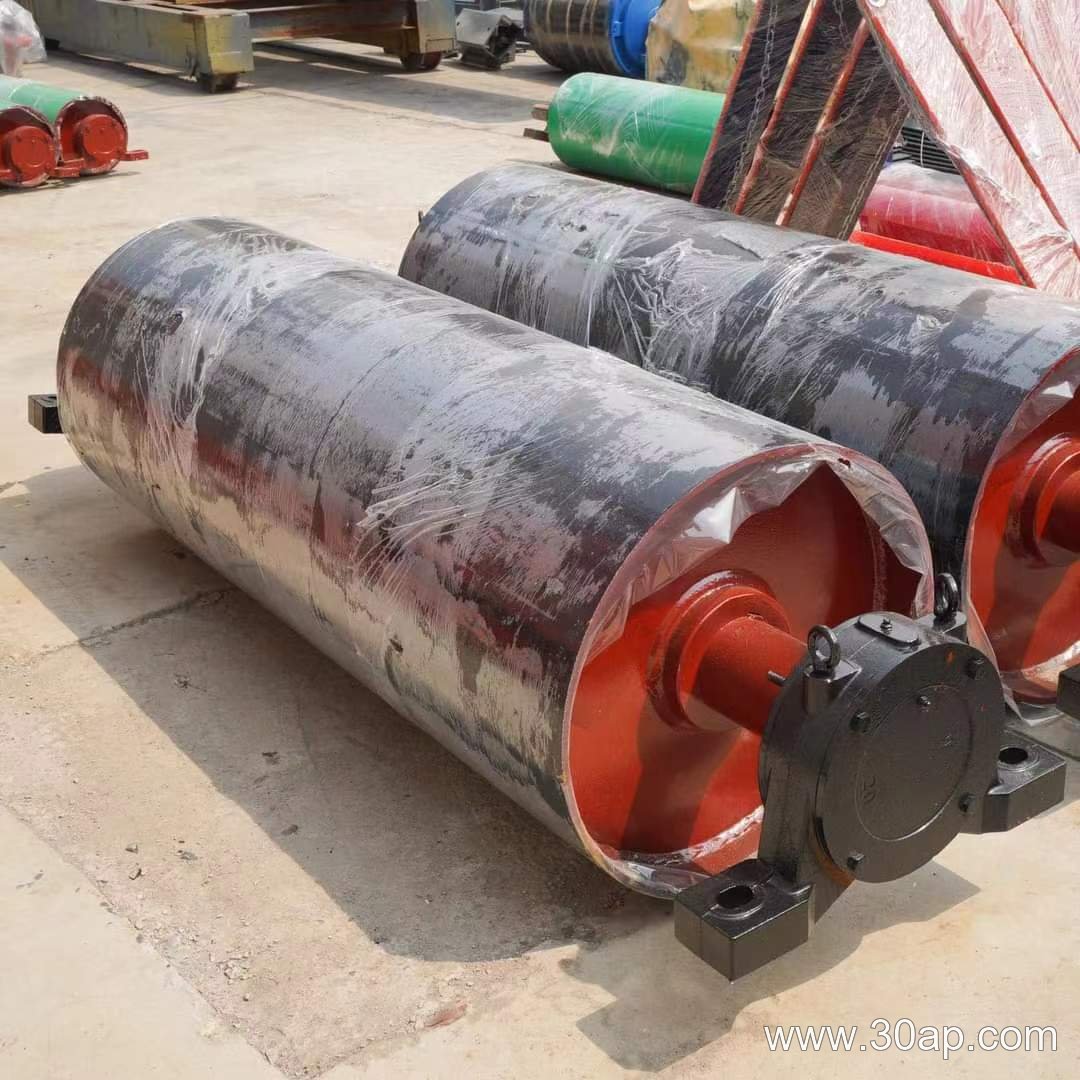
Diameter and shaft size should follow the actual belt tension, torque, and load rather than a simple rule tied to belt width. A B800 conveyor might use a Ø500 tail pulley in one plant, but the same belt width could call for a different diameter where space, take-up travel, or belt stiffness differs. Shaft diameters such as Ø80, Ø100, or Ø120 appear in common designs, but the final value comes from the torque and bending load calculation.
Where It Fits in a Plant
Tail pulleys appear wherever a conveyor returns its belt, which includes quarry and aggregate lines, coal handling at power stations, and crushing and screening circuits. In a limestone quarry, a tail pulley at the feed end may see heavy dust and occasional spillage, so sealed bearings and a lagged shell are practical choices. In a sand and gravel plant, a smaller tail pulley with a smooth surface can be adequate on a short transfer conveyor.
The working position also affects maintenance access. A tail pulley mounted on a screw take-up is usually easier to inspect than one buried under a chute, and that difference matters when planning service intervals. A conveyor pulley that cannot be reached safely tends to be neglected, which shortens bearing life.
Selection Points for Buyers
- Confirm the belt width and the required face width. The shell face is normally wider than the belt, for example around 950 mm for B800 and about 1400 mm for B1200, but these are reference values rather than fixed pairings.
- State whether the tail pulley also handles tensioning, because that changes bearing and shaft loads.
- Choose lagging according to material and moisture. Diamond or herringbone rubber can help in wet or slippery conditions.
- Check that the shaft diameter is based on torque and load, not copied from a different conveyor.
- Plan for bearing lubrication and alignment, since a misaligned tail pulley can train the belt poorly and cause edge wear.
Keeping It Running
A tail pulley usually lasts a long time when the bearings stay clean and the belt tracks correctly. Inspect lagging for wear, listen for bearing noise, and check that the pulley remains square to the belt centerline. When the surface becomes polished or damaged, re-lagging is often more economical than replacing the whole assembly. For comparison, a bend pulley may need less grip because it only redirects the belt, while a drive pulley needs the highest friction. Matching the surface and structure to the actual duty is the surest way to avoid premature failure.