What a Non-Standard Conveyor Bracket Actually Is
A non-standard conveyor bracket is a custom-fabricated support structure that holds idler rollers in positions that standard, off-the-shelf brackets cannot accommodate. In many conveyor systems, the support frame must match a specific belt width, trough angle, roller diameter, and mounting hole pattern that does not align with catalogued components. When a project requires a transition zone, an unusual incline, or a modified frame geometry, a non-standard bracket becomes the practical solution. It is not a replacement for a drive pulley, tail pulley, or bend pulley — those are separate functional units. Instead, this bracket works alongside the conveyor belt and idler rollers to keep the belt tracking correctly and the load stable.
How These Brackets Are Built
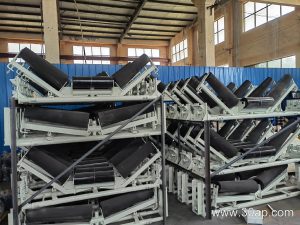
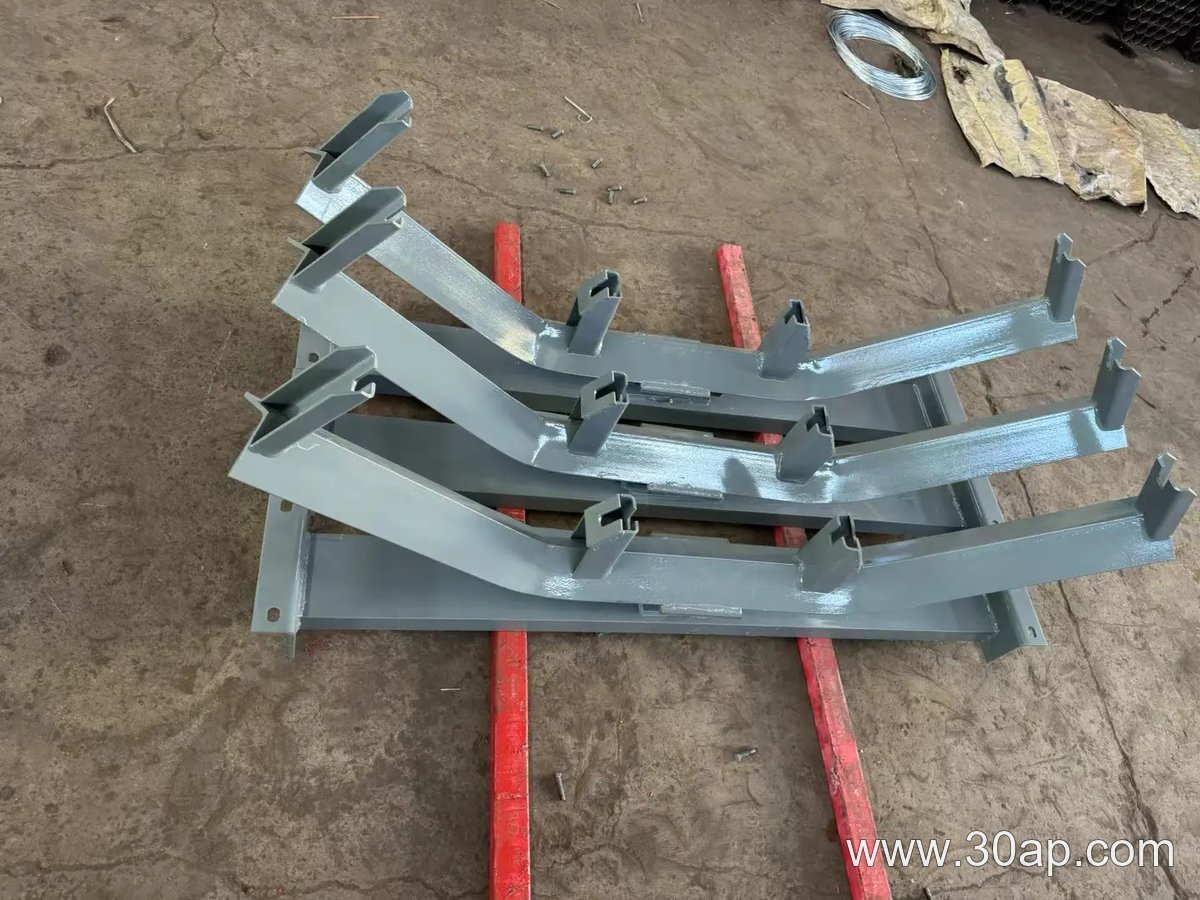
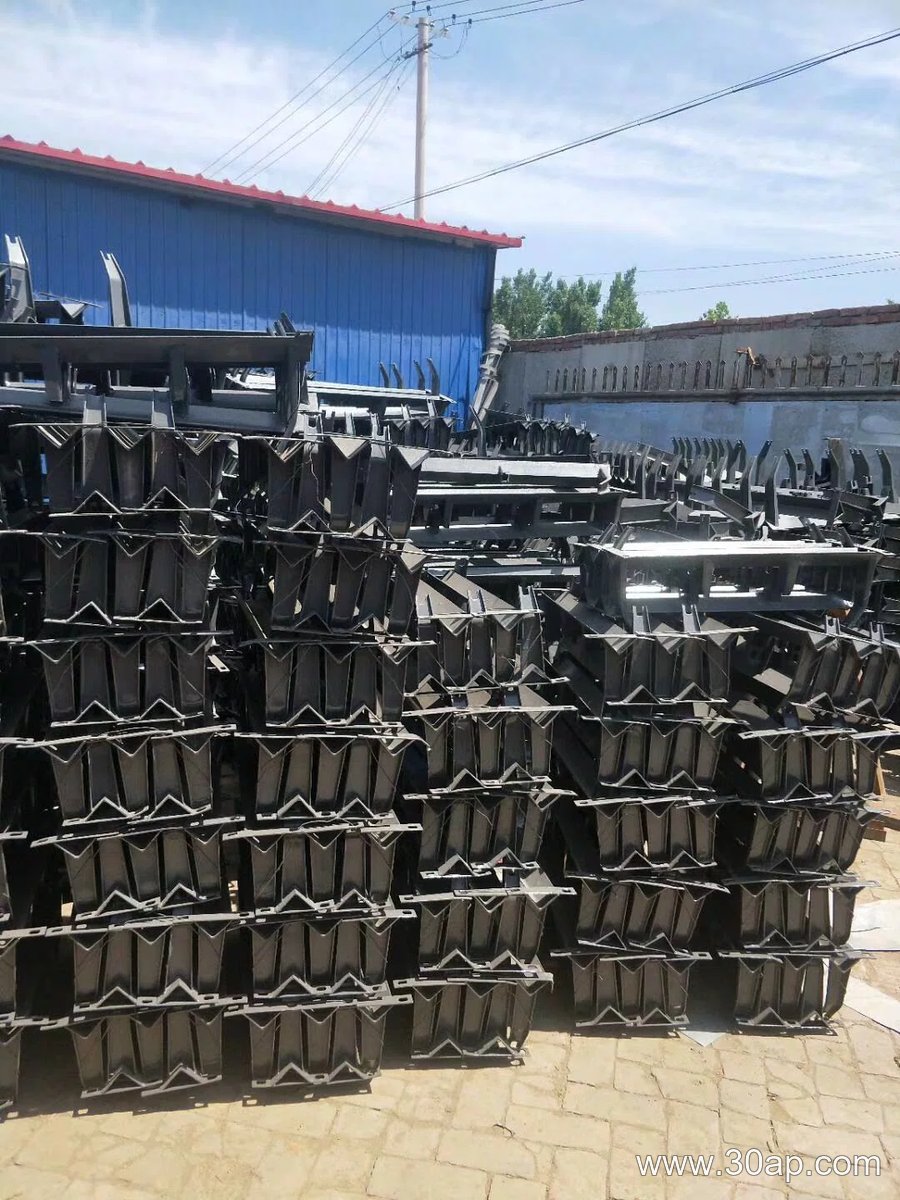
Fabrication typically starts with structural steel such as angle iron, channel steel, or bent steel plate. The choice of material and thickness depends on the load, belt speed, and environmental conditions. A non-standard bracket may include adjustable slots, welded gussets, or reinforced mounting pads to handle specific alignment needs. Because it is made to order, the bracket can incorporate features like a 20-degree, 30-degree, 35-degree, or 45-degree trough angle, or an adjustable range that covers several of these. For example, a bracket designed for a B800 belt with a 35-degree trough and Ø108 rollers will have different mounting hole spacing and beam length than one built for a B1200 belt with a 45-degree trough and Ø133 rollers. These combinations are common, but they are not fixed rules — the final dimensions are determined by the conveyor design.
Where Non-Standard Brackets Are Used
One frequent application is in a limestone quarry where the conveyor route includes a transition from a horizontal section to an incline. The standard bracket may not provide the correct roller contact or belt support at that point, so a custom bracket bridges the gap. Another typical setting is a coal washing plant, where space constraints and existing steel structures require brackets that fit around beams or chutes without compromising roller alignment. In both cases, the bracket must work with the conveyor belt, idler rollers, and sometimes a conveyor pulley that redirects the belt. A non-standard bracket is never a substitute for a drive, tail, or bend pulley; it simply supports the idlers that carry the belt between those pulleys.
Key Selection Factors for Buyers
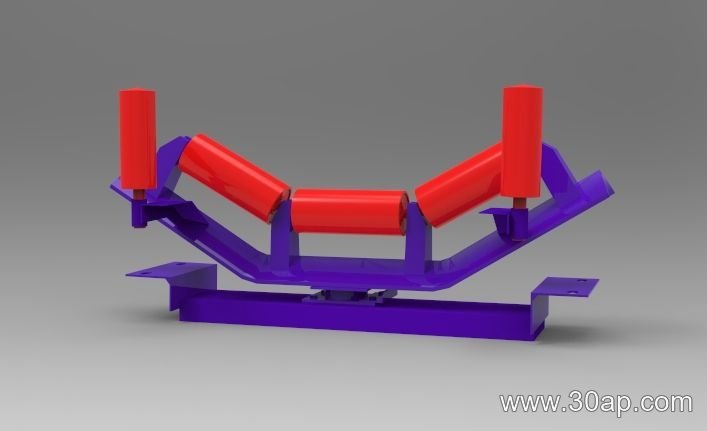
When specifying a non-standard conveyor bracket, the buyer should provide the belt width, required trough angle, roller diameter, and the mounting hole pattern of the existing or planned frame. Common belt widths include B500, B650, B800, B1000, B1200, B1400, B1600, B1800, B2000, and B2200, but not every width requires a custom bracket. Roller diameters such as Ø89, Ø108, Ø133, Ø159, and Ø194 are also common reference points. The bracket type matters as well: a trough bracket, return bracket, impact bracket, or self-aligning bracket each serves a different purpose. If the conveyor uses a V-return or a flat return, the bracket geometry changes accordingly. A fixed bracket offers rigidity, while an adjustable bracket allows fine-tuning of the trough angle on site. Buyers should also confirm the material and surface treatment, especially in dusty or corrosive environments. Finally, remember that a non-standard bracket is defined by its fit to the conveyor, not by a single universal size. Providing accurate dimensions and a clear sketch of the mounting interface will reduce the risk of mismatch and keep the conveyor belt running smoothly.