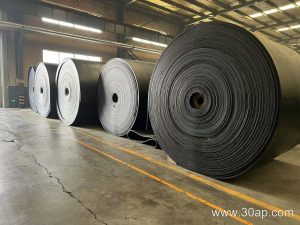
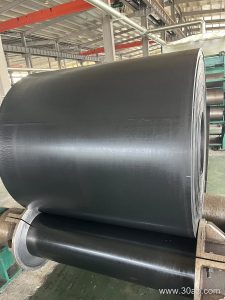
What the NN300 Conveyor Belt Is
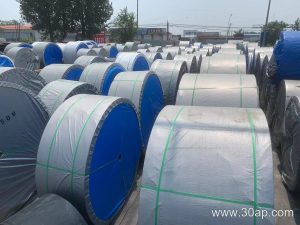
An NN300 conveyor belt is a multi-ply rubber belt built on nylon fabric carcass. The NN stands for nylon warp and nylon weft, and 300 refers to the nominal tensile strength of the carcass, commonly expressed as 300 N/mm per ply. In practice, the full belt strength depends on how many plies the manufacturer builds into it, so a three-ply and a five-ply construction of the same fabric grade behave differently on the same conveyor.
Nylon is chosen for its high elongation and elastic recovery. A belt made with nylon fabric absorbs starting shocks and impact at the loading point better than a rigid carcass, and it returns to shape after the load passes. That is why this grade is often found on medium to long conveyors where the belt has to survive repeated flexing around pulleys and idler rollers.
How the Belt Is Built
The carcass is the working heart of the product. Several layers of nylon fabric are bonded with rubber skim compound, then covered on both faces with rubber that protects the fabric from abrasion, moisture, and the material being carried. A buyer will usually see the cover expressed as a pair of numbers, for example 4+2 or 5+2 mm, meaning top cover plus bottom cover. Cover thickness is chosen from the duty, not from habit: sharp lumpy material wears the top cover faster, while a thin bottom cover is often enough on a clean, well-aligned system.
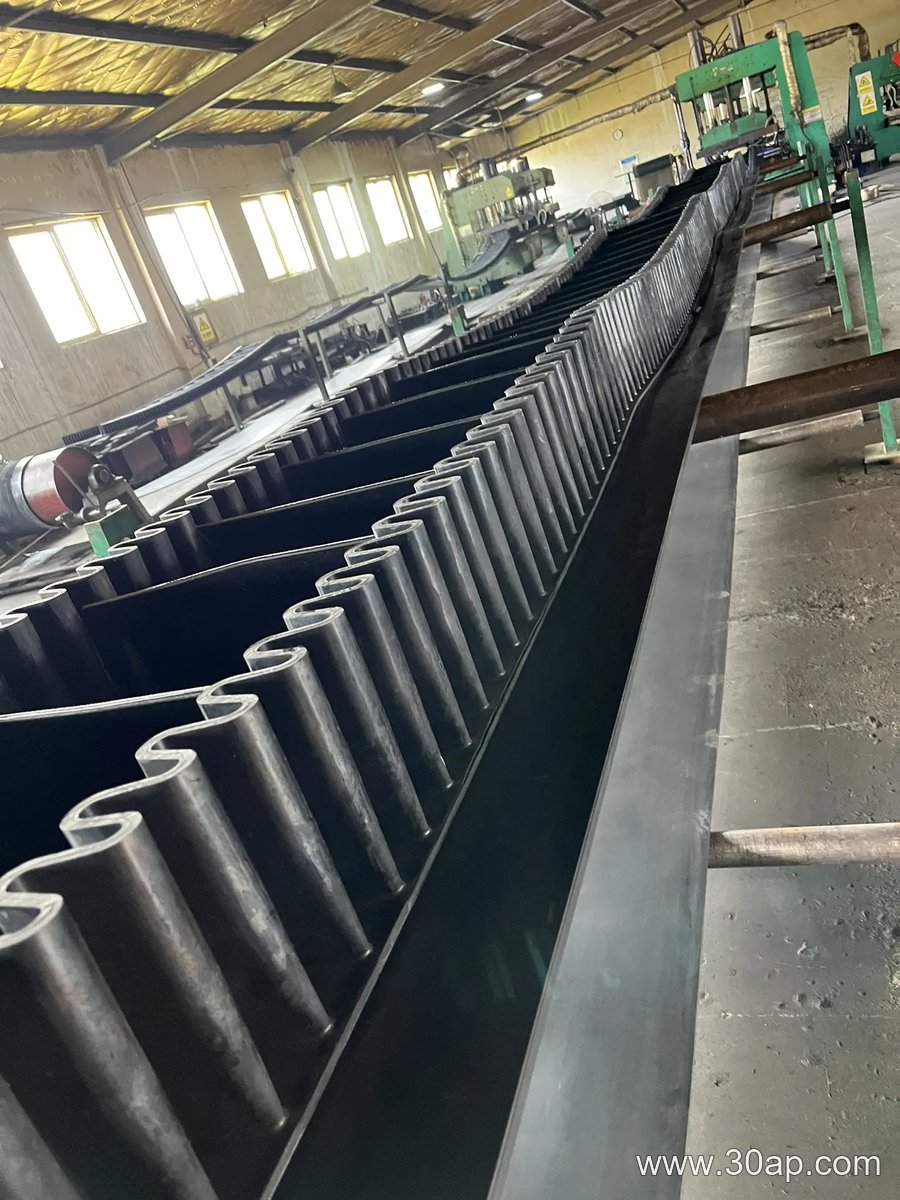
Edge construction matters too. Cut edges are common, but some belts are built with sealed or moulded edges when the conveyor handles fine, wet, or dusty material that could work into the fabric. The belt can also be made with different surface forms when grip is needed, such as a patterned or chevron top cover for inclined runs. These are variations of the same belt family, not a different product.
Where It Fits on a Conveyor
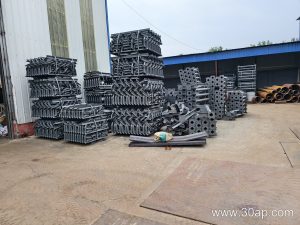
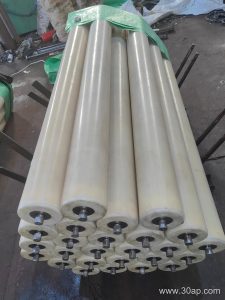
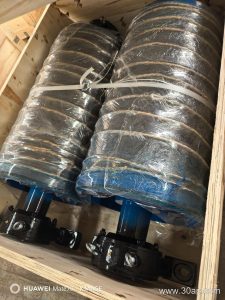
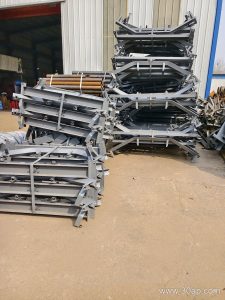
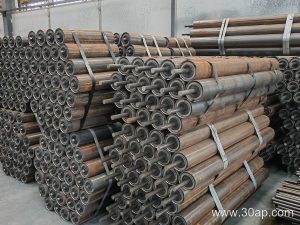
The belt runs over a head or drive pulley, returns over a tail pulley, and changes direction at bend pulleys. It is supported along the carrying run by troughing idlers and on the return run by flat idler rollers, all of which sit in the conveyor bracket and frame. Each of these parts has its own role and its own name. A drive pulley transmits torque; a tail pulley mainly guides and tensions the return side; a bend pulley changes the belt path. They are not interchangeable, and the belt has to be matched to the pulley diameters and the troughing arrangement of the specific conveyor.
Typical applications include aggregate and sand plants, cement and clinker handling, coal preparation, grain and fertiliser transport, and general bulk material systems. Because the nylon carcass tolerates impact and flexing, the belt also suits mobile crushing and screening equipment where the belt must cope with a fast-changing load.
What a Buyer Should Check
- Required belt width and the belt speed of the conveyor, so the load can be carried without spillage.
- Number of plies and the strength grade that the conveyor design actually calls for.
- Top and bottom cover thickness, chosen for the abrasiveness of the material and the loading conditions.
- Whether the environment needs heat, oil, flame, antistatic, cold, or chemical resistance in the rubber compound.
- Pulley diameters and the minimum pulley size allowed for the selected carcass, confirmed with the belt supplier.
- Whether a plain cover is enough or a patterned surface is needed for the incline angle.
Two common points cause trouble. First, do not assume one belt width can only match one pulley diameter; several pulley sizes may be used with the same width, and the correct value comes from the belt construction and conveyor design. Second, do not read a shaft diameter from the belt width alone. Shaft size follows the pulley load, the torque, and the bearing arrangement, not the belt width by itself.
For a fair comparison, a steel cord belt is often selected when the conveyor is very long or the tension is very high, while a fabric belt such as this nylon grade is usually simpler to splice and more tolerant of impact. Both have their place. The right choice comes from the duty, the layout, and the maintenance the site can realistically support.
Finally, storage and handling deserve attention. Belts should be stored away from direct sunlight, ozone sources, and sharp objects, and should be supported so the rolls do not deform. During installation, correct alignment of the conveyor pulleys, idler rollers, and brackets prevents edge damage and keeps the belt tracking straight. A belt that is properly matched and properly installed will give far better service than one chosen on price alone.