What a Belt Conveyor Rubber Lagged Pulley Does
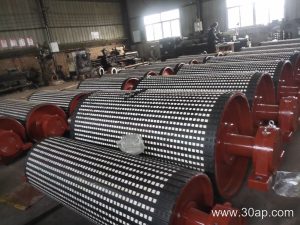
A belt conveyor rubber lagged pulley is a conveyor pulley whose cylindrical shell is covered with a rubber layer. The rubber is bonded or mechanically attached to the drum face so that the pulley can grip the conveyor belt with more friction than a bare steel surface. In practice, the lagging protects both the pulley shell and the belt, while helping to reduce slip at the point where torque is transferred.
This component is often called a rubber lagged drum pulley or a lagged conveyor pulley. It remains a single product family: the rubber covering is what defines it, not the position in the conveyor. Drive, tail, and bend pulleys are different roles, and a rubber lagged pulley can serve in more than one of them depending on the conveyor design.
Construction and Surface Options
The basic build starts with a steel shell, end discs, a shaft, and bearing housings. Rubber lagging is added to the shell in several common ways:
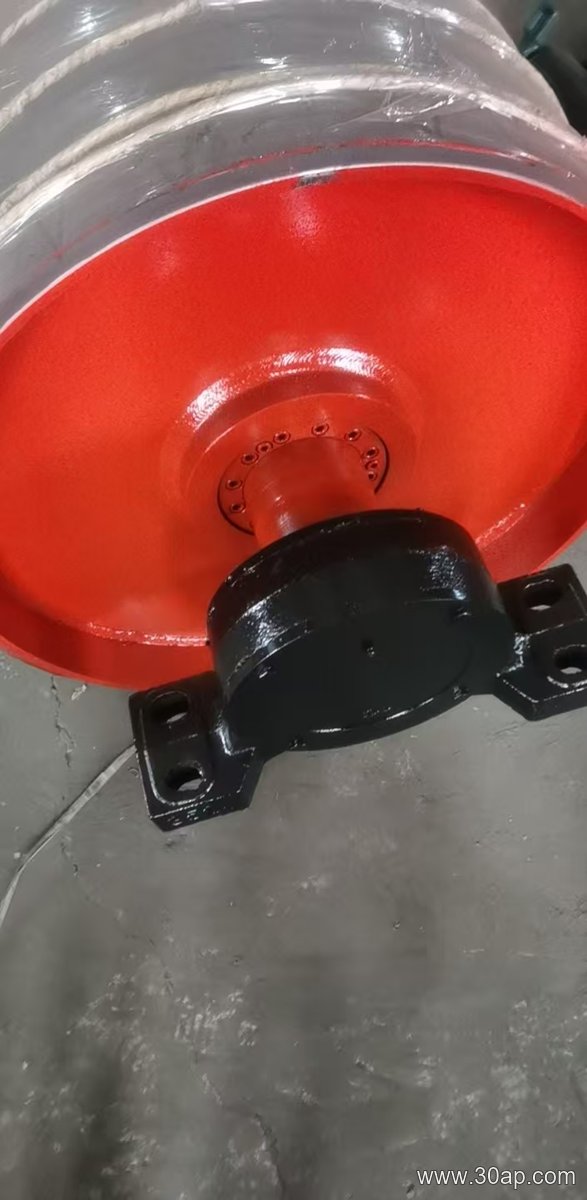
- Hot vulcanized rubber, bonded under heat and pressure for a strong, durable cover
- Cold bonded rubber, applied with adhesive and often chosen for field repair or smaller batches
- Diamond grooved lagging, which channels water and fine material away from the contact area
- Herringbone lagging, a chevron pattern that helps with wet or slightly contaminated belts
- Plain rubber lagging, a smooth cover used where a simple friction increase is enough
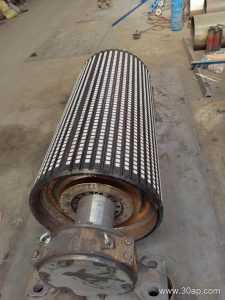
- Ceramic lagging, where hard ceramic tiles are embedded in rubber for high-wear duty
Lagging thickness commonly falls in the 8 mm to 20 mm range. The choice depends on belt tension, expected slip, material carryback, and the amount of wear the pulley will see.
Where It Fits in a Conveyor
The most common use is at the drive position, where the pulley must transmit torque to the belt. Here, rubber lagging improves traction and reduces the chance of belt slip under load. A rubber lagged drive pulley is especially useful on inclines, in wet conditions, or where the belt carries abrasive bulk material.
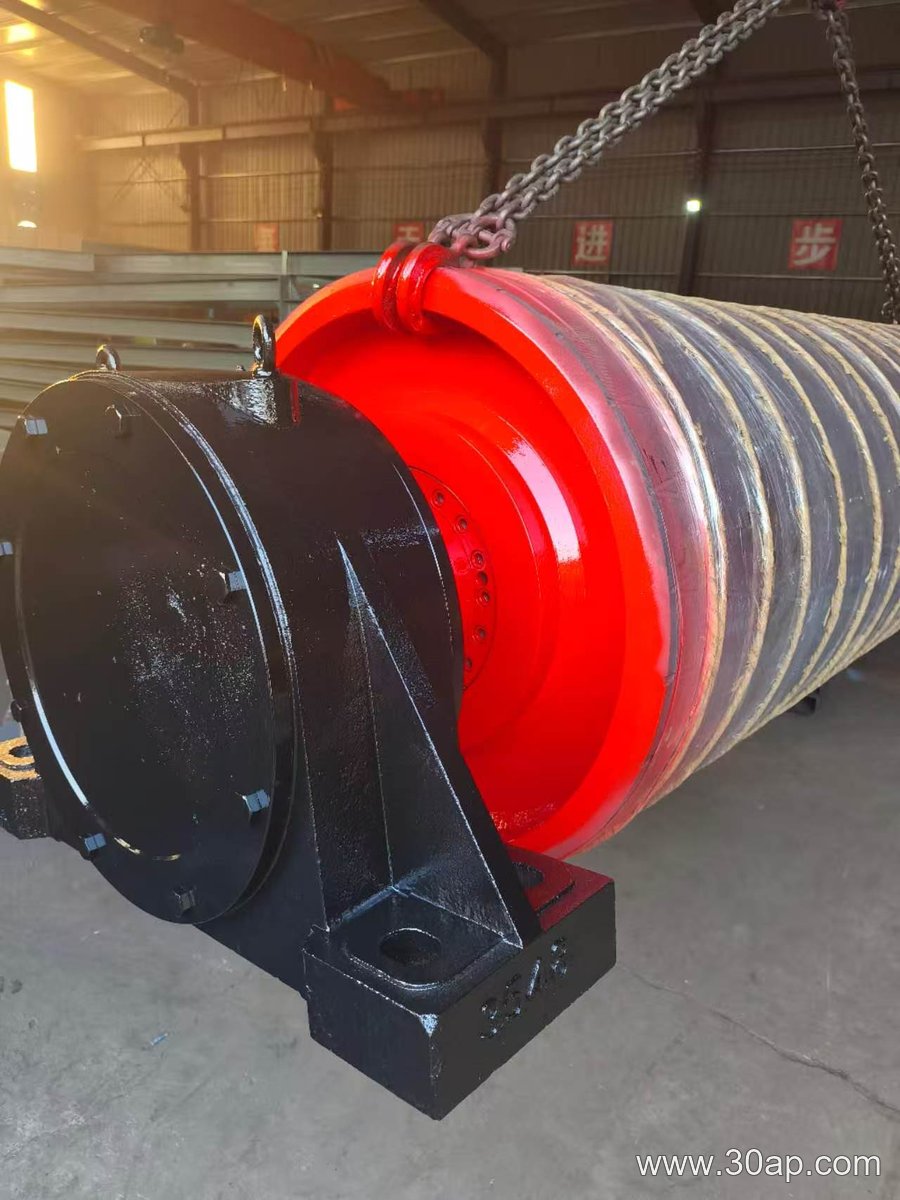
Rubber lagging is also found on tail pulleys, where it can help self-clean and protect the shell from abrasive fines. In some layouts, a bend pulley or snub pulley may be lagged as well, but those positions are chosen for belt wrap and direction change, not for driving. A tail pulley and a bend pulley are not interchangeable with a drive pulley; each has its own job in the belt path.
Typical sites include a quarry, a limestone mine, a coal preparation plant, a sand and gravel line, a cement plant handling clinker, or a port bulk terminal. The same pulley type can appear in a crushing and screening circuit or in a tunnel muck removal system.
Matching the Pulley to the Belt
Belt width and pulley diameter are related but not locked together. A B800 belt may run on a pulley around Ø500 mm in one conveyor and a larger diameter in another, depending on belt tension, wrap angle, and the space available. A B1200 conveyor might use a Ø1000 mm drive pulley, while a B1400 system could use a Ø800 mm bend pulley. These are examples, not fixed rules.
The shell face is usually wider than the belt. For instance, a B650 belt often runs on a pulley face of about 750 mm, and a B1000 belt may use a face near 1150 mm. Shaft diameter is determined by torque and load, not by belt width alone. Common shaft sizes range from Ø50 mm to Ø200 mm, but the final value comes from the conveyor designer.
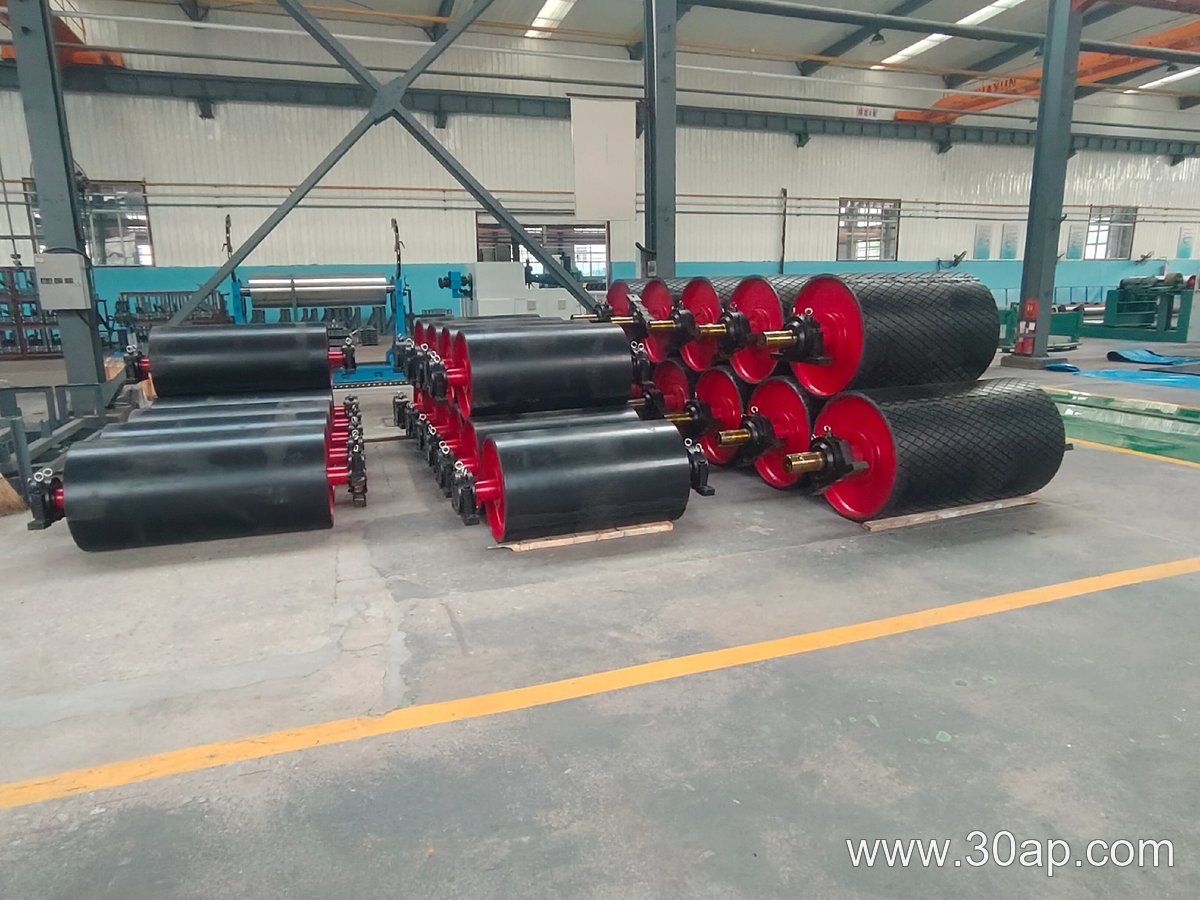
Rubber lagging thickness, groove pattern, and rubber hardness should be selected together. Soft rubber grips well but wears faster; harder rubber lasts longer but may not hold as well on a wet belt. Diamond or herringbone grooves help in wet or dirty conditions, while plain lagging can be sufficient in dry, clean service.
What Buyers Should Check
Before ordering a belt conveyor rubber lagged pulley, confirm the pulley role, belt width, shell diameter, face width, shaft size, and bearing type. Ask how the lagging is applied and whether the groove pattern suits the material being conveyed. Check that the pulley will fit the existing conveyor bracket and that the shaft and bearings match the load.
Also consider maintenance. A worn lagging surface can be re-covered in some cases, but severe shell wear may require a new pulley. Keeping the belt aligned, controlling carryback, and using proper idler roller support all help extend lagging life. A rubber lagged pulley is not a universal fix for misalignment or overload, but when specified correctly it improves grip and protects the belt in demanding bulk handling work.