What a Cement Conveyor Idler Does on the Line
A cement conveyor idler is the rotating roller that supports and guides the conveyor belt as it carries clinker, limestone, gypsum, fly ash or finished cement. In cement plants and quarries, these rollers are mounted on a conveyor bracket or frame, spaced at intervals along the carrying and return sides of the belt. The idler roller turns with the belt rather than dragging against it, which reduces friction, protects the belt cover and keeps material moving at a steady rate. The same basic component is also called a belt conveyor roller or troughing roller, depending on the section of the conveyor where it is installed.
Because cement duty is dusty, abrasive and often hot, the idler has to do more than spin freely. It must keep dust out of the bearing, resist vibration from lumpy feed, and stay aligned so the belt does not drift. That is why the selection of roller type, diameter, wall thickness, bearing and seal matters as much as the initial price.
How the Roller Is Built
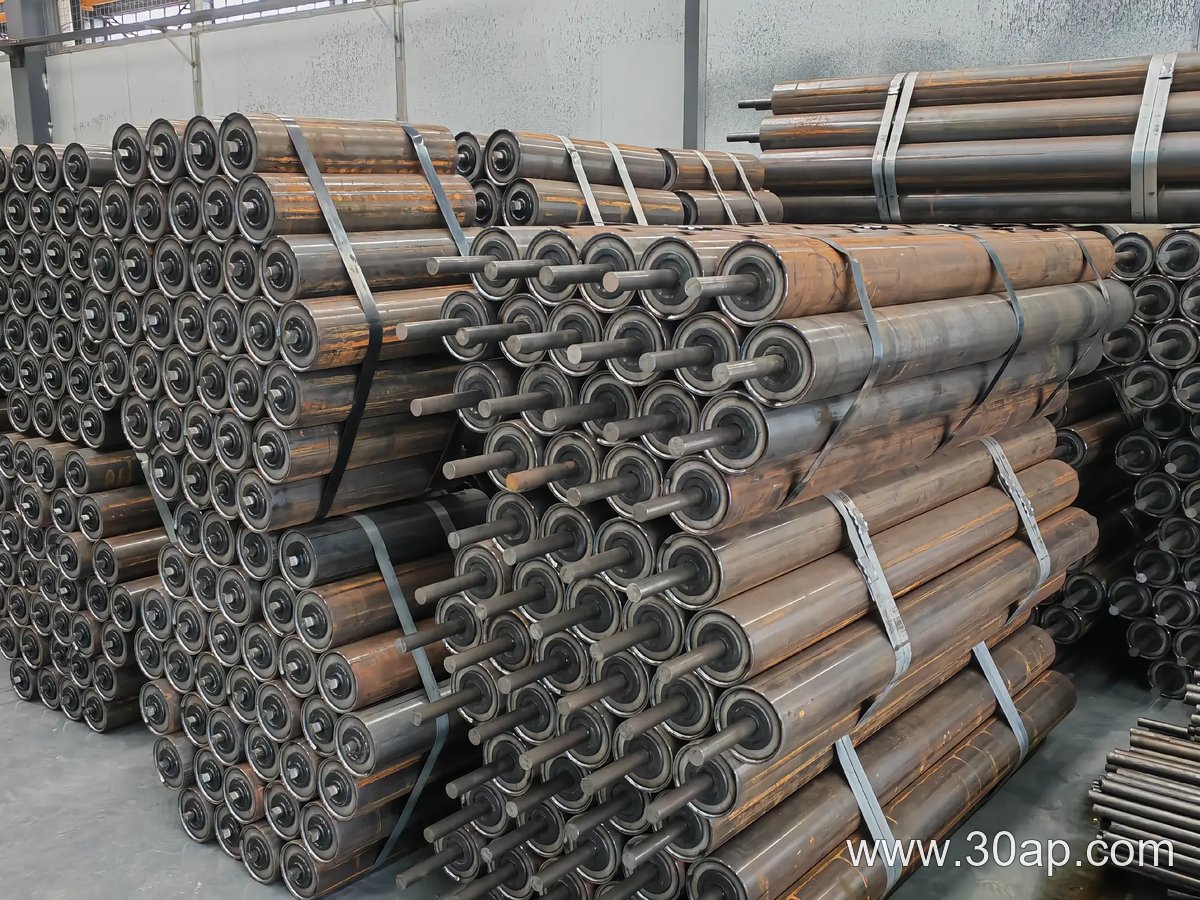
A typical cement conveyor idler consists of a steel tube shell, a shaft, two bearing housings, bearings, seals and end caps. The shell is usually made from seamless or welded steel pipe, machined at both ends so the bearing seats sit square with the shaft. Common roller surfaces include plain steel tube, nylon, ceramic and rubber rings. Rubber rings are often chosen for impact zones, while ceramic or nylon may be used where sticking or wear is a concern.
Bearings are normally deep-groove ball bearings in sizes such as 6204, 6205, 6305, 6306, 6308 or 6310, with the final choice depending on load, speed and roller diameter rather than on belt width alone. Seals range from simple labyrinth types to contact seals and grease-filled arrangements. A good seal keeps cement dust out and grease in, which extends bearing life. The shaft may be through-going or stub type, and the end caps are designed to fit the bracket without pinching the shell.
Common Idler Groups
- Single-roller flat idlers for the return strand
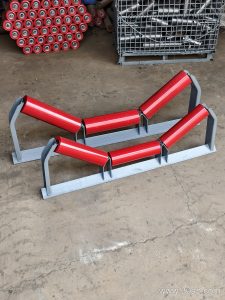
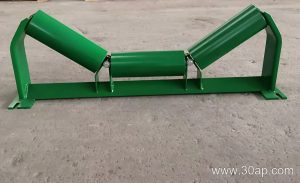
- Two-roll and three-roll troughing sets for the carrying side
- Transition idlers placed near the head or tail to ease belt bending
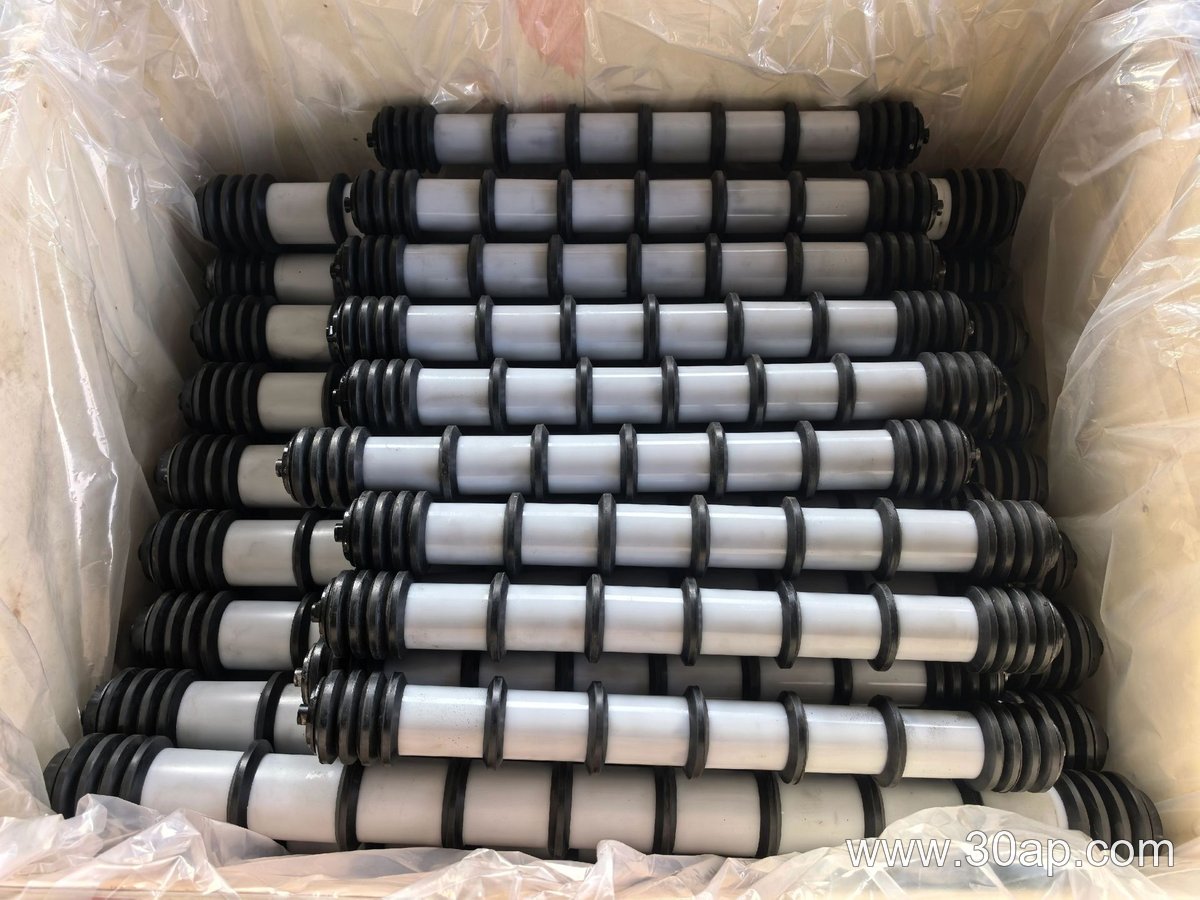
- Impact idlers with rubber rings under the loading point
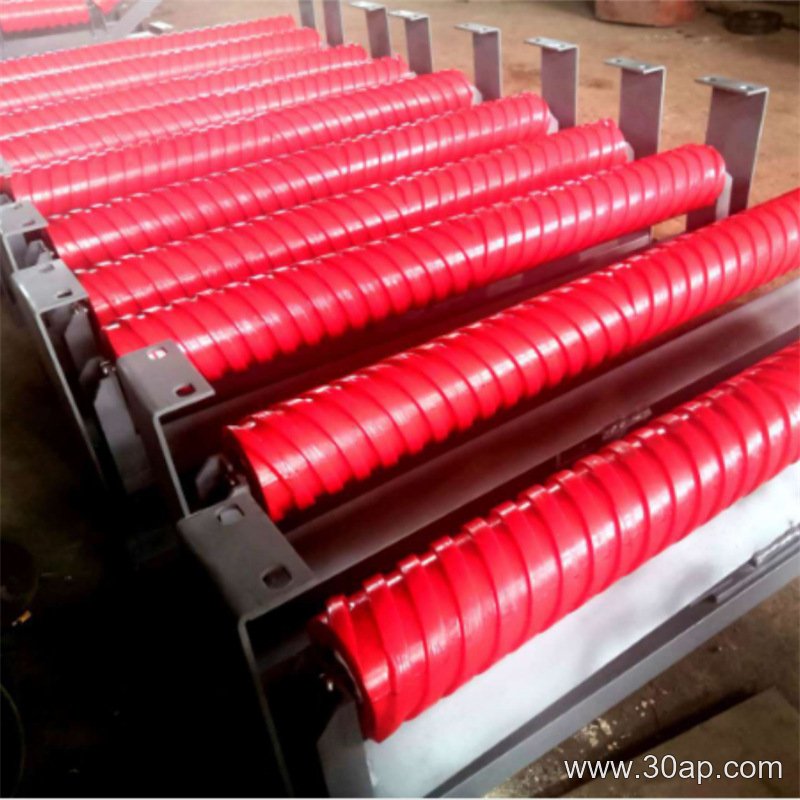
- V-return and spiral rollers for training and cleaning the return belt
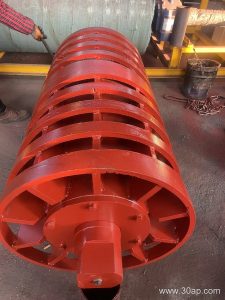
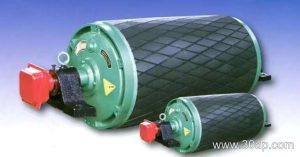
These are different arrangements of the same family, and each is selected for a particular position on the conveyor. A troughing idler on the carrying side is not a substitute for a return roller, and neither is a replacement for a drive pulley or a bend pulley. Pulleys transmit power or change belt direction; idlers support the belt between those points.
Where Cement Conveyor Idlers Are Used
The most common locations are cement plants and limestone quarries. In a cement plant, idlers carry crushed limestone from the stockpile to the raw mill, clinker from the cooler to the clinker silo, and gypsum or fly ash to the finish mill. In a quarry, they support the conveyor belt that moves blasted rock from the crusher to the stockpile. The same rollers appear in aggregate lines, coal yards, power plant coal handling and port bulk terminals, but the cement and quarry duty is a useful reference because the material is heavy, sharp and often dusty.
At the loading point, impact idlers or rubber-ring rollers absorb the fall of large lumps. Along the middle of the conveyor, three-roll troughing sets with a trough angle of 20, 30, 35 or 45 degrees keep the belt cupped so material does not spill. Near the head pulley, transition idlers gradually flatten the belt before it reaches the pulley. On the return side, flat or V-return rollers support the empty belt and help keep it centered.
Choosing Diameter, Length and Trough Angle
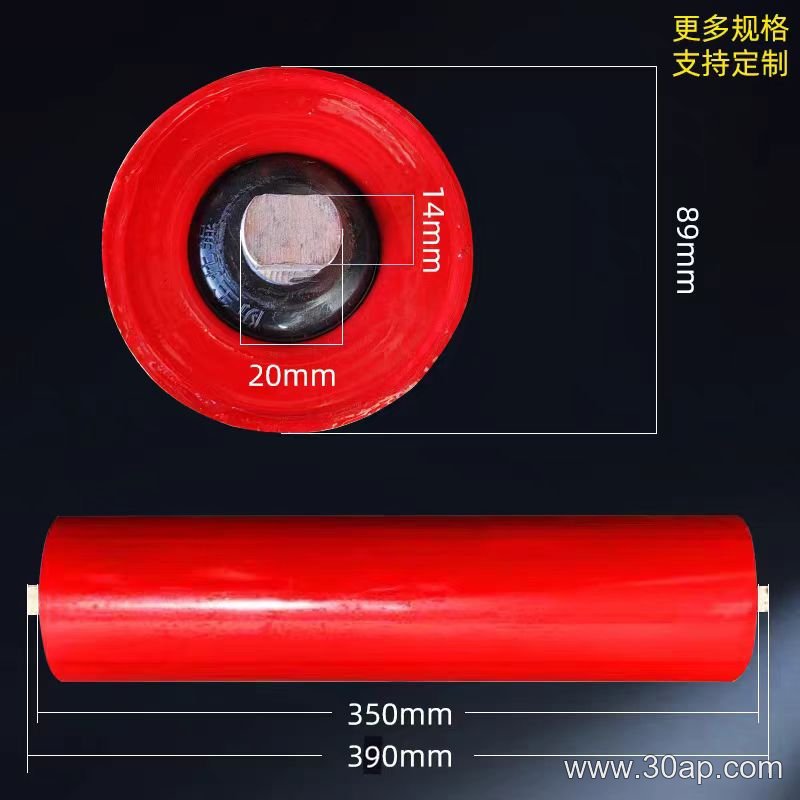
Roller diameter is usually chosen from a range such as Ø63, Ø76, Ø89, Ø102, Ø108, Ø127, Ø133, Ø159, Ø178, Ø194 or Ø219 mm. Smaller diameters suit light, narrow belts and lower loads; larger diameters handle higher belt speeds, heavier material and longer spans. The roller length depends on belt width, trough angle and the number of rolls in the set. For example, a three-roll troughing set on a B800 belt commonly uses a roll length near 315 mm, while a B1200 belt may use a roll near 465 mm. Side rolls and the center roll can differ in length, so these figures are examples rather than fixed pairings.
Belt widths from B400 up to B2400 are common in bulk handling. A wider belt does not automatically mean a particular shaft diameter, and a given belt width can work with more than one roller diameter. The design engineer checks the load per idler, the belt speed, the material density and the desired bearing life before fixing the size.
What Buyers Should Check
- Roller diameter, length and shaft size against the conveyor drawing
- Bearing size and seal type for the dust and moisture level on site
- Tube wall thickness and surface form for abrasive or impact duty
- Trough angle and roll arrangement for the belt width and material
- Bracket dimensions and mounting hole spacing
- Whether the roller is for carrying, return, impact or training service
It also helps to confirm the rotation resistance, since a roller that turns easily draws less power and wears the belt more slowly. Balanced rollers run quieter and reduce vibration on long conveyors. Buyers should ask for the actual drawing and material list rather than relying on a catalog picture, because two rollers with the same outside diameter can differ in bearing, seal and wall thickness.
Maintenance and Replacement Notes
Seized or rough idlers are a common cause of belt wear, misalignment and higher power consumption. During routine inspection, maintenance teams listen for noisy rollers, check for grease leakage, and look for a belt that wanders to one side. A failed roller should be replaced with the same type and size, or with an equivalent approved by the conveyor designer. Mixing a troughing idler with a return roller, or using a bend pulley as a support roller, is not a valid substitution. Keeping a small stock of the most common roller sizes and brackets helps reduce downtime in cement plants and quarries where the conveyor is the main transport link.