What a Lagged Pulley Does on a Belt Conveyor
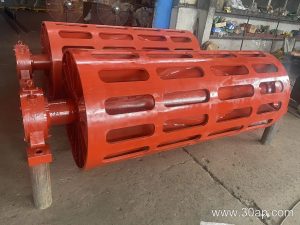
A conveyor belt lagged pulley is a standard conveyor pulley whose cylindrical shell has been covered with a rubber or ceramic layer. That cover is the lagging. It changes how the pulley interacts with the conveyor belt: it raises friction, protects the shell from wear and slipping, and helps keep the belt centered under load. You will find this component at the head of a conveyor, where it drives the belt, and at other positions where grip or belt protection matters.
The name is often shortened to lagging drum or rubber lagged roller, but the product is still a conveyor pulley with a bonded surface. It should not be confused with a drive pulley, a tail pulley, or a bend pulley. Those terms describe the pulley’s position and job, while lagging describes the surface. One pulley can be both a drive pulley and a lagged pulley.
How the Lagging Is Built
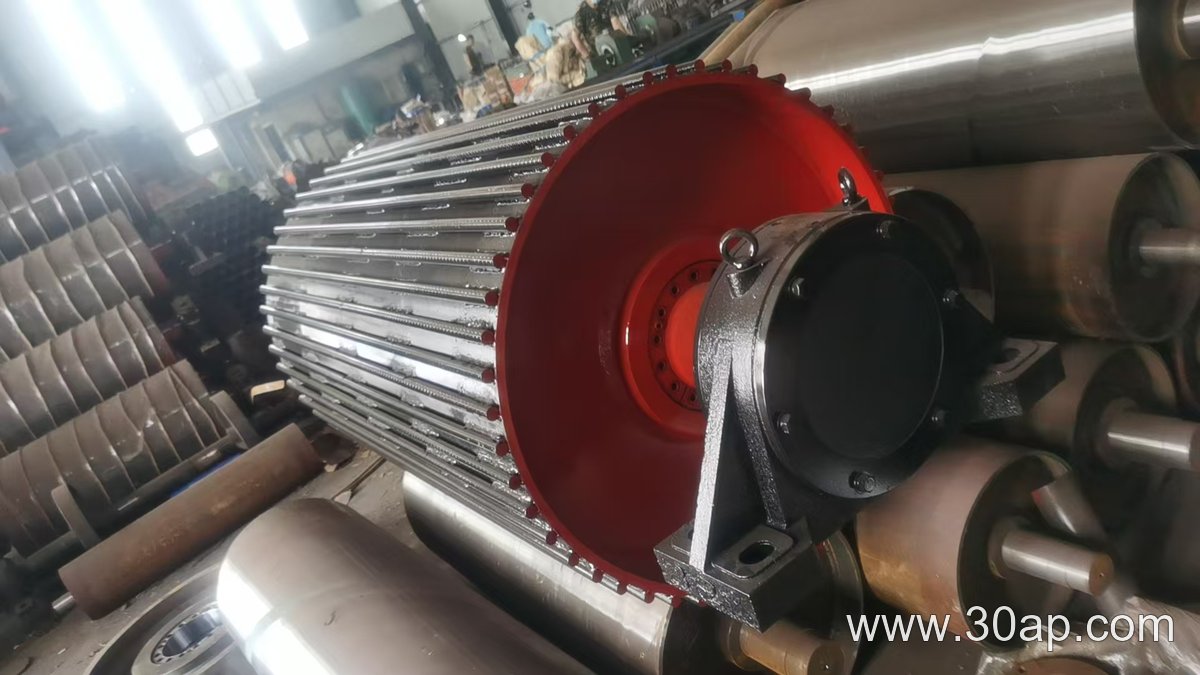
The base is a steel drum with end discs, a hub, and a shaft. After machining, the shell is cleaned and prepared for bonding. The lagging is then applied in one of several ways:
- Hot vulcanized rubber, bonded under heat and pressure for a strong, seamless cover
- Cold bonded rubber, applied with adhesive at ambient temperature
- Cast rubber, molded directly onto the shell
- Ceramic lagging, where ceramic tiles sit in a rubber matrix for extreme grip
Surface patterns matter as much as the material. A plain or flat rubber surface works well when the belt runs clean and dry. Diamond lagging gives extra traction and sheds water. Herringbone lagging pushes water and fines toward the belt edges, which helps on wet or dirty conveyors. Ceramic lagging is chosen where slip is a serious risk and the belt carries abrasive material. Common cover thicknesses include 8 mm, 10 mm, 12 mm, 15 mm, and 20 mm, selected by duty rather than by habit.
Why Grip and Crown Matter
Friction between the belt and the pulley decides how much torque the drive can transmit before the belt slips. Lagging raises the coefficient of friction, so the same pulley diameter can carry more load or run with less wrap. On a drive pulley, this often means a smaller, lighter drive package. On a tail or tension pulley, lagging mainly protects the shell and improves tracking.
Crowning is a related feature. A slightly crowned face, meaning a small rise in the middle of the shell, encourages the belt to stay centered. A lagged pulley can be flat or crowned; the choice depends on belt width, belt type, and the tracking behavior expected from the conveyor. Neither shape is automatically correct for every installation.
Where Lagged Pulleys Are Used
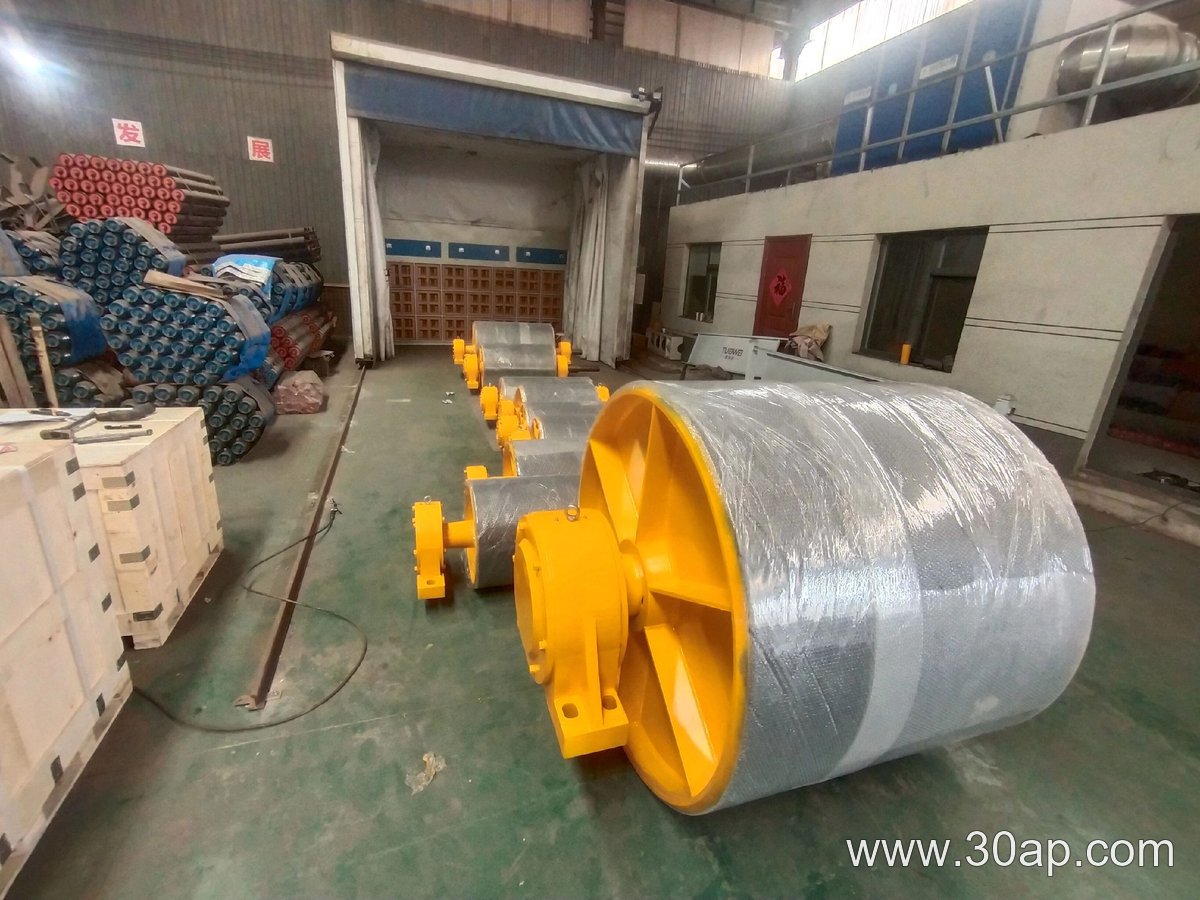
Drive positions are the most common application. A quarry conveyor moving crushed rock, a coal handling line at a power plant, or an aggregate plant feeding a screen all rely on a lagged drive pulley to keep the belt moving under shock and moisture. The cover also protects the shell from abrasive dust that works its way between belt and pulley.
Lagging is also useful at bend and tension points, where a bare steel shell would polish and lose grip over time. In a tunnel muck conveyor or a fertilizer plant, a rubber cover reduces build-up and makes cleaning easier. The same principle applies on a concrete batching conveyor or a grain silo discharge line, though the material and duty differ.
If the pulley is a drive pulley, lagging is usually specified with the highest friction demand. If it is a tail or bend pulley, the goal is often wear protection and belt support rather than torque transmission. That is why a tail pulley and a drive pulley are not interchangeable, even when they share the same shell diameter.
Sizing and Selection Notes
Pulley dimensions follow the conveyor design, not a fixed table. Belt width and pulley face width are related but not identical: the face is normally wider than the belt so the belt has room to track. A B800 belt often runs on a pulley with a face around 950 mm, and a B1200 belt on a face near 1400 mm. Diameter is chosen from belt tension, wrap angle, shaft load, and the space available. Common diameters range from about Ø200 mm on small units to Ø1600 mm or more on heavy duty conveyors. Combinations such as B1200 × Ø1000 or B1400 × Ø800 appear in real projects, but no single belt width locks in one diameter.
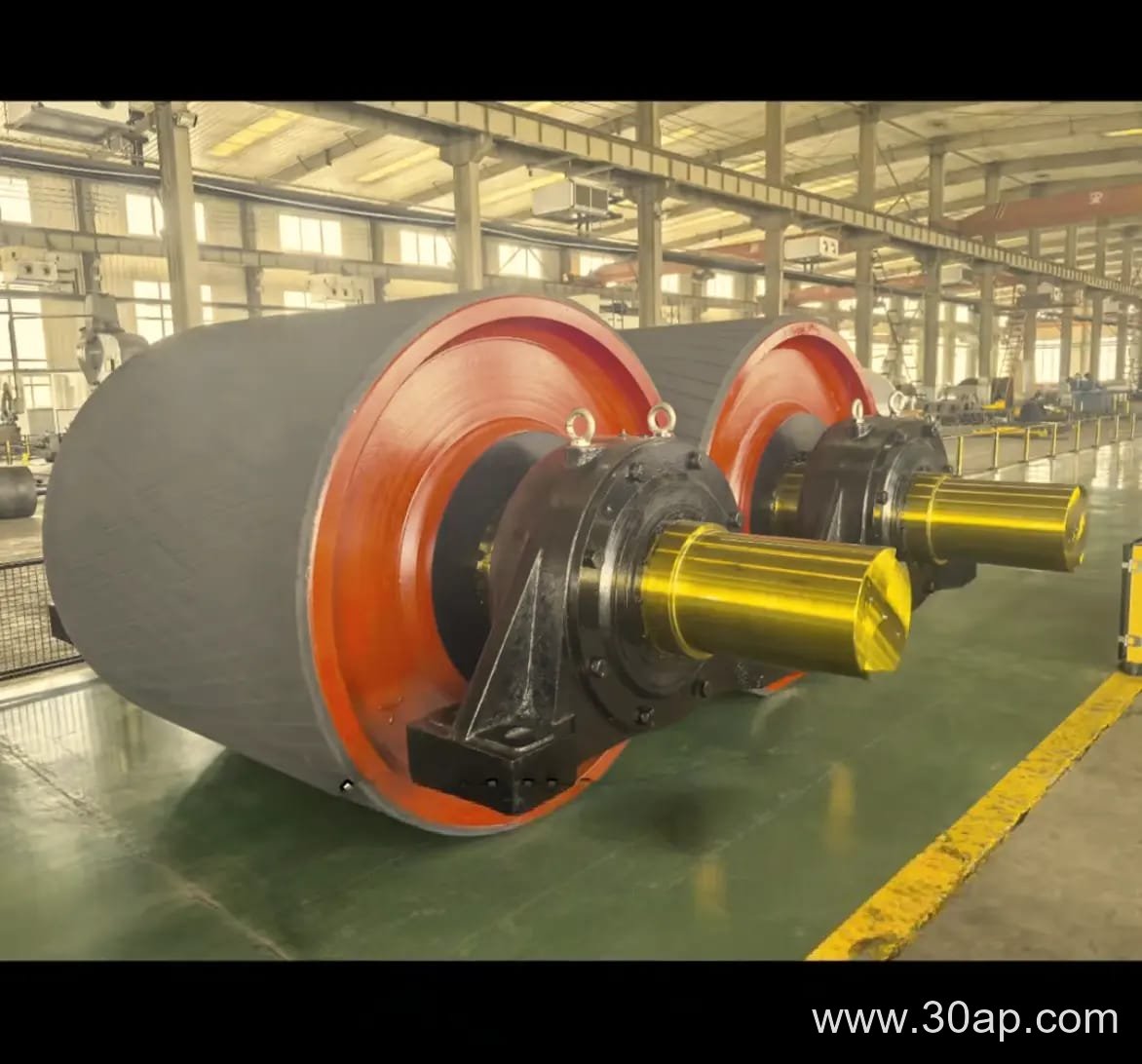
Shaft diameter is calculated from torque and bending load. Typical shaft sizes include Ø50, Ø60, Ø70, Ø80, Ø90, Ø100, Ø120, Ø140, Ø160, Ø180, and Ø200 mm, but the correct value comes from the drive design, not from the belt width alone. A buyer should be ready to share belt width, belt speed, motor power, pulley position, and the material being carried.
What Buyers Should Check Before Ordering
- Position and function: drive, tail, bend, or tension. Each has different demands on grip and wear resistance.
- Lagging material and pattern: rubber, ceramic, diamond, herringbone, or plain, matched to the material and moisture level.
- Cover thickness: 8 to 20 mm is common, but the right value depends on abrasion and slip risk.
- Shell diameter and face width: confirm both against the conveyor frame and the belt.
- Shaft and bearing details: shaft diameter, keyway, and bearing type must match the drive and the conveyor bracket.
- Balancing and runout: a lagged pulley that is out of balance will wear the belt and the bearings.
It also helps to ask how the lagging is bonded. A hot vulcanized cover usually lasts longer under heavy load than a cold bonded one, but the right choice depends on the pulley size, the workshop, and the budget. Ceramic lagging costs more and is reserved for the toughest slip conditions.
Maintenance and Replacement
Inspect the lagging during scheduled shutdowns. Look for worn grooves, missing ceramic tiles, cuts, and areas where the rubber has lifted from the shell. A small patch can sometimes be repaired, but widespread wear means the pulley should be re-lagged or replaced. Check the conveyor belt for tracking problems at the same time; a worn lagged surface often shows up as belt wander or slip under load. Keeping the belt cleaner and the pulley free of build-up will extend the life of both the lagging and the belt.
A conveyor belt lagged pulley is a small part of the conveyor, but it directly affects traction, belt life, and uptime. Matching the lagging to the duty, the material, and the pulley position is the practical way to get reliable performance.