What a Stone Crushing Conveyor Belt Does
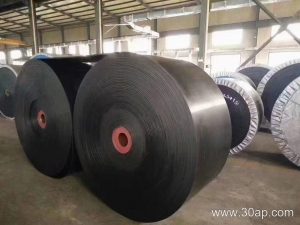
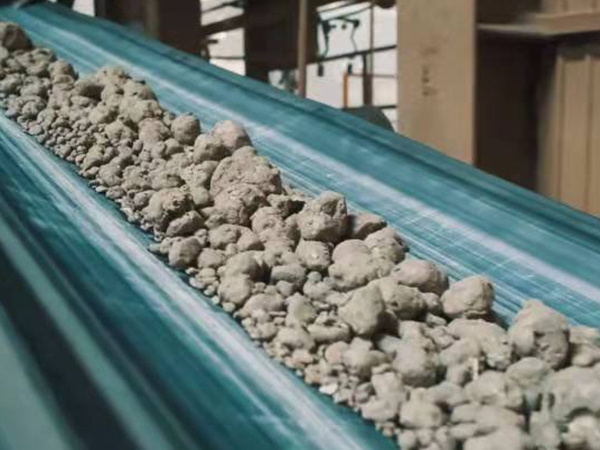
A stone crushing conveyor belt is the moving rubber or fabric-reinforced band that carries blasted rock, crushed aggregate, and screened stone between the jaw crusher, cone or impact crusher, screens, and stockpiles. In a quarry or gravel plant, this belt is the main link between each stage of size reduction. It must survive sharp edges, heavy impact at the loading point, abrasive dust, and occasional wet or frozen material. The same product is also called a crusher conveyor belt or a quarry conveyor belt, depending on the plant and the supplier.
This article looks at how the belt is built, which constructions suit different crushing duties, and what a buyer should confirm before placing an order.
Construction of the Belt
A typical stone crushing conveyor belt has three main parts: the carcass, the cover rubber, and the edge. The carcass carries the tension and resists impact. Common carcass types include EP (polyester-cotton) fabric, NN nylon fabric, and steel cord. EP and NN belts are widely used in mobile and fixed crushing lines because they tolerate repeated flexing over relatively small pulleys. Steel cord belts are chosen for long overland runs where very high tension is needed.
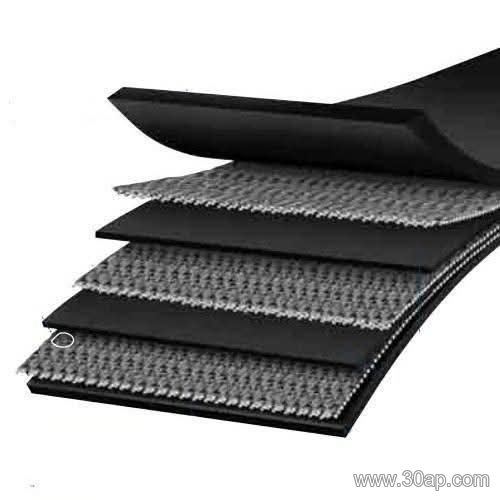
The cover rubber protects the carcass from abrasion and cutting. In stone crushing, abrasion-resistant covers are common, and covers with good cut and gouge resistance help where the feed contains large, sharp lumps. Heat-resistant grades are used after a hot-mix or asphalt plant, while oil-resistant grades appear where the material carries oil or grease. Fire-resistant and antistatic grades are specified in some enclosed or hazardous areas.
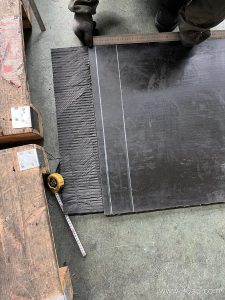
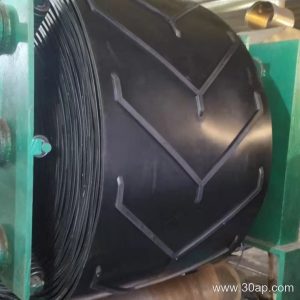
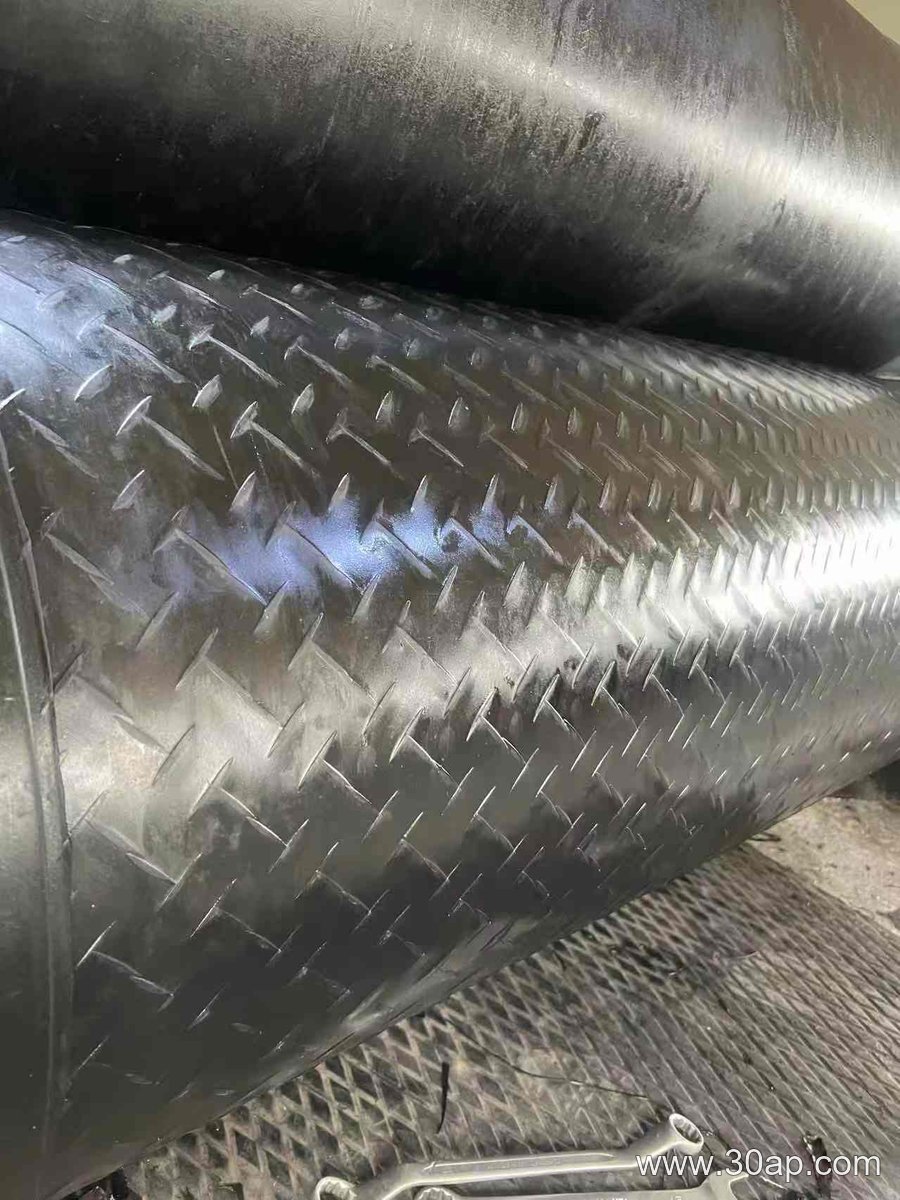
Surface form also matters. A smooth cover is standard for most crushed stone. A patterned or chevron cover gives extra grip on inclines where loose aggregate might roll back. Corrugated sidewall belts are a different subtype and are used where the belt must run at a steep angle; they are not a direct replacement for a flat stone crushing belt on a normal incline.
Strength, Width, and Cover Grades
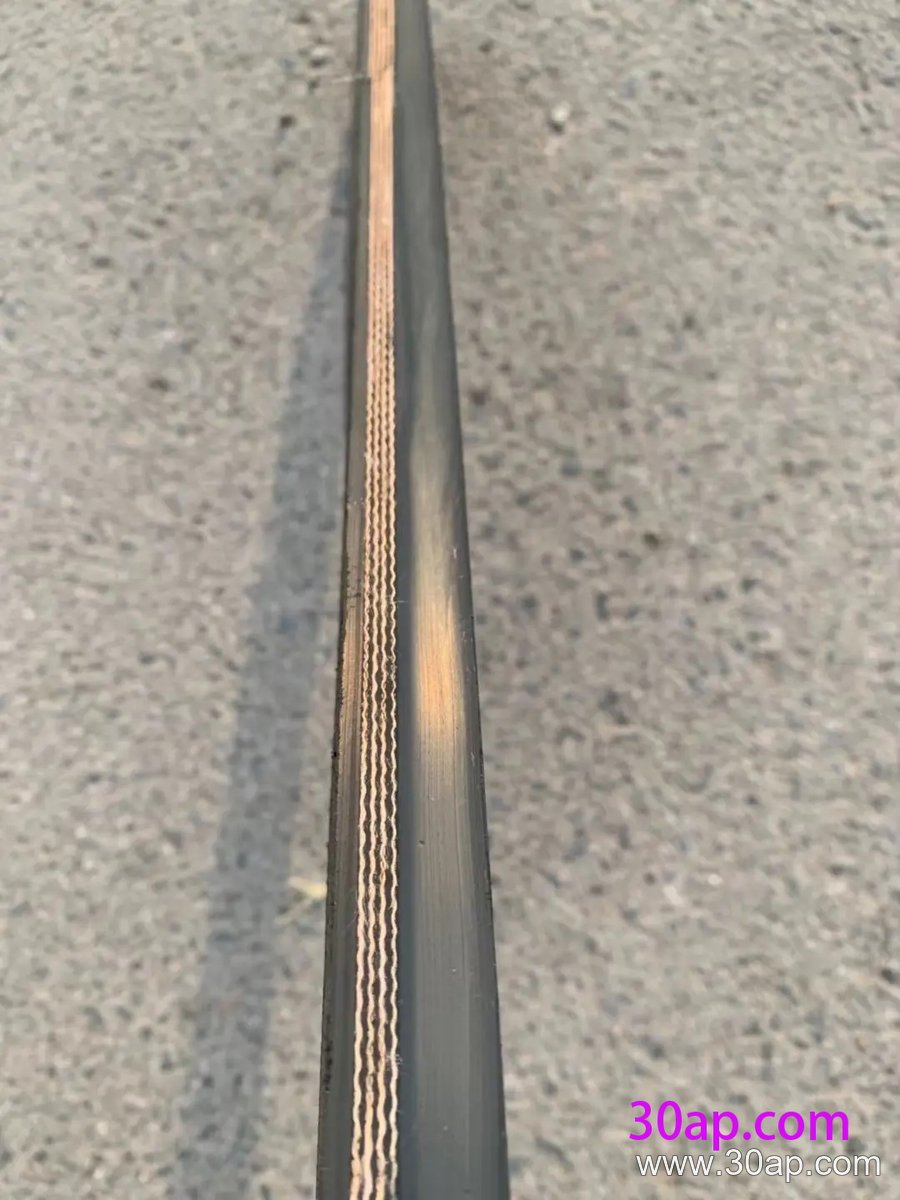
Belt strength is usually described by the carcass grade, such as EP200, EP315, EP400, EP500, EP630, EP800, and higher grades up to EP2000. These numbers refer to the nominal tensile strength of the carcass and are a starting point for selection, not a universal rule for every crusher. The actual required grade depends on the conveyor length, the incline, the capacity, the material weight, and the starting and stopping conditions.
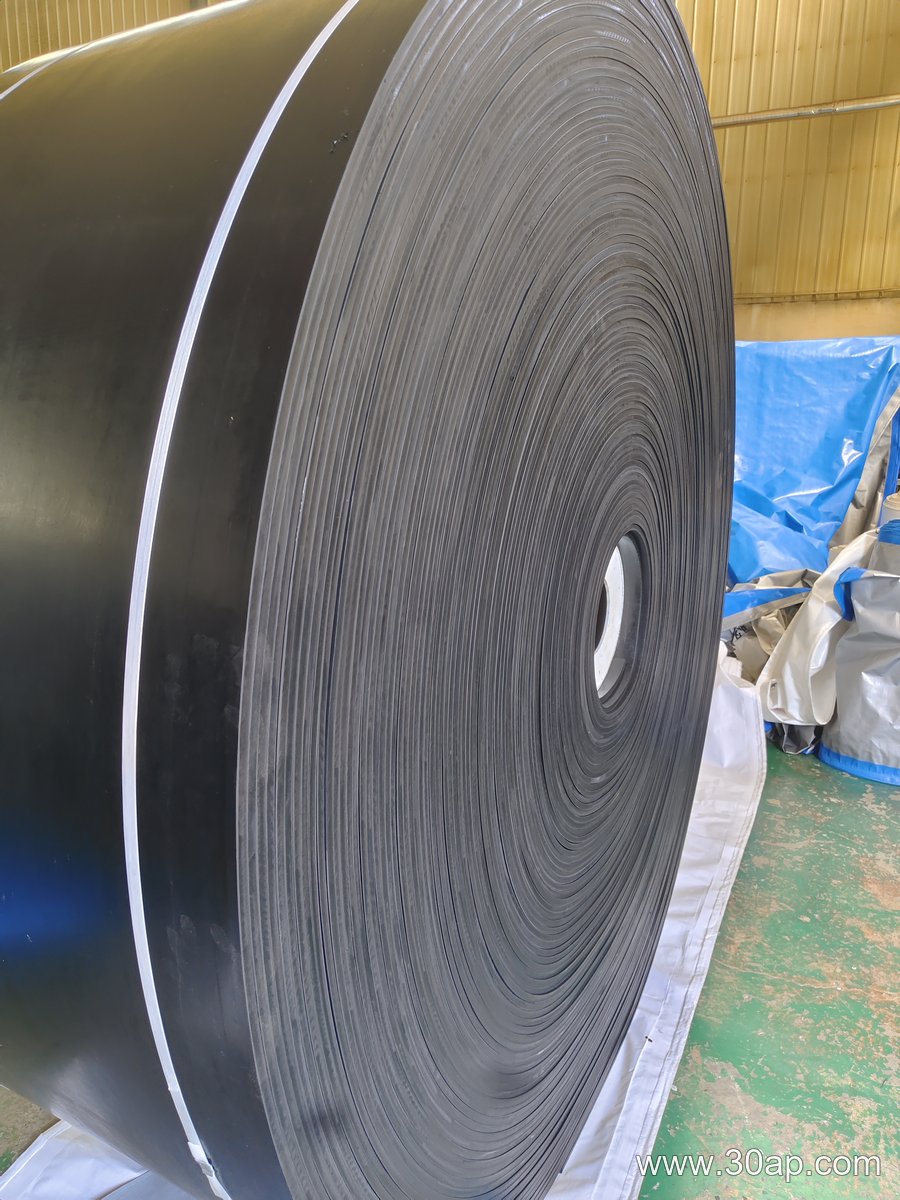
Standard belt widths for crushing plants include B500, B650, B800, B1000, B1200, B1400, B1600, B1800, and B2000. A small secondary screen might use a narrower belt, while a primary discharge belt can be much wider. Width should be chosen so the load sits with enough edge clearance and does not spill. There is no fixed rule that one belt width must match one pulley diameter; the pulley size, shaft, and bearing are selected from the belt tension and the allowable bending radius, so the same width can appear with different pulley dimensions in different plants.
Cover thickness is commonly given as a top and bottom figure, for example 3+1.5 mm, 4+2 mm, 5+2 mm, 6+2 mm, or 8+3 mm. The first number is the top cover, which faces the stone, and the second is the bottom cover. A thicker top cover lasts longer under heavy abrasion but adds weight and may need a larger minimum pulley diameter. Fabric plies usually range from two to six layers; more plies increase strength but also reduce flexibility.
Where the Belt Is Used in a Crushing Circuit
In a typical stone crushing line, the belt appears at several points. A primary feed belt carries raw rock from the hopper or feeder to the jaw crusher. A discharge belt takes crushed stone from the crusher to the first screen. Return belts carry oversize back to a secondary or tertiary crusher. Final product belts move screened aggregate to stockpiles or loadout bins.
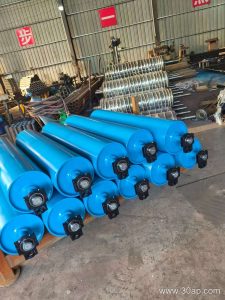
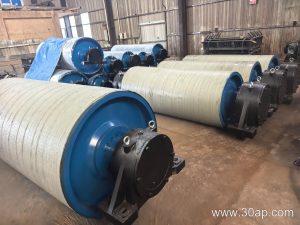
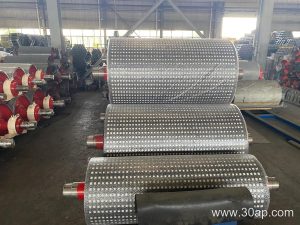
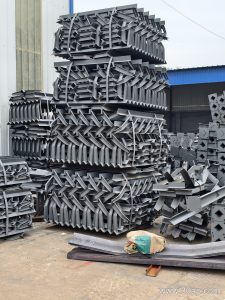
Each position has different demands. The primary feed belt sees the largest lumps and the highest impact, so it often uses a thick abrasion-resistant cover and impact idlers at the loading point. A conveyor idler roller supports the belt along the carrying run, and a set of three idlers forms the trough that keeps the load centered. A conveyor pulley at the head end drives the belt, while the tail pulley and bend pulleys guide it. These pulleys are not interchangeable: the drive pulley transmits power, the tail pulley returns the belt, and a bend pulley changes direction or increases wrap angle. A conveyor bracket holds the idlers, pulleys, or scrapers in position, and its alignment affects belt tracking.
Secondary and tertiary belts often run faster and carry smaller, more uniform stone. Here a smoother cover and a lighter carcass may be enough. Inclined belts benefit from a patterned cover or from sidewalls if the angle is steep.
What a Buyer Should Check
- Material and duty. Confirm the rock type, maximum lump size, moisture, temperature, and whether the stone is sharp or rounded. This drives the cover grade and carcass choice.
- Tension and length. Give the conveyor length, lift, capacity, and belt speed so the supplier can calculate the required belt grade. Do not choose a grade from width alone.
- Pulley and idler compatibility. Check the minimum pulley diameter allowed for the belt carcass and cover thickness. Confirm the idler roller diameter and spacing, and make sure the conveyor pulley and conveyor bracket are rated for the load.
- Cover thickness. Match the top cover to the abrasion level. A thicker cover costs more but can reduce downtime in a primary crushing position.
- Surface form. Use a smooth cover for flat or gently inclined belts, and a chevron or patterned cover where material tends to roll back. Do not use a sidewall belt as a substitute for a flat belt unless the conveyor is designed for it.
- Environmental grade. Ask for the correct grade if the plant is in a cold climate, near oil, or in a fire-sensitive area.
- Documentation. Request the belt grade, cover thickness, ply count, width, and splice method in writing. Keep the data with the conveyor records for the next replacement.
Maintenance and Long Life
Even a well-chosen stone crushing conveyor belt needs attention. Check belt tracking at the head and tail, keep the loading point centered, and replace worn idlers before they cut the bottom cover. Inspect the conveyor pulley lagging for wear and the conveyor bracket for loose bolts. Clean scrapers help remove sticky fines that can build up and misalign the belt.
Store spare belts in a dry, shaded place, and keep them rolled rather than folded. When splicing, follow the belt maker’s method and cure time. A good splice is often the weakest point, so it deserves the same care as the belt itself.
Quick Selection Notes
For a short primary discharge with large lumps, a heavier EP or NN belt with a thick abrasion-resistant cover is common. For a long overland run, a steel cord belt may be more suitable. For a steep incline, a patterned cover can help, while a very steep angle may call for a corrugated sidewall design. Widths such as B800, B1000, and B1200 appear often in mid-size plants, but the final choice should come from the conveyor calculation, not from a catalog shortcut.
Buyers who compare belt grade, cover thickness, pulley compatibility, and environmental grade before ordering usually get a belt that fits the crusher circuit and lasts longer in daily service.