Material Selection and Construction Grades Shape Conveyor Pulley Durability
Engineering a conveyor pulley for a demanding bulk-material port terminal requires careful evaluation of structural materials and construction grades. Operating in a coastal environment exposes material handling equipment to severe moisture, wind-driven salt spray, and highly abrasive cargos such as imported coal, bauxite, and iron ore fines. Under these harsh conditions, the structural integrity of the conveyor pulley depends entirely on the metallurgical properties of its shell, end discs, and shaft assembly. Selecting the correct combination of carbon steel, alloy steel, and specialized lagging materials prevents premature fatigue, catastrophic shell cracking, and excessive shaft deflection.
Carbon Steel Shell Grades and Plate Thickness Trade-Offs
The outer shell of a conveyor pulley experiences continuous bending stress, high radial loads from belt tension, and localized impact forces where bulk material drops onto the belt. Manufacturers typically utilize structural carbon steel plates conforming to internationally recognized specifications such as ASTM A36 or equivalent high-strength low-alloy grades like ASTM A572 Grade 50.
- Standard Carbon Steel (ASTM A36): Offers good weldability and sufficient yield strength for standard-duty port applications, making it cost-effective for general material handling.
- High-Strength Low-Alloy Steel (ASTM A572 Grade 50): Provides a higher minimum yield strength of 50 ksi, allowing engineers to specify thinner shell walls under high belt tensions without increasing overall rotating weight.
- Trade-Offs: While high-strength alloy steels reduce inertia and save motor torque, they demand more rigorous pre-heating and post-weld heat treatment during fabrication to prevent micro-cracking in the heat-affected zone.
End Disc and Hub Metallurgy Under Cyclic Fatigue
Connecting the rotating cylindrical shell to the stationary drive shaft requires robust end discs and locking assemblies. In heavy-duty port terminal applications, fluctuating loads induce severe cyclic shear stresses at the welded joint between the shell and the end plates. For this critical zone, fabricators select forged steel or heavy plate carbon steel with balanced carbon equivalents to ensure optimal fatigue resistance.
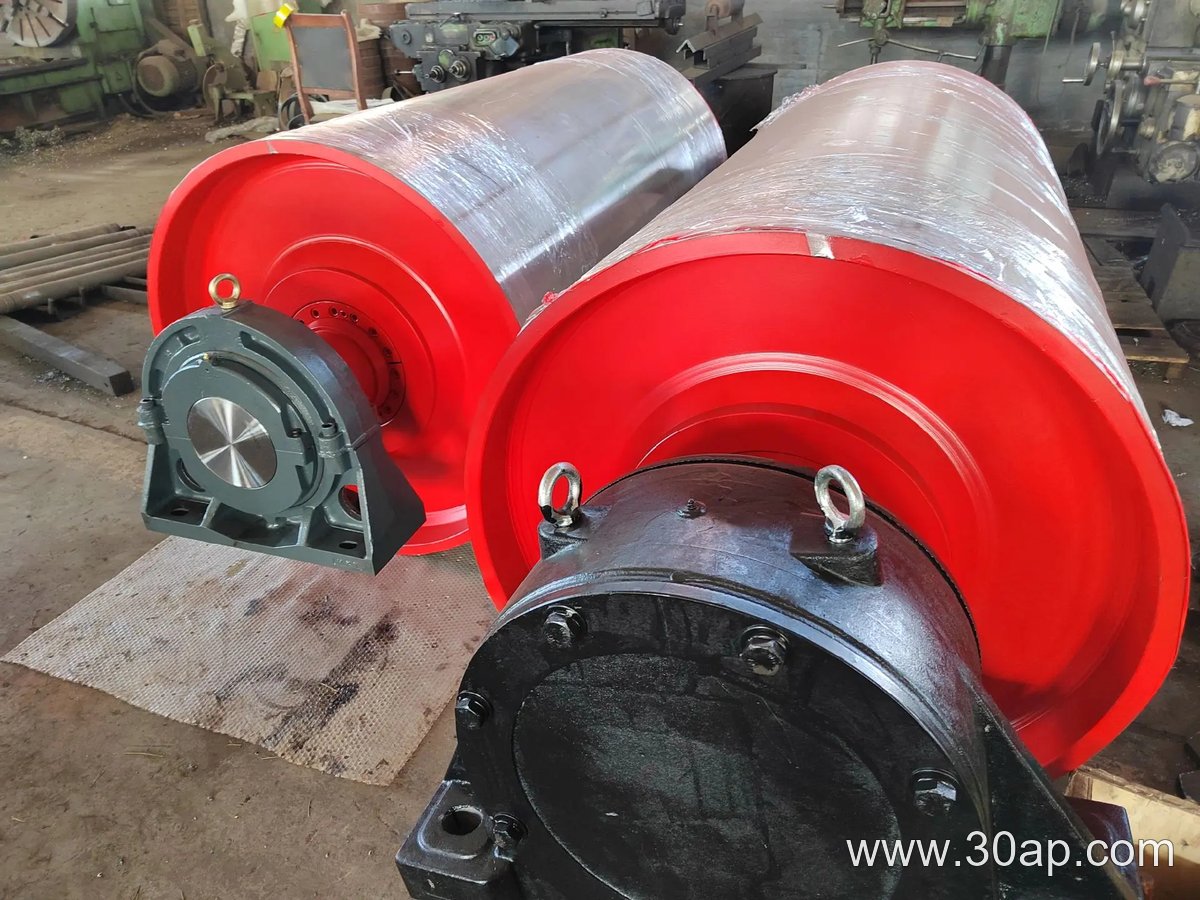
Locking elements and shaft hubs are frequently manufactured from medium-carbon forged steels like AISI 1045 or alloy steels like AISI 4140. Forgers and mechanical designers must balance hardness and toughness. High hardness improves wear resistance against shaft fretting, but overly brittle materials can experience sudden fracture when subjected to the high torque spikes common during emergency conveyor stoppages.
Shaft Material Selection and Deflection Limits
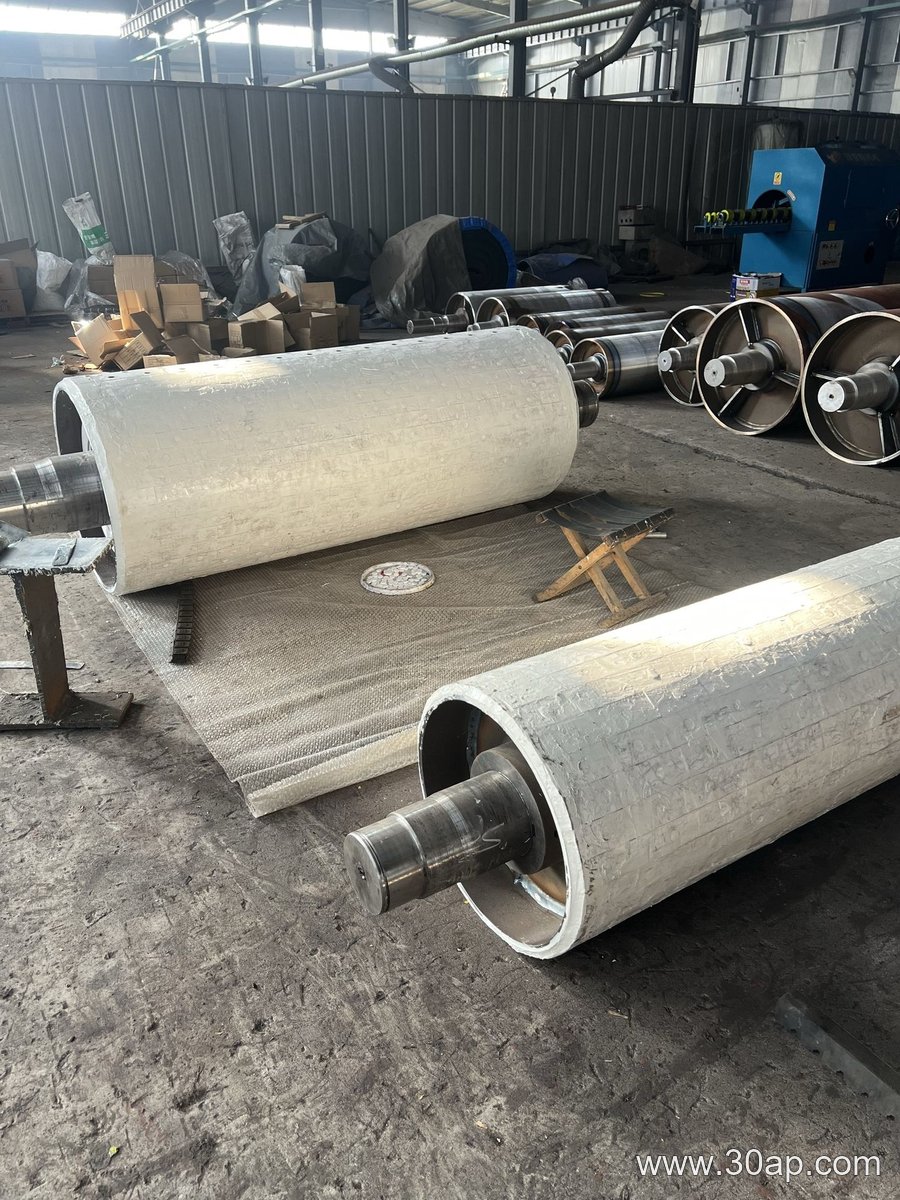
The drive shaft of a conveyor pulley transmits torsional power from the gearbox while supporting the combined weight of the pulley, belt, and conveyed material. Shaft deflection must be strictly controlled to prevent premature bearing failure and uneven stress distribution across internal locking elements.
Engineers typically rely on hot-rolled or forged alloy steels such as AISI 4140 or AISI 4340 for high-torque drive applications. Alloyed with chromium and molybdenum, these grades offer exceptional hardenability and high tensile strength through the entire cross-section of the shaft. However, machining alloy steels requires specialized tooling and stress-relieving processes after rough turning to eliminate internal residual stresses that could otherwise lead to out-of-roundness or sudden shaft snapping under heavy torsional loads.
Elastomeric and Ceramic Lagging Materials
To enhance friction between the conveyor pulley and the rubber belt, various lagging materials are bonded to the outer steel shell. In a corrosive port environment, lagging also serves as a protective barrier shielding the underlying steel from moisture and aggressive chemical fertilizers or salt.
- Natural Rubber (NR) and SBR Blends: Provide excellent high-friction properties and flexibility under normal operating temperatures, though they are susceptible to ozone cracking and oil degradation.
- Neoprene and Nitrile Compounds: Offer superior resistance to oils, greases, and coastal weathering, making them ideal when handling oily petroleum cokes or mineral concentrates.
- Ceramic-Embedded Lagging: Features high-alumina ceramic tiles vulcanized into a rubber matrix, drastically increasing wear life and eliminating belt slippage under wet, heavy-duty port terminal conditions.