Decoding Carcass Construction and Tensile Strength Metrics on a Conveyor Belt Specification Sheet
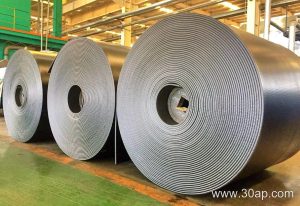
How do you interpret the alphanumeric codes and numerical ratings stamped on technical data sheets for a heavy industrial conveyor belt? When plant engineers review procurement documents for material handling upgrades, understanding how to read specification fields prevents costly misapplications. A conveyor belt functions as a continuous tractive and load-bearing medium, meaning its internal architecture must balance longitudinal tensile strength with transverse flexibility. Without a clear grasp of carcass designations, cover thickness metrics, and elongation limits, facility managers risk specifying an under-engineered asset that suffers from premature ply separation, edge wear, or catastrophic tensile failure under heavy operational loads.
Interpreting Fabric Ply Codes and Tensile Strength Units
The primary identifier on a multi-ply fabric carcass conveyor belt usually follows a standardized designation such as EP300 or EP500. In these fabric core classifications, the letters indicate the warp and weft material—where ‘E’ stands for polyester and ‘P’ stands for nylon. Polyester provides high longitudinal modulus and low elongation, while nylon offers excellent transverse flexibility and impact resistance.
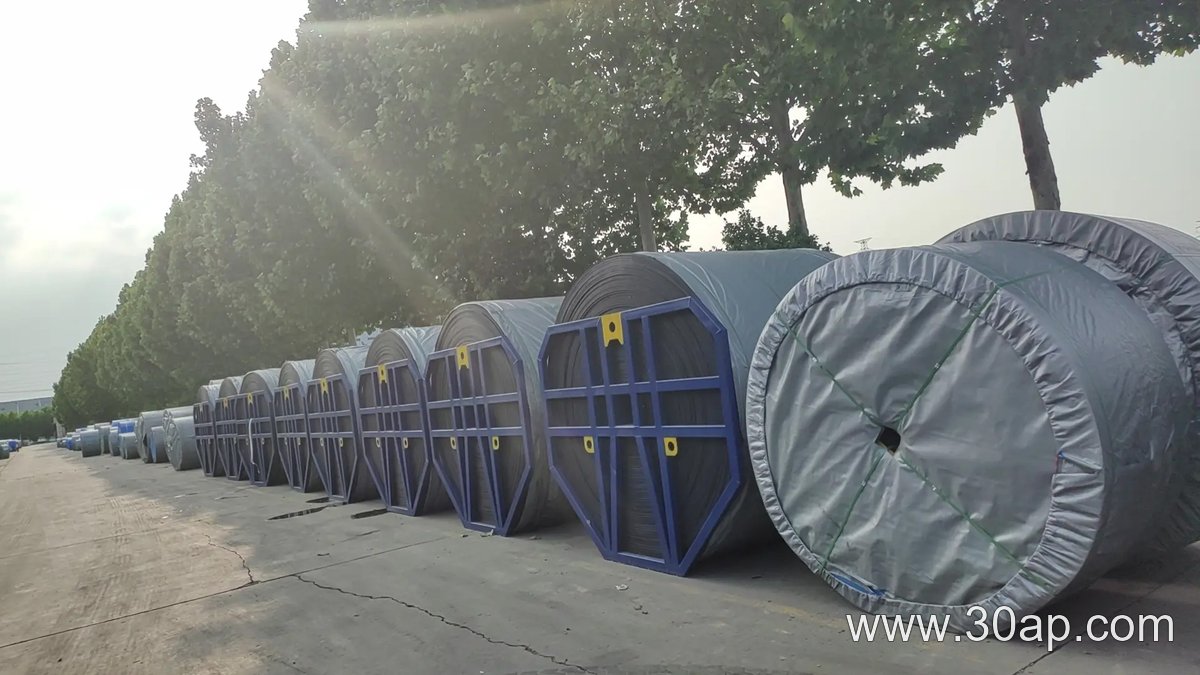
The numerical value following the letters—such as 300 or 500—represents the nominal tensile strength of the conveyor belt expressed in Newtons per millimeter of width (N/mm). For instance, an EP400 rating indicates that a one-millimeter-wide strip of this fabric carcass can theoretically withstand a maximum working tension of 400 Newtons before failure. Engineers must compare this rated breaking strength against calculated effective tension, applying an appropriate safety factor based on starting torques, acceleration rates, and drive configurations.
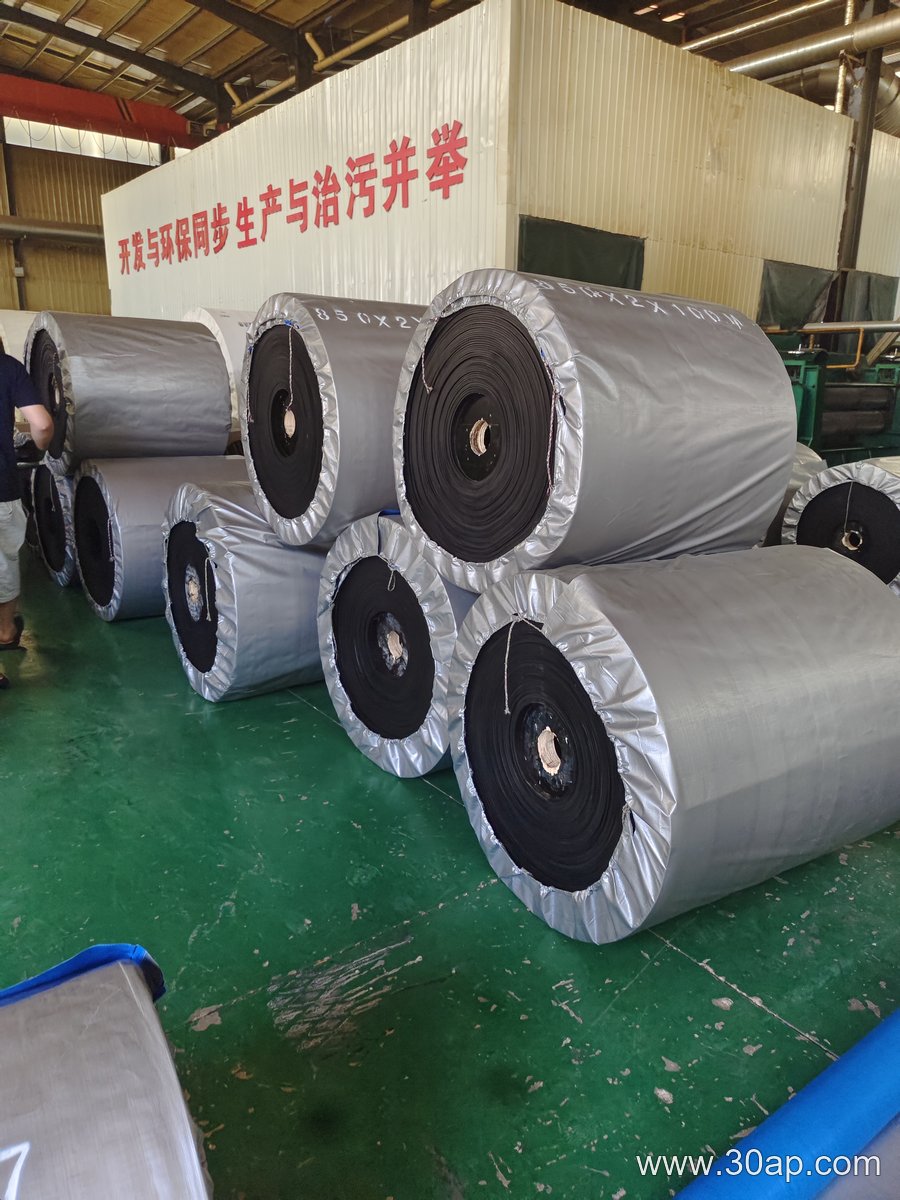
- Warp Threads (Longitudinal): Typically polyester fibers designed to handle high operational tension and minimize stretch over long center-to-center distances.
- Weft Threads (Transverse): Usually nylon fibers that allow the conveyor belt to trough effectively around idler rolls and resist impact damage from falling heavy stones.
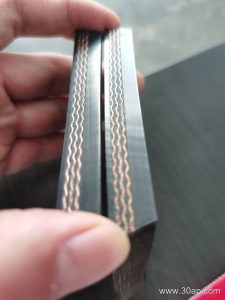
- Ply Count: Indicates the number of fabric layers sandwiched between the rubber skim coats, influencing thickness, mass per unit area, and minimum pulley diameter requirements.
Evaluating Cover Thickness, Rubber Grades, and Elongation Limits
Beyond the internal tensile carcass, specification sheets detail top and bottom rubber cover properties. Cover thickness is typically measured in millimeters, with common industrial configurations featuring a thicker top cover (e.g., 4mm to 8mm) to absorb abrasive impact from sharp materials, and a thinner bottom cover (e.g., 1.5mm to 3mm) optimized for friction against drive and tail pulleys.
Rubber grade designations on the data sheet dictate compound performance characteristics, such as abrasion resistance, oil resistance, or thermal tolerance. Furthermore, technical sheets state elongation at break percentages under specific load conditions. A quality conveyor belt must maintain low permanent elongation during normal operation to prevent excessive take-up travel. By systematically verifying these fields against actual plant operating conditions—such as material lump size, drop height, and ambient temperature—maintenance teams ensure optimal mechanical compatibility across the entire conveying circuit.