How to Calculate a Conveyor Bracket’s Idler Spacing in a Wet Outdoor Conveyor
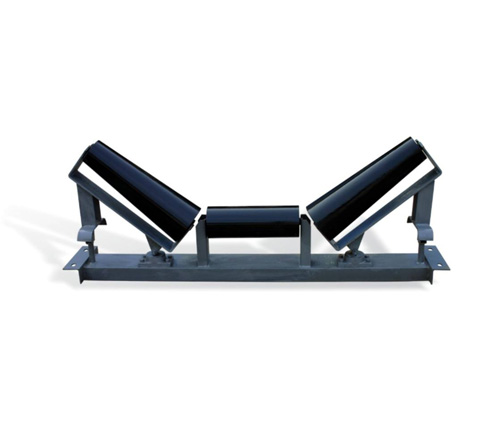
To size a conveyor bracket for wet outdoor service, first find the required idler spacing using the belt’s weight and load per unit length. Assume a 36-inch-wide belt carrying 100 lb/ft of material, with a belt weight of 10 lb/ft. For a 100-ft span between terminal pulleys, use the sag formula: maximum sag = (w × L²) / (8 × T), where w is total load per foot (110 lb/ft), L is idler spacing in feet, and T is belt tension in pounds. For a wet outdoor conveyor, choose a maximum sag of 0.5 inches (0.0417 ft) to limit water pooling. Rearranging gives L = √(8 × T × sag / w). If T is 3,000 lb, then L = √(8 × 3000 × 0.0417 / 110) = √(9.1) ≈ 3.0 ft. Thus, a conveyor bracket spacing of about 3 feet is needed. Always verify the bracket’s load rating and corrosion allowance for wet conditions.
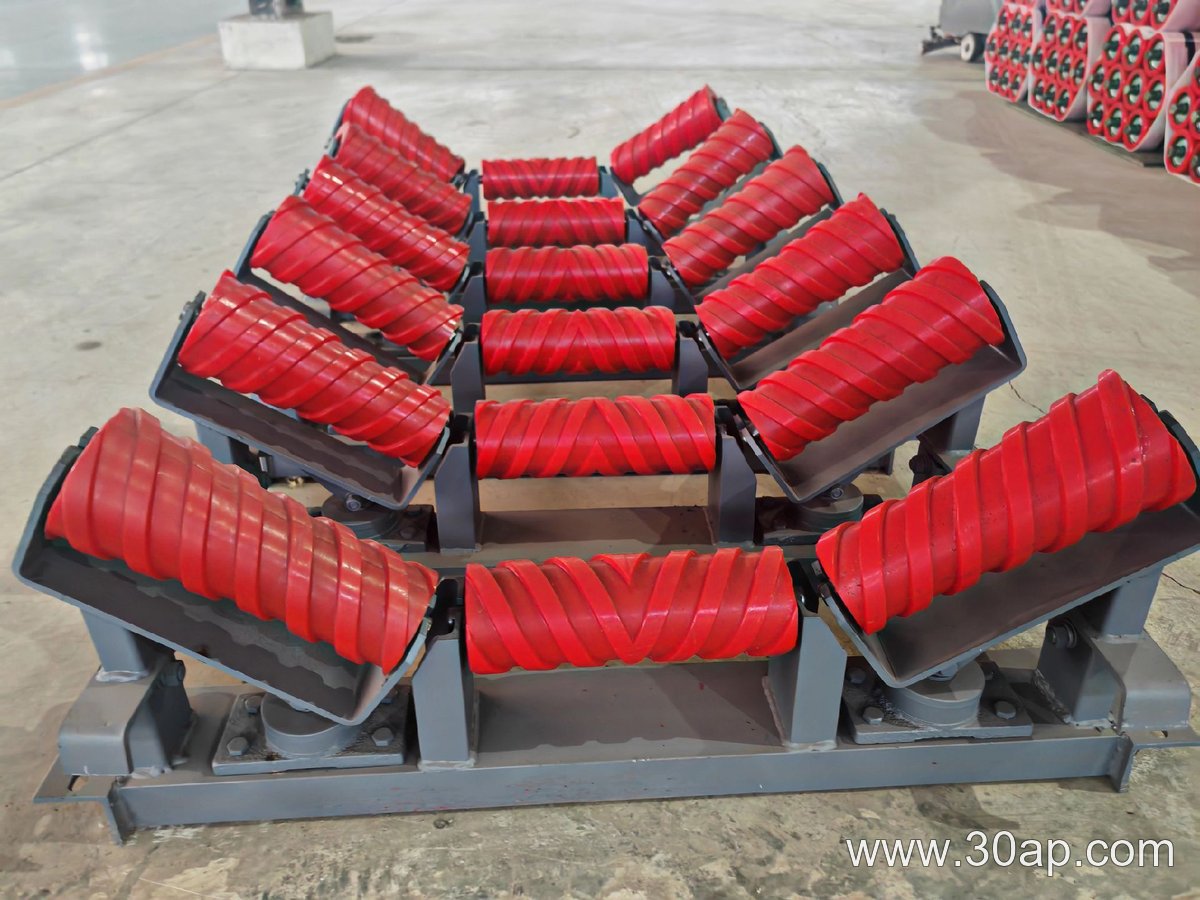
How Do You Calculate Conveyor Belt Length at a Hypothetical Mineral Processing Plant
At a hypothetical mineral-processing plant, a conveyor belt must be ordered for a simple two-pulley transfer. A compact checklist helps before any number is written: pulley diameters, center distance, belt wrap, splice allowance, and take-up travel.
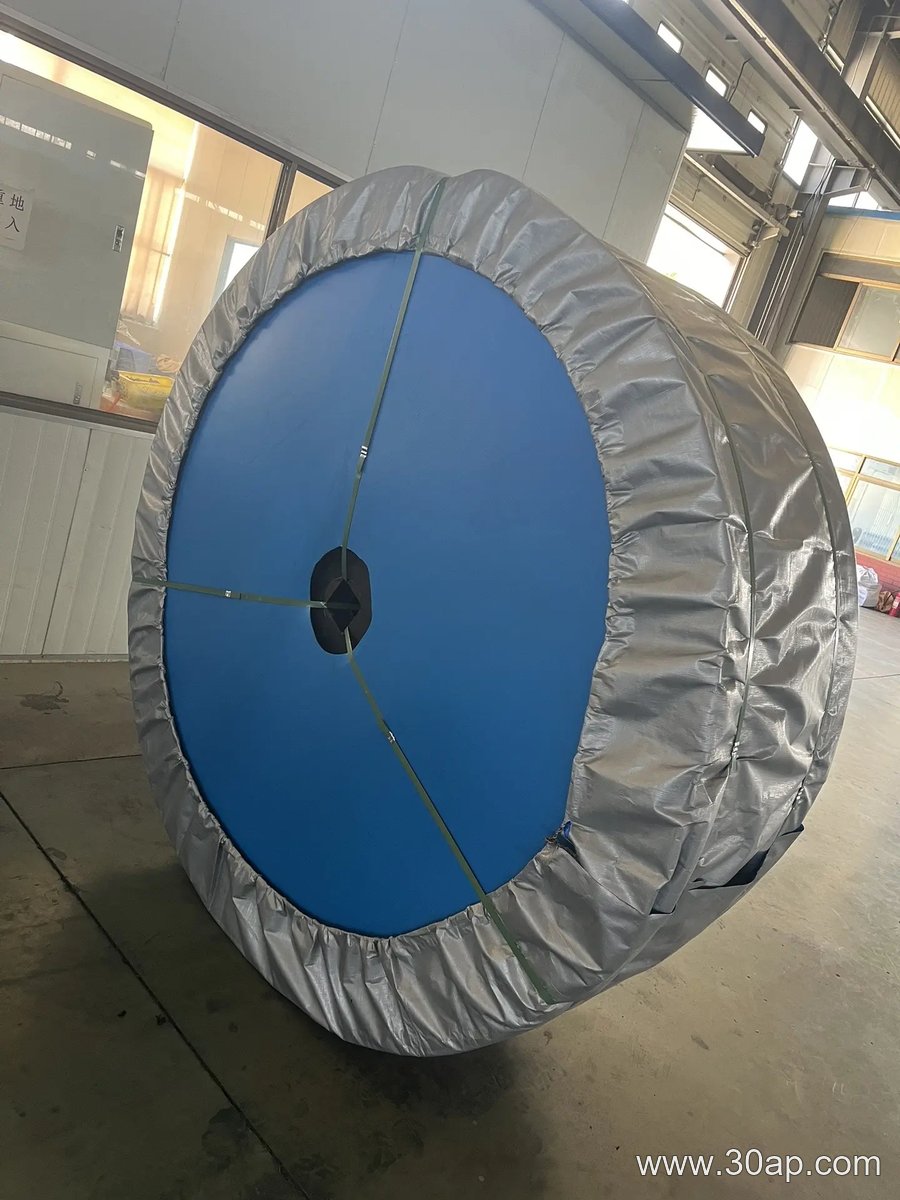
Assumptions and Method
- Center distance between pulley shafts: 40 m
- Drive pulley diameter: 0.8 m; tail pulley diameter: 0.6 m
- Wrap angle: 180 degrees on each pulley
- Splice allowance: 1.5 m; take-up reserve: 2 m
For 180-degree wrap, each pulley contributes half its circumference. Belt length = 2 x center distance + 0.5 x pi x (drive diameter + tail diameter) + splice allowance + take-up reserve. Using these values: 80 m + 0.5 x 3.14 x 1.4 m + 1.5 m + 2 m, which is about 85.7 m. Confirm field measurements before ordering a conveyor belt.
Why Coal Dust Rewrites the Idler Roller Rulebook
Coal dust is not just abrasive; it is fine, persistent and often slightly acidic. Under a stockpile conveyor, an idler roller must keep turning while fines settle into every crevice. The main trade-off is sealing versus heat dissipation. Tight labyrinth seals protect the bearing but can trap heat during high-load starts. A wider bearing housing or a vented outer cap solves this, but only if the plant allows routine inspection.
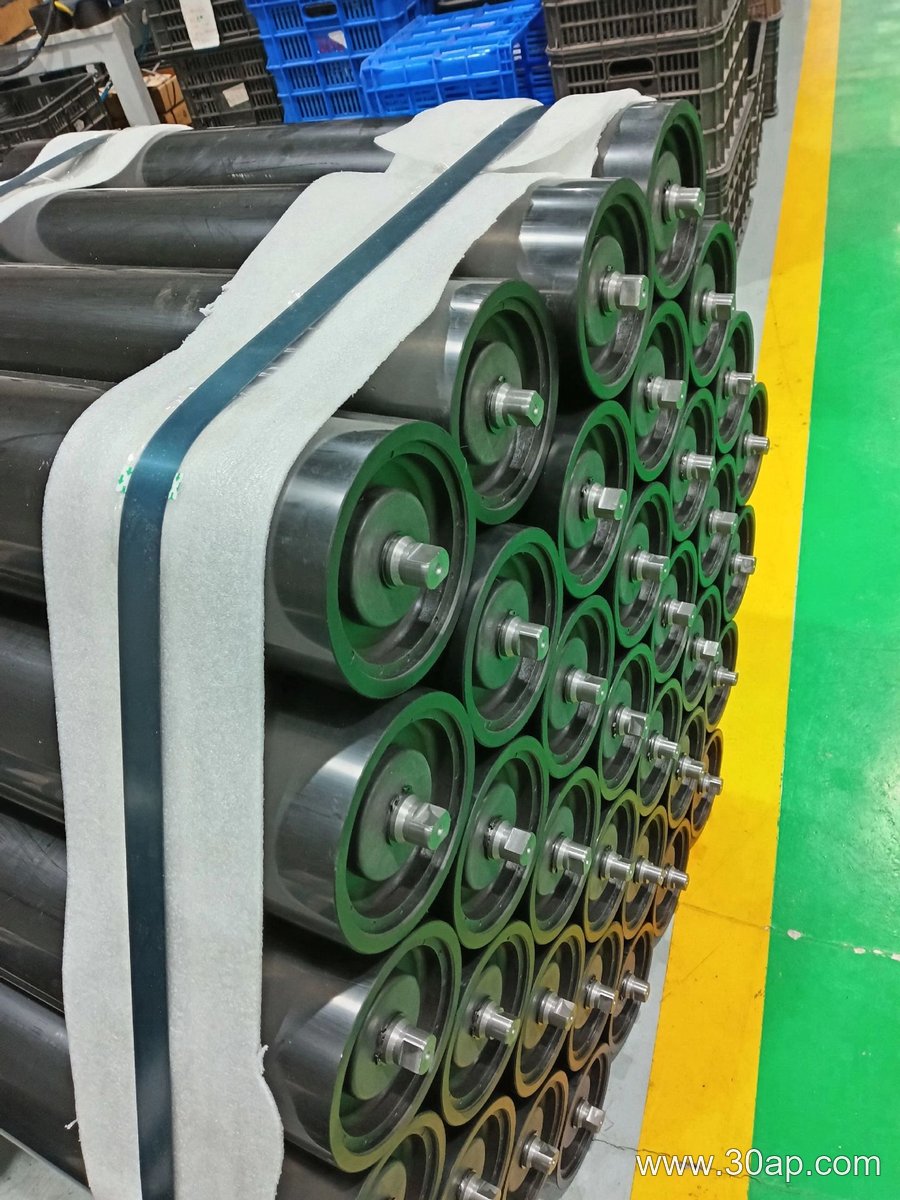
Three Checks Before Ordering
- Confirm the idler roller shell thickness suits the lump size at the load zone.
- Match the bearing clearance to the expected temperature swing between shifts.
- Verify the roller face length leaves adequate belt edge clearance on the stockpile incline.
If coal is wet or washed, add a contact lip seal ahead of the labyrinth. This keeps slurry out without overloading the idler roller. In a mineral-processing plant, the same roller may see dry fines one week and wet coal the next, so specify for the worst condition, not the average.
How Does a Conveyor Pulley Withstand Hot Clinker Dust in a Cement Plant Transfer Point
At a cement plant transfer point, clinker dust settles into every crevice while heat radiates from the belt. A conveyor pulley here must resist abrasion, keep its bearing seals clean, and avoid losing lagging grip.
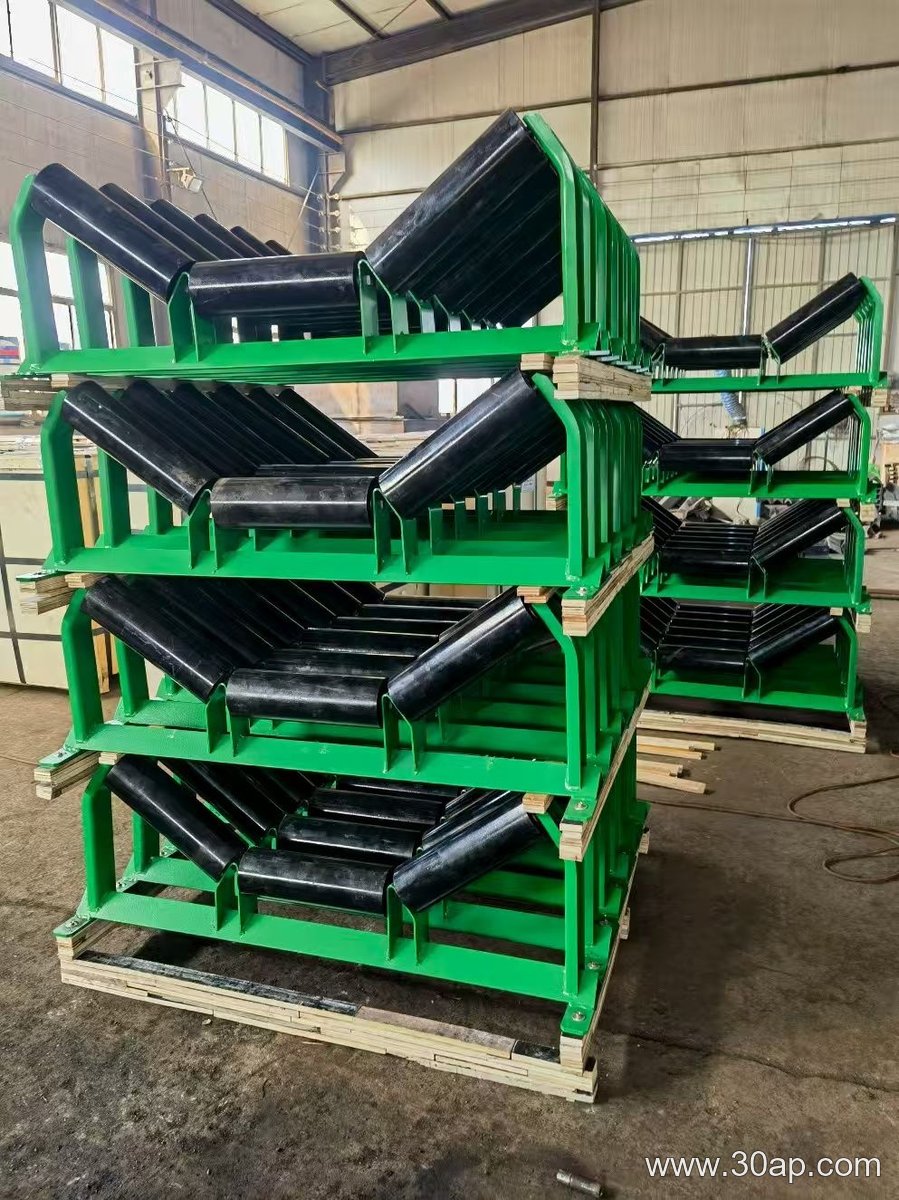
Checks That Matter at the Transfer Point
- Confirm lagging grade suits abrasive, warm clinker dust rather than wet or oily service.
- Verify bearing seals exclude fine dust, since grit entering a seal shortens bearing life.
- Inspect weld quality and shell thickness for the shock of uneven loading.
- Check that the pulley face width matches the belt and that lagging is bonded continuously.
These checks are illustrative. Actual values depend on the belt tension, load, and plant conditions, so they should be confirmed by engineering calculation.