What the Frame Does on a Conveyor
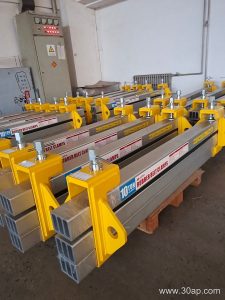
A conveyor idler frame is the structural support that holds idler rollers at a set position under the conveyor belt. Often called a conveyor idler bracket or idler support frame, it fixes the trough angle of the carrying idlers, keeps the return rollers aligned, and transfers the weight of the belt and material into the conveyor stringer or base. In a quarry, a cement plant, or a coal handling system, the frame is the part that decides whether the idlers stay where the designer intended or drift out of alignment over months of service.
The frame is not the roller and not the pulley. It carries the idler roller; it does not drive the belt. Drive, tail, and bend pulleys are separate components with their own mountings, so a buyer should never treat an idler frame as a substitute for a conveyor pulley support.
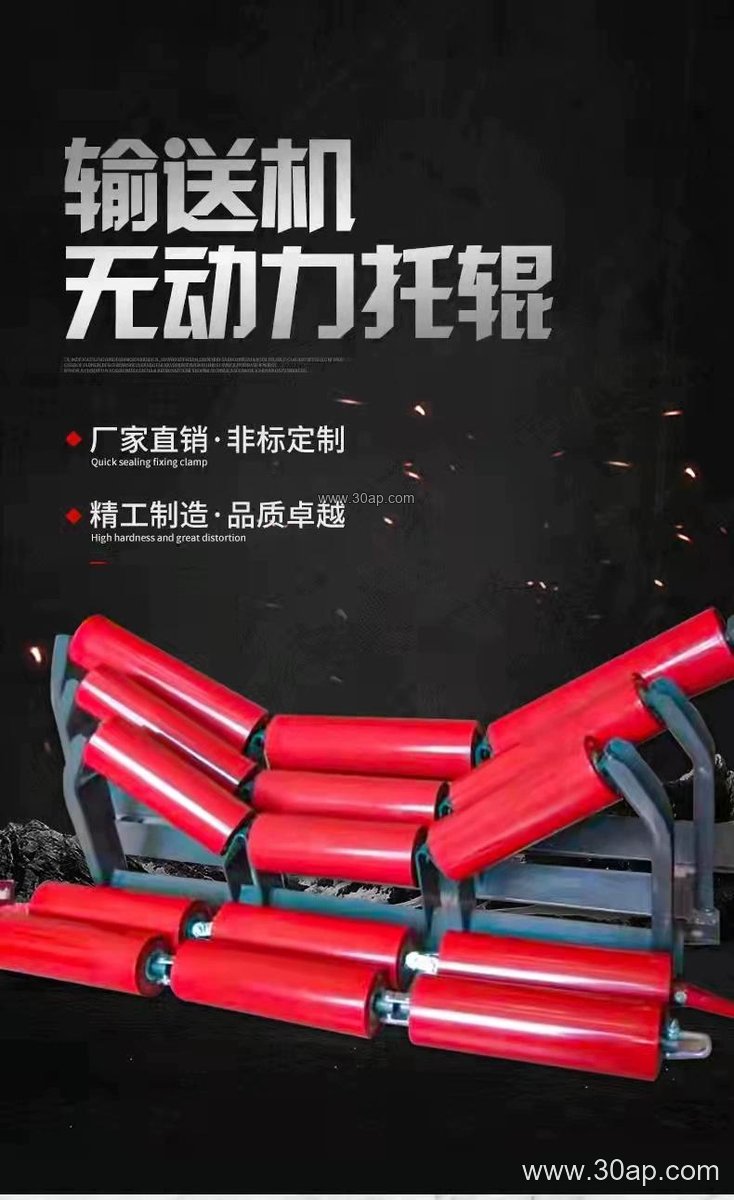
How an Idler Support Frame Is Built
Most frames are fabricated from angle steel, channel steel, or folded steel plate. The crossbeam length and the mounting hole spacing follow the belt width and the trough angle, so they are set by design rather than by a single standard number. A typical frame includes a crossbeam, end brackets that bolt to the stringer, and angled mounting pads that position each idler at the required trough angle.
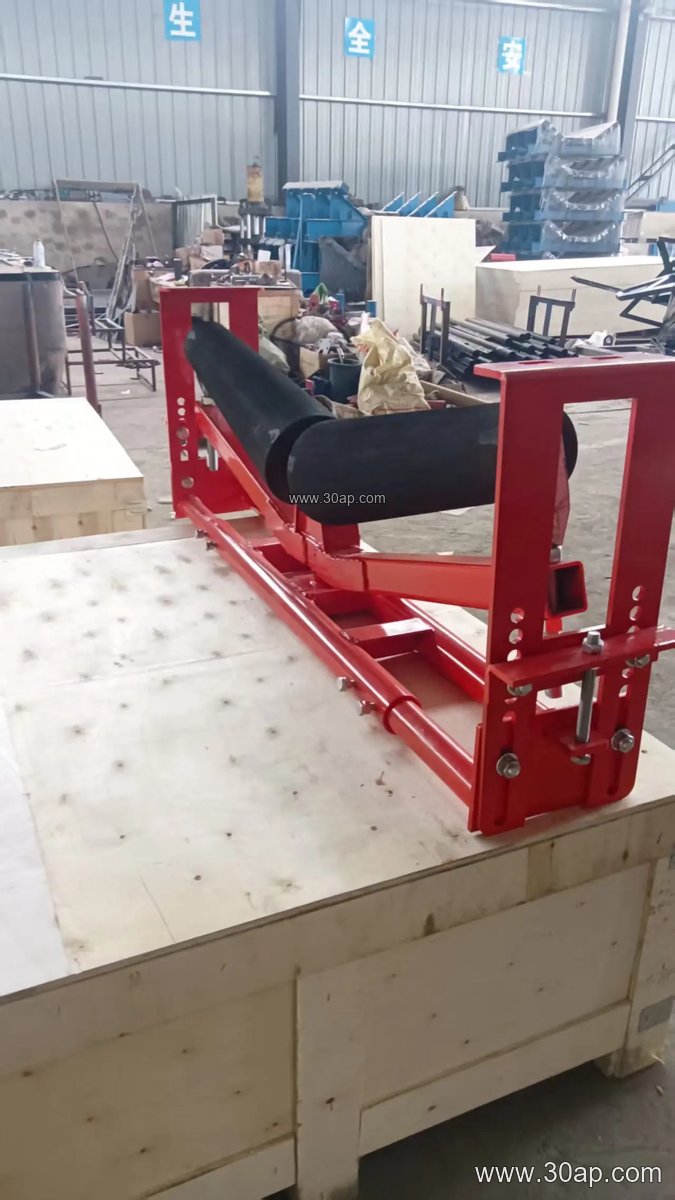
Common belt widths run from B500 and B650 through B800, B1000, and B1200 up to B1400, B1600, B1800, B2000, and B2200, but the frame for a given width is not fixed to one roller size. Trough angles of 20, 30, 35, and 45 degrees are all in use, and adjustable frames can move between these angles. Forward-leaning designs usually sit around 1.5 to 2 degrees.
Reference Data for Frame Selection
| Item | Common Options |
|---|---|
| Belt width | B500, B650, B800, B1000, B1200, B1400, B1600, B1800, B2000, B2200 |
| Trough angle | 20°, 30°, 35°, 45° (adjustable frames cover a range) |
| Idler diameter | Ø89, Ø108, Ø133, Ø159, Ø194 |
| Material | Angle steel, channel steel, folded steel plate |
These are reference values for discussion, not a fixed pairing rule. A B800 belt might use a 35 degree frame with Ø108 idlers, while a B1200 line could run 45 degrees with Ø133 rollers; the actual choice depends on load, belt speed, and material.
Main Frame Types and Where They Sit
Carrying side frames include the standard trough frame, transition frames near the pulley, impact frames under the loading point, and self-aligning frames. Return side frames include the flat return frame and the V-return frame. Hanging frames suit structures where a fixed stringer is not practical, and adjustable frames help where the trough angle must be tuned on site.
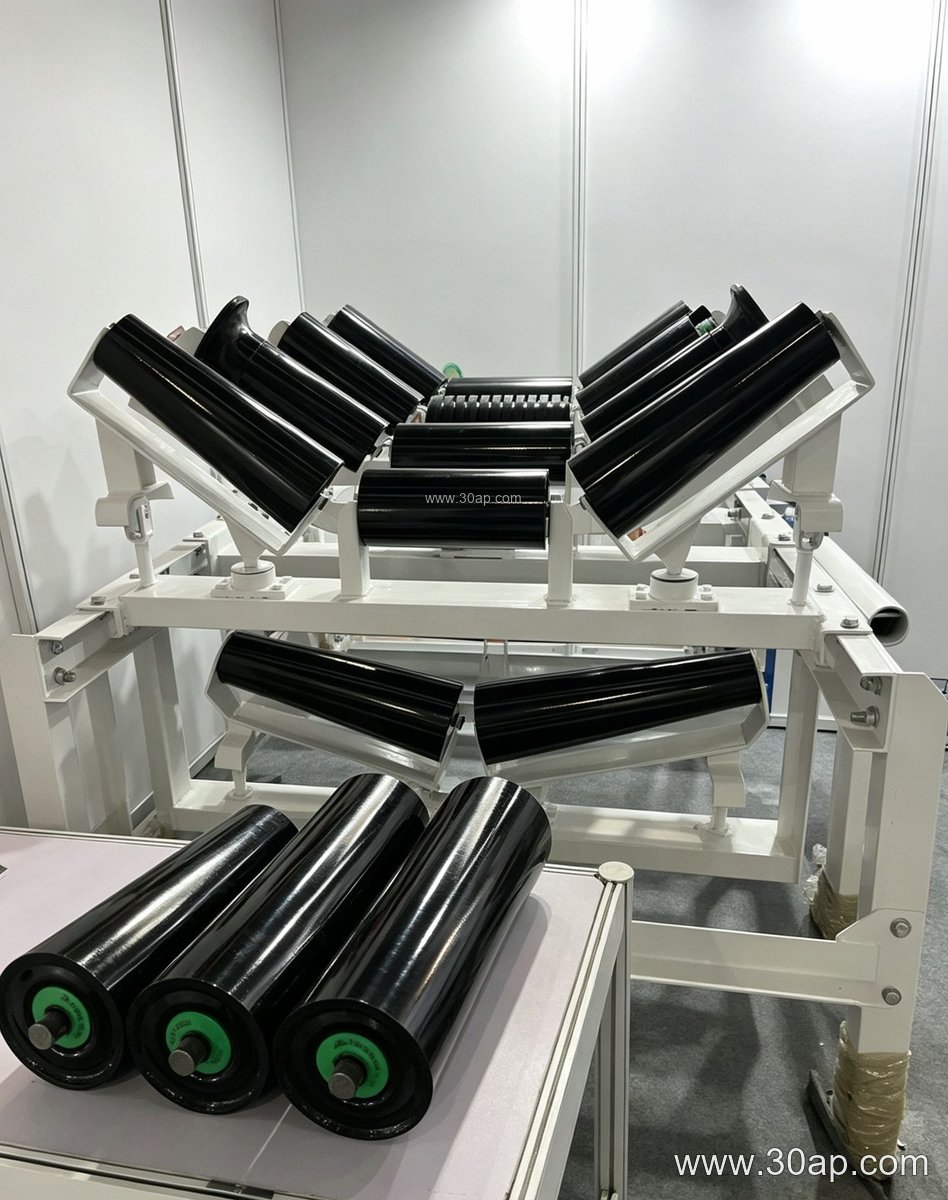
- Trough frame: supports three idlers in a trough shape on the carrying run.
- Transition frame: eases the belt from flat to troughed near a pulley.
- Impact frame: sits under the chute to absorb loading shock.
- Self-aligning frame: corrects belt tracking on long runs.
- V-return frame: supports the belt on the return side with a slight V shape.
The conveyor belt, idler roller, and frame work as one system. A well-made frame keeps the rollers square to the belt, which reduces edge wear and misalignment in a sand and gravel line or a power plant coal yard.
What a Buyer Should Check
Confirm the belt width, the required trough angle, and the roller diameter before ordering. Check the mounting hole spacing and crossbeam length against the existing stringer, since these change with width and angle. Ask whether the frame is fixed or adjustable, and whether it is a carrying, return, impact, or self-aligning type. For corrosive or dusty sites such as a fertilizer plant or a tunnel mucking operation, discuss the steel finish and drainage. A frame that fits the stringer, matches the idler roller, and holds its angle will outlast one that is simply bolted on.