Conveyor Pulley Sizing: Face Width and Diameter
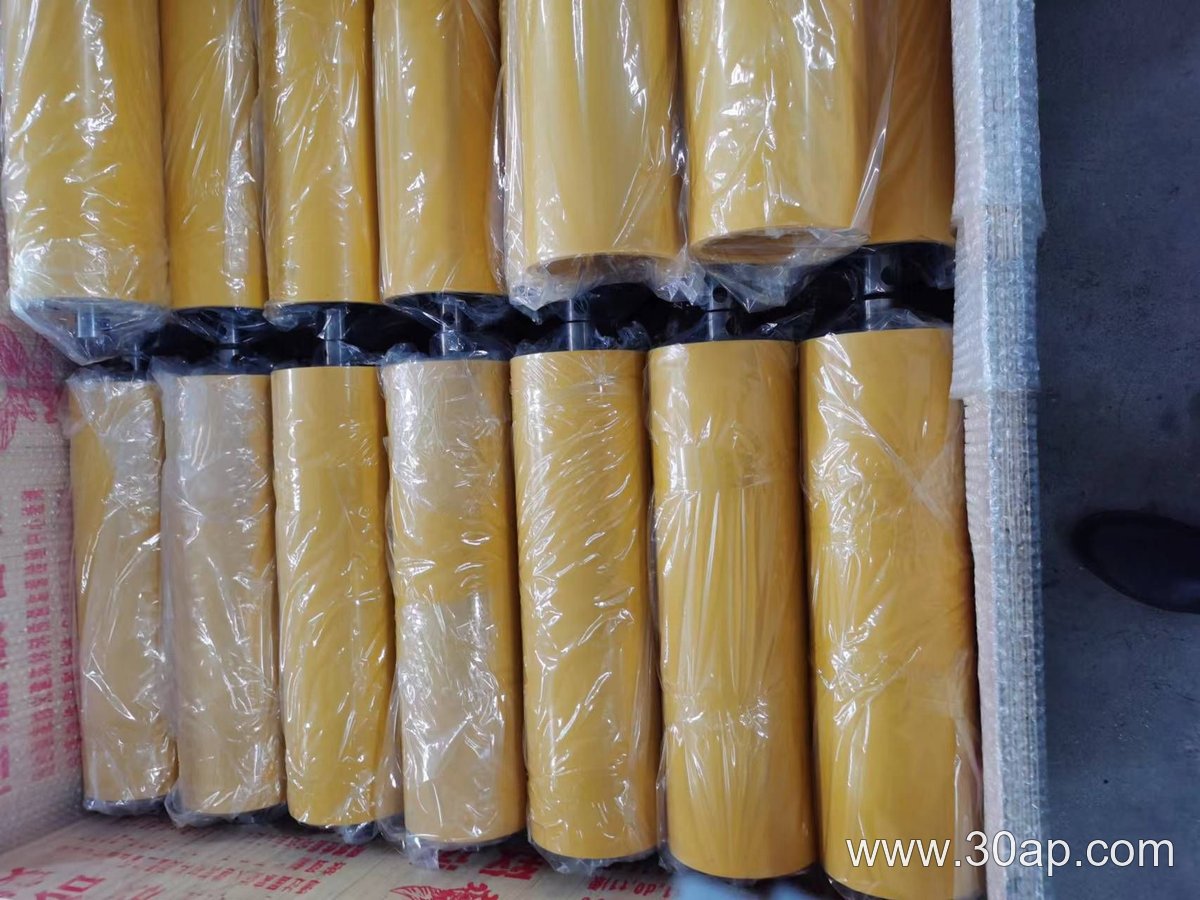
For a hypothetical port terminal handling iron ore, start with belt width, not pulley size. Assume a 1,200 mm belt, 2,500 t/h, and 3.5 m/s. Face width should exceed belt width by 100–150 mm per side for tracking; so 1,400–1,500 mm face is typical. Diameter depends on belt tension and ply count: for a 4-ply EP belt, minimum drive pulley diameter is often 800–1,000 mm.
Worked Example with Units
- Belt width: 1,200 mm
- Face width: 1,200 + 2 × 125 = 1,450 mm
- Belt speed: 3.5 m/s
- Wrap angle: 180°
- Assumed friction coefficient: 0.35 (lagged)
Check torque: T = (P × 9550) / n. If P = 500 kW and n = 60 rpm, T ≈ 79,600 N·m. Verify shaft and lagging can transmit this without slip.
Material Choices for a Conveyor Bracket in Cement Service
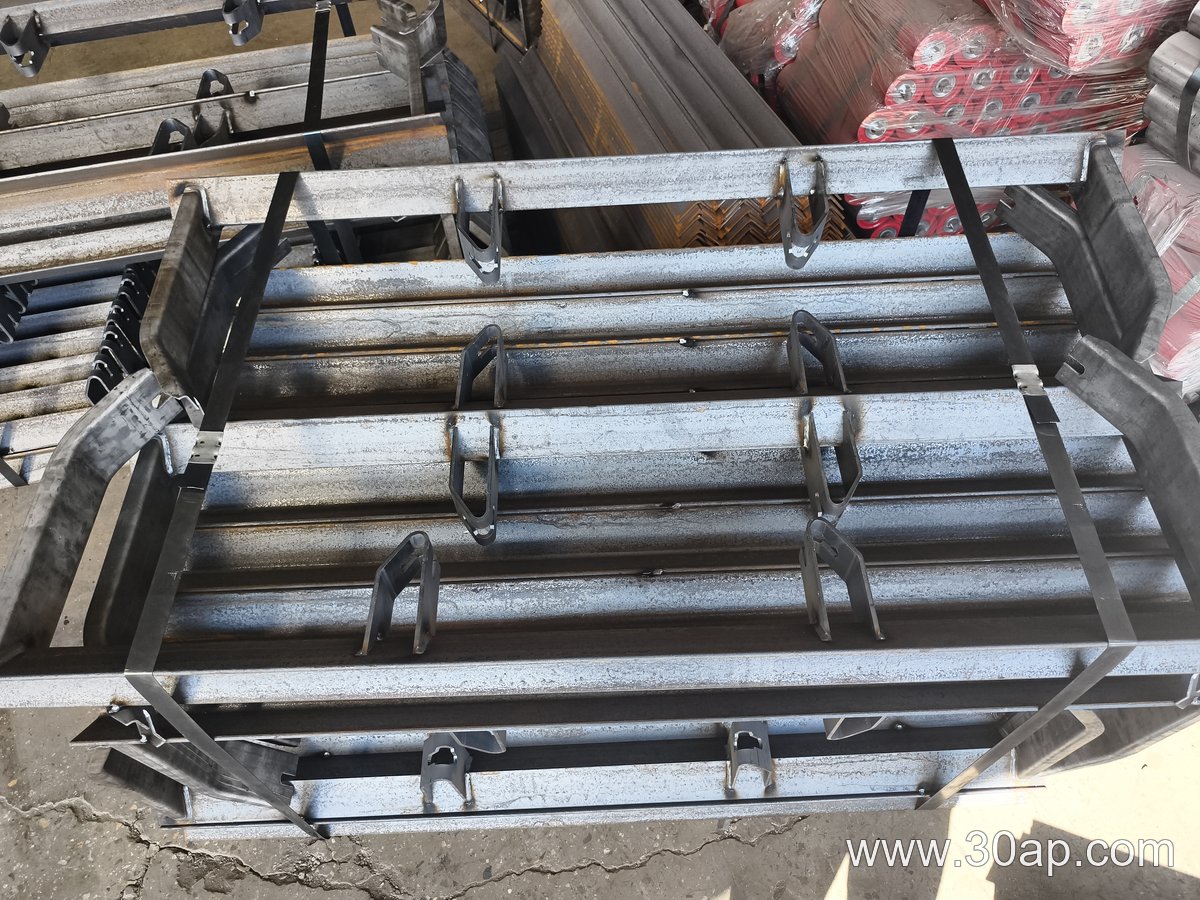
A conveyor bracket in a cement plant must resist abrasive clinker dust, vibration, and moderate heat. Material selection balances strength, corrosion resistance, and cost.
Common Grades and Trade-Offs
- Mild steel (e.g., S235/S275): Low cost, easy to weld and form, but limited wear and corrosion resistance.
- Weathering steel: Better atmospheric corrosion resistance; still vulnerable to severe abrasion.
- Stainless steel (e.g., 304/316): Excellent corrosion resistance, higher cost, and lower yield strength than some carbon steels.
- Cast or ductile iron: Good compressive strength and wear resistance, but heavier and less weldable.
For a hypothetical cement-plant bracket, a painted mild-steel design with replaceable wear plates may offer the best balance where dust is abrasive but corrosion is moderate.
Fabric vs. Steel-Cord Conveyor Belt: Which Fits Your Bulk Port Terminal?
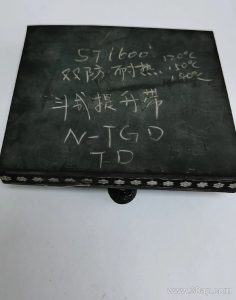
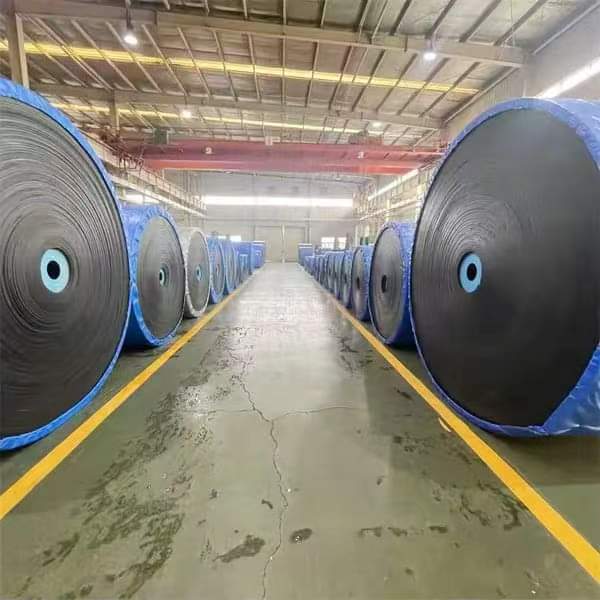
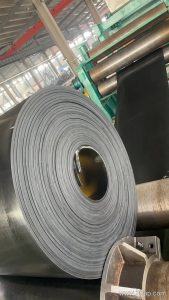
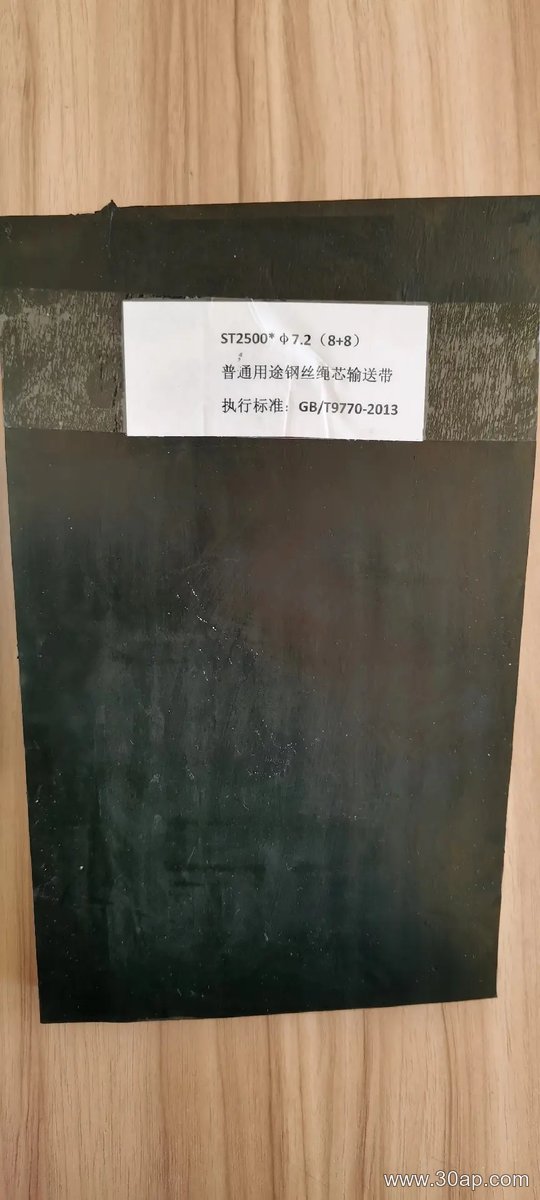
At a bulk port terminal, the conveyor belt must move thousands of tons per hour over long distances. The two main subtypes are fabric-reinforced (often NN) and steel-cord. Fabric belts offer flexibility and easier splicing, making them suitable for moderate lengths and frequent repositioning. Steel-cord belts handle high tension and long lifts with minimal stretch, but require specialized splicing and larger pulleys. Choose fabric for shorter, multi-point transfers; choose steel-cord for long, high-capacity runs.
Benefits and Limitations
- Fabric conveyor belt: Lower initial cost, simpler maintenance, but limited tension capacity and higher elongation under load.
- Steel-cord conveyor belt: High strength, low stretch, but heavier, harder to splice, and less tolerant of small pulley diameters.
Suitable Conditions
Use fabric belts where routes change or space is tight. Use steel-cord belts for straight, long overland or dock-to-stockyard runs with consistent high tension. Both require proper cover compound selection for abrasive coal or iron ore.
Idler Roller Spacing: A Practical Calculation
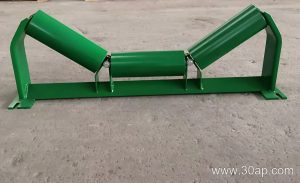
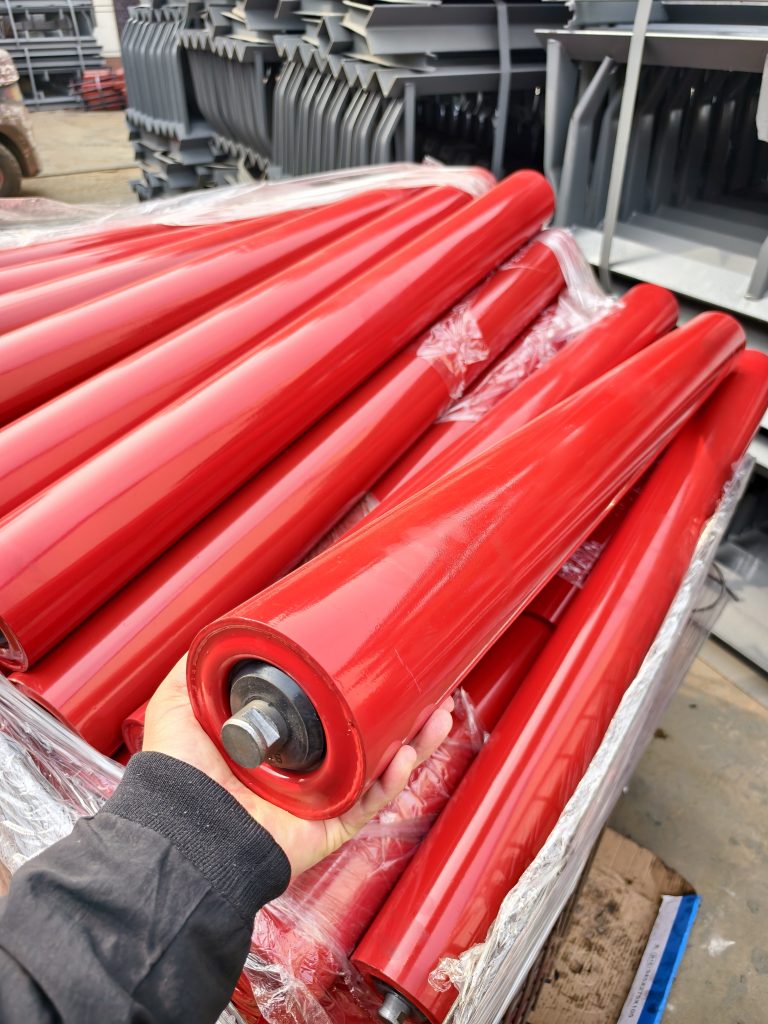
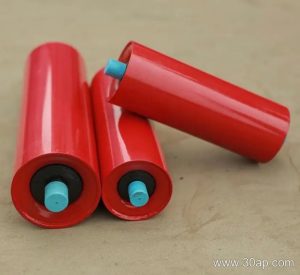
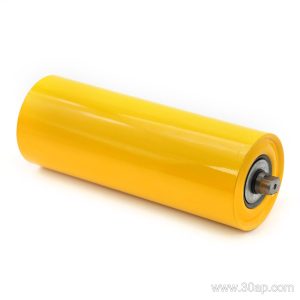
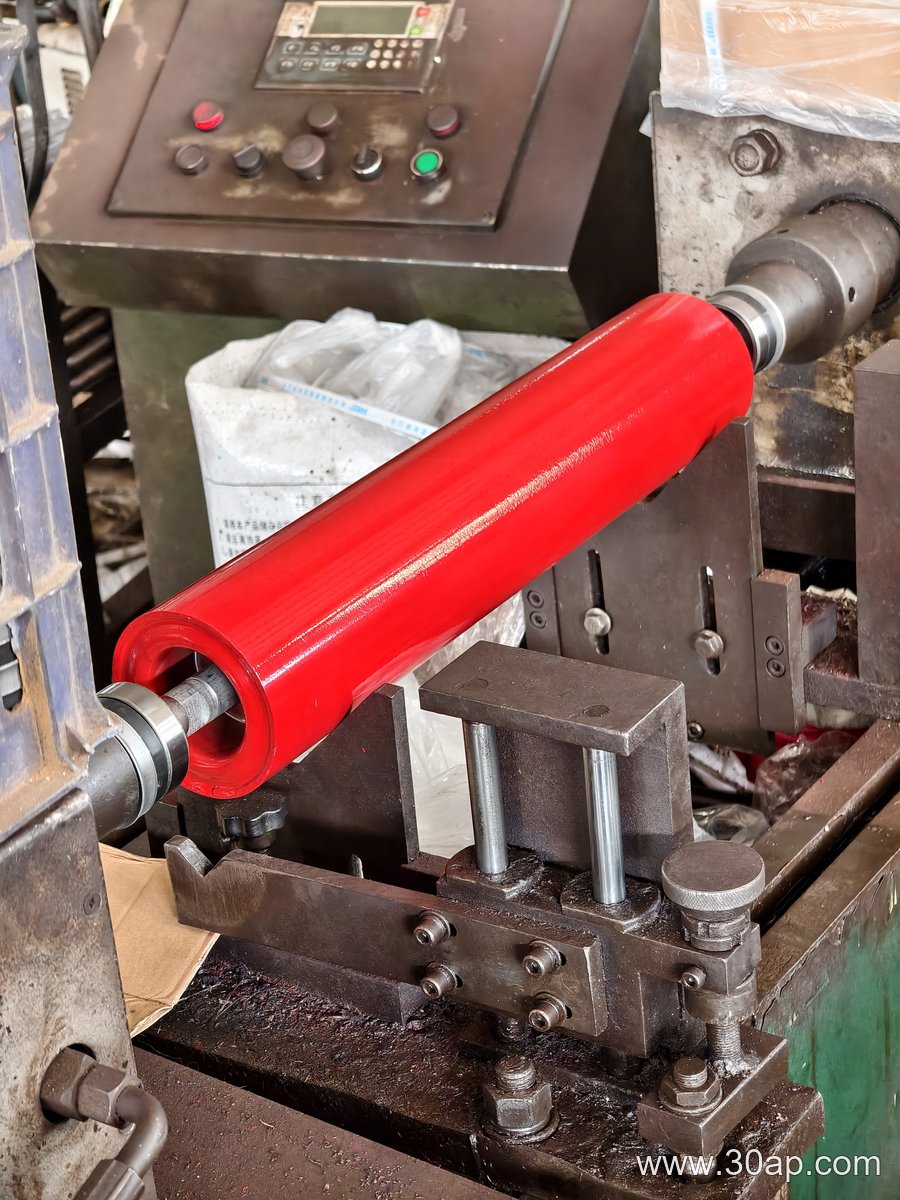
At a bulk-material port terminal, idler roller spacing affects belt sag and load support. Assume a 1,200 mm wide belt, 2,000 kg/m³ material density, and 1.5 m/s belt speed. For a carrying idler roller, use the 3 equal-length roll arrangement. The recommended spacing (S) for a 3-roll set can be estimated by S = (8 × T × h) / (w × L), where T is belt tension (N), h is allowable sag (m), w is load per meter (N/m), and L is idler roller length (m). For a hypothetical example, T = 20,000 N, h = 0.02 m, w = 2,500 N/m, L = 0.5 m, giving S ≈ 2.56 m. Always verify with the belt manufacturer.
Key Assumptions and Units
- Belt tension: 20,000 N (hypothetical)
- Allowable sag: 2% of spacing (0.02 m)
- Material load: 2,500 N per meter of belt
- Idler roller length: 0.5 m
Round down to the nearest standard spacing. This method helps avoid excessive sag and premature idler roller wear.