Which Idler Roller Standards and Grades Matter for a Dusty Quarry Conveyor?
A common misconception is that any idler roller with the right shaft diameter will perform the same in a dusty quarry. In reality, abrasive dust, heavy loads, and continuous operation expose differences in bearing protection, wall thickness, and dimensional consistency. Standards and grades give engineers a shared language to specify these differences without relying on brand claims.
Purpose and Scope of Idler Roller Standards
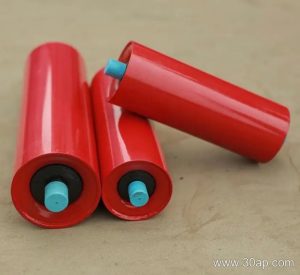
Idler roller standards typically define dimensions, load ratings, and test methods. For example, CEMA standards in North America classify idlers by load designation, such as B, C, D, E, and F, which correspond to increasing load capacities. These designations do not certify a product; they provide a basis for comparison. ISO standards may cover belt conveyor idlers in broader terms, including tolerances and marking. The scope is usually limited to specific parameters like roller diameter, shaft size, bearing type, and end-cap construction. A quarry operator can use these standards to match an idler roller to the belt width, speed, and material load.
Grades and Their Practical Meaning
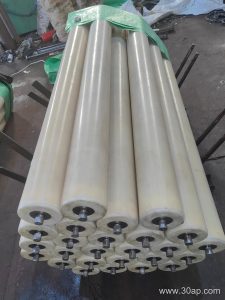
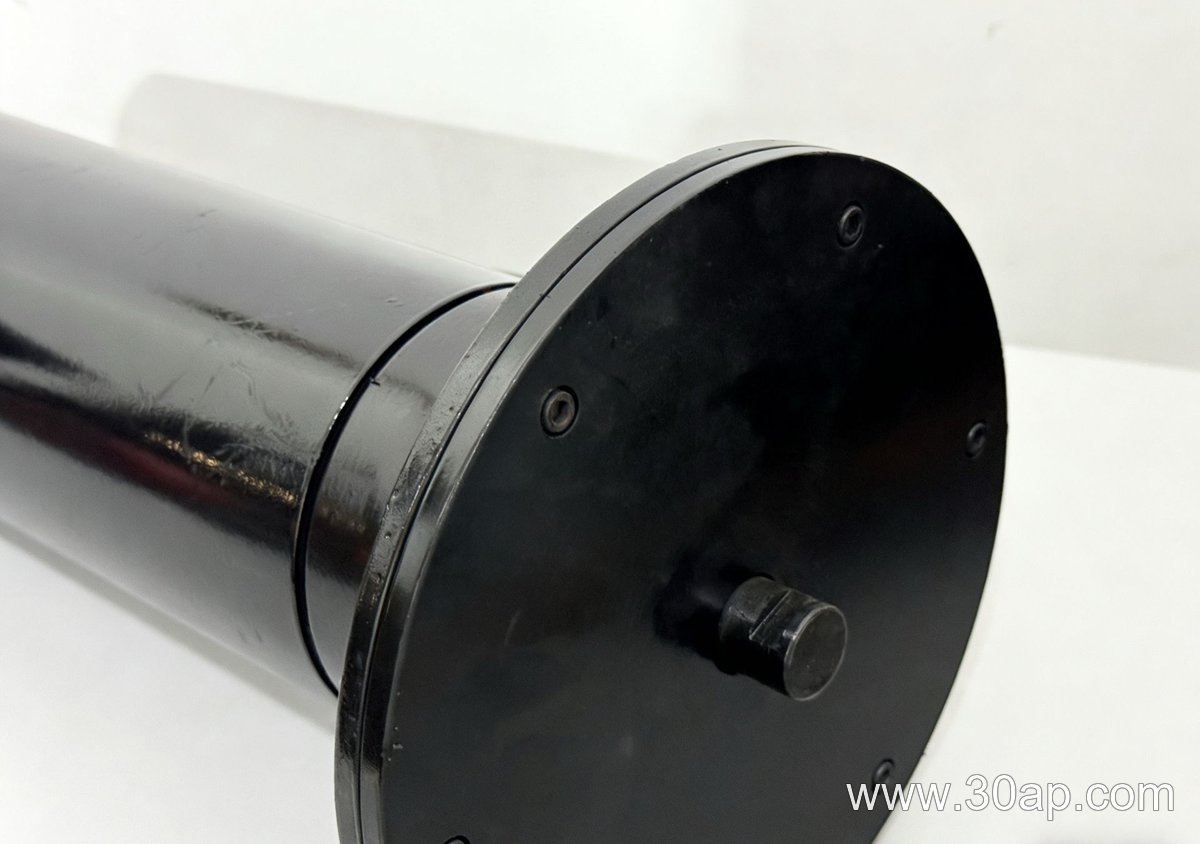
Grades often reflect material and construction choices. A heavy-duty mining idler may use thicker tubing, reinforced end caps, and multi-stage labyrinth seals to resist dust ingress. A polyurethane idler roller, by contrast, might be chosen for applications where belt wear or noise is a concern, though it may not suit high-impact zones. Grades are not universal: one manufacturer’s “premium” may align with another’s standard. The key is to read the specification sheet for bearing type, seal arrangement, and load rating rather than assuming a grade name guarantees performance.
Applying Standards in a Dusty Quarry
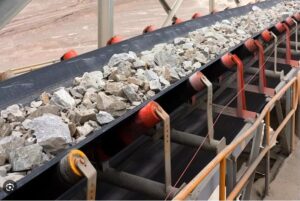
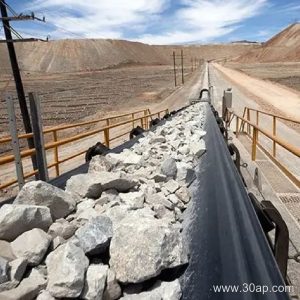
In a hypothetical quarry conveyor moving crushed aggregate, abrasive dust can penetrate standard seals and cause bearing seizure. Here, an ore conveyor idler with labyrinth seals and a CEMA D or E load rating might be appropriate, depending on belt speed and load. The standard helps verify that the roller’s shaft and bearing housing can handle the calculated load. It does not, however, replace a site-specific evaluation of dust concentration, maintenance intervals, or belt tracking.
What Standards Do Not Cover
Standards rarely address installation quality, alignment, or environmental extremes. A roller that meets a dimensional standard can still fail if mounted on a skewed frame or if the belt is over-tensioned. Therefore, use standards as a baseline for interchangeability and load capacity, and combine them with practical inspection and maintenance.
Why Conveyor Pulley Design Trends Toward Modular Lagging and Balanced Welds in Dusty Quarries
In a dusty quarry, a conveyor pulley must survive abrasive grit, heavy loads, and constant vibration. Two recent engineering directions are shaping how pulleys are built: modular lagging for easier maintenance and balanced weld design for longer fatigue life. Both involve trade-offs that affect performance, cost, and downtime.
Modular Lagging: Grip Versus Replaceability
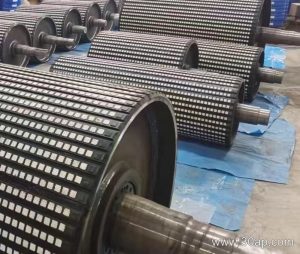
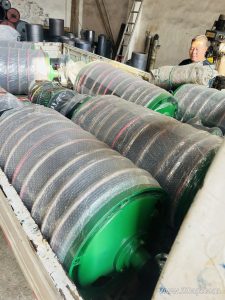
Traditional lagging is bonded or vulcanized directly to the pulley shell. In a quarry, that means when the lagging wears smooth, the entire pulley often leaves service for re-lagging. Modular lagging—usually rubber or polyurethane strips fastened mechanically—lets maintenance crews replace worn sections in place. The trade-off is complexity: fasteners can loosen under vibration, and the lagging-to-shell interface may trap fine dust. For high-tension drives, a welded pulley with vulcanized lagging still offers the most secure grip, but modular systems reduce long-term downtime for non-critical pulleys.
Balanced Welds for Fatigue Resistance
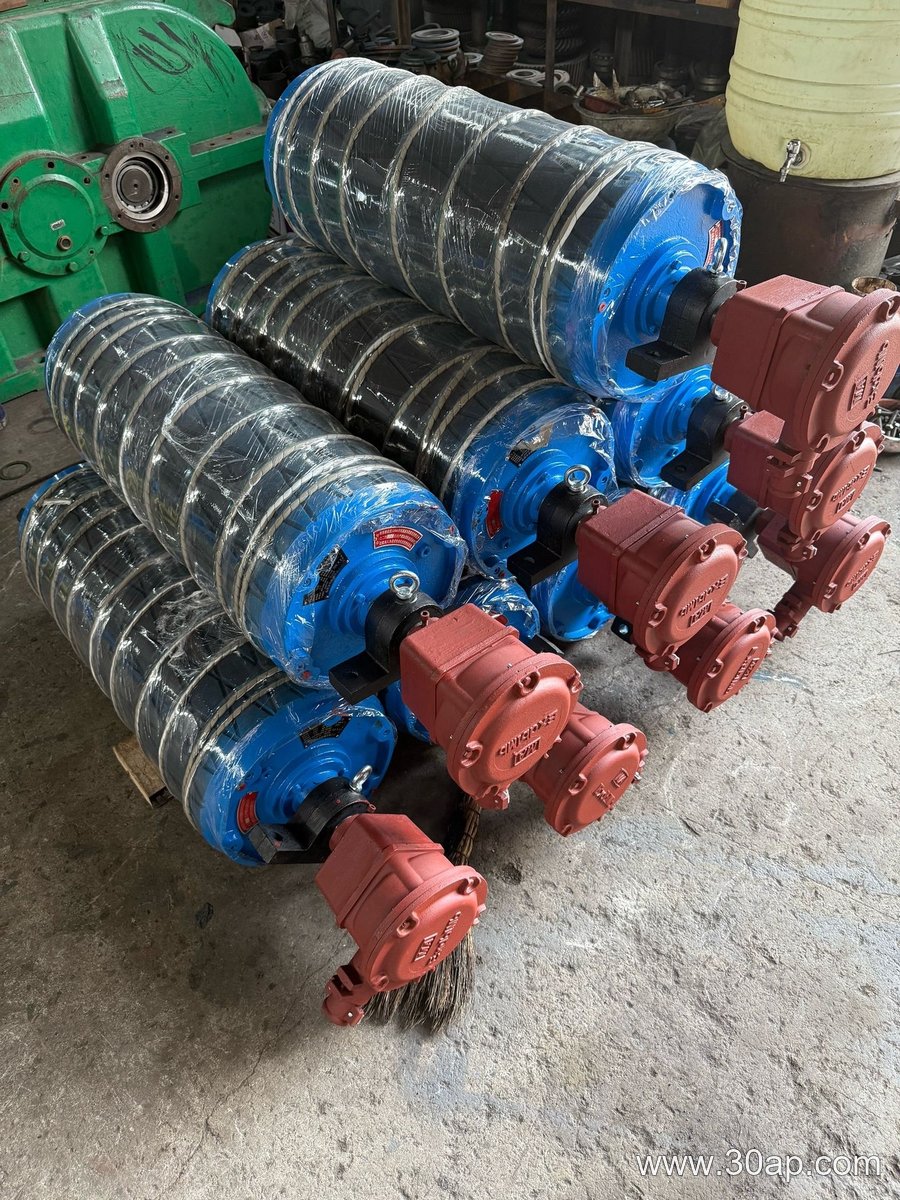
A conveyor pulley is a welded assembly: shell, end discs, and hub. In dusty, high-cycle operations, weld discontinuities become crack initiation sites. Modern fabrication tends to favor symmetrical weld sequences and stress-relieving where practical. The goal is not maximum weld size but balanced stiffness. An overly rigid weld can transfer stress to the shell; a slightly more compliant design may tolerate misalignment better. This is a trade-off between static strength and fatigue life, and it matters most on drive pulleys that see reversing loads.
Material and Surface Choices
Carbon steel remains common for quarry pulleys because it balances strength, weldability, and cost. For abrasive fines, a welded pulley with a slightly thicker shell can outlast a thinner, harder shell that cracks under impact. Stainless steel is rarely justified unless corrosion from wet processing is present. The practical direction is to specify shell thickness and lagging hardness based on measured belt tension and particle size, not on a catalog default.
What This Means for Specification
- Ask whether the pulley will be re-lagged in place or returned to a workshop.
- For drive pulleys, request weld details and any stress-relief notes.
- Match lagging type to the actual abrasive and wetness, not just to belt width.
- Remember that a conveyor pulley is a system component: balance, runout, and shaft fit affect belt tracking as much as lagging does.
These directions are not universal rules. They reflect a general shift toward designing conveyor pulleys for maintainability and fatigue life in harsh environments, where the cost of a failure often exceeds the cost of a more carefully built drum.
Load Rating: The Technical Term That Drives Conveyor Bracket Selection
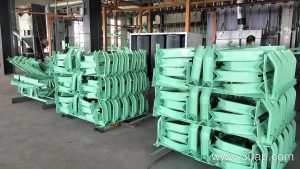
In a mineral-processing plant, a conveyor bracket must support idler rolls, belts, and material loads under constant vibration and abrasive dust. The load rating—often expressed as a safe working load (SWL) or allowable stress—is the maximum force a bracket can withstand without permanent deformation or failure. This rating directly affects material thickness, weld size, and bolt grade. Ignoring it can lead to premature cracking or catastrophic collapse.
Why Load Rating Is Not Just a Number
Load rating depends on factors such as the bracket’s geometry, the material’s yield strength, and the expected dynamic loads. For example, a bracket made from mild steel may have a lower load rating than one made from high-strength low-alloy steel, even with identical dimensions. In mineral processing, impact from falling ore and belt tension add cyclic loads that reduce fatigue life. Therefore, engineers must apply a safety factor—typically between 2 and 4—to account for uncertainties. A hypothetical example: if an idler roll imposes a static load of 5 kN, a bracket with a 10 kN rating might be selected, but if impact loads double the force, a 20 kN rating becomes necessary.
How Load Rating Influences Engineering Decisions
Once the load rating is known, several design choices follow:
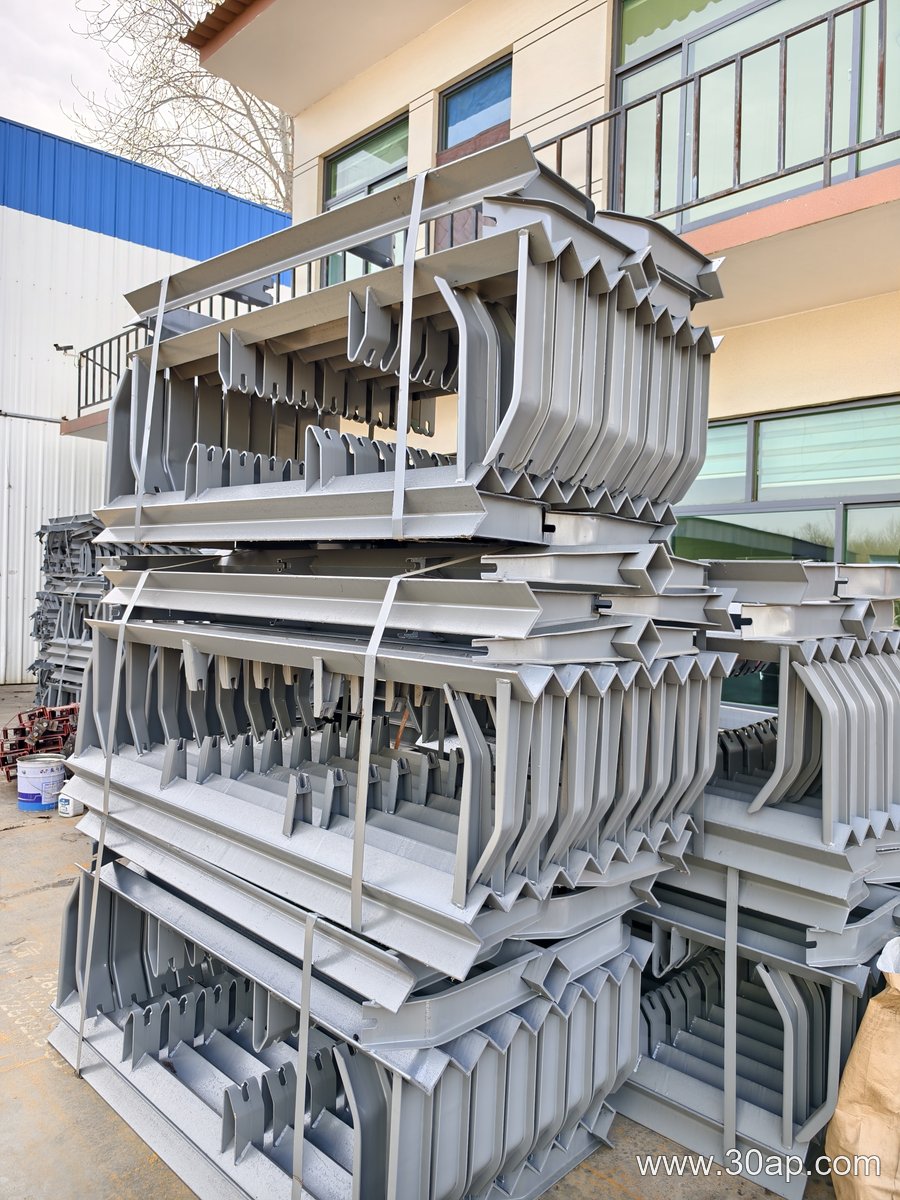
- Material thickness: A higher rating often requires thicker plate or additional gussets.
- Connection method: Bolted brackets may need larger bolts or more of them; welded brackets may require full-penetration welds.
- Support spacing: Brackets with lower ratings must be placed closer together to share the load.
- Maintenance strategy: Higher-rated brackets may tolerate more wear before replacement.
These decisions are not independent; they interact with cost, installation time, and accessibility. For instance, increasing thickness may solve a rating issue but complicate on-site welding.
Practical Guidance for Mineral-Processing Plants
When specifying a conveyor bracket, always request the manufacturer’s load rating and the assumptions behind it—such as whether it includes dynamic factors. Do not assume that a bracket rated for a general manufacturing line will suit a mineral-processing plant where ore lumps and dust are present. Instead, calculate the actual loads from belt tension, idler weight, and material weight, then apply a safety factor. If the calculated load exceeds the bracket’s rating, consider a heavier-duty bracket or redesign the support system. Remember that load rating is a starting point, not a substitute for site-specific engineering.
Selecting a Conveyor Belt for a Cement Plant: A Practical Guide
In a cement plant, a conveyor belt must handle abrasive clinker, hot kiln discharge, and fine dust that infiltrates every joint. Choosing the wrong belt leads to rapid wear, splice failure, or belt hardening. This guide walks through four key decisions—material, speed, temperature, and operating conditions—to help you specify a belt that lasts.
1. Material: Match the Cover to the Cargo
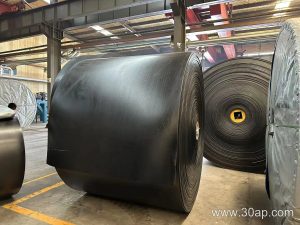
The cover compound is the first line of defense. For abrasive clinker and limestone, a high-abrasion rubber (often rated by ISO 4649) is typical. If the belt carries hot material, a heat-resistant cover (e.g., EPDM or SBR blends) prevents cracking. For general cement plant use, an EP (polyester-nylon) carcass offers low elongation and good troughability. Avoid PVC covers unless the application is light-duty and non-abrasive; they lack the cut and heat resistance needed for cement.
2. Speed: Balance Throughput and Wear
Higher belt speeds increase capacity but accelerate wear on covers, idlers, and pulleys. For a cement plant, typical belt speeds range from 1.5 to 3.5 m/s, depending on material size and lump weight. As a rule of thumb, keep the speed as low as practical for the required tonnage. For a hypothetical 500 t/h clinker line, a 1.2 m wide belt at 2.0 m/s might suffice; increasing to 3.0 m/s would raise wear without a proportional benefit. Always verify the belt’s maximum recommended speed with the manufacturer.
3. Temperature: Account for Kiln Discharge
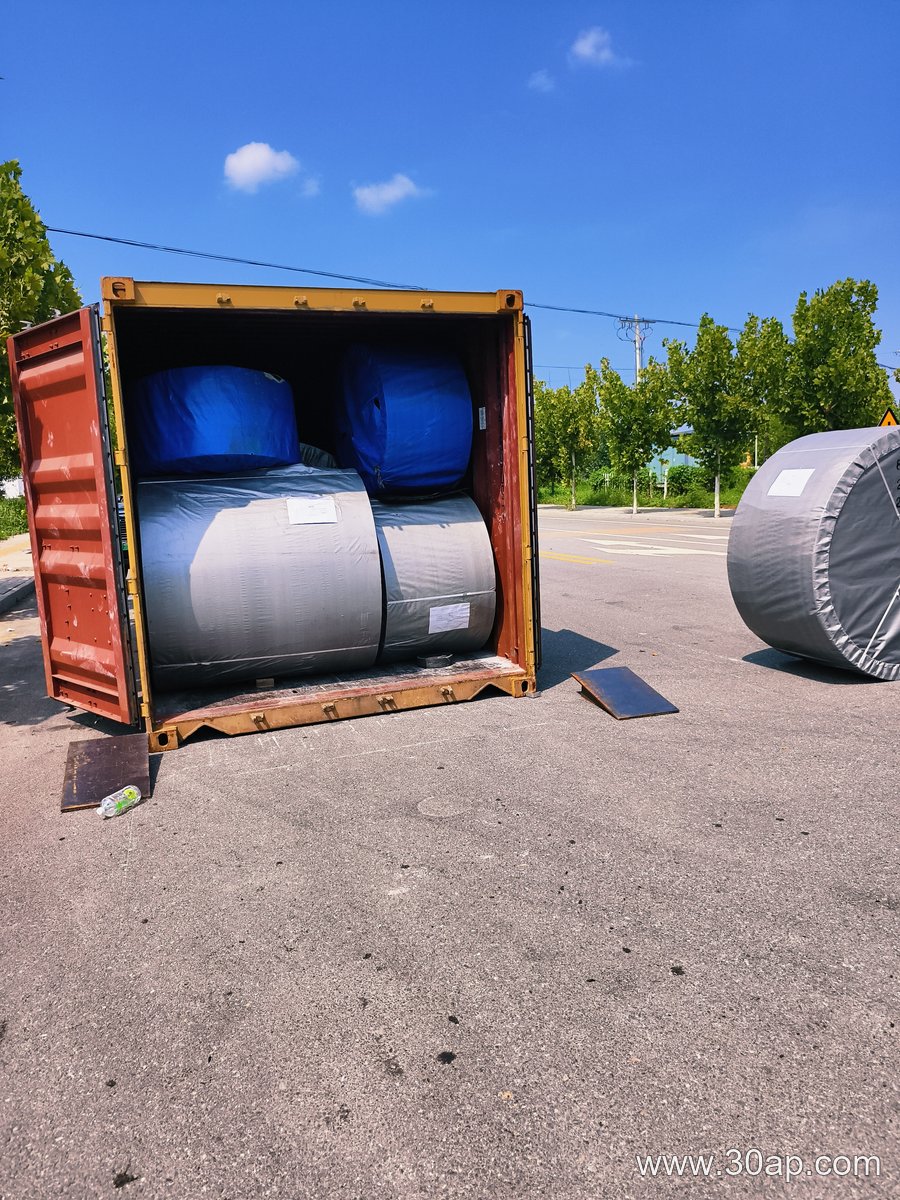
Clinker leaving a kiln can exceed 200°C. Standard rubber belts typically handle up to 80°C; heat-resistant grades may go to 120–150°C. For higher temperatures, consider a belt with a heat-resistant cover and a carcass designed to resist thermal degradation. If the material is above the belt’s rating, use a short transfer or cooling section. Never assume a belt can handle peak temperatures without checking the manufacturer’s continuous and peak limits.
4. Operating Conditions: Dust, Impact, and Troughing
In a cement plant, dust is constant. Choose a belt with antistatic properties if explosive dust is present. Impact from large clinker lumps requires a belt with a thick cover and a strong carcass—often an EP belt with a breaker ply. Troughability matters for stable material containment; a belt that is too stiff will not form a proper trough. Also consider splice type: vulcanized splices outlast mechanical fasteners in dusty, high-tension applications.
Putting It Together
Start with the material and its temperature. Then set the speed to meet capacity while minimizing wear. Finally, review dust, impact, and troughing needs. For a cement plant, a heat-resistant EP conveyor belt with a thick abrasion-resistant cover is a common starting point, but each conveyor section may need its own specification. Document your assumptions and confirm with belt suppliers before ordering.