What a Belt Conveyor Trough Idler Does
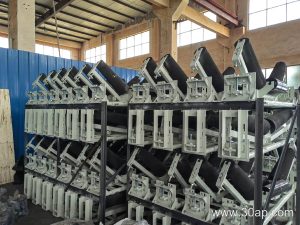
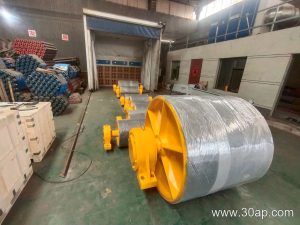
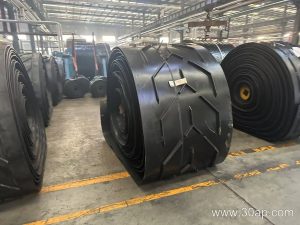
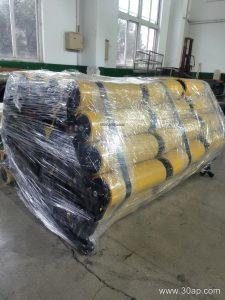
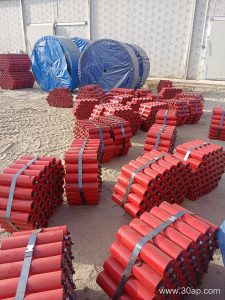
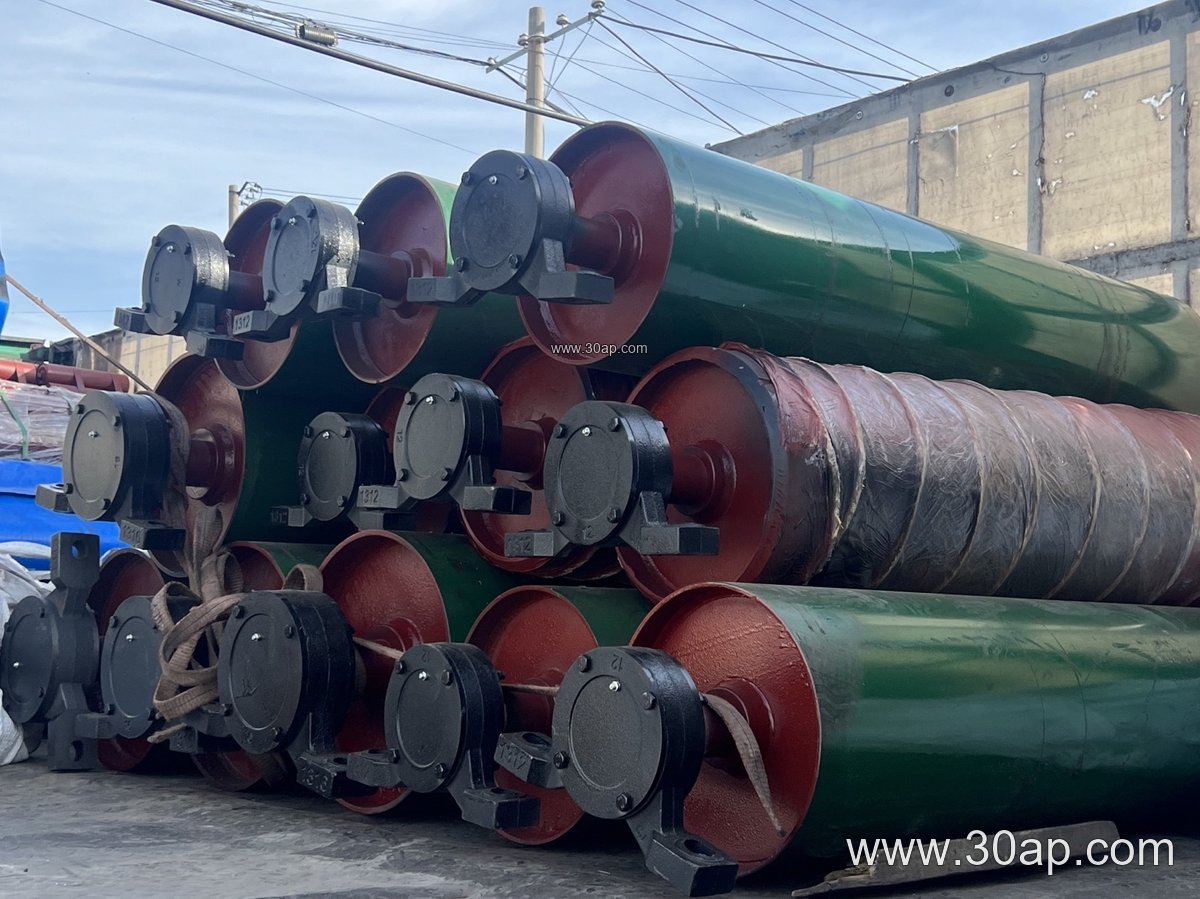
A belt conveyor trough idler is the set of rollers that supports the carrying side of a conveyor belt and shapes it into a trough. The angled rolls lift the belt edges, so loose material sits in a shallow pocket instead of spilling off a flat surface. This carrying idler set is one of the most heavily loaded parts of a conveyor line in a quarry, a cement plant, a power plant coal yard, or a sand and gravel operation. It works together with the conveyor belt, the conveyor pulley at each end, and the conveyor bracket that holds the assembly in line.
The same device is also called a troughing idler or a carrying trough idler. These names describe the same product; they are not different components.
How the Assembly Is Built
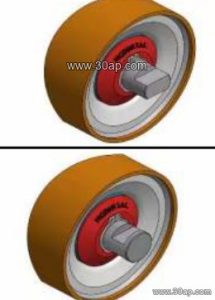
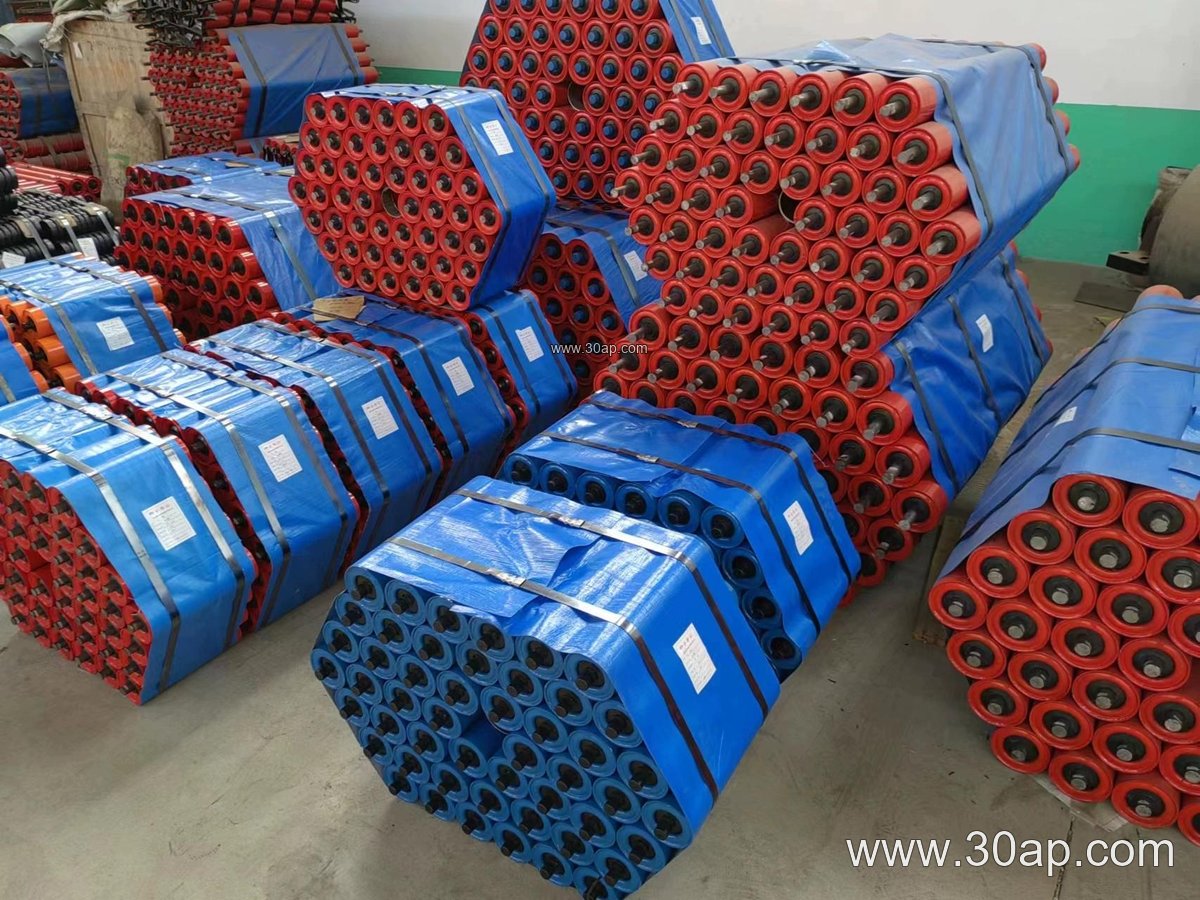
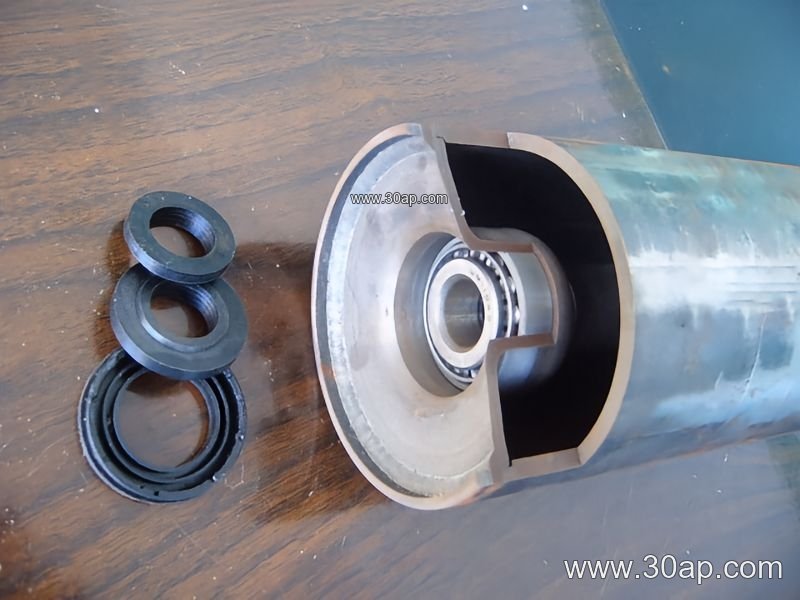
A typical troughing set uses three rolls in a three-roll arrangement, with two side rolls tilted upward and one center roll. Two-roll and single-roll versions exist for narrower belts or lighter duties. Each roll usually has a steel tube shell, a shaft, bearing housings, and sealed bearings. Common bearing numbers include 6204, 6205, 6305, 6306, 6308, and 6310, but a given roll diameter may accept more than one bearing choice depending on the design.
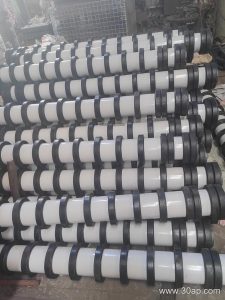
The trough angle is a key feature. Common angles are 20, 30, 35, and 45 degrees. A steeper angle holds a deeper material load, while a shallower angle suits certain belts and transition zones. Some rolls are tilted forward by about 1.5 to 2 degrees to help center the belt. Roll surfaces may be plain steel, nylon, ceramic, or rubber rings; rubber rings are often chosen at load points where impact is heavy.
Where Troughing Idlers Are Used
In a limestone mine or aggregate crushing line, troughing idlers carry crushed rock from the crusher discharge toward screening. In a coal washing plant or power station coal handling system, they keep damp coal and refuse moving without excess spillage. Cement plants use them on clinker and raw meal lines, while fertilizer and grain facilities rely on them for free-flowing bulk material. The carrying idler is usually paired with return idlers underneath the belt, but return rolls and impact rolls are separate subtypes and are not replacements for the troughing set.
Matching Roll Diameter, Belt Width, and Roll Length
Buyers should treat roller dimensions as design values, not as fixed pairings. The roll diameter is commonly selected from a range that includes Ø63, Ø76, Ø89, Ø102, Ø108, Ø127, Ø133, Ø159, Ø178, Ø194, and Ø219 mm. Belt width is usually written as B400, B500, B650, B800, B1000, B1200, B1400, B1600, B1800, B2000, B2200, or B2400. Roll length changes with belt width, trough angle, and the number of rolls in the set. For example, a three-roll troughing set may use a roll length near 200 mm for B500, 250 mm for B650, 315 mm for B800, 380 mm for B1000, 465 mm for B1200, 530 mm for B1400, 600 mm for B1600, 670 mm for B1800, and 750 mm for B2000. These are common examples only; side rolls and center rolls can differ, and no single belt width dictates one pulley diameter or one shaft size.
| Item | Common reference values |
|---|---|
| Roll diameter | Ø63, Ø76, Ø89, Ø102, Ø108, Ø127, Ø133, Ø159, Ø178, Ø194, Ø219 mm |
| Belt width | B400 to B2400 |
| Trough angle | 20, 30, 35, 45 degrees |
| Roll surface | Steel, nylon, ceramic, rubber ring |
| Bearing examples | 6204, 6205, 6305, 6306, 6308, 6310 |
What to Check Before Ordering
- Confirm the belt width and the required trough angle for the line.
- Check the load, lump size, and whether impact rolls are needed at the transfer point.
- Review the sealing and bearing arrangement for dusty or wet conditions.
- Match the idler frame to the existing conveyor bracket and stringer spacing.
- Consider belt speed, material abrasiveness, and ambient temperature when choosing the roll surface.
On a heavy-duty mining conveyor, a worn or seized carrying idler can damage the belt and increase power draw. Regular inspection of roll rotation, seal condition, and frame alignment helps avoid unplanned stops. In dusty cement or coal service, sealed bearings and good housing protection matter as much as the tube thickness.
For a complete conveyor system, the trough idler should be specified together with the belt, the conveyor pulley, and the supporting structure. A buyer who knows the belt width, trough angle, roll diameter, and duty conditions can compare offers on a like-for-like basis rather than by price alone.