What PLC Belt Tracker Programming Involves
PLC belt tracker programming is the control logic that links sensors, a programmable logic controller, and an automatic belt alignment device on a conveyor. It is not a single product but a configuration task: the PLC reads deviation signals from the belt edge or from tracking rollers, decides whether the belt is drifting and in which direction, and commands the correct actuator response. In a coal mining conveyor or a cement plant transfer point, this programming determines how quickly and smoothly a misaligned belt is brought back to center without overcorrection.
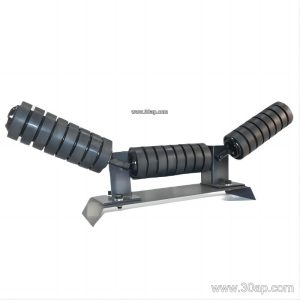
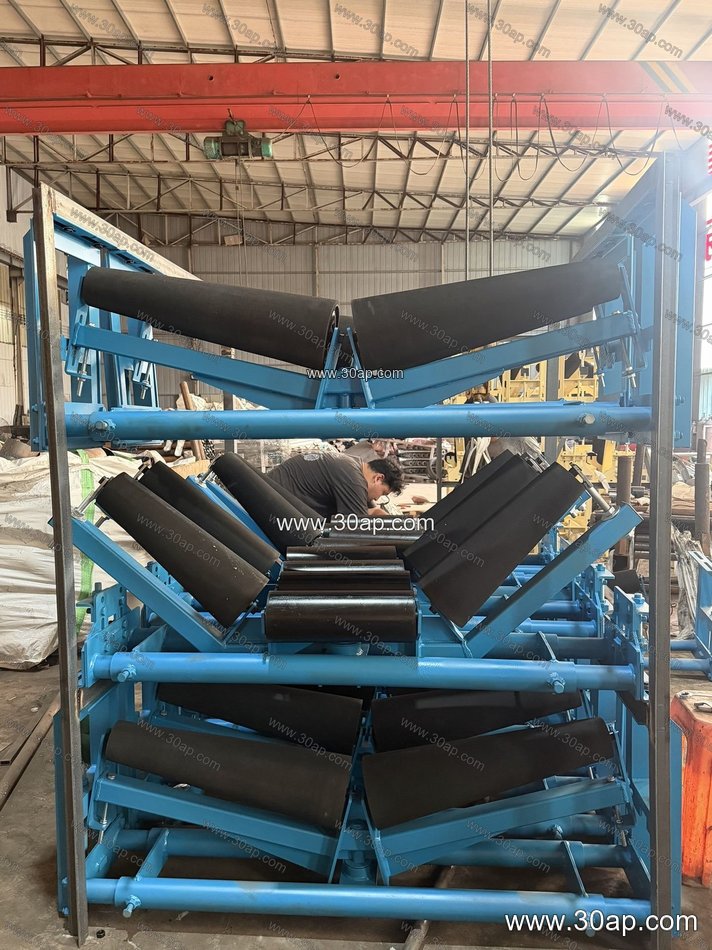
The tracker itself is often a powered steering idler or a roller-based unit that pivots to guide the belt. The PLC does not replace the mechanical tracker; it supervises it. Good programming respects the tracker’s mechanical limits and the conveyor’s operating conditions.
How the Control System Is Built
A typical PLC belt tracker setup includes four elements:
- Sensing: limit switches, proximity sensors, or analog angle sensors mounted at the belt edges or on a pivoting idler roller.
- Controller: a PLC with digital inputs for alarm contacts and analog inputs for continuous deviation signals.
- Actuation: electric linear actuators, hydraulic valves, or pneumatic cylinders that move the tracker frame.
- Feedback: position feedback from the actuator or from the tracker frame so the PLC knows when the correction has been applied.
The programming defines deadbands, delays, and travel limits. A deadband prevents the system from reacting to normal small movements. A delay avoids chasing short-term disturbances caused by uneven loading. Travel limits protect the tracker from moving beyond its mechanical range.
Where It Is Used
PLC-controlled tracking is common where conveyors are long, access is difficult, or downtime is costly. Examples include underground coal mining conveyor systems, quarry conveyor belts carrying abrasive rock, and power plant coal handling lines. It also appears in steel plant conveyor belts and port conveyor belts where material flow is continuous. In these settings, a belt that rubs against the structure can damage the conveyor belt, wear the idler roller, and spill material.
The programming must account for the conveyor’s direction of travel. Reversible conveyors require logic that changes the correction direction when the belt reverses. On a multi-ply fabric core conveyor belt or a steel cord conveyor belt, the tracker response may need to be gentler because the belt is stiff and resists bending.
What a Buyer Should Know
When specifying PLC belt tracker programming, provide the conveyor layout, belt width, belt speed, operating direction, and the type of tracker being controlled. A 1200mm wide conveyor belt and an 1800mm wide conveyor belt may use different sensor spacing, but width alone does not determine the programming. The PLC logic should be matched to the tracker’s actuator stroke and the available mounting space.
Ask for a description of the control sequence, alarm handling, and manual override. The program should fail safely: if a sensor fails, the tracker should hold position or return to neutral rather than drive to an extreme. Also confirm that the programming supports the site’s voltage and communication protocol.
Maintenance staff should be able to adjust deadband and delay parameters without rewriting the program. Training on the HMI or programming interface is valuable. Finally, keep a backup of the PLC program and the sensor calibration settings.
Programming and Maintenance Notes
Before commissioning, verify sensor alignment and actuator direction. Test the system at low speed and empty belt first. Observe the belt at the tail pulley and bend pulley areas, since tracking problems often appear there. Do not adjust the program to compensate for a crooked conveyor bracket or a seized idler roller; mechanical faults should be corrected first.
Regular checks include cleaning sensors, inspecting the conveyor pulley for material buildup, and confirming that the tracker frame moves freely. A PLC belt tracker program is only as effective as the mechanical system it controls.