Why Material Spillage Happens on Belt Conveyors
Spillage is one of the most persistent cost drivers in bulk handling. In a coal mine, a cement plant, a power plant coal yard, or a quarry crushing line, a small stream of fugitive material at the transfer point or along the carry side quickly becomes a cleanup burden, a safety hazard, and a wear source for the conveyor belt itself. How to reduce conveyor material spillage is therefore less about one gadget and more about understanding where the material leaves the intended path.
Most spillage traces back to four conditions: belt misalignment, poor loading geometry, inadequate edge sealing, and component wear. Each has a different remedy, and mixing them up wastes money.
Start with Belt Tracking, Not With Extra Skirts
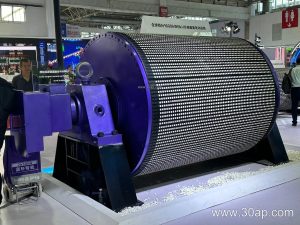
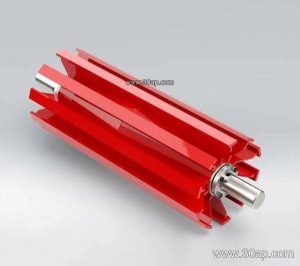
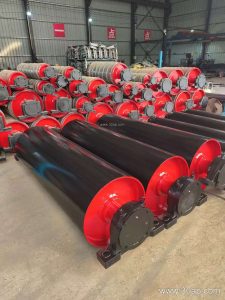
A belt that runs off-center will discharge material over the edge no matter how tight the skirt rubber is. Before adding sealing, check whether the belt is centered on the drive pulley, the tail pulley, and the bend pulleys. These are separate components with separate alignment checks and should never be treated as interchangeable. A bend pulley that is out of square with the frame can steer the belt just as effectively as a misaligned tail pulley.
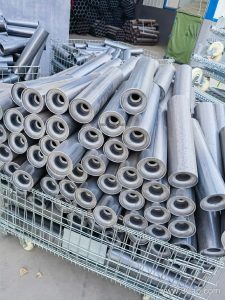
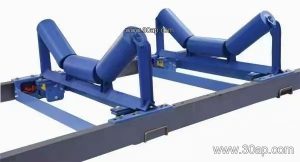
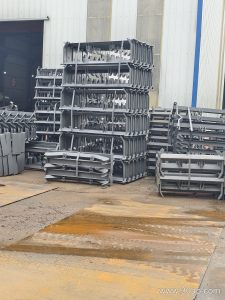
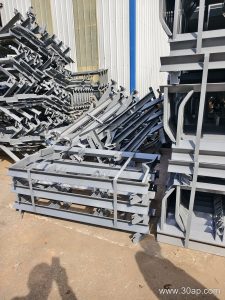
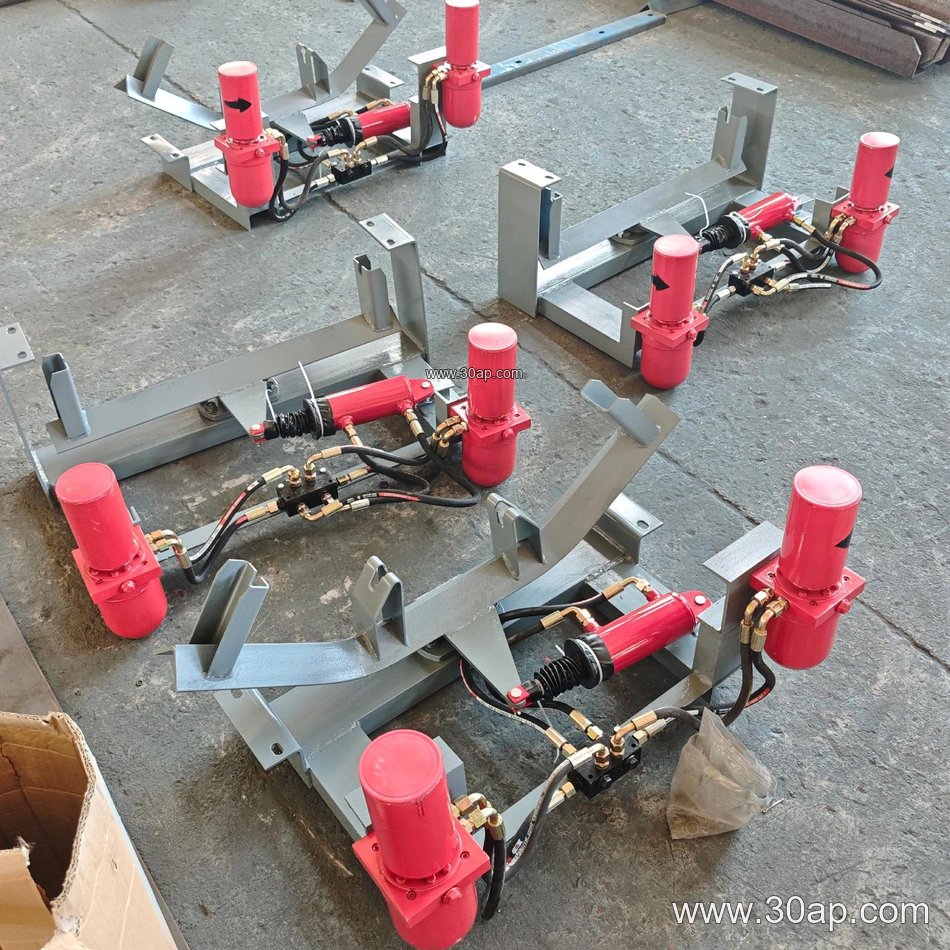
Look at the idler roller frames, the conveyor bracket condition, and the loading point. Off-center loading pushes the belt sideways; a skewed idler roller in the carry run can do the same. For persistent drift, a 输送带纠偏器 installed at a known trouble spot often stabilizes tracking better than repeated manual adjustments. On wider belts, such as an 1800mm wide conveyor belt in a port or iron ore terminal, tracking errors amplify quickly, so correction devices and roller alignment deserve early attention.
Control the Load Point
Spillage at the transfer chute usually comes from three things: impact velocity, off-center discharge, and insufficient freeboard. Chute liners, deflector plates, and properly sized skirt boards keep the material stream centered on the belt. On a crusher conveyor belt handling coarse rock, impact idlers under the load zone reduce belt sag and help the skirt seal stay effective.
Material characteristics matter. Wet, sticky limestone in a cement plant behaves differently from dry aggregate in a sand making plant. High-moisture loads tend to migrate under skirt rubber; very dry, dusty loads escape through gaps. Neither problem is solved by tensioning the skirt harder.
Match the Belt Construction to the Duty
The belt itself influences spillage through edge condition, stiffness, and troughability. A worn or frayed edge on an abrasion resistant conveyor belt will not seal against skirt rubber. A belt that is too stiff for the trough angle will not seat properly on the idlers.
For steep inclines where material rolls back, a chevron conveyor belt or a corrugated sidewall conveyor belt contains the load mechanically. In enclosed routes, a pipe conveyor belt prevents escape entirely along the run. These are design choices, not retrofits to apply blindly.
Reference belt constructions and typical duty notes
- EP conveyor belt, multi-ply fabric core, general bulk handling
- NN conveyor belt, nylon fabric core, good flexibility
- Steel cord conveyor belt, long overland and high-tension routes
- Flame retardant conveyor belt and fire resistant conveyor belt, underground coal mining conveyors
- Heat resistant conveyor belt, cement and sinter plant service
- Oil resistant conveyor belt, recycling and oily scrap duty
- Cold resistant conveyor belt, winter yard operation
Belt width and pulley diameter are matched through engineering calculation, not by a fixed rule. A 1200mm conveyor belt does not dictate one specific pulley size; load, tension, and wrap angle decide that.
Seal the Edges and Manage Carryback
Skirt rubber, edge sealing strips, and belt cleaners work together. Carryback on the return strand drops material along the entire route, so secondary cleaners and a well-positioned return idler roller set reduce the mess at the tail. Inspect the conveyor pulley lagging too; a slipping drive pulley can cause belt wander and edge spillage at the same time.
What Buyers Should Confirm Before Ordering
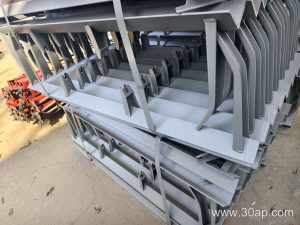
When specifying belts or tracking hardware, provide belt width, belt speed, running direction, trough angle, material type and lump size, and the location of the problem. For a 1000mm or 1400mm conveyor belt in a power plant coal system, state whether the issue is at the load zone, along the carry run, or on the return side. Photos of the frame and the conveyor bracket layout help more than a general description.
Reducing spillage is a system task. Correct tracking, a controlled load point, suitable belt construction, and maintained rollers and pulleys together keep material where it belongs.