Why Reversible Belts Wander in Both Directions
A reversible conveyor belt mistracking problem is rarely a simple case of a belt that needs more tension. When a conveyor runs in one direction only, the belt tends to settle into a stable path, and small errors in idler alignment or loading can be tolerated for a long time. A reversing conveyor has no such stable state. Every time the drive changes direction, the belt must find a new equilibrium, and any misalignment that was harmless in forward running may push the belt toward one edge in reverse. This is why mistracking on shuttle, tripper-fed and reversible yard conveyors often appears only during one direction of travel, or becomes worse after a direction change.
The same effect appears in mining plants, coal preparation facilities, cement kilns and clinker lines, power plant coal yards, and quarry or aggregate stockyard systems where belts must discharge at several points. In these layouts the belt may run loaded in one direction and empty in the other, so the tracking behaviour differs between the two passes.
How the Belt, Pulleys and Idlers Interact
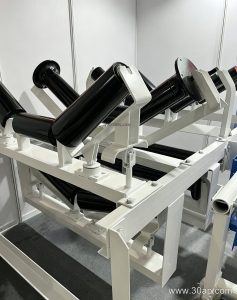
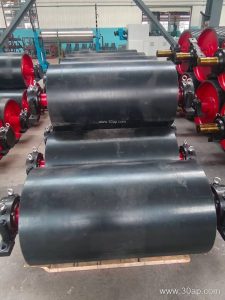
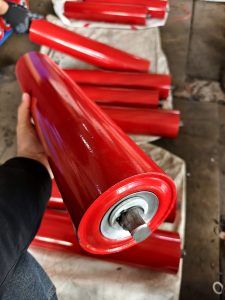
Mistracking is the result of lateral forces acting on the belt. These forces come from several sources at once: the squareness of the belt ends and the splice, the alignment of the conveyor pulley shafts relative to the frame, the straightness of the idler roller sets, the position of the load on the belt, and the freedom of the belt to move sideways on the pulleys. On a reversible installation, the drive pulley, tail pulley and bend pulleys each influence tracking, but they are not interchangeable. The drive pulley transmits torque and is usually lagged; the tail pulley sets the return end geometry; bend pulleys change the belt path without driving it. Correcting one does not automatically correct the others.
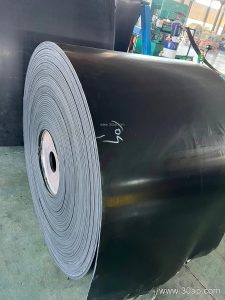
The belt construction also matters. A heavy, stiff carcass resists lateral correction, while a lighter fabric core belt responds more quickly to idler angle changes. Products such as EP Conveyor Belt, NN Conveyor Belt, Steel Cord Conveyor Belt, Multi-Ply Fabric Core Conveyor Belt and Corrugated Sidewall Conveyor Belt each behave differently under side load, and a Steel Cord Conveyor Belt in particular needs a straight, well-supported path because local bending is limited.
Common Causes Specific to Reversing Duty
- Splice skew: a belt joined out of square will steer toward one side, and the direction of the error reverses with the belt direction.
- Pulley misalignment: a drive or tail pulley that is not square to the centreline will bias the belt in one direction and fight any correction in the other.
- Idler frame twist: training idlers set for forward running may over-correct or under-correct when the belt reverses.
- Off-centre loading: a chute that discharges to one side shifts the load profile, and the effect changes when the belt runs the other way.
- Material build-up: spillage around the tail pulley, bend pulleys and conveyor brackets changes effective pulley diameters and pushes the belt sideways.
- Uneven tension: a take-up that does not keep both belt edges evenly tensioned allows the belt to drift.
These causes should be separated before any hardware is added. A belt that mistracks only at the head end during reverse is a different problem from a belt that wanders along the whole carrying run.
Correction Approaches for Two-Way Operation
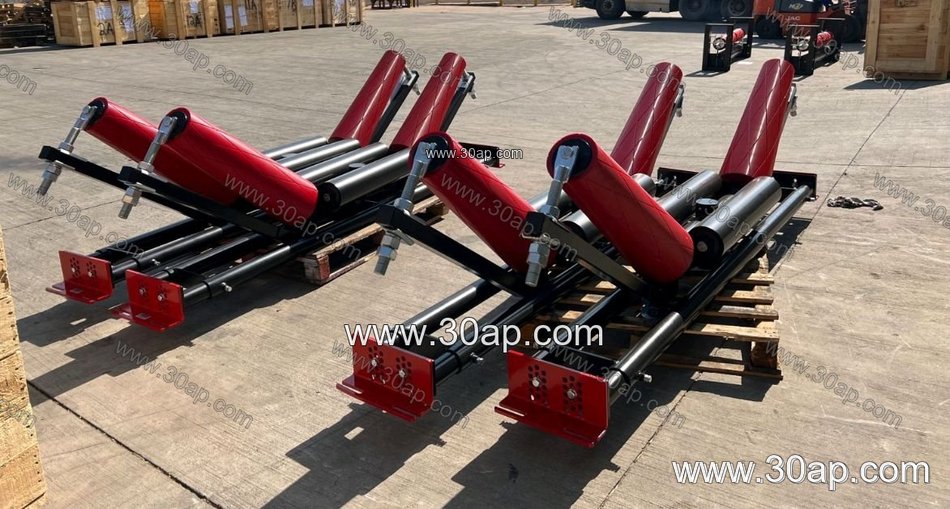
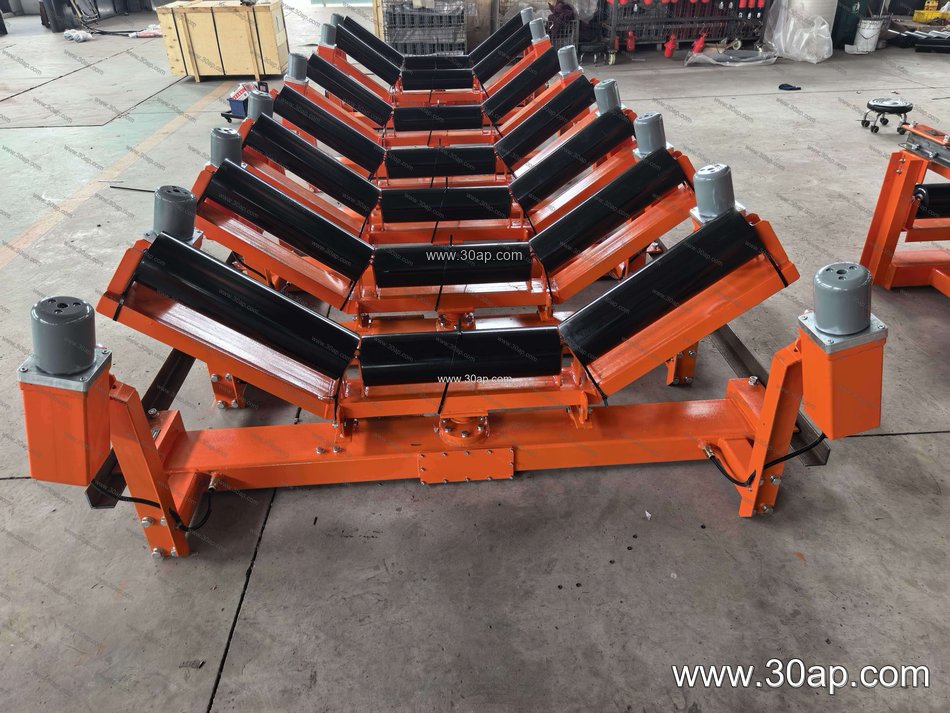
Because the belt must be trained in both directions, a standard one-way training idler is often insufficient. Reversible installations commonly use self-aligning idler sets designed to sense belt edge position and pivot in either direction, or a 输送带纠偏器 installed at selected points on the carrying and return runs. These devices work by reacting to the belt edge; they do not replace correct pulley alignment or a square splice. In many cases the most effective first step is to check the conveyor pulley and idler roller alignment with a string line, confirm the splice squareness, and clean build-up from the tail pulley and bend pulleys before considering any training device.
Where the belt is a heat resistant, oil resistant, flame retardant or abrasion resistant grade, the training equipment must be compatible with the belt surface and the environment. In coal mining and underground coal mining conveyors, for example, flame retardant and anti-static properties are usually required for the belt itself, and the tracking hardware must not interfere with those requirements.
What Buyers Should Confirm Before Ordering
There is no single device or setting that suits every reversible conveyor. A buyer should provide the belt width, belt type and carcass, belt speed, running directions, the location of the problem (carrying run, return run, head or tail), the pulley and idler arrangement, available mounting space, and the conveyor drawing. Belt width alone does not determine pulley diameter or shaft size, and one belt width does not match only one pulley diameter.
For reference, the table below shows typical belt width ranges that may appear in enquiries; final selection must follow the actual conveyor design.
| Belt width | Typical duty example | Information to confirm |
|---|---|---|
| 600 mm | Small aggregate or cement transfer | Idler spacing, frame width, splice type |
| 800 mm | Quarry and sand plant lines | Load position, belt speed, pulley lagging |
| 1000 mm | Power plant coal handling | Reverse frequency, take-up arrangement |
| 1200 mm | Mining and port conveyors | Belt carcass, pulley diameters, training points |
| 1400 mm | Heavy bulk material duty | Impact, spillage control, support structure |
| 1600 mm | Large ore and coal systems | Belt stiffness, bend pulley geometry |
| 1800 mm | High capacity stockyard belts | Frame survey, wind and dust conditions |
| 2000 mm | Wide heavy-duty installations | Full site drawing and load data |
For a reliable quotation, include the belt specification, the conveyor layout, the observed mistracking pattern in each direction, and any recent maintenance history. A correct diagnosis of reversible conveyor belt mistracking saves far more than a quick hardware purchase, because the belt, pulleys and idlers must work as one system in both directions.