What a Conveyor System Pulley Does
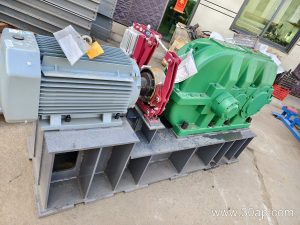
A conveyor system pulley is the rotating drum that drives, redirects, or tensions the belt on a bulk handling conveyor. It is not a passive part. The pulley transfers torque from the drive unit to the belt, sets the belt path through bends, and maintains the tension that keeps material moving. In a coal handling plant or a limestone quarry, a single conveyor may use several pulleys in different roles, each with its own diameter, face width, and surface treatment.
This drum is often called a conveyor pulley or a belt pulley. The related conveyor pulley family includes drive, tail, bend, take-up, and snub positions. These are separate duties, not interchangeable names. A drive pulley at the head end is built for torque; a tail pulley at the loading point is built for belt guidance and impact tolerance.
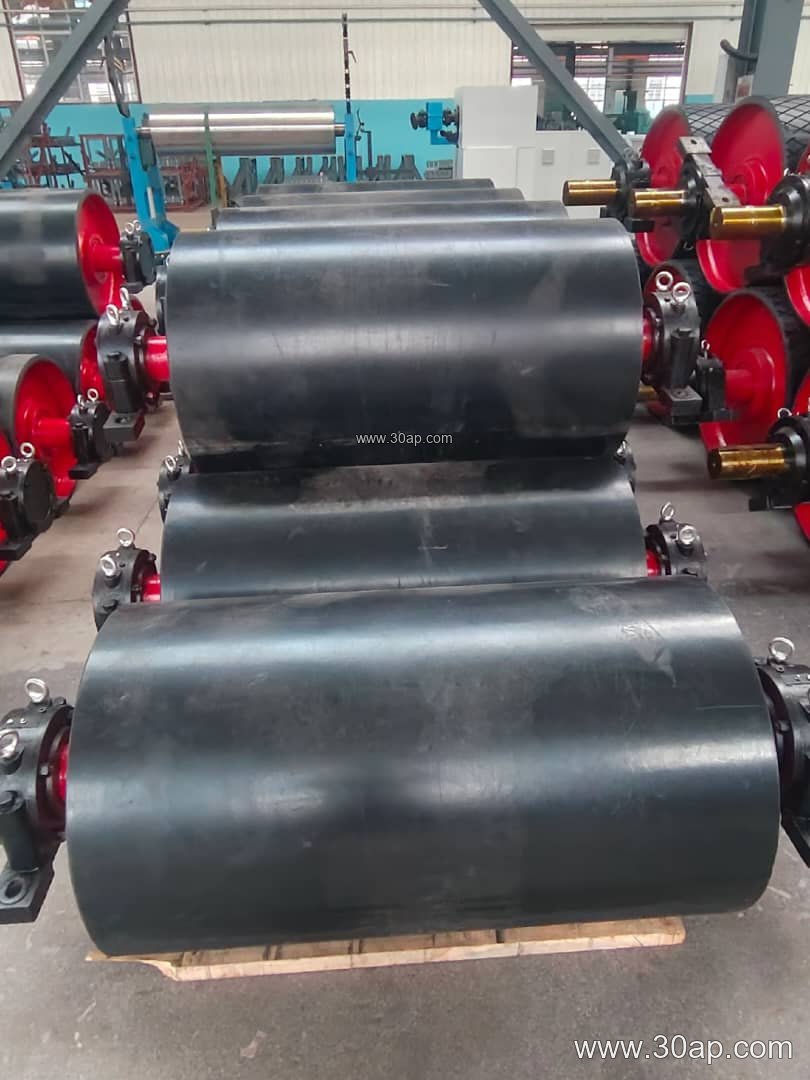
Construction and Main Parts
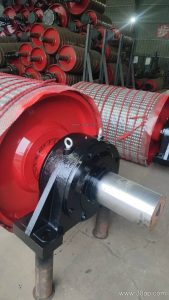
A typical drum consists of a cylindrical shell, two end discs, a shaft, and bearing housings. The shell may be seamless tube or rolled plate. The shaft is keyed or shrink-fitted to the end discs, and the assembly is balanced for the belt speed. Common shell diameters include Ø200, Ø315, Ø500, Ø630, Ø800, Ø1000, and Ø1250 mm. Shaft diameters are usually Ø50, Ø80, Ø100, Ø120, Ø140, or larger, but the shaft size must be calculated from torque and load, never copied from belt width alone.
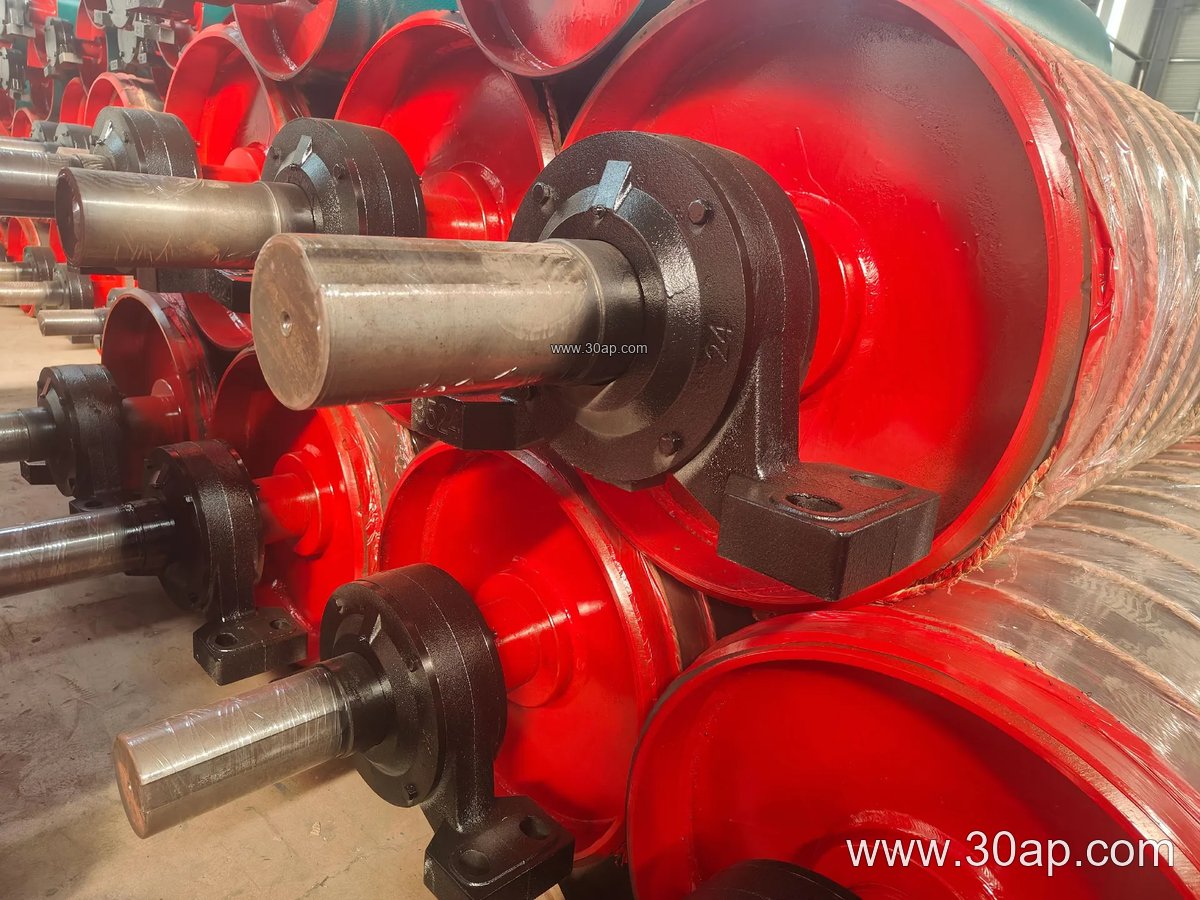
Face width normally exceeds belt width so the belt is fully supported. For example, B800 belt may run on a drum with about 950 mm face; B1200 with about 1400 mm; B1600 with about 1800 mm. These are common proportions, not fixed rules, and a wide conveyor belt in an iron ore terminal can use other combinations.
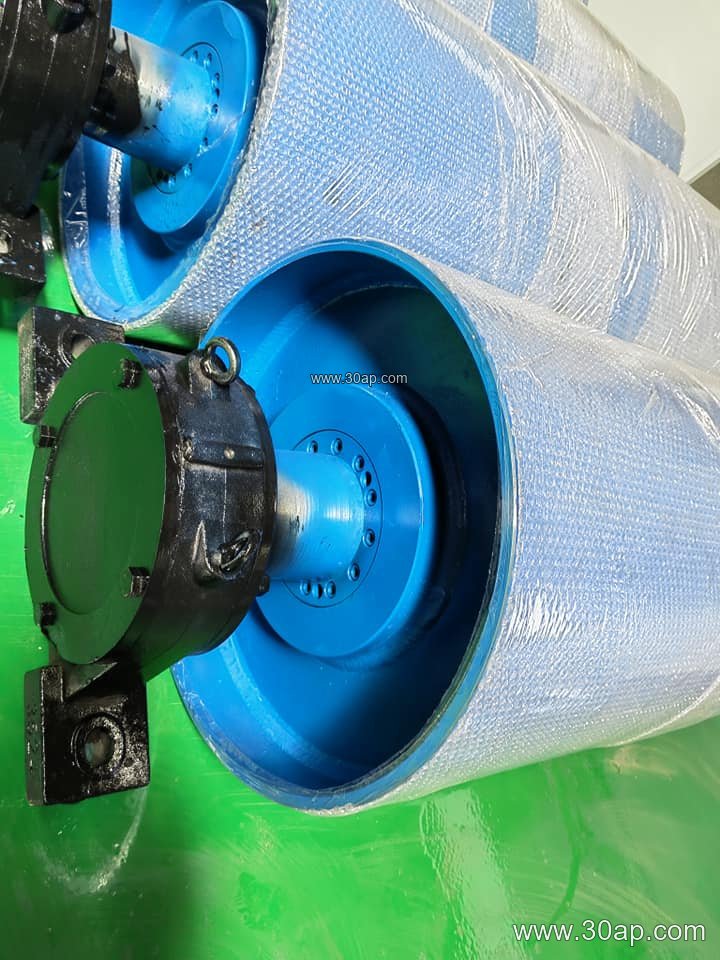
Surface Forms and Grip
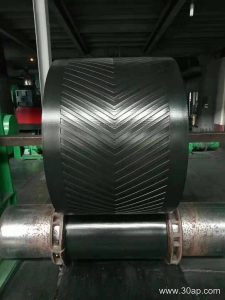
The surface is where the drum meets the belt. Plain finish suits light duty and reversing belts. Rubber lagging improves friction and protects the shell. Common options include cold-bonded rubber, hot-vulcanized rubber, diamond lagging, herringbone lagging, and ceramic lagging. Lagging thickness is often 8, 10, 12, 15, or 20 mm. Diamond and herringbone patterns help shed water and fines, which matters on a wet quarry conveyor. Ceramic lagging is chosen where slip and wear are severe.
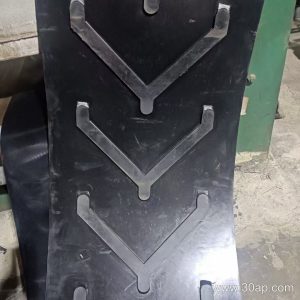
Grip also depends on the belt cover. A heavy-duty abrasion resistant conveyor belt with a rough top behaves differently from a smooth EP conveyor belt, so the lagging choice should match the belt surface, not just the drum size.
Where These Drums Are Used
You will find them in coal preparation plants, cement clinker lines, power station coal yards, and aggregate crushing circuits. In a tunnel muck removal line, the tail pulley sits close to the loading point and must tolerate lumps and water. In a port ship loader, the head pulley handles high tension and long belt runs. Each position has its own load profile, which is why a bend pulley and a drive pulley are specified separately.
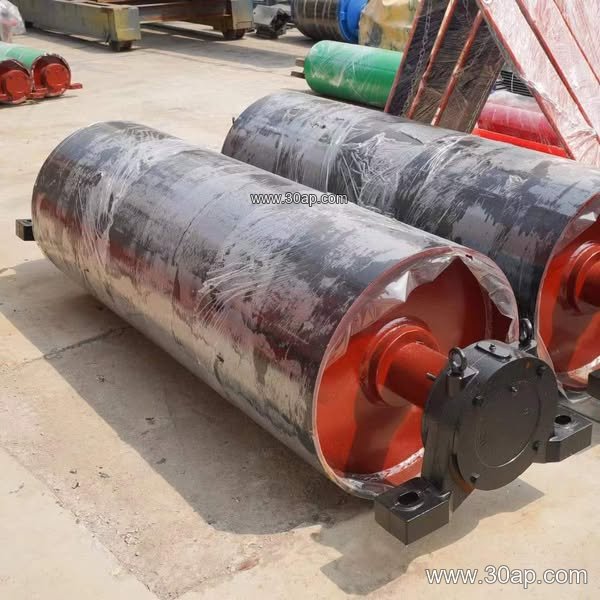
Matching Pulley to Belt and Components
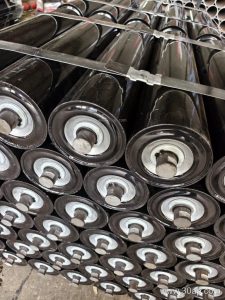
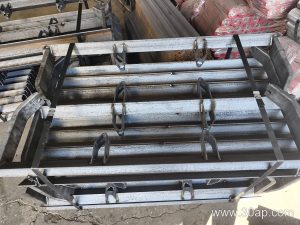
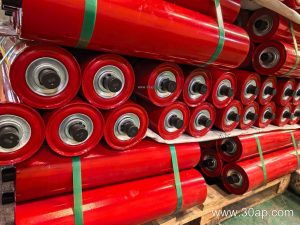
The belt is only one part of the system. A conveyor system pulley works with the conveyor belt, idler roller, and conveyor bracket to keep the line tracking. On a steel cord conveyor belt, the drum diameter is usually larger to limit bending stress in the cord. On a fabric core conveyor belt such as EP1000 or NN300, the required diameter is calculated from belt tension and the number of plies. A flame retardant conveyor belt used underground may need a larger drum to reduce heat build-up.
- Check belt tension and belt speed before choosing shell diameter.
- Confirm face width against the actual belt width, for example B650, B1000, or B1400.
- Select lagging for the material: wet fines, oily scrap, or hot clinker.
- Verify shaft and bearing size from the drive torque, not from a catalog guess.
Buyer Checklist
Ask for the duty position, belt width, belt type, and expected tension. A B800 × Ø500 drum for a sand plant is a very different item from a B1400 × Ø800 drive pulley in a copper ore line. Confirm whether the surface is plain, rubber lagged, or ceramic lagged, and whether the lagging is cold bonded or hot vulcanized. Check that the bearing housing fits the conveyor bracket and that the shaft diameter matches the coupling. For replacement work, record the existing shell diameter, face width, shaft size, and lagging pattern before ordering. A correctly specified pulley keeps the belt centered and extends the life of the whole conveyor.