What AI-Assisted Conveyor Belt Monitoring Actually Does
AI-Assisted Conveyor Belt Monitoring is a condition-monitoring approach that combines sensing hardware with machine-learning software to watch the belt, idler roller, conveyor pulley and supporting structure continuously. Instead of relying only on scheduled walk-arounds, cameras, vibration probes, temperature sensors and belt-speed signals feed a model that learns what normal operation looks like and flags deviations early. The output is practical: a maintenance team sees which section of a long overland or underground conveyor needs attention before a small fault becomes a stoppage.
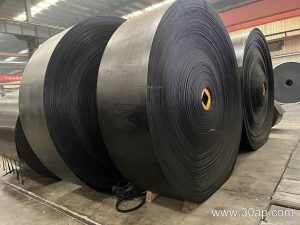
The keyword matters because the belt is usually the most expensive single component in a bulk handling line. A 1200mm or 1800mm wide conveyor belt carrying ore, clinker or coal may represent a significant capital item, and unplanned downtime in a mine, cement plant or power plant costs far more than the belt itself.
How the System Is Built
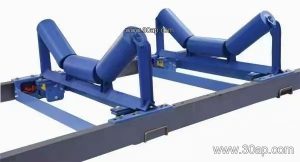
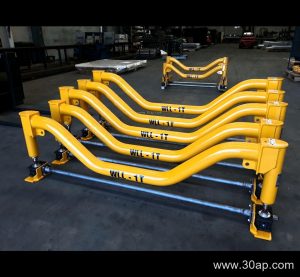
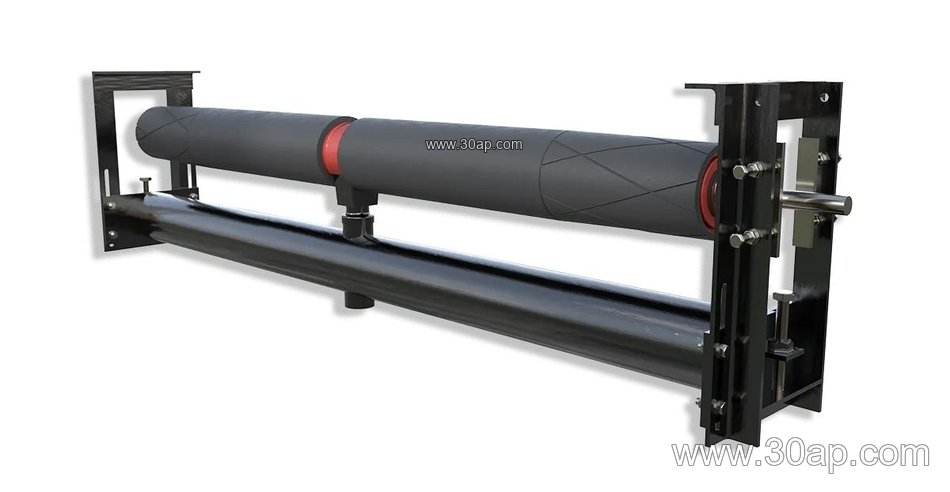
A typical installation has three layers. The sensing layer may include fixed cameras for belt surface inspection, thermal sensors for idler roller and drive pulley bearing temperatures, vibration sensors, belt alignment detectors such as a 输送带纠偏器, and speed or slip monitoring. The edge layer processes video and sensor streams locally, which keeps bandwidth low on remote conveyors. The software layer applies trained models to classify events such as surface cuts, edge damage, material spillage, blocked chutes, misalignment and abnormal pulley vibration.
Two points deserve care. First, detection and alarm are not the same as automatic correction; a monitoring system can warn about misalignment, while a separate belt training device performs the mechanical correction. Second, the drive pulley, tail pulley and bend pulley are distinct components with different duty and inspection needs, and monitoring logic should treat them separately rather than as one interchangeable “pulley”.
Where It Fits in Real Plants
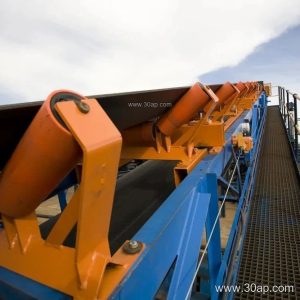
These systems suit long or hard-to-reach conveyors: underground coal mining conveyor belts, quarry and aggregate lines, iron ore and copper ore handling, cement plant raw mill and clinker circuits, port ship loading conveyors, and power plant coal conveying. Dust, humidity, impact from large lump sizes and temperature variation all affect sensor choice and mounting.
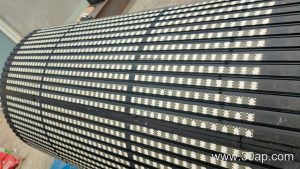
Environmental conditions also shape the belt specification being monitored. A heat resistant conveyor belt on a sinter or clinker line, a flame retardant conveyor belt in a coal mine, an abrasion resistant conveyor belt in a crusher circuit, or an oil resistant conveyor belt in a recycling plant each produces different wear signatures. The monitoring model should be tuned to the actual belt construction, whether that is an EP conveyor belt, a steel cord conveyor belt, a multi-ply fabric core belt or a corrugated sidewall belt.
Specification Data Buyers Should Gather
The table below shows the kind of reference data that helps a supplier match monitoring hardware and analytics to the conveyor. These are examples, not a universal compatibility list.
| Item | Example reference values |
|---|---|
| Belt width | 800mm, 1000mm, 1200mm, 1400mm, 1600mm, 1800mm, 2000mm |
| Belt type | EP1000, EP1250, NN300, ST1600, PVG800S |
| Conveyor pulley positions | Drive pulley, tail pulley, bend pulley, take-up pulley |
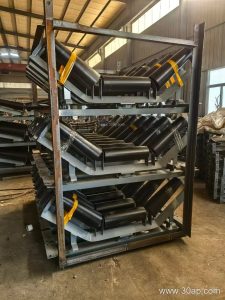
| Idler roller | Troughing, return, impact, training idler |
| Belt speed and load | Rated t/h, belt speed m/s, material lump size |
Do not assume that one belt width determines pulley diameter or shaft size. Those values must come from the conveyor drawing and the pulley manufacturer’s data.
What to Check Before Buying
- Define the problem: surface damage, misalignment, hot bearings, spillage or belt slip.
- Confirm camera and sensor mounting positions, lighting and cleaning access along the conveyor bracket and frame.
- Check whether the software can be trained on your belt type and material, and how alarms are escalated.
- Ask how the system handles dusty, wet or vibrating environments common in mines and cement plants.
- Plan for maintenance access and safe isolation before any sensor or idler roller work.
- Clarify data ownership, local versus cloud processing and integration with existing PLC or SCADA systems.
AI-Assisted Conveyor Belt Monitoring works best as part of a broader reliability program that includes correct belt tracking, good loading conditions and routine inspection of every conveyor pulley and idler roller. Used that way, it turns belt condition data into earlier, better-informed maintenance decisions.