What a Guide Pulley Does on a Conveyor
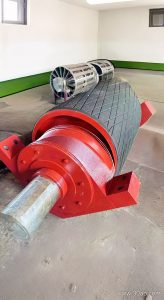
A guide pulley is a relatively small, lightly loaded drum that steers a conveyor belt along the correct path rather than carrying the main material load. It is often positioned where the belt has a tendency to wander, for example just before a critical transfer point or along a long return run. In plant layouts it may also be called a belt guide roller or a steering pulley, and those names describe the same duty. It should not be confused with a drive pulley, which transmits torque, a tail pulley at the loading end, or a bend pulley that simply changes the belt direction under tension.
Because the guide pulley works on belt tracking, its geometry and surface finish matter more than raw power capacity. A badly placed or poorly aligned unit can create edge wear, mistracking and premature splice failure, so the position and the mounting bracket deserve as much attention as the drum itself.
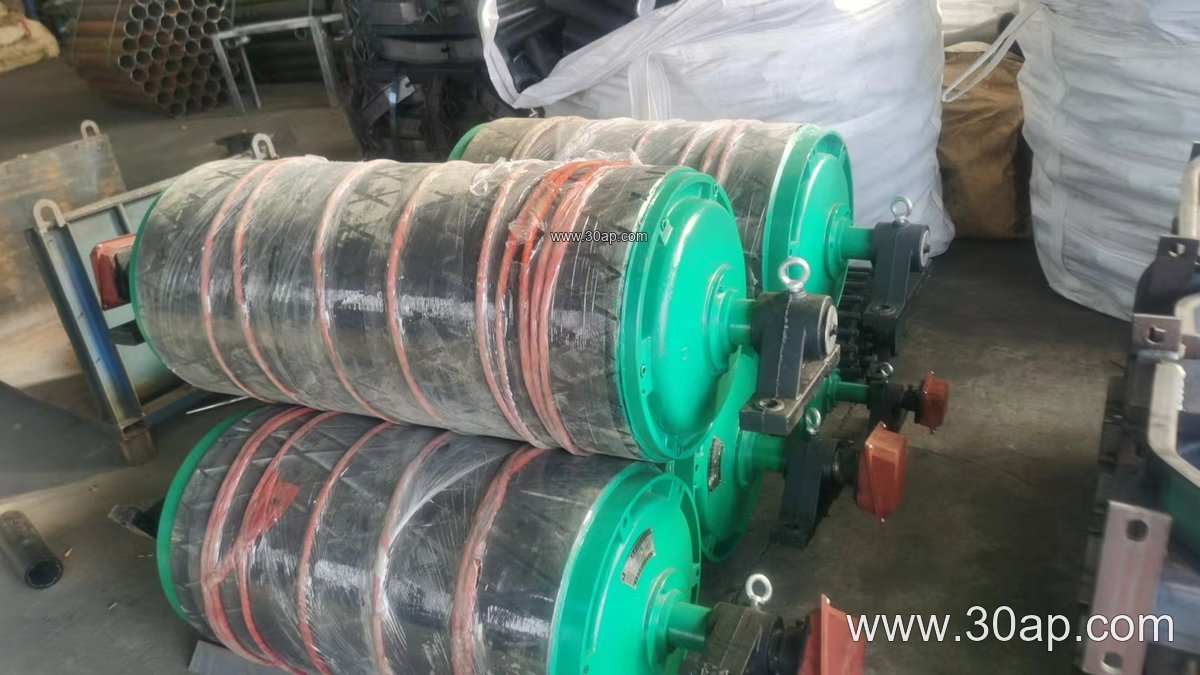
Construction and Typical Surface Options
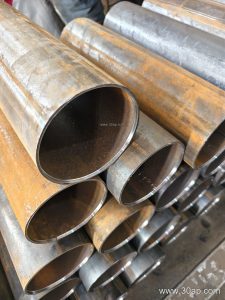
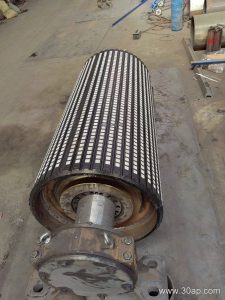
Most units are built around a steel tube with welded end discs and a through shaft supported by self-aligning bearing housings. The shell may be plain, or it may carry a rubber or ceramic lagging to improve grip without marking the belt. Common surface forms include plain finish, cold-bonded rubber, hot-vulcanised rubber, diamond grooving and ceramic tiles. Lagging thickness is usually selected from a range such as 8, 10, 12, 15 or 20 mm depending on the belt and the environment.
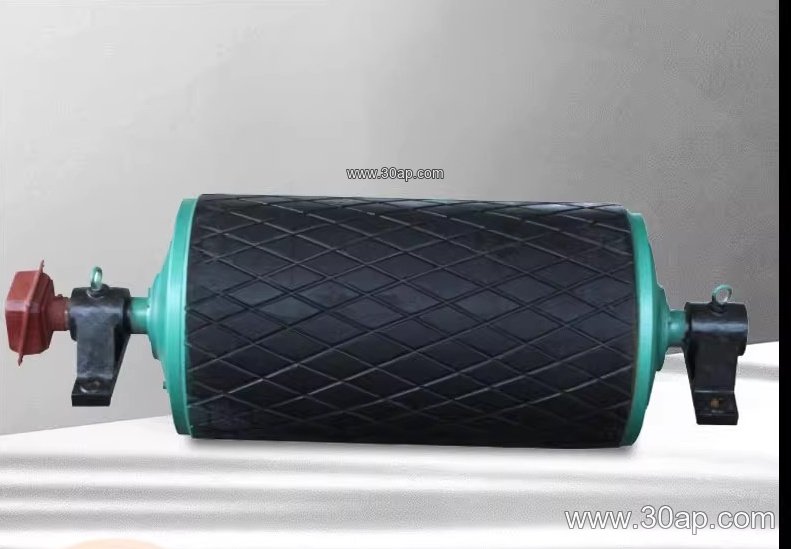
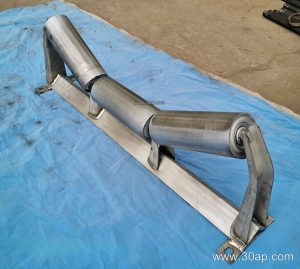
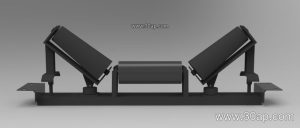
Where the belt needs lateral correction, a slight crown on the shell or a pair of angled guide rollers can help. On dusty circuits such as a quarry or a cement clinker line, sealed bearings and a wear-resistant cover reduce maintenance calls. The unit is normally fastened to the conveyor bracket with a simple bolted base, and the bracket should allow small lateral adjustment so the operator can fine-tune tracking after installation.
Where It Fits in the Line
Guide pulleys appear in many bulk handling circuits. In a coal preparation plant they keep the return strand away from structural steel; in a limestone or iron ore operation they help control belt position before a transfer chute. They are also found in power plant coal handling, port bulk terminals and aggregate plants feeding a crusher. The belt itself may be a heavy-duty mining conveyor belt, a heat resistant conveyor belt near a clinker cooler, or an abrasion resistant conveyor belt on sharp stone. A flame retardant conveyor belt is common underground, and there the guide pulley must be positioned so it does not rub against the belting or create a pinch point.
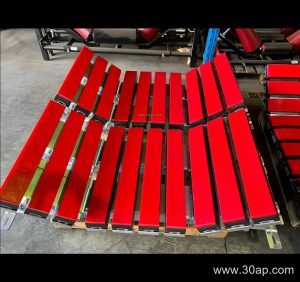
In these layouts the guide pulley works alongside the conveyor pulley set, the idler roller groups and the supporting frame. It is not a substitute for any of them; it only corrects belt position.
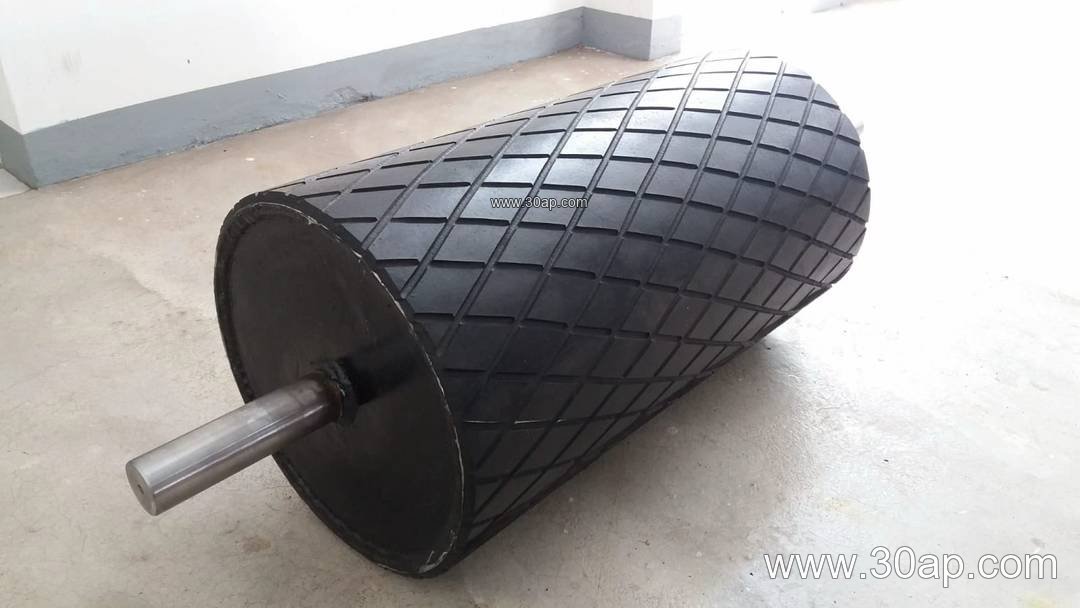
Matching the Pulley to Belt Width and Duty
Face width is normally a little wider than the belt so the edges are not trapped. Typical relationships include B650 with roughly 750 mm face, B800 with about 950 mm, B1000 with about 1150 mm and B1200 with about 1400 mm. Diameter is chosen from the belt thickness, the wrap angle and the space available, with common sizes such as Ø200, Ø250, Ø315, Ø400 and Ø500. A small diameter is not automatically right for a narrow belt, and a wide belt does not require one fixed diameter.
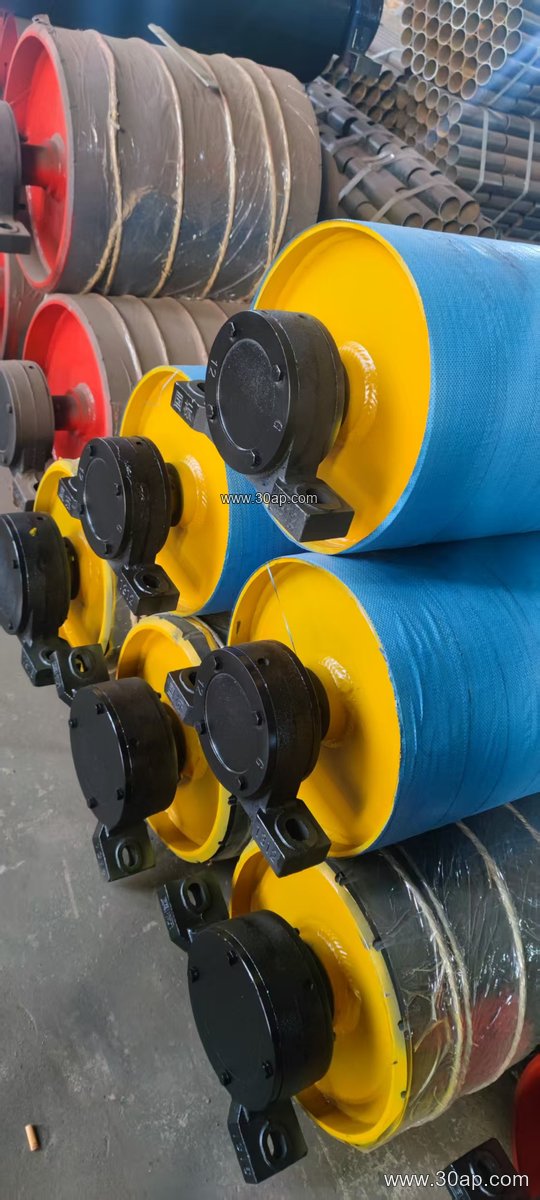
Shaft size follows torque and bearing load, not belt width alone. Common shaft diameters run from Ø50 to Ø200, and the final value should come from the pulley designer. The table below shows example combinations for reference only.
- B800 with Ø500 shell and 10 mm lagging
- B1000 with Ø630 shell and 12 mm lagging
- B1200 with Ø800 shell and 15 mm lagging
- B1400 with Ø1000 shell and 15 mm lagging
These are illustrative pairings, not fixed rules. A B1200 system may use a larger or smaller drum depending on belt tension and the available frame height.
Buyer Checklist Before Ordering
Start with the belt width, the belt type and the running tension, then confirm the mounting position and the adjustment range needed on the conveyor bracket. Ask for the lagging material and thickness, the bearing type and the shaft diameter with a drawing. Confirm that the face width suits the belt and that the surface will not damage a sensitive cover such as a food grade conveyor belt or a pipe conveyor belt. On a steel cord conveyor belt, avoid small-diameter drums that could over-flex the cords. Finally, plan a simple alignment check after commissioning, because a guide pulley only performs well when it is square to the belt and free to rotate.