What an EP100 Conveyor Belt Is
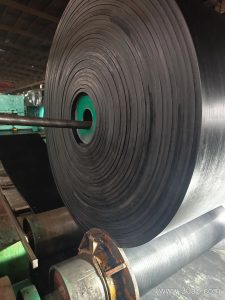
An EP100 Conveyor Belt is a fabric-core rubber belt built around polyester (E) and nylon (P) warp and weft yarns. The “100” refers to the nominal tensile strength of the carcass, commonly expressed as 100 N/mm per ply. In practice, this places the belt in the light-to-medium duty range, making it a practical choice for aggregate plants, cement lines, small mines, and general bulk material handling where extreme tension is not the limiting factor. Buyers comparing product families often see it grouped with other EP grades, from EP200 up to EP2000, as well as NN Conveyor Belt and Steel Cord Conveyor Belt constructions. Each family serves a different tension and duty envelope, and the EP100 sits near the entry point of the EP range.
Construction and Materials
The carcass is the load-bearing part. In an EP100 belt, polyester warp yarns carry tension with low elongation, while nylon weft yarns absorb impact and help the belt track. Multiple plies are bonded with rubber skim compounds and protected by top and bottom cover rubber. Cover thickness is usually quoted as a pair, such as 3+1.5 mm or 4+2 mm, and the carcass commonly runs from two to six plies depending on the design. A buyer should treat these as typical reference values, not fixed rules; the final build is set by the conveyor design and the manufacturer’s data sheet.
Cover compound selection matters as much as the carcass. A standard abrasion resistant conveyor belt suits sand, gravel, and crushed stone. A heat resistant conveyor belt is used when clinker or hot sinter is carried, while a flame retardant conveyor belt or fire resistant conveyor belt is often specified for coal handling and enclosed galleries. Oil resistant, cold resistant, and anti-static versions are available for other duty conditions. Belt edges, splices, and cover grade should be confirmed together, because a strong carcass with the wrong cover still shortens service life.
Common Configurations
The table below lists typical reference values seen in product literature. They are indicative only and should be confirmed against the actual design.
- Strength grades in the EP family: EP200, EP315, EP400, EP500, EP630, EP800, EP1000, EP1250, EP1600, EP2000
- Common belt widths: B500, B650, B800, B1000, B1200, B1400, B1600, B1800, B2000
- Cover thickness pairs: 3+1.5 mm, 4+2 mm, 5+2 mm, 6+2 mm, 8+3 mm
- Carcass plies: usually 2 to 6, set by design
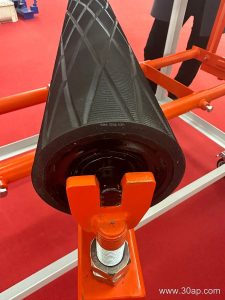
For heavier loads, plants may move up to an EP200 or EP300 belt, or switch to a steel cord design. That is a comparison of duty levels, not a replacement for the EP100 grade in lighter duties. Width and pulley diameter are matched through conveyor engineering, so no single belt width should be assumed to fit one pulley size. Drive pulleys, tail pulleys, and bend pulleys each have their own role and are not interchangeable.
Where It Works
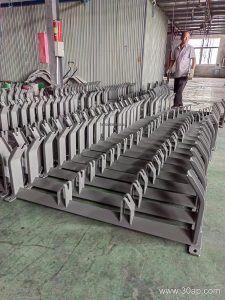
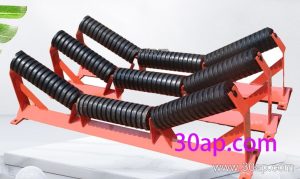
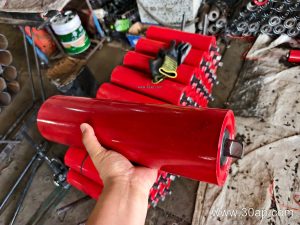
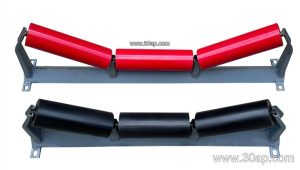
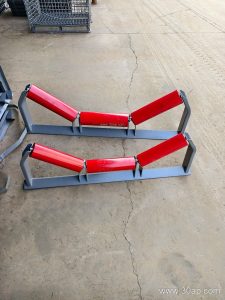
Typical installations include quarry and sand making plants feeding crushers, cement plant raw material and clinker lines, power plant coal yards, and port or ship loading systems. In mining, an EP100 belt often appears on secondary and transfer conveyors rather than the highest-tension main line. It also suits recycling lines and construction material yards. Around the belt, the conveyor pulley, idler roller, and conveyor bracket form the supporting hardware, and their alignment strongly affects belt life. A well-aligned frame with free-turning idlers reduces edge wear and mistracking.
Buyer Checklist
Before ordering, confirm the required tensile grade, belt width, number of plies, cover thickness and compound, and splice method. Ask how the belt will be joined, since an endless conveyor belt splice or a mechanical joint changes the effective strength. Check the minimum pulley diameters recommended for the carcass, the troughing angle, and the material size and temperature. For coal or dusty environments, verify flame retardancy and anti-static properties. For hot or oily cargo, confirm the cover grade rather than relying on the base EP100 description alone. Finally, request the manufacturer’s dimensional and technical data sheet so the delivered belt matches the conveyor design.